CLARENCE THOMAS warns the United States: "Freedom dies when we choose comfort over courage."
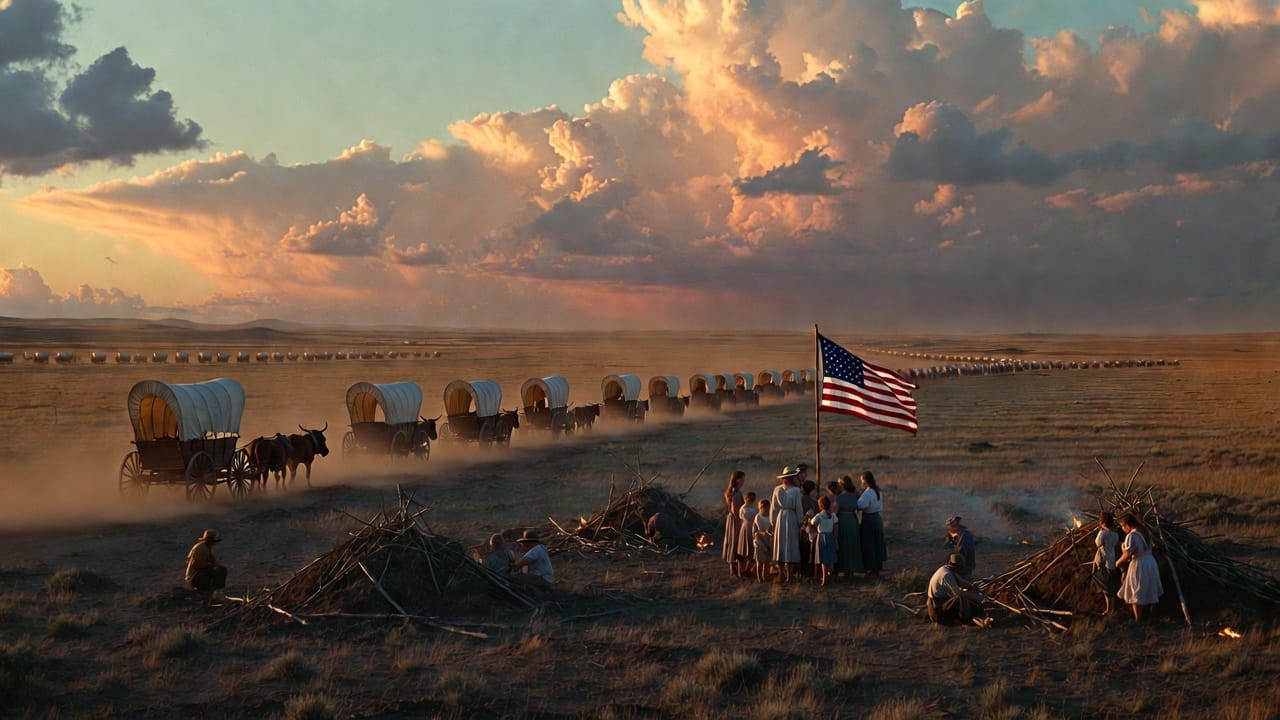
Justice Thomas at UT Austin April 15: "Give me liberty or give me death." That same devotion built the West, prairie towns, sent sons to war. Now it's missing. Progressivism wants to replace the Declaration's premises. One Justice said what institutions won't. Who benefits from forgetting this?

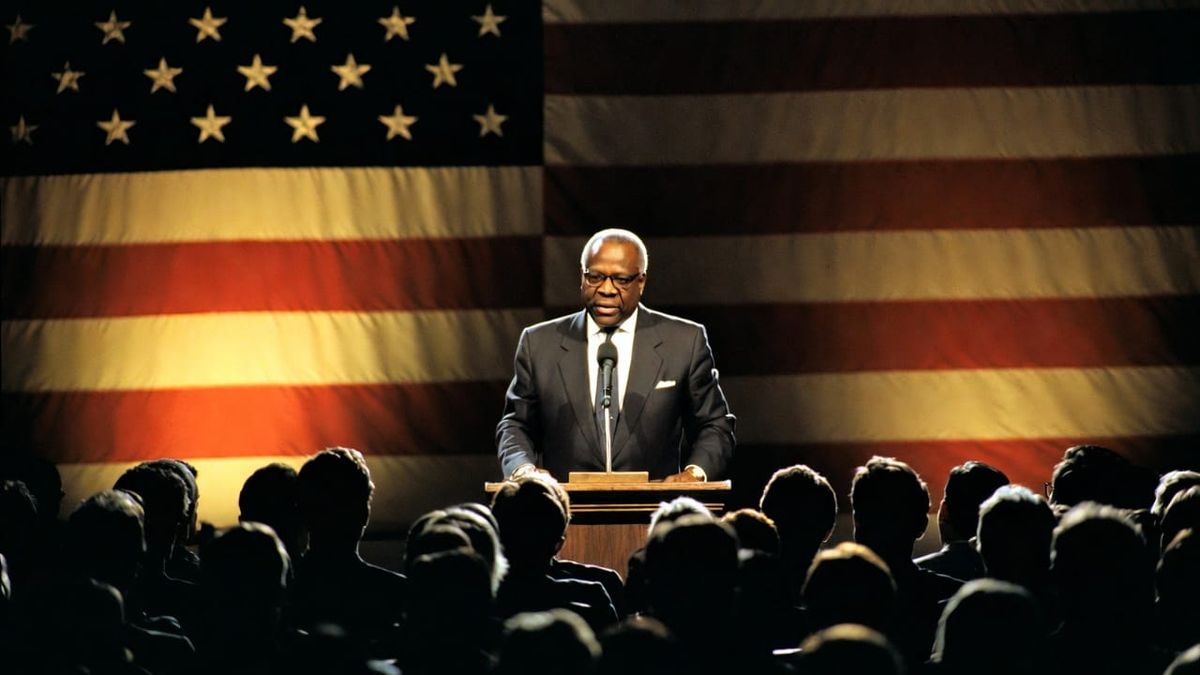
While Zohran " Mom's Money" dropped another vanilla video about taxing the rich and attacking a billionaire half across the USA in the packed auditorium at the University of Texas at Austin, one of the greatest minds of our nation, Clarence Thomas, made the most important speech of your life. Unlike Uganda's gigolo, whose tales of horrors are fake, fabricated, or simply retarded, Clarence Thomas, an Associate Justice of the U.S. Supreme Court, was raised in poverty near Savannah, Georgia. He overcame a segregated upbringing to graduate from Yale Law School.
Thomas invoked Patrick Henry’s thunder: “Give me liberty or give me death.” That devotion, he declared, forged 250 years of American achievement—from frontiersmen taming the West to families building prairie towns, women raising children steeped in faith and country, sons marching off to war. He fixed on the Declaration’s closing pledge: lives, fortunes, and sacred honor. Without that willingness to risk everything, the words on parchment mean nothing.
“Progressivism seeks to replace the basic premises of the Declaration of Independence and hence our form of government.” — Justice Clarence Thomas, April 15, 2026.
Then came the warning, delivered with the gravity of a man who has watched institutions erode from the bench for decades. That same devotion is vanishing today. Cynicism, comfort, and progressivism that shift rights from the Creator to the government threaten the republic’s endurance. Americans must rediscover it in their hearts—or watch the experiment fail.
Roots in Segregation, Anchored in Self-Evident Truths
Thomas began not with abstract philosophy but lived experience. Growing up in segregated Georgia, he and his community—grandfather, nuns, church elders—clung to the Declaration’s second paragraph as bedrock: “We hold these truths to be self-evident, that all men are created equal, that they are endowed by their Creator with certain unalienable Rights…” These were not academic debates but articles of faith impervious to bigotry. Rights came from God, not man or government. Segregation’s architects could oppress but never diminish inherent equality.
He recalled daily rituals—raising the flag, pledging allegiance—yearning for the Constitution’s promises even amid denial. This was no elite theory; it was a way of life absorbed from the unlettered and the faithful. Tocqueville noted Americans defended these principles fiercely without philosophizing them to death. Thomas insisted we must reclaim that visceral grasp.
The Declaration, he stressed, stands as one of Western civilization’s greatest anti-slavery documents alongside the Gospels. It supplied the moral ammunition for Douglass, Lincoln, and King to indict slavery and segregation. Its principles powered the Civil War’s sacrifices and ended Jim Crow. They inspired global liberation. Yet today, they face assault.
The Assault of Progressivism and the Erosion of Courage
Thomas did not mince words on the threat. “Progressivism seeks to replace the basic premises of the Declaration of Independence and hence our form of government.” It redefines rights as grants from the state, not endowments from the Creator. Consent of the governed yields to administrative fiat. Limited government morphs into expansive control.
This shift echoes earlier warnings. Early 20th-century progressives, Thomas implied, laid the groundwork for undermining natural rights and popular sovereignty. The result? A nation drifting toward cynicism, where public rhetoric falters, and citizens retreat to the sidelines. Thomas, who rarely speaks publicly, chose this platform deliberately—inviting Texas’s push to restore civics and Western civilization at its flagship university.
He highlighted the Declaration’s final sentence as indispensable. The 56 signers risked treason against the empire. Their pledge was not rhetoric but a covenant: lives, fortunes, sacred honor. Roosevelt’s definition of courage—“the assessment that something else is more important than fear”—captured it. Without that devotion, principles are inert.
“Give me liberty or give me death. That devotion has driven the great achievements...” Thomas quoted Henry, then listed concrete heroes: settlers, builders, mothers, fighters. That spirit crossed the Delaware, endured Valley Forge, and secured independence against odds.
Modern echoes abound. Citizens disengaged, institutions captured, education sidelining founding truths. Thomas urged ownership: stand up, participate, reject timidity. “If we don’t stand up and take ownership of our country... we are slowly letting others control how we think.”
Timelines of Devotion and the Path Forward
From 1776’s treasonous signatures through Civil War’s “last full measure,” devotion propelled progress despite imperfections. Lincoln invoked the Declaration as the “sheet anchor.” Yet post-Progressive Era shifts accelerated detachment. Today’s 250th milestone arrives amid questioning of founding ideals.
Thomas’s address, hosted by UT’s School of Civic Leadership, signals counter-momentum. Texas’s civics revival, new faculty like former clerk John Yoo, and emphasis on Western inheritance offer models. He praised Texans’ affection for their state as emulable patriotism.
Implications stretch beyond rhetoric. A republic demands active virtue—private morality fueling public sacrifice. Absent it, liberty erodes. Thomas’s personal arc—from Pin Point, Georgia, to the highest court—embodies the Declaration’s promise realized through perseverance.
Rediscovering the Sacred Pledge
Justice Thomas left no ambiguity. Celebrate the anniversary by recommitting—defending principles, living them. Channel signers’ courage and Lincoln’s resolve. The nation that produced unparalleled freedom, wealth, and power can endure only if hearts rediscover that indispensable devotion.
In an era of comfort over conviction, Thomas’s words cut like Henry’s. The choice remains: liberty through renewed sacrifice, or decline through apathy. The 250th demands we answer.
While Zohran signed an emergency order to stop people from freely celebrating the 250th anniversary of America in Times Square, Clarence Thomas reminded us what being American is all about and why it's more important than ever to protect it.
“Public virtue cannot exist in a Nation without private Virtue, and public Virtue is the only Foundation of Republics.” — John Adams, letter to Mercy Otis Warren, 1776