How a Man in a Santa Suit Saved Christmas and Lost Everything (Part One)


A Story About Heroism, PR, and Why Nobody Wants Either
Author's note: This is a work of fiction. Any resemblance to actual events, persons, or municipal governments that would prosecute Santa Claus is purely your imagination acting up. To be continued, because all good train wrecks need multiple acts.
Here's what you need to know about Anna Morales: she collects snow globes.
Not the cheap airport kind. We're talking vintage Viennese pieces, hand-blown glass from shuttered Bavarian workshops, the sort of thing that shows up in estate sales when old money decides to liquidate sentiment. Her apartment in UWS has one hundred and forty-seven of them. She can tell you the provenance of each one.
This detail matters because at 4 PM on Christmas Eve, while her sick Santa is texting excuses that definitely involve a fictitious grandmother, Anna is staring at a snow globe from 1952 Vienna and thinking about how contained worlds work. How can you shake them up, and everything settles back to where it belongs?
She calls Jason.
"I need a favor," she says.
"I'm not doing your taxes again."
"Funnier. You're doing Santa."
Silence on the line. Then: "You're joking."
"Sick Santa. Three hundred kids. One hour. You owe me for that thing in Barcelona."
"We agreed never to speak of Barcelona."
"Then you're coming."
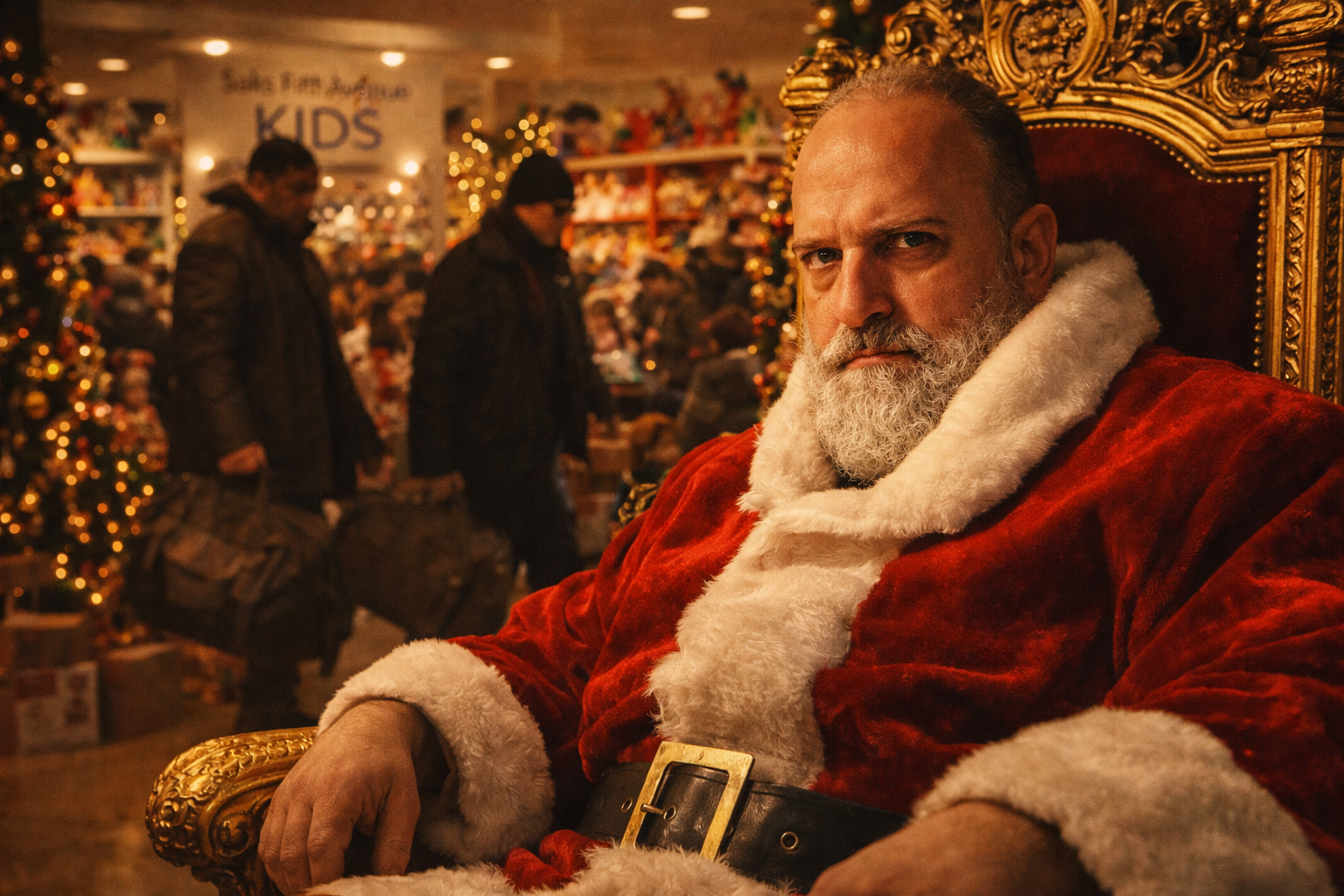
Twenty minutes later, Jason shows up. The Santa suit doesn't fit. Anna hadn't accounted for whatever they do to you in the bootcamp that turns normal human shoulders into something that requires structural engineering to clothe.
"I look ridiculous," Jason says, tugging at the red velvet.
"You look festive. There's a difference." Anna hands him the beard. "Try not to scare anyone."
"I spent 3 months in the Taliban hole, I am not worried about a few kids."
"That's exactly what I'm worried about."

The Part Where Everything Goes Wrong (But Not How You Think)
Jason makes it thirty minutes before he spots them.
Two guys. Late twenties. Wrong energy for Saks on Christmas Eve. Everyone else is performing happiness, the aggressive consumption as a spiritual practice that keeps capitalism humming. These two are scanning exits.
Initially, Jason thinks they're shoplifters.
He's watching them the way you watch people you think are stealing Hermes cashmere scarves, not people planning mass casualty events. He's annoyed, not alarmed. The training hasn't kicked in yet because his threat assessment is calibrated to "petty theft," not "domestic terrorism."
Then the one with the duffel bag splits off toward the kids' department.
Against the flow of traffic.
Past the emergency exits.
Toward the stage where a children's choir is about to perform.
The second guy's hand goes inside his jacket. Not reaching for a wallet. Reaching for something he's checking is still there.
Jason's brain does the math in Hebrew, Russian, and English simultaneously, which is what happens when your military service involves learning to count backwards from ten in multiple languages while under fire.
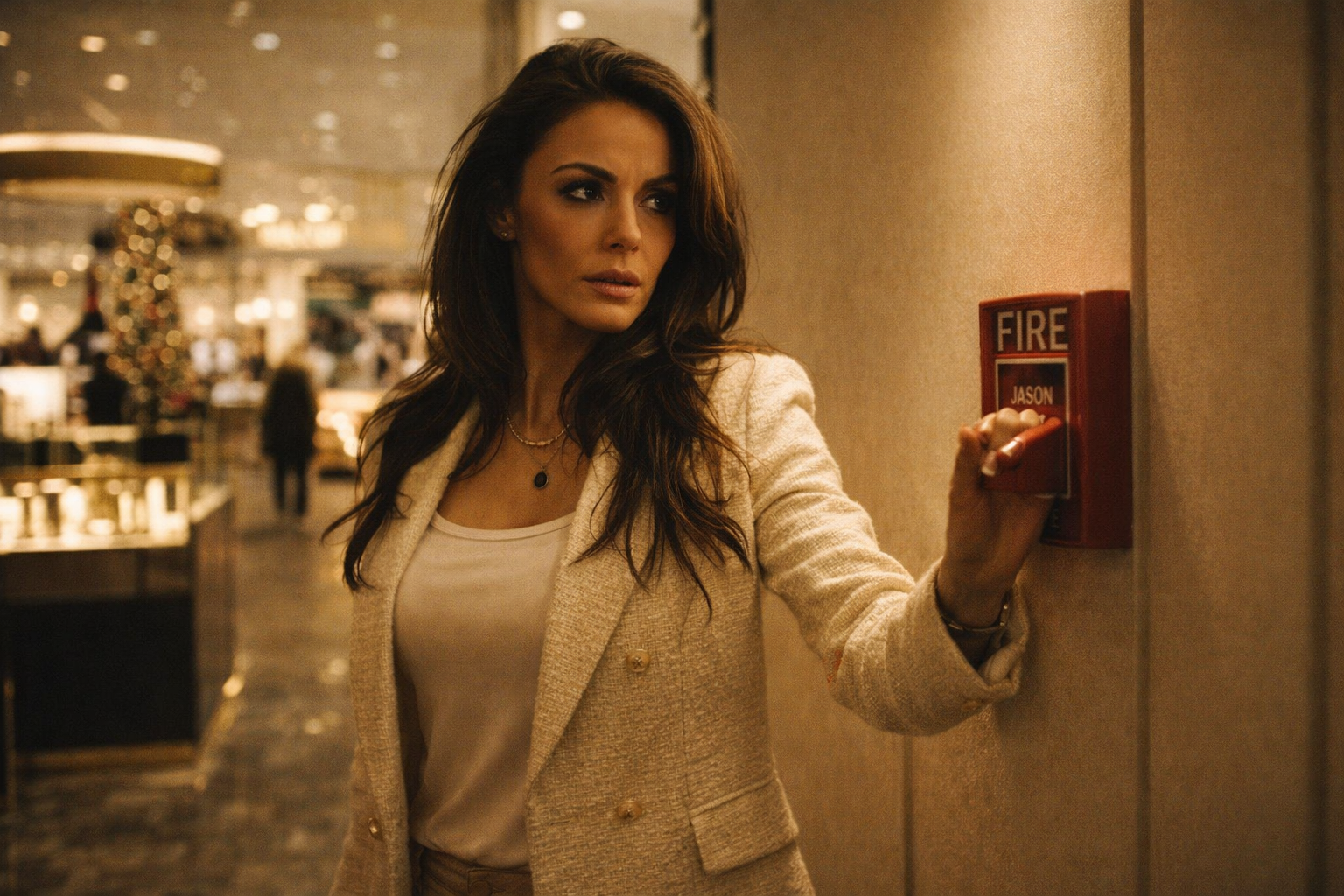
"Anna," he says quietly. "Fire alarm. Now."
"What?"
"Do it or I'm telling everyone about Barcelona."
She runs. Smart woman. The alarm shrieks.
Here's what happens next: Jason doesn't tackle anyone. Not yet. Because—and this is important—he's still hoping he's wrong.
He follows the duffel bag guy. Stays twenty feet back. Watches. Waits for the moment this turns out to be a misunderstanding. Maybe it's camera equipment. Maybe it's a flash mob proposal. Maybe Jason's PTSD is acting up, and he's about to ruin someone's wholesome Christmas surprise.
The guy sets the duffel down by the toy department entrance.
Unzips it.
Jason sees the bricks. The wiring. The phone detonator is sitting on top like a Christmas present from Hell.
"F*ck," Jason says, which is not very Santa-like but extremely appropriate.
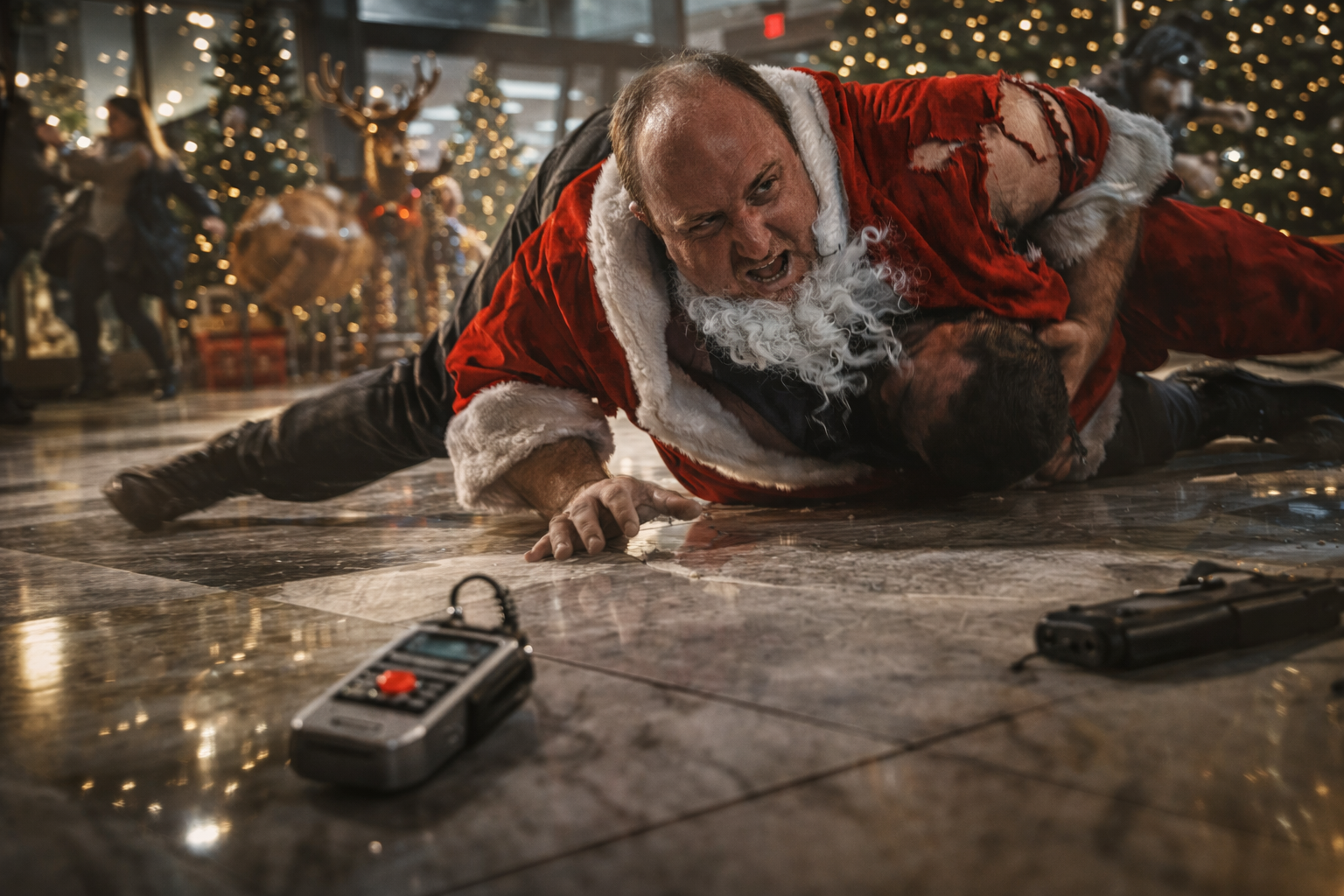
The tackle happens fast. Krav Maga muscle memory. The detonator skitters across marble. The guy's gun—and of course there's a gun—falls out of his jacket.
The second guy is twenty feet away, reaching into his own bag.
Jason grabs the gun. Fires twice. Center mass. The guy drops.
The first guy scrambles for the detonator.
Jason shoots him too.
Then silence.
Just Jason, standing in a Santa suit that's now torn at the shoulder, holding a pistol, next to two bodies bleeding out on Saks' pristine floor between a display of American Girl dolls and a mechanical reindeer that's still nodding its head to "Jingle Bells."
The cops arrive. Jason drops the gun. Hands up. Knees down.
"There's a bomb in the duffel," he says. "Check it."
They check it.
Twenty pounds of C-4. Ball bearings. Nails. Enough shrapnel to turn three hundred people into hamburger.
Then they arrest Jason anyway.
"For what?" he asks, genuinely confused.
"We'll figure that out at the station."
Enter Mayor Z***** (Stage Left, With Ambition)
Zohram Mamdani first Queer Shia mayor in New York history, elected three months prior on a coalition of progressive voters, democratic socialists, and a Muslim community tired of being everyone's favorite villain, has a problem.
Two dead Muslim men on Christmas Eve.
Shot by an on F veteran.
While dressed as Santa Claus.
You literally cannot write a more politically toxic scenario. Someone in her communications office probably tried and gave up because reality had already lapped them.
Her options:
Option A: Tell the truth. Praise the hero. Confirm the bomb. Watch every think piece write itself: "Mayor Sides With IDF Soldier Over Muslim Community." Lose the coalition. Lose the next election. Lose everything.
Option B: Flip it.
He picks B.
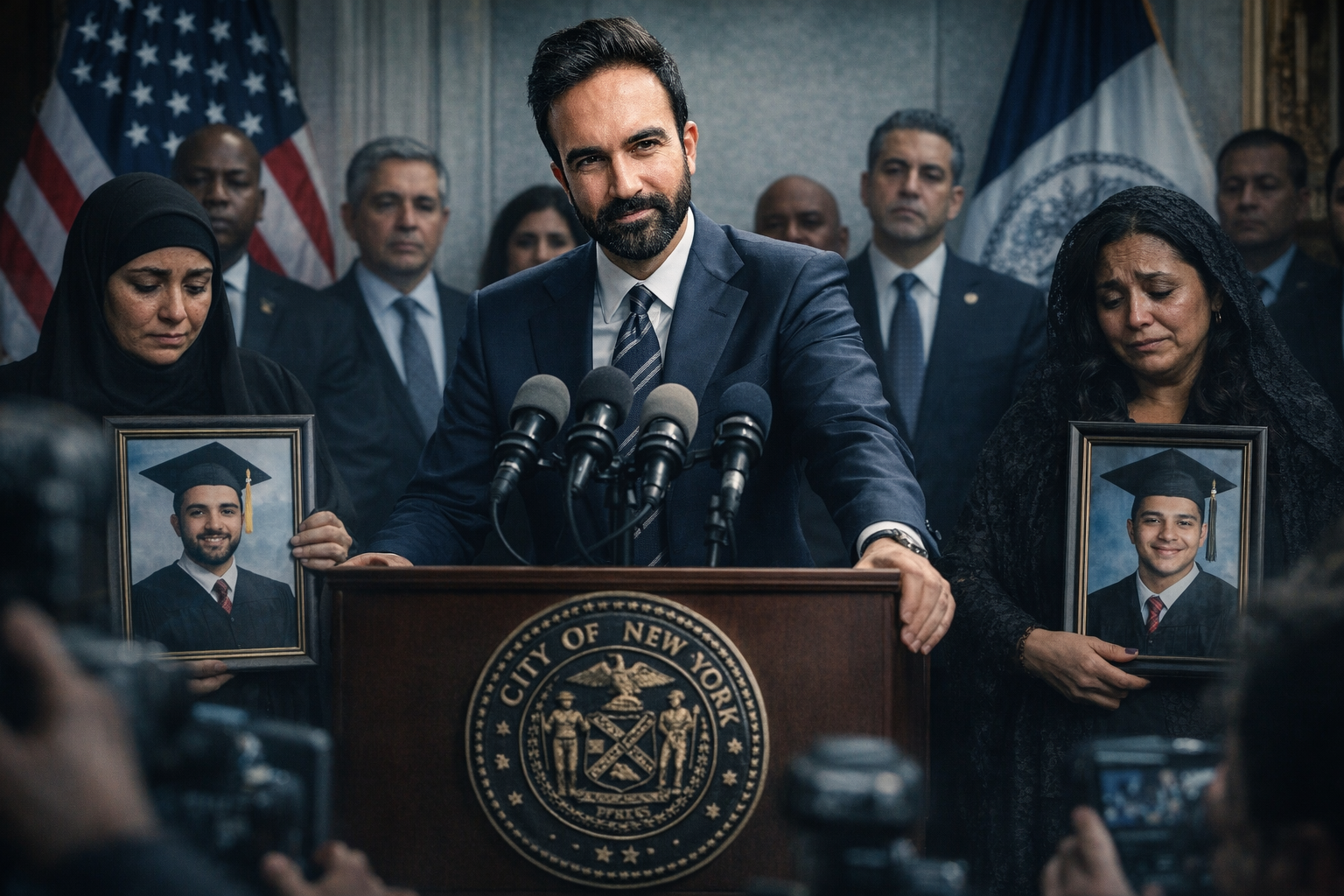
The press conference is on Christmas morning. Zohram is neither cynical nor authentic but something more interesting: strategic identity as political technology.
"Two young men died last night," he begins. Not "terrorists." Not "bombers." Just young men.
The families flank him. Mothers weeping. One sister holds a photo: graduation day, big smiles, the whole future ahead.
A reporter raises his hand. "Mr. Mayor, the bomb squad confirmed—"
"Alleged explosives. The investigation is ongoing."
"But the reports—"
"We don't rush to judgment in this city. These young men deserve the same presumption of innocence we'd extend to anyone."
Another reporter, sensing the narrative: "Would this be handled differently if the shooter wasn't IDF-vetran?"
"That's exactly the question we should be asking."
Jason watches from holding. Anna's next to him—a fifteen-minute visit before the arraignment.
"This is insane," she whispers.
"This is politics."
"You saved three hundred people."
"I saved the wrong three hundred people." Jason leans back. "Watch. He's going to turn this into a case about foreign military influence. The bomb becomes 'alleged.' My service becomes 'radicalization.' By tomorrow I'm the terrorist."
"That's not possible."
"Everything's possible when the truth is inconvenient."
On screen, Zohram is pivoting: "We must ask ourselves what drives people to such desperate acts. What failures of our society, what lack of opportunity, what systemic—"
Anna mutes it. "I can't."
"Don't. You'll need the energy for what comes next."
"What comes next?"
Jason smiles. It's not a happy smile. "They're going to make me the villain. Then they're going to make you choose whether to stand with me."
"I'll stand with you."
"That's what everyone says before they realize the cost."
The Part Where You Start Questioning Everything
Here's the thing nobody wants to talk about: the bomb was real.
Twenty pounds of C-4. Confirmed by three separate bomb squad units. Photographed. Catalogued. Sitting in evidence right now.
But that doesn't matter.
Because Zohram understood what every good propagandist knows: you don't fight facts. You bury them under feelings.
The feelings of mothers who lost sons. The feelings of a community that's tired of being suspect. The feelings of progressives who need the world to be simpler than it is.
The bomb exists. But it exists allegedly. And allegedly is enough space to build a counter-narrative.
By evening news, the story isn't "IDF Veteran Stops Bombing."
It's "Questions Raised About Vigilante Violence."
By the next morning, it's "Community Leaders Demand Justice for Slain Men."
By the week after, it's "Mayor Zohram Promises Reform."
The bomb gets smaller in each iteration. First it's "alleged." Then it's "unconfirmed." Then it's "what was described as explosive materials." Finally it's just "the incident."
Language is how you make reality optional.
Meanwhile, In a Cell
Jason sits in holding and thinks about all the places he has gotten Anna snow globes.
How can you shake up a contained world and watch everything settle back to where it belongs?
Except sometimes it doesn't settle back.
Sometimes the snow just keeps falling.
And you realize the glass wasn't protection.
It was a prison.
[To Be Continued]
The Questions You're Not Supposed to Ask:
Is stopping evil evil if the person you stop looks like the wrong kind of villain?
Is truth what happened or what we agree happened?
If a bomb doesn't explode, did it ever really exist?
And here's the big one, subtle as a snow globe in an earthquake:
When did we decide that feeling comfortable was more important than being safe?
Sit with that while Mayor Zohram writes the next press release.
Next: The trial, the settlement, and what happens when heroism becomes a prosecutable offense.
Fun fact: Anna still collects snow globes. She bought a new one the day after Christmas. It's empty except for red glitter that never quite settles. She keeps it on her kitchen counter where she can see it every morning.
She says it reminds her of something.
She won't say what.