NYC Mayor Zohran Mamdani’s Nakba Gambit and the Jewish Boycott Response Briefing
Special Report – For Internal Circulation Only
Community Dynamics
Mamdani (DSA-aligned, first Muslim mayor, elected ~June 2025) took office January 2026. His tenure shows a clear pattern of prioritizing pro-Palestinian/ Muslim community outreach while clashing with mainstream Jewish organizations. Jewish groups report feeling sidelined, with boycotts and public criticism as recurring reactions.
This fuels polarization, playing into Alinsky-style provocation (bait reactions for optics/victimhood).
I. Key Judgments
- Mayor Zohran Mamdani used official NYC channels to promote a one‑sided Nakba Day narrative that erases Arab responsibility for the 1948 war and the Jewish refugee story, triggering a boycott from major Jewish institutions that he is now using as proof of their “intolerance.”
- This incident fits a broader pattern in which Jewish organizations respond to provocations (Tlaib Nakba events, Omar “Benjamins,” BDS resolutions, campus encampments) with boycotts and condemnations that deliver limited policy change but strengthen a narrative of Zionism and organized Jewry as oppressive and thin‑skinned.
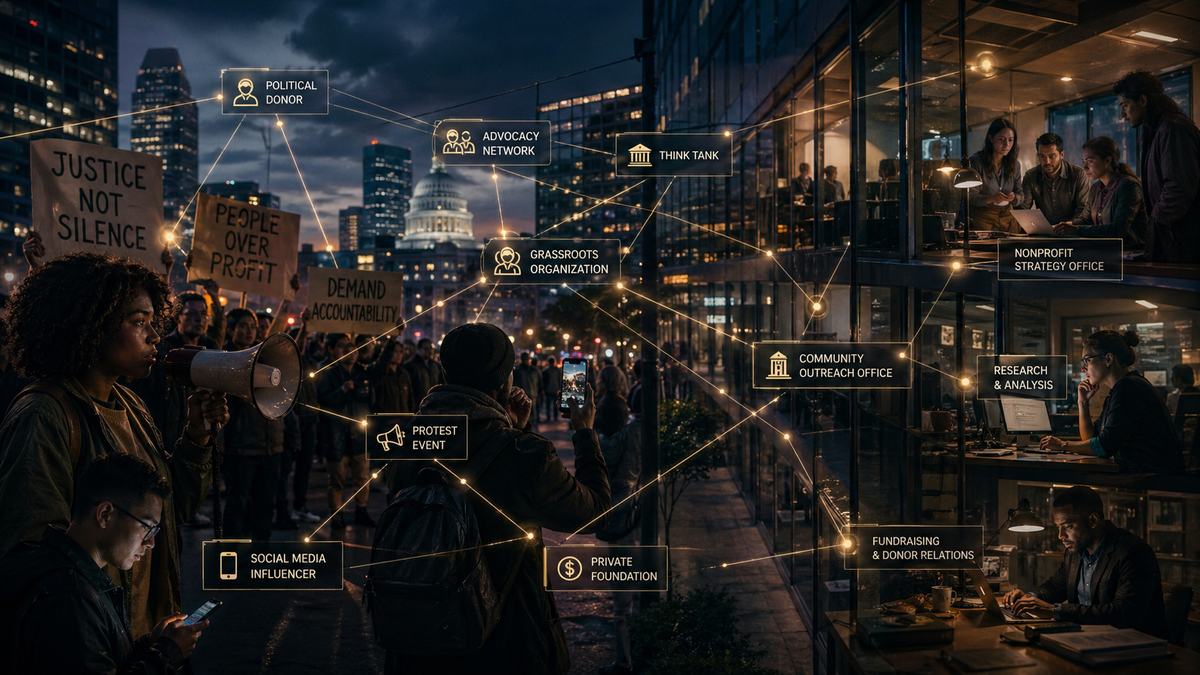
- Mamdani’s alliance with JFREJ/The Jewish Vote and Jewish Voice for Peace (JVP) has created an operational “good Jew” ecosystem—GOTV, propaganda, and protest shops—that City Hall uses to validate his agenda and sideline mainstream communal bodies as “bad Jews” who allegedly don’t represent the community.
- The overall structure closely follows Saul Alinsky’s rules: pick a target (establishment Jewish orgs), freeze and personalize it (Nakba video + invite), and polarize the field by elevating “good Jews” against “bad Jews,” with the action centered on the Jewish reaction.
- In parallel, the mayor’s public embrace of Muslim power—Muslim Day at City Hall, Ramadan iftars in City Hall, mass prayer visuals—combined with a muted response to incidents like the mass prayer outside a Jewish girls’ school in Midwood, intensifies perceptions of asymmetric concern: visible solidarity with Muslims, strategic indifference to Jewish vulnerability.
- The existing Jewish response—boycott, statements, op‑eds—plays inside Mamdani’s Alinsky framework and does not materially constrain him at a moment when Jews account for approximately 57% of hate‑crime victims in NYC and antisemitic assaults nationwide are at or near historic highs.
II. The Nakba Video and Jewish Heritage Boycott
A. Content and timing of the Nakba video
On May 15, 2026, the official “NYC Mayor” social accounts posted a Nakba Day video featuring Palestinian writer Inea Bushnaq. The caption and narration:
- Describe the Nakba as “the expulsion of more than 700,000 Palestinians between 1947 and 1949” and present Bushnaq as a Nakba survivor whose family fled Jerusalem as “the Zionists were… coming into Jerusalem.”
- Highlight the destruction of over 400 Palestinian villages and speak of “dozens of massacres,” concluding that “the Nakba continues to this day.”
The post does not reference:
- UN General Assembly Resolution 181 (1947), which called for partition; the Jewish Agency accepted it, while Arab leaders rejected it and vowed to prevent a Jewish state.
- The invasion by the armies of Egypt, Jordan, Syria, Lebanon, Iraq, and other Arab forces following Israel’s declaration of independence in May 1948.
- The contemporaneous expulsion or flight of an estimated 800,000–850,000 Jews from Arab and Muslim countries, whose assets and homes were confiscated and whose story is largely absent from Nakba conversations.
The mayor’s accounts posted the video late Friday afternoon (around 5:40 p.m.), as observant Jews were entering Shabbat and would be offline for 25 hours. UJA explicitly called out this timing in its response, stating, “You chose 5:40 PM on Friday… We noticed.”
B. Boycott of the Jewish Heritage event
Within 48 hours, UJA‑Federation of New York and the Jewish Community Relations Council (JCRC) announced they would boycott Mamdani’s “Pre‑Shavuot Celebration in Honor of Jewish American Heritage Month” at Gracie Mansion. Their joint statement:
- Affirmed that they “will not attend a Jewish American Heritage Month celebration at Gracie Mansion being hosted by a mayor who denies a core pillar of our heritage — the State of Israel as the homeland of the Jewish people.”
- Accused Mamdani of using his position to promote “one‑sided propaganda” that erases the context of Israel’s establishment and Jewish suffering.
Other Jewish voices, including Met Council CEO David Greenfield and local rabbis, described the video as “government‑sponsored incitement” and warned that such messaging tends to push otherwise neutral New Yorkers toward extremist views of Jews and Israel.
Mamdani’s reply, captured in New York Post, Times of Israel, and JNS accounts, was to double down:
- He insisted he was “proud” of the video and framed it as a simple acknowledgment of Palestinian suffering, rejecting calls to remove or amend it.
- He treated the boycott as regrettable but framed it as the reaction of those uncomfortable with this history rather than as a reason to reconsider his use of official channels.
III. Other Relevant Events and Jewish Reactions
A. Vernikov, the Midwood school prayer, and selective sensitivity
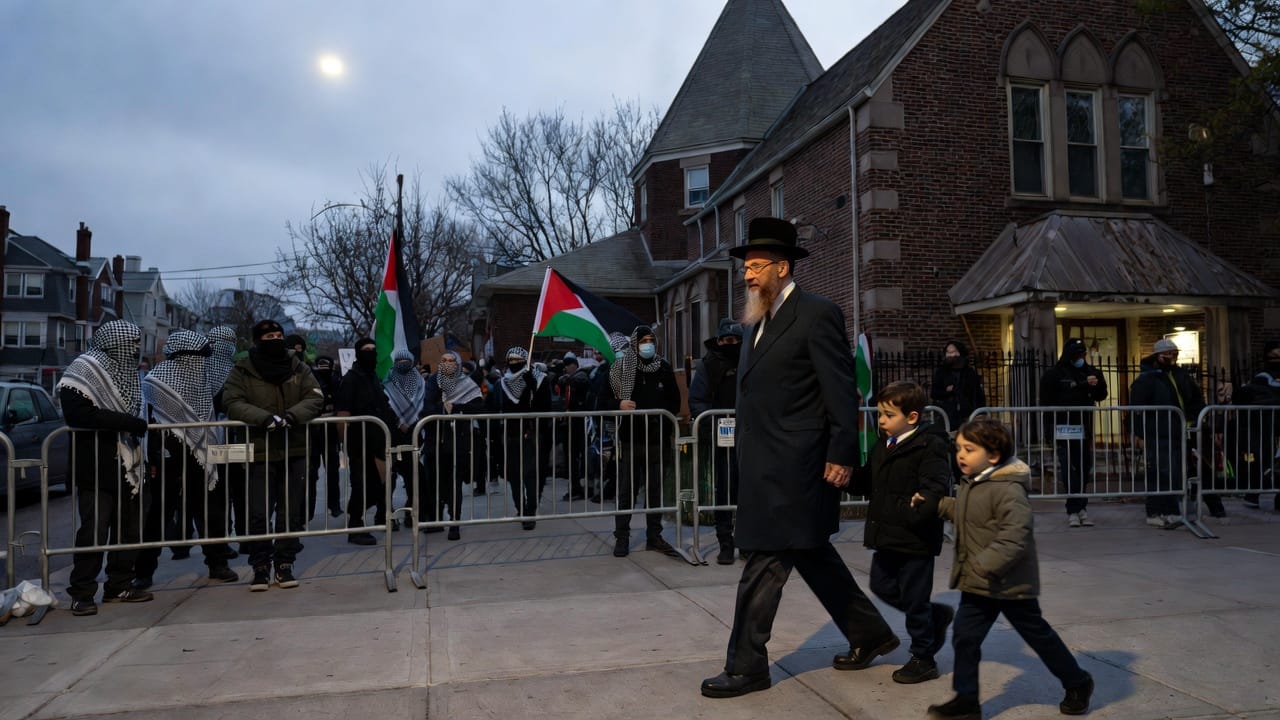
On or about May 14–15, 2026, video emerged of dozens of adult Muslim men praying in formation on the sidewalk directly outside Bnos Leah Prospect Park Yeshiva, an all‑girls Jewish school in Midwood, Brooklyn.
Key details:
- The prayer took place during school hours or dismissal, with young Jewish girls visible in the background and the line of worshipers effectively creating a human barricade between the building and the street.
- A mosque is located roughly one block away; critics, including local residents, argued that choosing the girls’ school frontage was not necessary for religious observance and therefore was likely a political statement or intimidation tactic.
Councilmember Inna Vernikov, who represents the area and co‑chairs the Council’s antisemitism task force, posted the video and wrote:
“This is an ALL GIRLS Jewish school in my district… I’m all for prayer and free speech, but why do a bunch of GROWN MEN need to do this right outside of a school full of little Jewish girls??? … There is a mosque around the corner.”
She tagged the mayor and asked for an explanation; as of current reporting there has been no detailed public response from Mamdani’s office, and NYPD reported no arrests or enforcement actions related specifically to the prayer gathering.
In contrast, Vernikov herself was previously arrested (charges later dropped) after bringing a handgun to a pro‑Palestinian rally at Brooklyn College in October 2023, a case JFREJ and allied groups widely amplified as evidence of right‑wing Jewish escalation. The asymmetry—aggressive scrutiny of a Jewish official, silence about a Muslim prayer display at a Jewish school—feeds a perception of selective enforcement.
B. Muslim Day at City Hall and Ramadan/Iftar events
Since 2021, “Muslim Day at City Hall” has been organized annually by Emgage and partner groups to highlight Muslim concerns and build political clout; by 2024 it had grown into a large advocacy and ceasefire‑focused event on the City Hall steps. Under Mamdani:
- City Hall and state partners have promoted Muslim Day at City Hall 2026, using green lighting on the building and social posts inviting people to “advocate for our communities” alongside Emgage and other Muslim organizations.
- Videos and reels show iftar gatherings and Ramadan prayers inside City Hall, including shots of prayer rugs laid out under the dome and celebrants praising New York’s “first Muslim mayor hosting Ramadan prayer in City Hall.”
A Times of Israel blog and other commentary noted the optics that Muslim Day at City Hall and ceasefire advocacy were being celebrated around May 14–15, overlapping with Yom Ha’atzmaut (Israel Independence Day) and Israel’s own commemorations. For many Jews, that juxtaposition—City Hall lit up in green, hosting Muslim advocacy and Gaza‑ceasefire calls, while posting Nakba content and inviting a Jewish boycott—reads as a deliberate re‑centering of which communal story gets civic celebration.
IV. JFREJ, JVP, and the “Good Jew / Bad Jew” Machinery
A. JFREJ / The Jewish Vote as GOTV and narrative shop
JFREJ’s electoral arm The Jewish Vote endorsed Mamdani’s mayoral run in March 2025, framing him as a “progressive champion” and urging Jewish New Yorkers to support his platform. Reporting in JFeed, the Guardian, Times of Israel and local Jewish press describes:
- Dedicated “Jews for Zohran” canvassing in Jewish neighborhoods, including door‑knocking and phone‑banking under explicitly Jewish branding.
- WhatsApp groups and relational organizing targeting progressive Jews and persuadable moderates, backed by JFREJ messaging that casts hostility to Mamdani as right‑wing fearmongering.
- A victory party in which progressive Jewish supporters celebrated his win as “a historic night for Jewish New Yorkers” and claimed his election showed that accusations of antisemitism had failed to sway voters.
In practice, JFREJ/The Jewish Vote serve as:
- GOTV infrastructure with “Jewish” branding but clear partisan alignment to the DSA‑style left.
- Crisis PR: When Mamdani is accused of antisemitism, they produce statements “as Jews” rejecting the claims and attacking mainstream Jewish critics, thereby reinforcing his narrative that his enemies are a narrow, reactionary establishment.
B. JVP as anti‑Zionist validator
Jewish Voice for Peace:
- Defines itself as “a national, grassroots organization inspired by Jewish tradition” that supports Palestinian rights and advocates for BDS.
- Is profiled by ADL as an “anti‑Israel” and anti‑Zionist group whose campaigns, such as “Deadly Exchange,” blame Israel for U.S. policing and which has supported convicted terrorists like Rasmea Odeh.
- Was identified in a 2021 ADL report as one of the top drivers of anti‑Israel activism and related antisemitic incidents on American campuses.
JVP members and messaging appear alongside JFREJ in coverage of “Jews for Zohran” and in op‑eds that argue Jewish critics of Mamdani are weaponizing antisemitism and Islamophobia. Together, JFREJ and JVP form the backbone of a “good Jew” bloc that City Hall and left media can cite whenever mainstream Jewish institutions push back.
V. The Alinsky Framework and Why Current Tactics Fail
Saul Alinsky’s Rules for Radicals stresses:
- Rule 13: “Pick the target, freeze it, personalize it, and polarize it.”
- The “action” is in provoking a reaction from the target—forcing it to reveal its character and, ideally, to overreact in ways that strengthen the organizer’s cause.
In this case:
- Target: The “organized Jewish establishment” (UJA, JCRC, ADL, Israel Bonds, mainstream synagogues).
- Freeze: The Nakba video freezes them as defenders of an immoral project who insist on a sanitized history of 1948.
- Personalize: The Shabbat timing and the immediate Gracie Mansion invitation force specific leaders into a moral test.
- Polarize: Their boycott allows Mamdani to stand flanked by JFREJ/JVP and claim that “Jewish New York” is with him, while “bad Jews” sulk outside.
Jewish organizations, by responding with boycott + statement, are:
- Vacating the stage he still controls (Gracie Mansion, City Hall, city social media).
- Confirming his story that a powerful establishment lobby tries to punish anyone who speaks about Palestinian suffering.
- Failing to impose material constraints on his policies—IHRA rescission, BDS normalization, security enforcement, and the use of official channels for partisan foreign‑policy messaging.
This repeats a known pattern from:
- Rashida Tlaib’s Nakba events in the U.S. Capitol, where cancellation of one venue became proof of lobby “suppression” as she held the event elsewhere.
- Ilhan Omar’s “all about the Benjamins” tweet, where condemnation and a formal apology still left her as a central anti‑Israel voice.
- The UN’s “Zionism = racism” resolution, where formal repeal did not erase the narrative now mainstream in progressive circles.
Bottom line: the current strategy—moral denunciation, boycotts, episodic pressure—relieves conscience but operates entirely within his chosen battlefield and does not change the balance of power.
VI. Strategic Implications and Adjustments
Given the data:
- ADL recorded 6,274 antisemitic incidents in the U.S. in 2025, with 203 assaults, 32 involving deadly weapons, and 3 murders—the highest number of violent antisemitic assaults ADL has ever recorded.
- In NYC, Jews were targets in 330 of 576 hate‑crime incidents in 2025 (57%), while overall hate crime dropped and antisemitic incidents declined far less, making Jew‑hatred an ever larger share of the total.
the stakes are not symbolic but physical.
Recommended shifts:
- Move from reactive to proactive narratives
- Do not only protest his Nakba video; immediately flood the zone with short, documented explainers on 1947–49 and Jewish refugees, and hold your own Jewish heritage/Nakba‑truth event the same night with historians and witnesses.
- Target the Good Jew / Bad Jew frame
- Explicitly frame the problem as a Good Jew / Bad Jew policy imported from Mahmood Mamdani’s Good Muslim, Bad Muslim ideology, and argue that a mayor picking “regime Jews” is a violation of pluralist norms.
- This shifts the conversation from “are you pro‑Israel or pro‑Palestine” to “is City Hall allowed to decide which kind of Jew is legitimate.”
- Expose JFREJ/JVP as operations, not representation
- Document endorsements, GOTV work, and crisis comms to show that these are partisan campaign instruments for Mamdani, not broad community representatives, and contrast that with ADL’s own documentation of JVP as a top anti‑Israel/antisemitic driver.
- Fight for process and representation rules
- Demand that any city antisemitism, hate‑crime, or heritage body include at least one mainstream communal organization (UJA, JCRC, security bodies), not only JFREJ/JVP.
- Press for clear rules on when and how city channels can be used for foreign‑policy messaging; if Nakba is promoted, demand parallel space for Jewish refugee narratives and Israel’s independence story.
- Use incidents like the Midwood prayer to highlight double standards
- Pair metrics about antisemitic incidents with the Vernikov episode: “In a city where Jews are over half of hate‑crime victims, the mayor stays silent when dozens of men stage a prayer show outside a Jewish girls’ school, but uses City Hall to elevate Muslim Day and Nakba narratives.”
In sum, the Mamdani Nakba video, the boycott, the Midwood school prayer, and Muslim Day at City Hall are not isolated controversies; they are parts of a coherent strategy that combines Alinsky‑style conflict staging with a Good Jew/Bad Jew sorting mechanism anchored in JFREJ and JVP. Jewish institutions will continue to lose ground if they respond only with boycotts and statements inside that frame. The next phase requires structural moves—exposing the machinery, demanding representation rules, and owning alternative civic stages—that change how power is actually allocated in New York, not just how outrage is expressed.