REVEALED: DSA's China Working Group Got Direct Advice From CCP-Funded Activists

Leaked Meeting Minutes Show Democratic Socialists Cultivating Party Ties—With Advice to Skip 'Sensitive' Topics
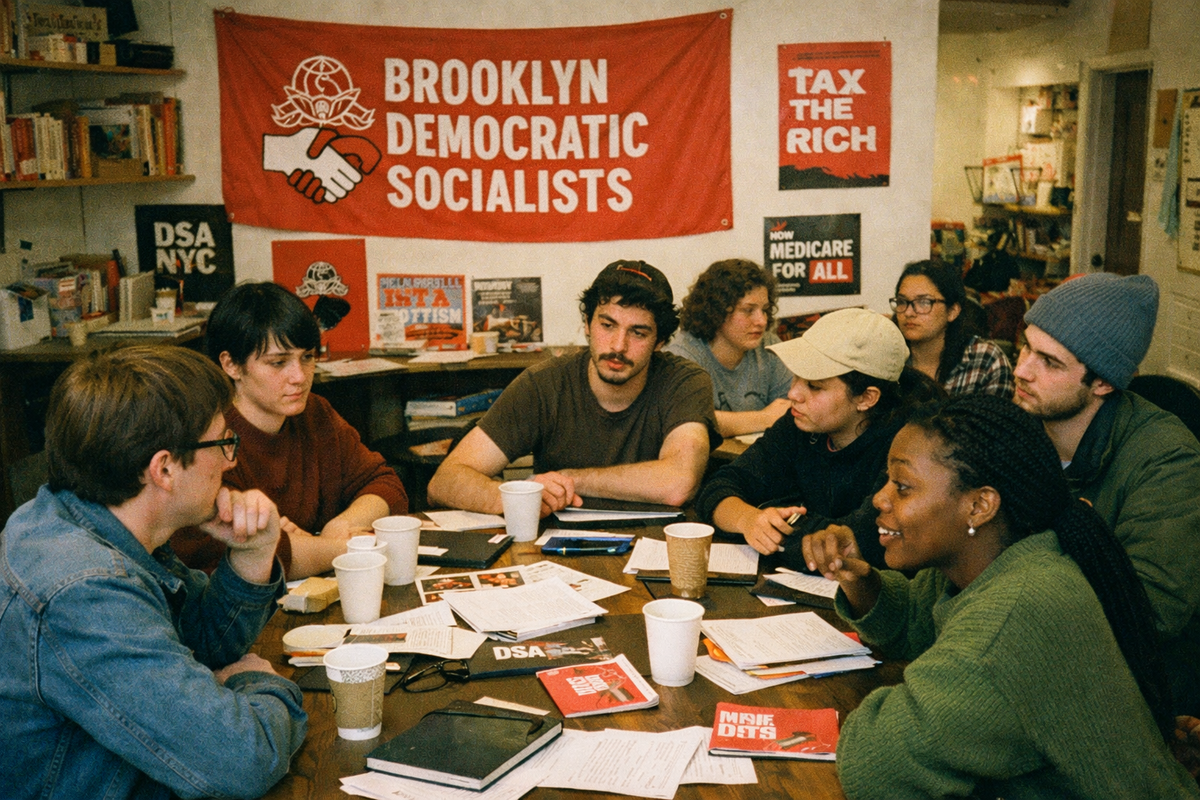
Newsweek dropped a bombshell Monday that deserves more attention than it got. Internal meeting minutes obtained by the outlet show members of New York City Mayor Zohran Mamdani's Democratic Socialists of America spent years cultivating direct relationships with Chinese Communist Party officials—complete with trips to Party schools in Guizhou, detailed itineraries crafted to "interface" with Beijing, and strategic advice from Code Pink activists about avoiding topics that make the Chinese government uncomfortable.
The documents span 2021 through August 2025. They show a pattern that should concern anyone who cares about foreign influence in American politics, regardless of ideology.

Follow the organizational chart. Mamdani took office January 1, 2026, as the nation's biggest city's first Muslim mayor. NYC-DSA describes itself as "Zohran's political home" and credits his mayoral victory directly to their grassroots organization. While Mamdani himself never appeared in the leaked meeting minutes and has distanced himself from elements of DSA's national platform, the organization's China Working Group was busy building bridges to Beijing throughout his rise.
The financial and organizational threads here matter more than the personalities.
Code Pink co-founder Jodie Evans appears repeatedly in the minutes, briefing DSA's China Working Group on messaging strategy. Her advice in June 2023: "Stay out of the weeds. Focus on points that are easier to sell." Translation: don't talk about Taiwan. Don't mention the Hong Kong crackdown. Skip Xinjiang. One DSA member praised this approach explicitly: "They don't get caught up in One China or Xinjiang or Hong Kong. It's good rhetorically."
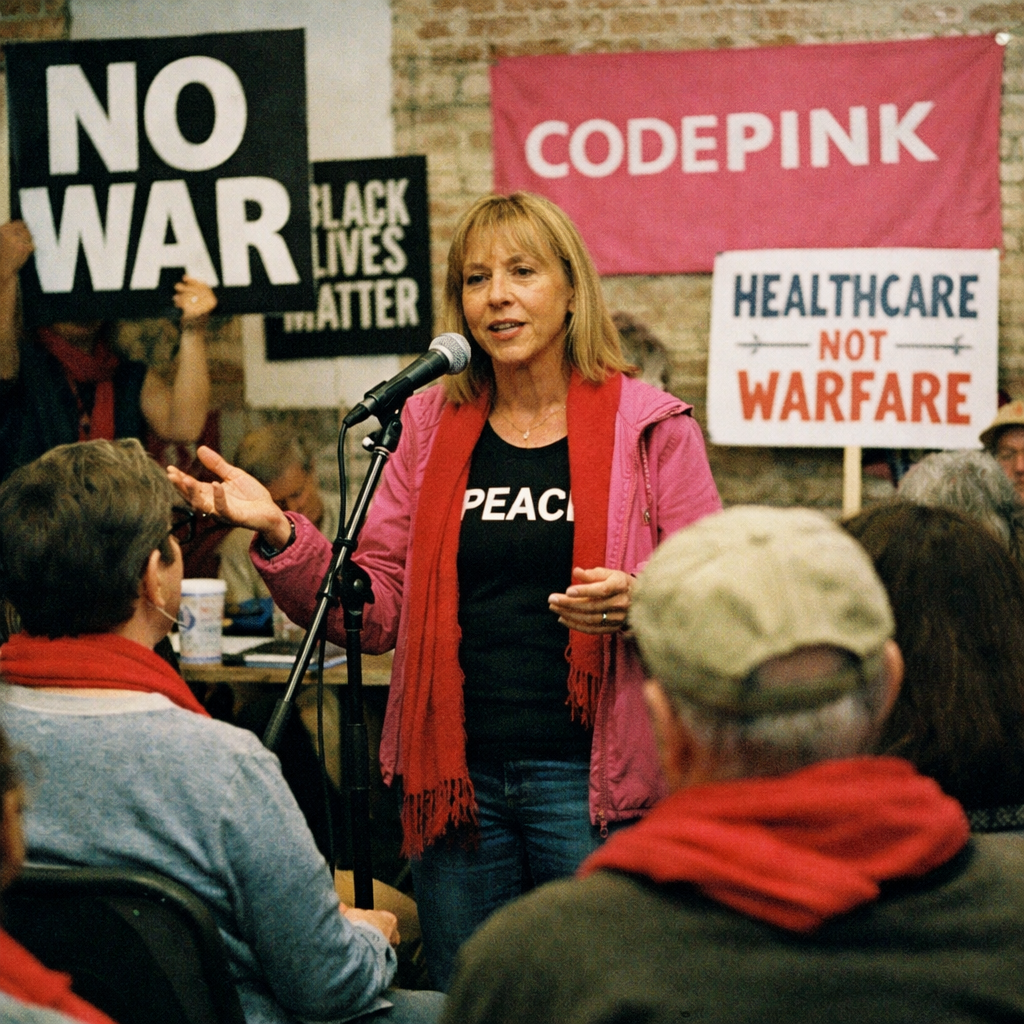
Evans knows her audience. Since marrying tech millionaire Neville Roy Singham in 2017, Code Pink shifted from criticizing China's human rights record to defending it. The organization launched its "China Is Not Our Enemy" campaign in 2020. Congressional investigators and the New York Times documented that Singham—who now works from Shanghai—has funneled at least $275 million through a web of nonprofits to groups that "mix progressive advocacy with Chinese government talking points."
Code Pink received over $1.4 million from Singham-linked sources between 2017 and 2022, representing roughly 25 percent of its total funding. The timing matters. Before 2017, Evans tweeted demands that China "stop brutal repression of their women's human rights defenders." After 2017, she described China as "a defender of the oppressed and a model for economic growth without slavery or war."
That's not ideological evolution. That's a business model.
The People's Forum—a Manhattan event space that received over $20.4 million from Singham between 2017 and 2022—shows up in the influence architecture too. The Forum hosted a September 2021 event titled "China and the Left: A Socialist Forum," co-sponsored by Code Pink and featuring Qiao Collective, a diaspora Chinese group that routinely amplifies Beijing's narratives. DSA International Committee members attended. The meeting minutes reference these connections repeatedly.
Mamdani ran as a Democrat like a cuckoo bird: never to belong, only to take over. The DSA said it plainly:
— Canary Mission (@canarymission) January 2, 2026
"We hate the Democratic Party”
“We need to orient ourselves toward insurrection”
"We need to take that Empire (America) down from within"
Our warning still stands: this… pic.twitter.com/N9p1VkSEaz
The August 2025 Guizhou trip crystallizes how this works. DSA members visited the Communist Party School there, hosted by CCP officials and the provincial foreign affairs department. Party officials encouraged them to establish "official exchanges." The visitors attended seminars on poverty alleviation programs that critics describe as surveillance mechanisms. One photo caption in the meeting slideshow shows a mechanical cotton harvester in Xinjiang with the parenthetical note: "(No slaves!!)"
That's propaganda laundering through activist tourism.
The minutes also document a 2023 visit to Xinjiang, apparently designed to counter UN human rights experts who've described China's detention network there as brutalization camps. One slideshow photo shows a Uyghur woman with the caption: "Our visit to Xinjiang was very revealing! A young woman we met in the Bazaar spoke near-perfect English. She told us she learned it in a training school." Another image of Id Kah Mosque in Kashgar notes worshippers "come and go freely."
These aren't independent observations. They're scripted talking points, the kind Beijing provides to visiting delegations willing to see what they're shown.
DSA's China Working Group also discussed building ties with Shanghai-based websites China Academy and Wave Media, both connected to pro-CCP media networks. Meeting minutes from October 2025 show one activist explaining: "China wants to interface with the DSA. If we develop a killer two-week itinerary, hire locals, and develop further connections with the CPC, then we're golden."
Not everyone in DSA bought the program. One member whose name was redacted pushed back in the minutes: "Saying we can't talk about their rights until we defeat American imperialism doesn't work for me." That member was told their approach was "unkind" and urged to "have conversation that encourages debate." They apologized.
That's how influence operations police dissent—not through direct control but through social pressure wrapped in anti-imperialist rhetoric.
The institutional design here deserves scrutiny. DSA operates through an International Committee with regional working groups. These groups help set organizational policy and advise leadership. The China Working Group, led by member Anlin Wang, functions as a policy shop. Wang didn't respond to Newsweek's request for comment through the International Committee.
Friends of Socialist China—a Britain-based organization that coordinates with DSA members—appears throughout the meeting minutes. The group openly lists DSA International Committee members on its advisory board, including Dee Knight who serves on DSA's East Asia and Anti-War subcommittees. Friends of Socialist China organized multiple delegations to China featuring DSA members, Workers World Party activists, and Qiao Collective representatives.
These aren't random encounters. They're coordinated network-building exercises.
The Chinese Embassy in Washington offered a careful non-denial when asked about DSA-CCP contacts. Spokesperson Liu Pengyu told Newsweek: "Local exchanges and cooperation are the important component of China-U.S. relations, serving as the foundation, vitality, and source of strength for the relations between the two countries."
2025 was the year Mamdani’s campaign was outed by @lsarsour as being bought and paid for by @CAIRNational, exposing their deep ties to the DSA. pic.twitter.com/jyKjreCFi3
— Canary Mission (@canarymission) December 31, 2025
That's diplomatic speak for "yes, and we think it's productive."
The pattern here mirrors classic influence operations. Beijing doesn't need to recruit agents or pay people directly. It cultivates relationships with ideologically sympathetic organizations, funds their operational infrastructure through cut-out donors, and provides access to Chinese officials and curated site visits. The target organizations then advocate positions that align with Chinese government interests—often genuinely believing they're advancing anti-imperialism rather than serving Beijing's strategic goals.
Several DSA members interviewed by Newsweek expressed discomfort with the trajectory. One who shared the meeting minutes anonymously said they were troubled by "efforts to avoid discussing controversial issues" and uncomfortable with the Communist Party links. That member described the documents as showing "a sustained pattern of ideological alignment, narrative filtering, and network overlap consistent with influence conducted at the discursive and organizational level."
Translation: this looks like influence operations, even if nobody signed FARA paperwork.
The regulatory gap here is significant. Foreign Agents Registration Act requirements only trigger when someone acts "at the order, request, or under the direction or control" of a foreign principal. Influence operations that work through ideological alignment and institutional cultivation can operate outside FARA's scope. Senators Tom Cotton and Chuck Grassley have called for investigations into whether Code Pink and The People's Forum should register under FARA, but proving legal threshold for "direction or control" is difficult when the relationship operates through shared ideology and financial intermediaries.
Mamdani's administration hasn't commented on any of this. Neither has NYC-DSA or the DSA International Committee. Their silence is strategic—why engage when the story hasn't penetrated mainstream Democratic politics yet?
But the infrastructure matters more than one mayor's connections. DSA membership peaked at 92,000 in 2021 and stood at 64,000 in October 2024. The organization plays a significant role in progressive politics nationwide, having endorsed dozens of candidates for Congress and state legislatures. Its foreign policy positions—shaped partly through committees like the China Working Group—influence a generation of left activists.
🚨 DSA IC’s Mirah Wood Goes Full Tankie on a Podcast: October 7 “Shot Into the Heart of Empire,” the “Tenderness” of “Resistance Fighters,” and Sabotage “From Within”
— Stu Smith (@thestustustudio) January 12, 2026
Here is DSA International Committee’s Mirah Wood on a podcast doing tankie group-therapy politics out loud,… pic.twitter.com/FEvYxBgtaz
Beijing understands this. Cultivating relationships with rising political movements is a long-term investment. Whether Mamdani himself ever engaged with the China Working Group's activities is less important than understanding that the organization he calls his "political home" spent years building institutional ties to Chinese Communist Party officials, often with advice from activists whose funding traces back to a Shanghai-based tech millionaire.
The who-benefits question here is straightforward. Beijing benefits from American progressive organizations that amplify its talking points on Xinjiang, Hong Kong, Taiwan, and Chinese economic policy. Organizations like Code Pink benefit from Singham's funding. DSA members benefit from access to Chinese officials and curated trips that provide content for anti-imperialist advocacy. And Chinese government institutions benefit from American activists who frame criticism of Beijing as manufactured propaganda rather than documented human rights concerns.
What gets lost in this exchange system is space for the kind of principled internationalism that could criticize both American militarism and Chinese authoritarianism without serving either power. That used to be the left's comparative advantage. Now it's increasingly rare.
The anonymous DSA member who shared the meeting minutes told Newsweek: "This isn't what I signed up for and I imagine it's not what a majority of members signed up for. There's no way you can be a part of the organization and promote the things they're doing."
That member is probably right about DSA's broader membership. Most socialists joining to fight for housing justice or Medicare for All aren't thinking about CCP influence operations. They're focused on domestic politics. But organizations accumulate institutional positions through committee work and leadership decisions, not membership-wide votes on every foreign policy question.
The real accountability mechanism here isn't legal. It's political. Democratic voters who supported Mamdani and progressive candidates endorsed by DSA deserve to know how their political organizations approach foreign influence. NYC has the largest Chinese population of any city outside China. Beijing has long sought to shape the city's politics through business groups, cultural organizations, and political donations. Newsweek has documented this extensively.
Understanding how American political organizations—particularly those on the rise like DSA—navigate these influence networks matters for democratic accountability. Sunlight is the best disinfectant, as Justice Brandeis wrote. These meeting minutes provide sunlight. What happens next depends on whether progressive voters and DSA members demand better from their organizations, or whether the institutional momentum toward Beijing-friendly positions continues undisturbed.
The infrastructure is already built. The question is whether it gets challenged from within.
Foreign influence in American politics doesn't always look like spy novels. Sometimes it's activist organizations building relationships, funders creating dependency, and ideology masking institutional capture.
If you care about democratic accountability, demand transparency from your political organizations. Ask who funds them.