The House Investigated This Nonprofit. Then Its CEO Joined Mamdani's Team. What Happened?

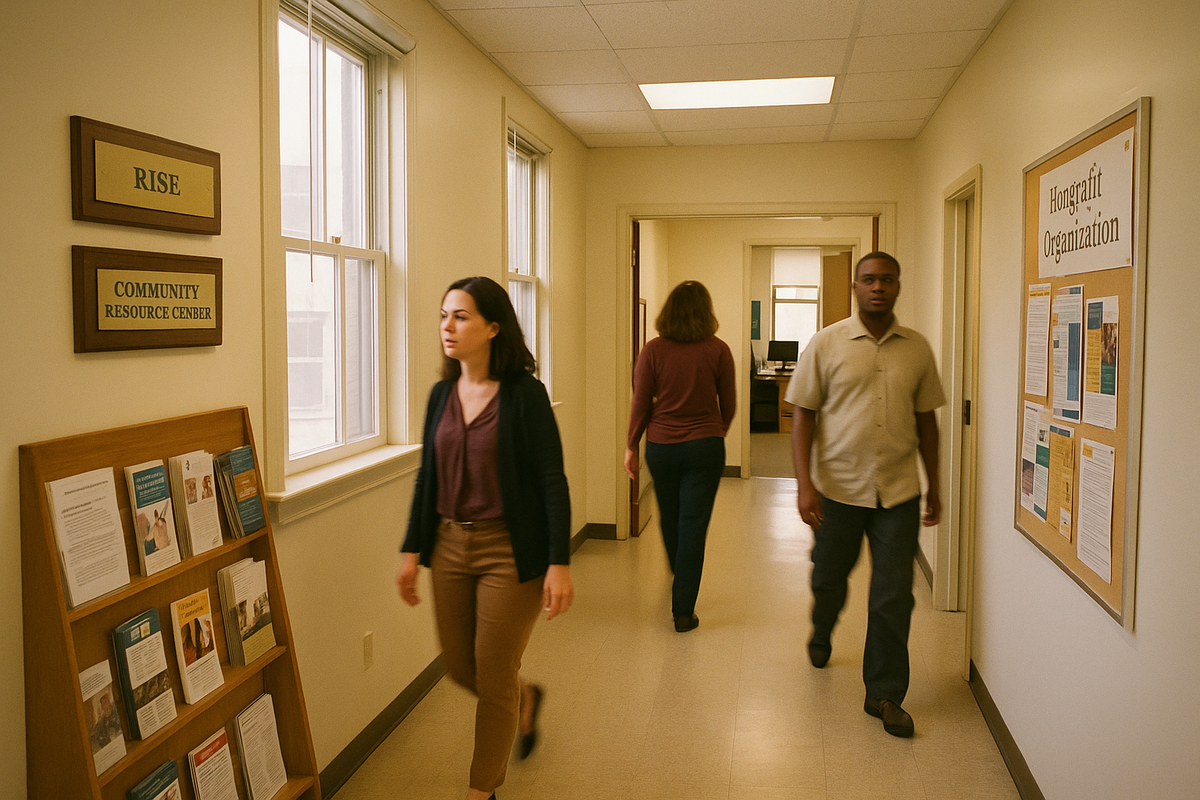
On April 14, 2025, the House Committee on Homeland Security sent Wayne Ho a letter. This was not a congratulatory note. The committee, then chaired by Mark Green (R-TN), was investigating his organization, the Chinese-American Planning Council. The investigation had been opened nine days earlier, sparked by an undercover video released by The Oversight Project showing Carlyn Cowen, CPC's Chief Policy and Public Affairs Officer, conducting what appeared to be a training on how to avoid Immigration and Customs Enforcement officers. The committee requested documents. It requested financial records. It requested anything relating to CPC's work on immigration.
This investigation continued. When Andrew Garbarino took over as committee chairman in July, the probe did not stop. It merely shifted to a lower frequency. Staff confirmed it was ongoing. The committee had asked for a full accounting of how a nonprofit that received taxpayer funds since 2022 had spent those funds, and whether any had been diverted toward the work that triggered the investigation in the first place.
Seven months later, in November, Zohran Mamdani won the New York City mayoral election. Two weeks after his victory, he announced his transition committees. Four hundred and two people appointed to seventeen advisory councils, each designed to shape hiring and policy for his incoming administration.
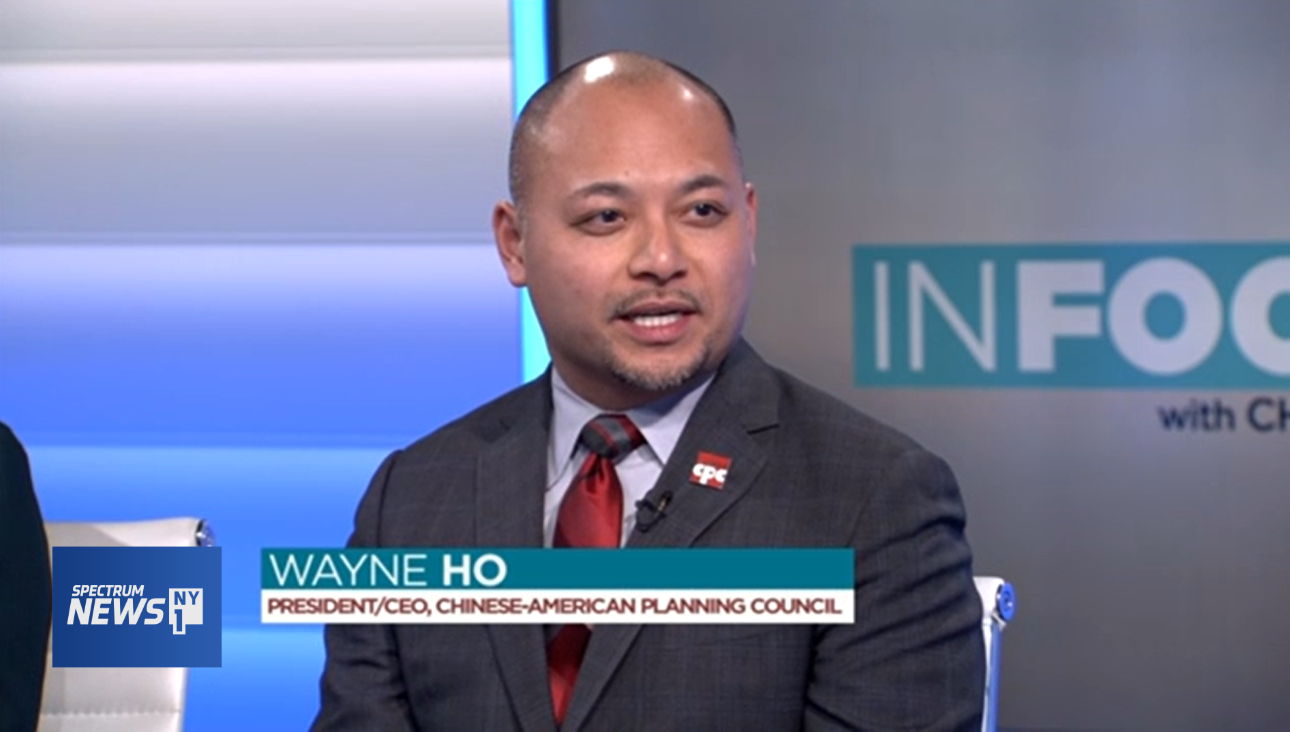
One of those appointed was Wayne Ho, named to the Committee on Social Services.
The timing is not hidden. The sequence is not obscure. What is absent is anyone asking, directly and publicly, whether an individual whose organization is the subject of an active federal investigation should be advising an incoming mayor on social services policy.
This is not a question of corruption or illegality. No one has alleged either. This is a question of networks, of how federal scrutiny operates alongside political advancement, of what it means when an investigation into an organization neither stops nor apparently influences the prominence of that organization's leader.
The financial trails are specific. They are not theoretical.
In April, the House Homeland Security Committee noted that CPC had received $1,453,070.20 in federal grants between January 2022 and January 2025. Public records showed CPC received at least $925,929.69 of that total. The organization operates with roughly 55 percent of its revenue coming from government grants, according to committee documents.
These were taxpayer dollars. This fact mattered to the committee because the investigation had centered on whether those taxpayer dollars were being used to facilitate the work shown in the undercover video.
But there was another funding stream. In May, the Daily Caller News Foundation published an investigation documenting that CPC had received approximately $445,969 in donations from sources with ties to the Chinese government since 2018. This was not speculation. These were documented transactions from CPC's annual reports and financial filings.
The Bank of China, a state-owned enterprise, donated as much as $9,999 to CPC in 2020 and again in 2024. The Industrial and Commercial Bank of China, another state enterprise, contributed as much as $19,997 across 2018, 2019, and 2023. The Bank of East Asia, a Hong Kong-based institution, had given amounts reaching $45,000. The Charles B. Wang Community Health Center, which had documented connections to the Chinese Communist Party's United Front apparatus, also contributed.
These transactions appeared on CPC's annual reports, the public filing documents that nonprofits submit to maintain tax-exempt status. They were not hidden. They were not secret. They were, however, not the subject of wide public discussion when Wayne Ho was appointed to Mamdani's transition committee. The connection between the funding source and the organization's leadership was simply not mentioned in the press coverage of the appointments.
CPC's self-description is straightforward. The organization presents itself as the nation's largest Asian-American social services provider. It runs early childhood programs, senior services, workforce development, housing assistance, and legal navigation services. Its mission is service delivery to Chinese-American, immigrant, and low-income communities in New York City. The organization has been operating since 1965. The scale is real: CPC serves over 280,000 community members annually across 35 locations.
This narrative is not false. It is incomplete, but it is not false.
The March 8, 2025 seminar where Carlyn Cowen was filmed was described by CPC and its supporters as a "know-your-rights" training. This is technically accurate. Legal advocates have long offered such trainings to immigrant communities, explaining their rights if stopped by immigration officials. The specifics matter. The video showed Cowen discussing strategies like "hardening your physical space," "identifying a list of individuals authorized to respond if ICE comes to the door," and "not open the door at all."
Supporters of CPC characterized the investigation as political targeting. Representatives from CPC declined to comment publicly. Democratic legislators called the investigation intimidation. Democratic politicians said it was proof of an administration's intent to suppress immigrant advocacy.
All of this was presented as the narrative. Service organization provides legal training. Republicans investigate. Democrats defend. The cycle completed itself.
What was not presented, because nobody assembled it into a single narrative, was the full network. The federal investigation. The specific federal funds flowing to the organization. The documented funding from Chinese state enterprises. The appointment of the organization's CEO to advise an incoming mayor on social services, while that investigation remained active. The fact that no one asked questions about this sequence.
The narratives that operate in political space are often designed to prevent the assembly of such sequences.
Wayne Ho has been CPC's president and CEO since 2017. Before that, he held leadership positions at the Federation of Protestant Welfare Agencies and the Coalition for Asian American Children and Families. His background is in social services leadership and nonprofit management. He holds degrees from UC Berkeley and Harvard Kennedy School. He has taught at NYU. He was recognized by City and State as a 40 Under 40 rising star in 2014.
He is not a minor figure. He runs an $80 million organization with a $200 million subsidiary operation. He speaks for the organization publicly. He represents it before city government and state government. He has been appointed to several municipal advisory boards over the years. He sits on boards including Coro New York Leadership Center.
When the House Homeland Security Committee investigation opened, Ho's name appeared on official letters. When federal grant documentation was compiled, his signature appeared on financial reports. When CPC's annual reports documented foreign donations, Ho's organization had accepted them. When an IRS complaint was filed against CPC by the Center to Advance Security in America questioning the nonprofit's tax-exempt status, Ho was the person whose organization was the subject.
Seven months later, he was named to an advisory committee that will influence personnel appointments and policy development for a city with eight million people.
This is not corruption. This is not necessarily even a problem. What it is, precisely, is an example of how networks operate. Federal scrutiny of an organization does not automatically disqualify its leader from future advisory roles. Congressional investigations do not prevent people from serving on transition committees. There is no rule requiring it.
What there should be is acknowledgment. When the House of Representatives is investigating an organization, and that organization's CEO is then appointed to advise an incoming mayor on the policy area most directly implicated in that investigation, someone should say this out loud. Someone should ask whether the investigation has concluded. Someone should ask whether Ho was consulted during the investigation. Someone should ask whether the investigation influenced or will influence the transition work.
Nobody did.
As of December 8, 2025, the House Homeland Security Committee investigation into CPC continues. According to committee staff, it is ongoing. No findings have been released. No conclusions have been announced.
The IRS complaint filed by the Center to Advance Security in America in June 2025 has not resulted in any public action from the Internal Revenue Service. The complaint questioned CPC's tax-exempt status based on allegations about coaching illegal immigrants and accepting foreign funding. No determination has been announced.
The federal grants to CPC have continued to flow, though at what rate under a new administration has not been documented in the public record.

Wayne Ho is on Mamdani's Committee on Social Services. His role is to advise on personnel and policy. This is known. What is not known is whether he was asked about the federal investigation. Whether he was asked about the Chinese government funding. Whether Mamdani's transition team conducted any independent review of the investigation before making the appointment.
These are not accusations. These are gaps. They are places where information is missing from the public record.
The networks that matter are the ones that move people from investigation to advancement without those two things being forced into relation with each other. The networks that matter are the ones where a federal investigation of an organization and the appointment of that organization's CEO to advise a mayor can happen within seven months of each other and nobody connects them.
This is what the networks do. They prevent the assembly of sequence into narrative. They prevent questions from being asked.
The questions remain unasked. The networks continue operating.