The Bureaucracy That Builds Predators
The Machine That Builds Predators How Albany's bail laws manufactured a Saturday subway rampage in Brooklyn


The Machine That Builds Predators How Albany's bail laws manufactured a Saturday subway rampage in Brooklyn
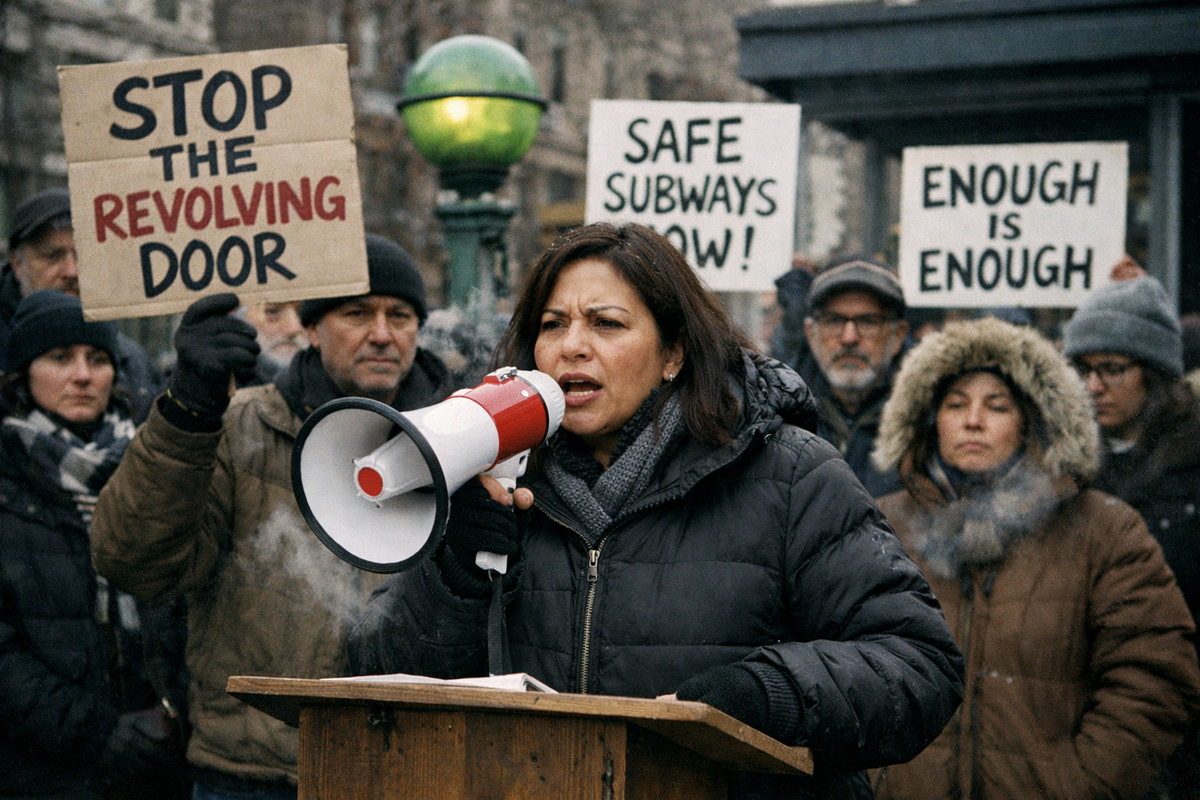
On Saturday morning, a 51-year-old woman was pushed onto the subway tracks at 53rd Street and Fourth Avenue in Sunset Park, Brooklyn. She hit the rails face-first, sustaining a laceration and substantial pain across her body. The man who shoved her then turned and punched a 44-year-old woman in the face, causing visible swelling. As he fled the station, he encountered a 17-year-old girl trying to get out of his way. He asked her, "Are you a gangster?" Then he punched her, as prosecutors put it, "dead in the face."
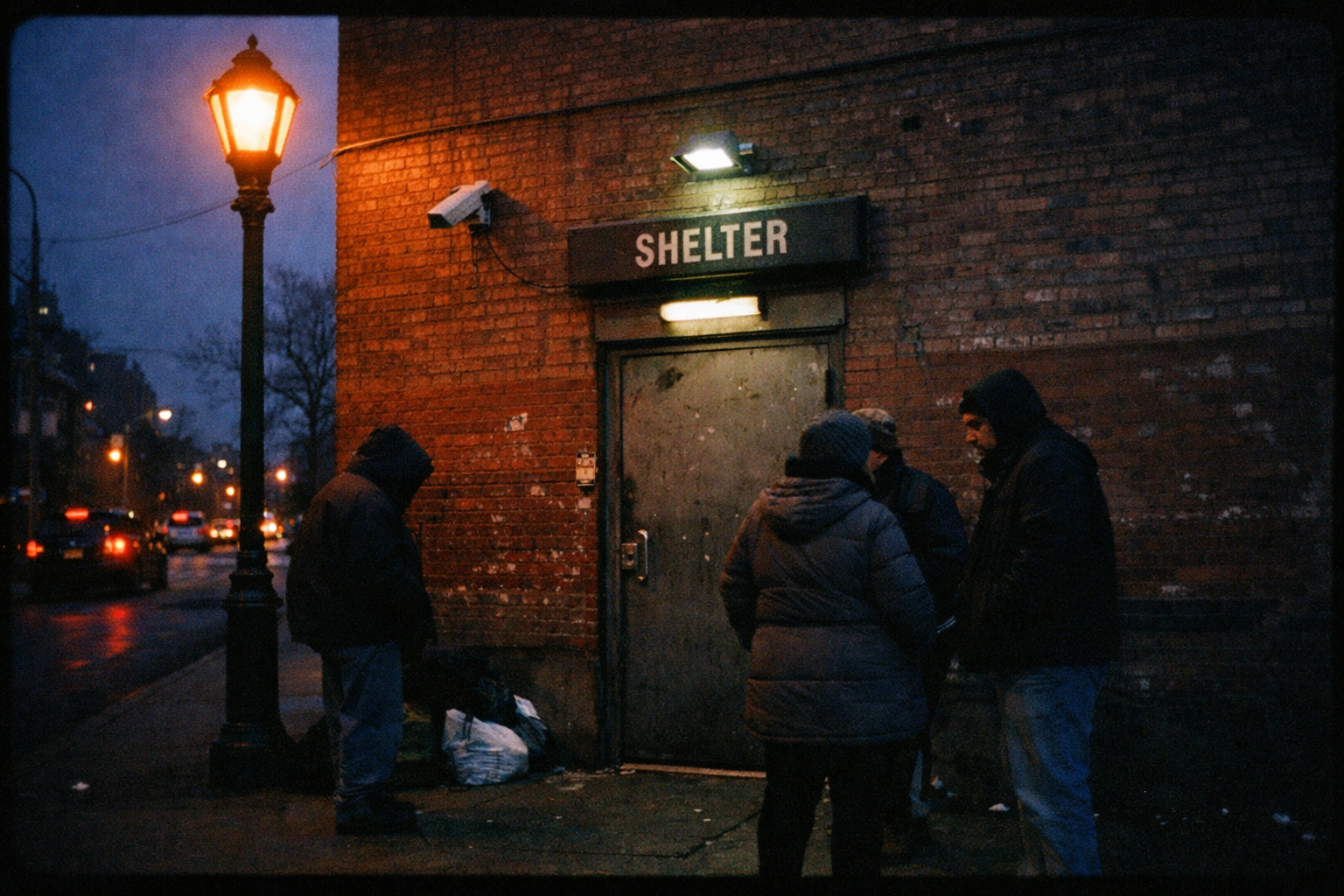
The attacker, a 25-year-old man, was arrested later at a shelter. He told officers he "did what he had to do." He said "people want to fight for no reason" and that he "always has to stand up" for himself. He was charged with attempted second-degree murder, first-degree attempted assault, second-degree reckless endangerment, and criminal possession of a weapon. A Brooklyn Criminal Court judge ordered him held without bail as a flight risk.
This is the story the press has reported. But the real story is the one that begins years earlier, in the administrative decisions, policy frameworks, and institutional failures that made Saturday's attack not just possible but predictable.
Multiple people pushed onto the subway tracks in Brooklyn (NY) by a maniac with over (50) arrests
— @Chicago1Ray 🇺🇸 (@Chicago1Ray) February 15, 2026
This, after Kathy Hochul declaring the Subways are the safest in the country... and concerns New Yorkers now have whether Mamdani is capable of governing the country's biggest city pic.twitter.com/DgiBJ0cJoT
The accused is a repeat transit offender currently on probation until June 2027. Consider his documented history:
In 2022, he allegedly beat a 31-year-old woman at a Queens doctor's office. That same year, he allegedly struck his own 13-year-old sister hard enough to leave her with a black eye. In 2023, he allegedly punched a 67-year-old woman waiting for an F train at 169th Street in Jamaica, Queens. That victim told the New York Post this week that the experience was "so traumatic I can't talk about it." Also in 2023, he allegedly punched a police officer inside a Bronx subway station.
Every single one of these incidents preceded Saturday's rampage. Every single one involved violence against another person. And yet, somehow, this man was on the street, in a shelter, free to board the R train and target three more women and a teenage girl.
The question that demands answering is not "who did this?" Police answered that within hours. The question is: who allowed this to happen?
New York's criminal justice apparatus is not broken. It is functioning precisely as designed by the legislative architects in Albany who built it.
When New York passed its sweeping bail reform in 2019, the stated goal was to prevent low-income defendants from languishing in pretrial detention for minor offenses. That was a legitimate concern. But the legislation did something far more consequential: it stripped judges of the ability to consider whether a defendant poses a danger to the public when setting bail. New York remains the only state in the country where judges cannot weigh public safety risk in bail decisions.
The statute is explicit. Under CPL § 510.30, bail determinations must be based solely on whether the defendant will return to court. Not on their history of violence. Not on the pattern of escalation visible in their record. Not on the probability that they will harm someone again. Only on flight risk.
Subsequent amendments in 2020 and 2022 expanded the list of bail-eligible offenses. Governor Hochul pushed through provisions allowing bail for defendants on probation who commit new felonies. These were steps in the right direction. But they did not address the core structural deficiency: the prohibition on dangerousness as a factor in pretrial release.
The results are visible in the data. Violent crime recidivism in the subway system has doubled since 2019, according to analysis from Vital City. Among the most frequent subway offenders in 2023, 80% had documented mental health issues, and nearly 90% had a history of homelessness. Subway assaults have tripled since 2009.
New York City's conviction rate tells the rest of the story. Just 36% of felony arrests lead to convictions, compared to 80% statewide. For misdemeanors, the city convicts at a rate of 21%, versus 69% in the rest of New York. Only 27% of all arrests in the city result in a conviction.
Read those numbers again. Nearly three out of four arrests in New York City produce no conviction. The system is not failing to deter violence. It is actively communicating to violent offenders that there are no consequences.
NYPD's Own Repeat Offender Data
A 2023 NYPD analysis revealed that 327 individuals were arrested more than 6,000 times over just two years and were repeatedly released under current law.
The accused attacker's trajectory follows a textbook escalation pattern that criminologists have studied for decades. Violence against a family member (his 13-year-old sister). Violence against a stranger in a contained setting (the doctor's office). Violence against an elderly woman in the transit system. Violence against a law enforcement officer. Then, finally, a multi-victim rampage targeting three women and a teenage girl.
At every stage, the system had an opportunity to intervene. At every stage, it chose not to.
This is not an argument against bail reform in principle. It is an argument against a specific policy design that treats public safety as an externality rather than a core function of the justice system. Twenty-five-year-old men who punch 67-year-old women on subway platforms and then assault police officers are not low-risk defendants awaiting trial for petty theft. They are signaling, loudly and repeatedly, that they will continue harming people until someone stops them.
Nobody stopped him. Not until three more women and a teenage girl paid the price.
When Mayor Adams raised alarms about repeat offenders exploiting the system, he cited staggering examples: one individual arrested 57 times since 2020, another with 87 arrests, including 25 since 2020, and another with 48 career arrests and 10 open warrants. The NYPD called it a "revolving door of injustice."
Governor Hochul has committed $154 million to enhanced NYPD subway patrols through 2026 and to installing platform barriers at 115 stations. These are real investments. But they address symptoms, not the underlying pathology. You can put a thousand officers on subway platforms. If the courts release violent recidivists within hours of arrest, and if prosecutors secure convictions in barely a quarter of cases, those officers are running on a treadmill.
The FTA's own senior advisor wrote it plainly: felony assaults in the subway rose more than 53% from 2019 to 2024, climbing from 374 incidents to 573. The agency noted that crimes haven't disappeared, they've been "redefined," and that dangerous offenders aren't being stopped, they're "being released under laws Albany passed."
Meanwhile, 92 subway attacks on NYPD members were recorded in 2025 alone, along with 32 on MTA workers and a 12% spike in assaults on elderly riders.
The fix is not complicated. It requires political will, not policy innovation.
First, New York must join the other 49 states and the federal system in allowing judges to consider dangerousness when setting bail. The current prohibition is an ideological artifact that costs real people their safety. The PROTECT Act, currently championed by State Senator Pam Helming, would give judges authority to detain individuals deemed likely to commit violent crimes if released. It should be passed immediately.
Second, the city's prosecutors must be held accountable for a 27% overall conviction rate that has become a green light for repeat offenders. The gap between New York City's conviction rate and the rest of the state's is not a data anomaly. It is an institutional choice.
Third, probation supervision for violent offenders must include real monitoring, real consequences for violations, and real intervention before the next attack. Being "on probation until June 2027" meant nothing to the three women and the teenager assaulted on Saturday.
A 51-year-old woman was thrown onto train tracks. A 44-year-old woman was punched in the face. A 17-year-old girl, trying to get out of the way, was asked if she was "a gangster" and then struck. These are not statistics. These are people whose bodies absorbed the consequences of policy decisions made in Albany conference rooms.
The machine built the predator. The machine set him loose. The machine will do it again unless someone dismantles the specific components that keep producing this outcome.
The only question is whether anyone in power has the courage to act before the next Saturday morning.
The Unredacted follows the money, the records, and the policy decisions that put New Yorkers at risk. If you believe accountability journalism matters, subscribe. Share this piece with someone who rides the subway. Every new reader strengthens our ability to hold the powerful accountable.
Subscribe free. Upgrade to support the work.
The Unredacted covers institutional failures, hidden networks, and the money trails behind New York City's power structures. This article relies on court records, NYPD data, MTA statistics, Vital City analysis, Brennan Center research, and reporting by the New York Post.
Disclosures: The Unredacted is an independent investigative publication. No party, campaign, officeholder, or law enforcement agency funded or reviewed this article prior to publication. The author holds no financial interest in any company or organization referenced herein. The accused has not been convicted; all allegations cited reflect prosecutor statements made during public arraignment proceedings.are based on statements made by the prosecutor