The Democratic Socialists of America are poised to remake the Democratic Party in their image. Their program is nothing less than an anti-American subversion campaign. Like all good Marxists, they believe their revolution is imminent.
The revolution has arrived in New York City, and it speaks the language of Nordic social democracy while plotting the overthrow of American capitalism.
Zohran Mamdani's ascension to Gracie Mansion represents something far more significant than another progressive politician winning office in a Democratic stronghold. It marks the successful culmination of a decades-long strategy by the Democratic Socialists of America to capture institutional power—not through violent insurrection, but through patient infiltration of the Democratic Party apparatus. What Tal Fortgang has documented in his essential National Review investigation is nothing less than a roadmap of how revolutionary movements operate in twenty-first century America.
The DSA has mastered the art of ideological camouflage. When Governor Kathy Hochul endorsed Mamdani, she described his socialism as merely wanting "a New York where children can grow up safe in their neighborhoods and where opportunity is within reach for every family." The New York Times ran interference with reassuring explainers about how democratic socialism is "closer to social democrats—a common ideology in Europe." Barack Obama offered his benediction with a phone call. The message was clear: democratic socialism is just progressivism with better healthcare and stronger unions.
This is a lie.
Fortgang's reporting cuts through the media spin to reveal what the DSA actually believes, as stated in their own platforms and expressed by their own leadership. The 2021 convention platform doesn't mince words: "In overcoming the old, barbaric order of capitalism, the working class will not only liberate itself from its own shackles, but all of humanity from the parasitic death-drive of capitalism." This isn't the language of Scandinavian technocrats managing a mixed economy. It's the rhetoric of revolutionary Marxism.
The organizational structure tells the story the mainstream media refuses to acknowledge. The DSA's National Political Committee—their ruling body—is now controlled by what founding member Maurice Isserman calls "entryists," openly Marxist-Leninist cadres who have successfully executed a takeover of the organization. National co-chairwoman Megan Romer proudly identifies as a member of the Red Star Caucus, a Marxist-Leninist faction that explicitly rejects reforming capitalism and demands its complete overthrow. "Socialist countries are not our enemy, U.S. imperialism is," their platform declares.
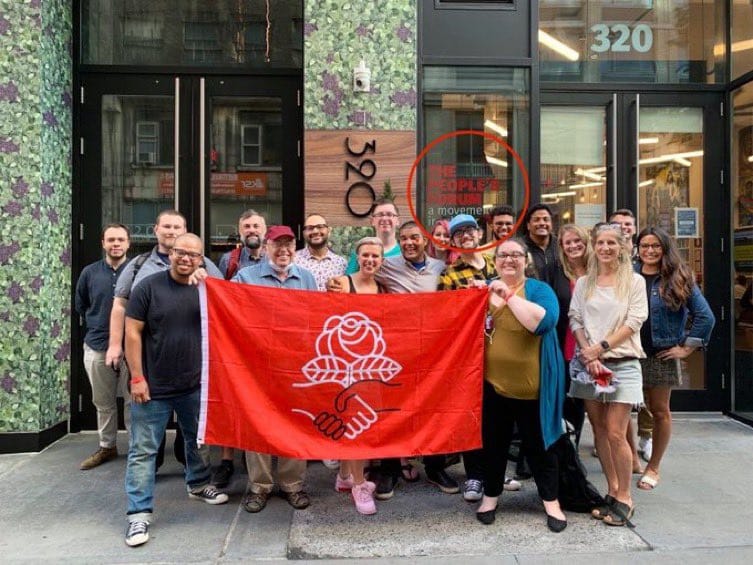
You can see Valdes in the turquoise shirt helping hold the DSA flag in Cuba. In the other photo, he’s standing alongside Zohran Mamdani.
The DSA’s standard fallback is to wave this away as “just a random organizer.” This is a national DSA leader saying these things, on the… pic.twitter.com/uhesYw0kJS
This matters because Mamdani is now staffing his administration with personnel drawn from this milieu. The rhetoric about Norwegian-style governance dissolves when you examine who actually holds power within the DSA and what they actually believe. These are not wonks debating marginal tax rates and healthcare delivery models. They are revolutionaries who view the American constitutional order as an impediment to be dismantled.
The DSA's platform makes explicit what its media allies try to obscure: they seek to abolish the Senate and Electoral College, extend voting rights to non-citizens, demilitarize the police, end prosecutions for all misdemeanors, and ultimately abolish prisons entirely. This isn't reform. It's regime change through institutional capture.
Here’s a fun photo of Calla Walsh with DSA’s Jorge Rocha. The caption translates to:
“It’s always a pleasure to see Cuban friends at the UN mission and talk about the realities of the imperialist blockade and the media war against Cuba. Long live solidarity between Cuban and… pic.twitter.com/TQ2F57V27x
But Fortgang's most disturbing findings concern the DSA's international allegiances. The organization maintains deep ties to Samidoun, an entity the U.S. government has designated a front for the Popular Front for the Liberation of Palestine—a terrorist organization. Within hours of Hamas's October 7 massacre, NYC-DSA organized a "Free Palestine" rally in Times Square where attendees burned Israeli flags and the demonstration leader celebrated murdered "hipsters" at a desert rave. DSA member Russell Rickford, a Cornell professor, called October 7 "exhilarating" and "energizing." National co-chairwoman Romer declared that the DSA does "not, in fact, condemn Hamas."
This isn't youthful radicalism or rhetorical excess. It's alignment with terrorism as revolutionary praxis.
The pattern extends globally. The DSA is a member of Progressive International, led by Neville Roy Singham, a centimillionaire Maoist who, according to the New York Times, "works closely with the Chinese government media machine and is financing its propaganda worldwide." The DSA's International Committee maintains "Cuba Solidarity" efforts that appear to violate the Foreign Agents Registration Act, sending delegations to deliver "solidarity aid" and advocating for removing Cuba from the State Sponsors of Terrorism list. When Venezuelan dictator Nicolás Maduro was arrested, the DSA demanded his release. When the U.S. bombed Iran's nuclear facilities, the DSA affirmed "Iran's right to self-defense."
🚨 DSA IC’s Mirah Wood Goes Full Tankie on a Podcast: October 7 “Shot Into the Heart of Empire,” the “Tenderness” of “Resistance Fighters,” and Sabotage “From Within”
Here is DSA International Committee’s Mirah Wood on a podcast doing tankie group-therapy politics out loud,… pic.twitter.com/FEvYxBgtaz
This is the organization that Zohran Mamdani has built his political career within. These are the networks that will supply personnel for New York City government.
The DSA's strategy is sophisticated precisely because it operates on multiple levels simultaneously. The electoral candidates moderate their rhetoric and emphasize kitchen-table issues. The organizational apparatus maintains revolutionary commitments and international solidarity with America's adversaries. The media allies provide cover by treating democratic socialism as a legitimate variant of European social democracy rather than what it actually is: a Marxist-Leninist movement pursuing power through democratic means.
Fortgang quotes the DSA's Communist Caucus articulating the strategy with remarkable clarity: "We will seize control of the world that was built through our collective exploitation and domination. All of this we want, yet none can be had exclusively through the ballot box." The ballot box is a tool, not a limitation. Electoral success provides institutional positions from which to advance revolutionary transformation.
This is why Mamdani's victory matters beyond New York City. The DSA has demonstrated that this strategy works. A no-name activist can become a state assemblyman, then capture the mayoralty of America's largest city, all while maintaining ties to an organization that explicitly seeks to overthrow American capitalism, supports designated terrorist organizations, and coordinates with hostile foreign governments. And he can do it with endorsements from the state's Democratic governor and a former Democratic president.
The mechanism of capture is now clear. First, take over the local Democratic Party apparatus through sustained organizing. Second, run candidates who emphasize popular economic issues while downplaying revolutionary commitments. Third, rely on partisan loyalty and media allies to prevent serious scrutiny of the organization's actual beliefs and activities. Fourth, use elected positions to further entrench organizational power and advance the revolutionary program incrementally.
Mamdani himself told the DSA that his victory is "just the beginning of a political movement of and for the working class that can defeat the oligarchy and win the political revolution." This wasn't a slip of the tongue. It's the stated objective.
What makes Fortgang's reporting so valuable is that it relies almost entirely on the DSA's own statements, platforms, and public activities. This isn't speculation about secret conspiracies. It's documentation of an openly revolutionary movement that has successfully convinced mainstream institutions to treat it as within the normal bounds of American politics. The New York Times writes helpful explainers. Democratic governors provide endorsements. And voters who might recoil from the organization's actual commitments never hear about them.
🚨 DSA State Senator Says Trump Is a Terrorist, an Imperialist, and a Kidnapper
A sitting New York State Senator told a DSA audience that Trump is a terrorist kidnapper running an imperial operation to steal oil. That is the rhetoric now coming from inside the DSA ecosystem.… pic.twitter.com/96IEncXZ5k
The DSA's Venceremos Fund—a central fundraising operation—openly states its goal is to "build a war chest" to "support the struggle to dismantle U.S. empire." NPC member Cliff Connolly puts it even more bluntly: "Undermining the genocidal U.S. government is one of the best ways to organize for world peace and prosperity."
New York has elected a mayor whose political organization seeks to dismantle the American constitutional order, maintains active solidarity with designated terrorist groups, coordinates with hostile foreign governments, and explicitly rejects the possibility of working within the existing system. And they've done it while convincing the electorate they just want better healthcare and stronger unions.
The revolution isn't coming. It's here. It just comes dressed in the rhetoric of European social democracy, backed by Democratic Party leaders who should know better, and protected by media institutions that refuse to investigate what the revolutionaries themselves openly declare.
Fortgang has done the essential work of documenting how we arrived at this moment. The question now is whether Americans will recognize the revolutionary vanguard for what it is—or continue to pretend that democratic socialism is just progressivism with Scandinavian characteristics.
Consider yourself warned.
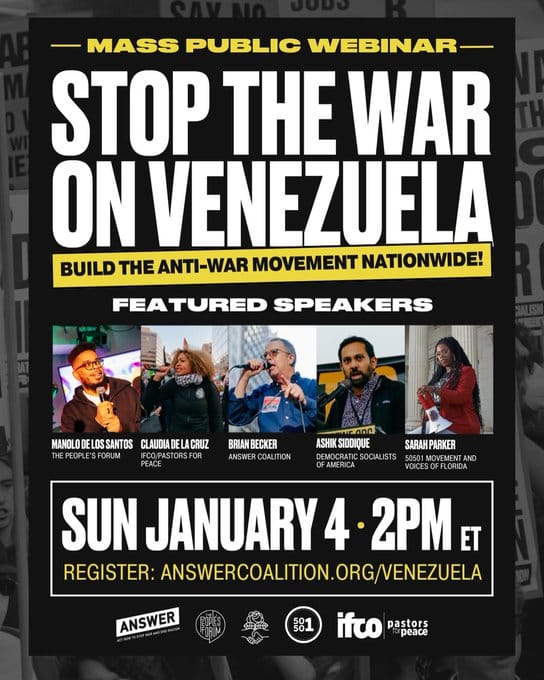
This poster is doing a lot at once. You’ve got DSA and The People’s Forum in the mix, while 50501 and Indivisible are also on the same flyer.
And that’s the coalition math: 50501 and Indivisible are mainstream progressive brands, but they’re still willing to put their logos next… pic.twitter.com/juKbjniKtb