When the City Stops Protecting You: A New Yorker's Field Manual for the Mamdani Era
Under Mayor Mamdani, the public safety architecture of New York has been redesigned around a single principle: the lawbreaker is the constituent, the lawful is the obstacle. New Yorkers should act accordingly.
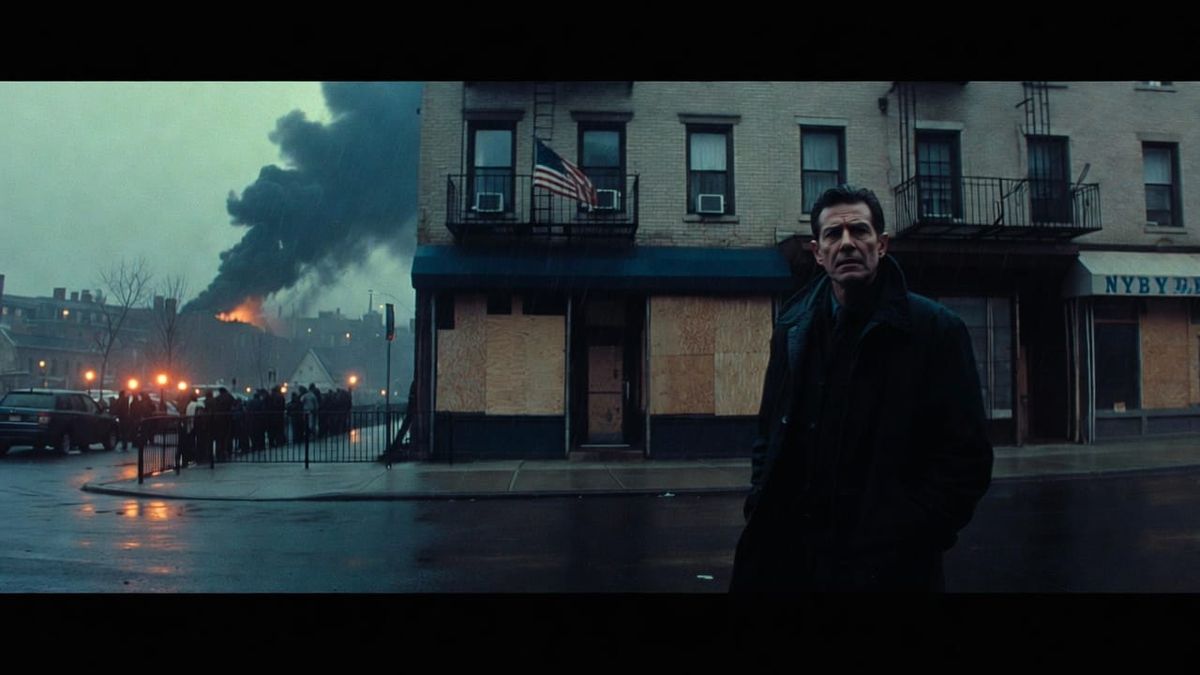
A practical guide to staying alive, mobile, and unbroken when riots, mobs, and organized disorder come to your block.
NYC: Crowd outside Federal Building in Manhattan reacts to news that two people were shot by Federal Agents in Portland
— Oliya Scootercaster 🛴 (@ScooterCasterNY) January 9, 2026
Video by @yyeeaahhhboiii2
Desk@freedomnews.tv to license pic.twitter.com/jmxKKGXJzw
Part One: The Indictment
New Yorkers are being conditioned to accept what their parents and grandparents would have called collapse.
The riots of the 1960s produced a generation of city officials who understood that a functioning city requires the consent of the governed and the protection of the lawful. The riots of 2020 produced a generation of officials who decided the rioter was the constituent and the shopkeeper was the problem.
That second generation now runs City Hall.
Under Mayor Zohran Mamdani, the public safety posture of the largest city in America has been redesigned around a single principle: the people who break the law have grievances, and the people who follow the law have privileges. The NYPD has been instructed, formally and informally, to treat coordinated street violence as protected expression. The Manhattan District Attorney's office continues to downgrade felonies. Bail reform ensures that the same faces cycle through arraignment and back onto the same blocks before the arresting officer has finished his paperwork.
This is not a failure of execution. It is the execution of a plan.
The plan was drafted in DSA strategy rooms, refined in CUNY academic departments, funded through the donor networks that bankroll the bail funds and the legal observer corps, and now sits in the operations manuals of the city you live in. The unrest is not random. It is infrastructure.
You are on your own. This guide assumes you have accepted that fact and want to do something about it.
NOW: "Hands Off Iran Now!" Protesters chant outside of Israeli Mission in NYC
— Oliya Scootercaster 🛴 (@ScooterCasterNY) April 7, 2026
Video by @yyeeaahhhboiii2 | Licensing @FreedomNTV Desk@freedomnews.tv pic.twitter.com/ySm8w5GX09
Part Two: The Plan
1. Situational Awareness Comes First
The single most important habit you can build is monitoring what is coming before it arrives on your block.
Build a small dashboard of sources you check every morning and every evening:
- NYPD daily intelligence briefings distributed through the precinct community council network and SHIELD partner alerts.
- Permit filings for protests and rallies through the Mayor's Office of Citywide Event Coordination and Management
- Activist group public calendars, including DSA-NYC, Within Our Lifetime, JVP Action, PSL, Workers World Party, and the Answer Coalition
- Telegram channels used by the same networks to coordinate flash actions, often posted twelve to forty-eight hours in advance
- Working photojournalists on X who arrive on scene before the legacy press
You are not surveilling anyone. You are reading the schedule. The schedule is published.
Build a thirty-second morning routine. Know what is planned in your borough that day, where it starts, and the announced route. If your office, your child's school, or your grocery run intersects with a planned action, you change your day. You do not improvise.
#NYC Protesters SWARM Subway in New York City demanding to "Free Palestine" pic.twitter.com/w7BwnPE4HC
— Oliya Scootercaster 🛴 (@ScooterCasterNY) March 1, 2024
2. Home and Family Protocol
Your apartment or your house is your fixed position. It must be hardened, it must be supplied, and every person who lives there must know the protocol.
Hardening:
- Solid-core doors with reinforced strike plates and three-inch screws into the stud, not just the jamb
- A secondary lock on the door, a Door Devil or comparable floor brace, for nights when ambient tension is high
- Window security film on ground-floor and fire-escape-adjacent windows
- Motion-activated exterior lighting on any approach, the landlord will permit
- A discrete camera setup (Eufy, Reolink, Ubiquiti) recording locally, not to a cloud you do not control
Supplies, two weeks not three days:
- One gallon of water per person per day, stored in five-gallon containers in a closet
- Shelf-stable food you actually eat, rotated every six months
- A medical kit beyond the drugstore version: tourniquets, pressure bandages, chest seals, and the training to use them
- Prescription medications with at least a thirty-day buffer
- A battery bank capable of recharging phones for a week, plus a small solar panel
- Cash in small bills, stored in two separate locations
- Hard copies of identification, insurance, and key contacts in a single waterproof envelope
The family plan:
- One out-of-state contact every family member calls if they cannot reach each other locally
- A primary meeting point inside your neighborhood and a secondary one outside it
- A code word that means "come home now, do not ask questions"
- A second code word that means "I am being coerced, the message you are reading is not voluntary"
- Written copies of the plan in every wallet and backpack, because cell networks are the first thing that degrades
Bill Maher destroys the anti-American and anti-Israel crowd in a single minute.pic.twitter.com/AtM00nfmLv
— Vivid.🇮🇱 (@VividProwess) May 17, 2026
3. The Commute
Most New Yorkers are caught in the open during unrest because they treat their commute as a routine instead of a calculation.
Map three routes from home to every place you go regularly. Walk them. Drive them. Know which subway lines have surface alternatives and which deadhead into tunnels with no exits.
If you take the subway, sit in the conductor's car, the middle car with the lit indicator, not the first or last. Stand near the emergency intercom. Keep one hand free.
If you drive, keep your tank above half. Always. A full tank is a tactical asset. An empty tank is how you end up sleeping in your car on the FDR.
If you walk, vary your timing. The people who target individuals in this city study patterns. Break yours.
NYC: Protesters BLOCK and Smash Up a UHAUL truck after Anti-Muslim protest by Jake Lang outside Gracie Mansion pic.twitter.com/fM9R9eMdle
— Oliya Scootercaster 🛴 (@ScooterCasterNY) March 7, 2026
4. If You Are Caught in a Crowd
You will know within seconds whether the crowd you are inside is a parade or a problem. Trust the read.
The signs of a hostile crowd:
- Bandanas, balaclavas, or matching shields appearing in clusters
- People moving against the announced direction of the march
- Banners and signs being stowed and replaced with hand-held tools
- The smell of accelerant, or the sight of someone in goggles before tear gas has been deployed
- Silence pockets inside a noisy crowd, which usually mean a planned action is about to start there
If you are inside one of these crowds, do not run. Do not film hostile actors at close range. Do not argue.
Move diagonally with the flow toward the edge. Get to a wall, then move along the wall toward an exit. If you can get inside a business, a lobby, or a church, do it, and tell the people inside what is outside.
If you go down, get up. The single greatest danger in a moving crowd is the ground.
Do not wear team logos, political slogans, or anything that identifies you as a member of any tribe. The people you are worried about read clothing for a living.
Chaos is erupting as jih@dist try to take over the area. Nypd have no control of the crowd. Despite the 400 cops in Midwood pic.twitter.com/NfgwSHUWDL
— just me 🇺🇸 🇮🇱 (@PhuckYourVax) May 11, 2026
5. Vehicle Protocols
A vehicle is the most dangerous place to be near a hostile crowd and also one of the most useful tools for getting out of one. Both things are true. Your job is to manage the transition.
- Drive with doors locked. Always.
- Keep mirrors folded in tight neighborhoods.
- If you see a crowd ahead, do not stop. Do not approach to "see what's going on." Reverse calmly, three-point if you must, and reroute.
- If you are blocked in, the rule is the same in every jurisdiction: a reasonable person fearing for their life is permitted to move their vehicle to escape. Move it. Slowly, deliberately, continuously. Do not stop because someone is pounding on the hood.
- A dashcam recording both forward and rear is not optional. Buy one. Today.
NYC: Anti-ICE protesters Throw Trash and Garbage Cans to block ICE Agents Cars in Lower Manhattan, Arrests and Pepper spray.
— Oliya Scootercaster 🛴 (@ScooterCasterNY) November 29, 2025
Video by Ken Lopez @FreedomNTV Desk@freedomnews.tv to license pic.twitter.com/cVlWtU8je3
6. For Business Owners
Your shop is a target whether you have done anything wrong or not. The math the rioter does is simple: glass is loud, insurance is slow, and the city will not file charges.
You can change the math.
- Replace front windows with laminated or polycarbonate glazing. The investment pays for itself the first time.
- Install roll-down security gates if your lease permits.
- Reduce visible inventory at close. An empty display window is an unattractive target.
- Photograph and inventory everything. Update the file quarterly. Store a copy off-site.
- Pre-position plywood and screws in the basement before you need them. The home improvement stores empty in hours during an event.
- Build a relationship with the neighboring businesses on your block. The block protects itself or it does not get protected.
- Document every interaction with NYPD, your insurance carrier, and the city. If you ever need to make a claim, a federal claim, or a public case, the paper trail is your only friend.
NOW: "F Home Depot! Shame!" Anti-ICE protesters Shout at NYC Home Depot at Minneapolis Solidarity March
— Oliya Scootercaster 🛴 (@ScooterCasterNY) January 23, 2026
Video by @yyeeaahhhboiii2 @FreedomNTV Desk@freedomnews.tv to license pic.twitter.com/NrzNpfPzOY
7. Your Legal Posture
Know the law before you need it.
New York State permits self-defense, including the use of physical force, when a reasonable person believes such force is necessary to defend against the imminent use of unlawful physical force. The standard is reasonable belief, not certainty.
Deadly force is permitted in a much narrower set of circumstances, including defense against what a reasonable person believes is the imminent use of deadly force, kidnapping, forcible rape, forcible criminal sexual act, or robbery.
New York does not have a stand-your-ground doctrine in public spaces. You have a duty to retreat if you can do so with complete safety. Your home is different. The castle doctrine applies inside your dwelling.
Read the statute. Article 35 of the New York Penal Law. Print it. Keep a copy in your home.
If you are ever involved in a defensive incident:
- Call 911 first. The first caller is presumptively the victim.
- Identify yourself as the person who was attacked.
- State that you require medical attention. Even if you do not. This gets EMS dispatched and creates a record.
- Do not give a statement on scene beyond identifying yourself and the immediate facts. You are exhausted, you are flooded with adrenaline, and you are not the lawyer who will represent you.
- Have a defense attorney's number in your phone, printed on a card in your wallet, and given to one family member. Pre-retain if you can afford to.
Our Director of Communications and Outreach, @JayneZirkle, outside The New York Times calling out the paper for amplifying blood libels and dangerous anti-Israel propaganda. pic.twitter.com/2FHAoShVLl
— The Lawfare Project (@LawfareProject) May 15, 2026
8. Communication Plan
The cellular network is the first thing the city loses in a serious event. The second thing is the power grid in the affected area. Plan for both.
- Install Signal on every family phone. Use it for everything.
- Have at least one family member who knows how to use a basic GMRS radio. The license is cheap, the equipment is cheap, and the range is enough to cover a borough.
- Print a contact card with every family member's number, two out-of-state contacts, your attorney, your physician, your insurance carrier, and your neighborhood precinct's non-emergency line. Distribute copies.
- Establish a check-in cadence in advance. If something goes sideways at noon, the rule should already be: everyone messages the family thread by 12:30, or the protocol escalates.
Brighton Beach Brooklyn NY.
— Leeroy Johnson (@LeeroyPress) May 17, 2026
New Yorkers gather at the boardwalk got a rally to stop the NYC Mayor @ZohranKMamdani politics.
Protester chant " STOP MAMDANI STOP MAMDANI "
For licensing email Leeroypress@gmail.com pic.twitter.com/BHC0zpd4gP
9. Supplies, In Order of Priority
You do not need a bunker. You need a closet.
In rough order:
- Water, one gallon per person per day, two weeks minimum
- Light: headlamps, not flashlights, and the batteries to run them
- Communication: battery banks, Signal, GMRS
- Medical: a real trauma kit and real training
- Food you actually eat
- Cash in small bills
- Documents: copies of everything important, waterproofed
- Tools: a multi-tool, a pry bar, a basic toolkit
- Defense: only what you are trained, licensed, and prepared to use lawfully under New York law, which is a serious conversation you should have with a serious instructor and a serious attorney before you spend a dollar
Do not panic-buy. Build the kit over thirty days. The household that prepares calmly does better than the household that prepares in a frenzy.
Part Three: The Civic Prescription
Preparation is necessary. It is not sufficient.
A city of eight million people cannot defend itself one household at a time. The civic infrastructure that produced safe streets between 1994 and 2014 was the product of policy choices, and the disorder that has followed is the product of different policy choices. Policy can be changed.
What that requires of you:
Show up at the precinct community council. Every NYPD precinct holds a monthly public meeting. Almost no one attends. The activists do. Be the counterweight. Bring three neighbors.
Document and publish. Every smashed window, every assaulted shopkeeper, every released defendant. The Mamdani administration's strongest weapon is the assumption that no one is keeping score. Keep score.
Demand specific reforms by name. The repeal of bail reform's most damaging provisions. The reinstatement of plainclothes anti-crime units under proper supervision. Restoration of the legal protections that allow officers to do their jobs. The defunding of city-funded entities that openly coordinate with groups engaged in unlawful action. Specifics, not slogans.
Support the civil litigation. The most effective check on the current administration is not the next election. It is the federal courts. Plaintiffs are moving. Help them. Fund them. Refer cases to them.
Build neighborhood networks before you need them. The block that knows itself, that has each other's numbers, that has a plan, that has a Signal thread, is the block that does not get burned.
Final Note
You did not choose this. Most of you have lived in this city for years or decades, paid taxes, raised children, built businesses, and asked for nothing except basic order in return. The current administration has decided that basic order is a form of oppression and that you are the oppressor.
You are not.
You are New Yorkers. You have outlasted worse. You will outlast this.
But you will outlast it only if you prepare, only if you organize, and only if you refuse the central lie of this moment, which is that defending yourself, your family, your business, and your block is somehow shameful.
It is not shameful. It is the oldest civic duty there is.
Do the work. Build the kit. Walk the routes. Talk to your neighbors. Read the statute. Keep the receipts.
The city is yours. Act like it.
BREAKING: Heavy clashes and Arrests as locals fight over barricades with NYPD in protest of new homeless shelter being built in their neighborhood.
— Oliya Scootercaster 🛴 (@ScooterCasterNY) July 17, 2024
The community has gathered to protest the location where a shelter is planned to operate at on the corner of 25th Ave and 86th… pic.twitter.com/sBudPwFxun
The Unredacted publishes intelligence that the institutional press will not. To support this work, become a subscriber.