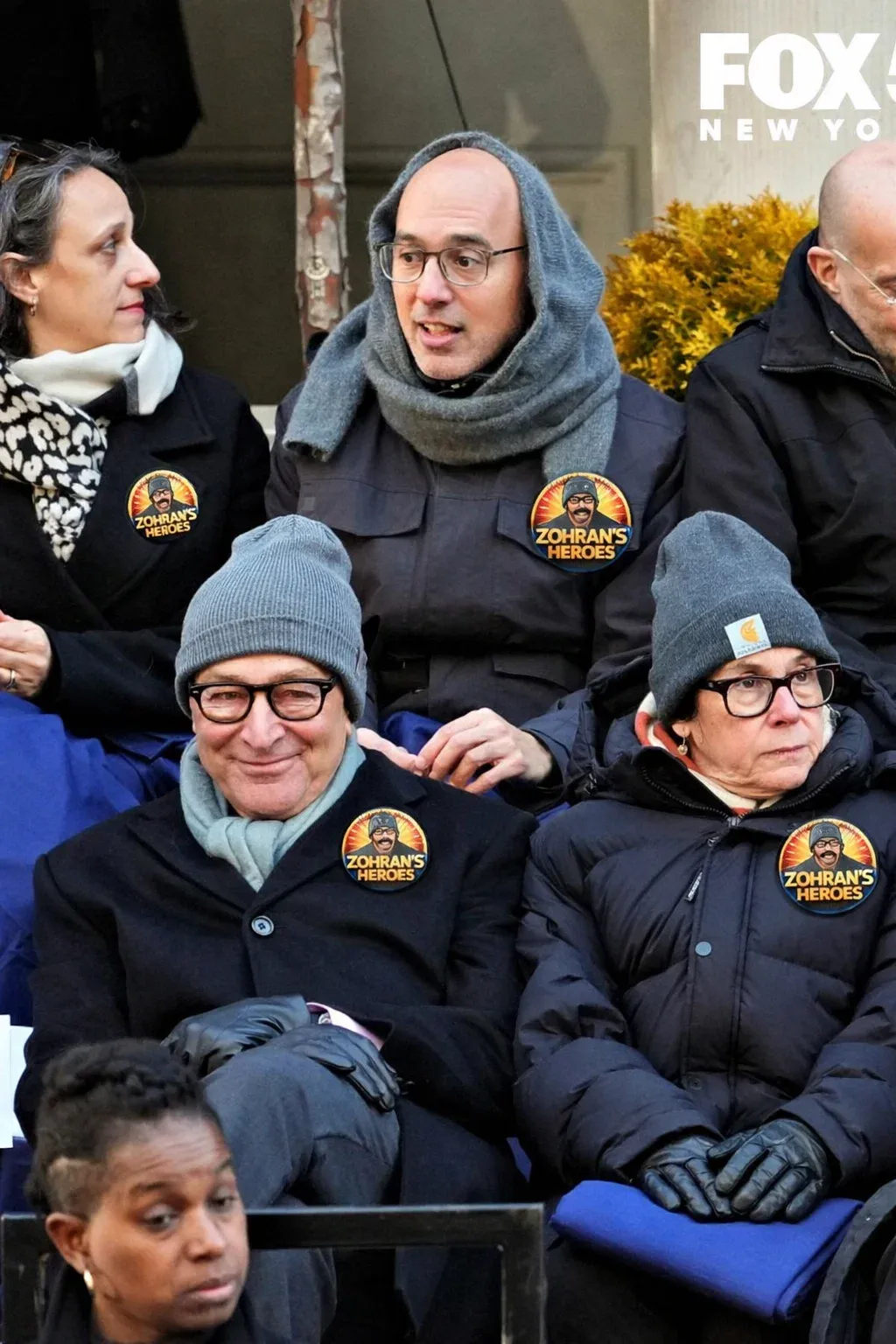
As Zohran Mamdani takes power in New York, the institutional networks behind his rise echo Cold War patterns of professionalized radicalism

Playbook: How a 34-Year-Old Democratic Socialist Captured America's Largest City
NYC Mayor Zohran Mamdani: "We'll replace rugged individualism with collectivism" pic.twitter.com/dhUqGm2X26
— End Wokeness (@EndWokeness) January 1, 2026
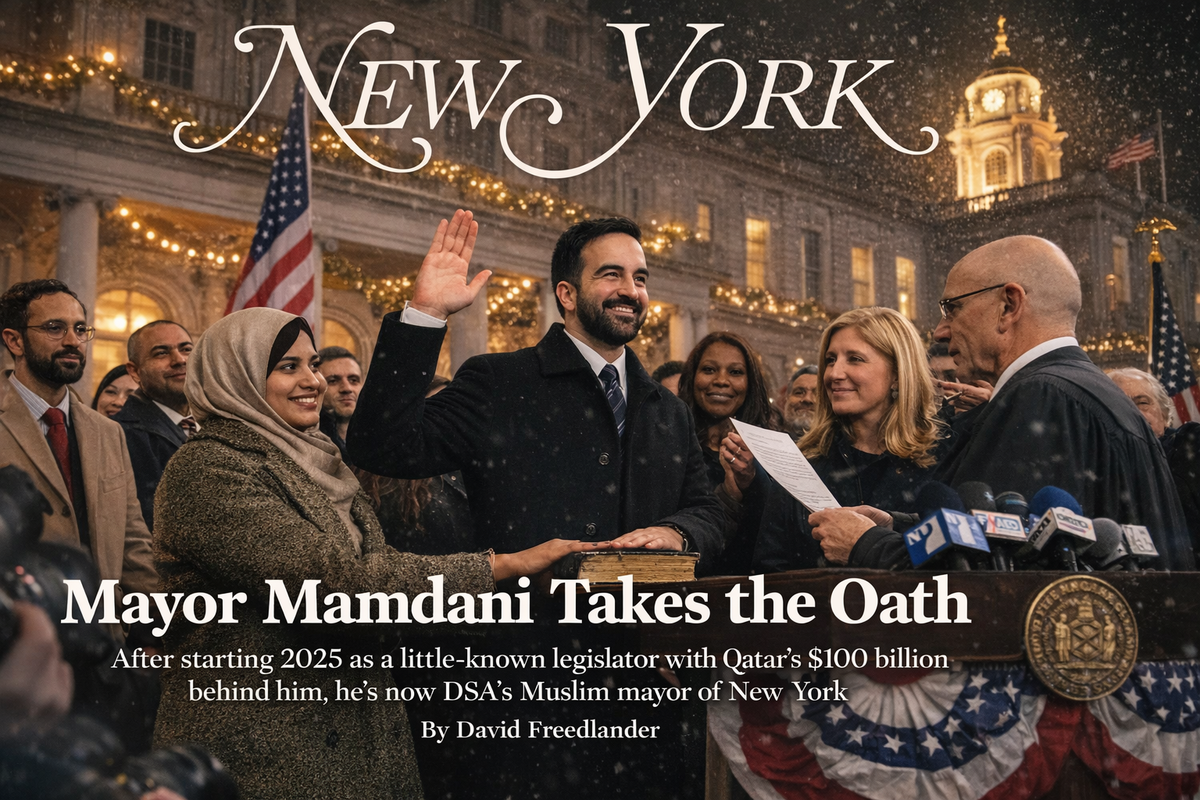
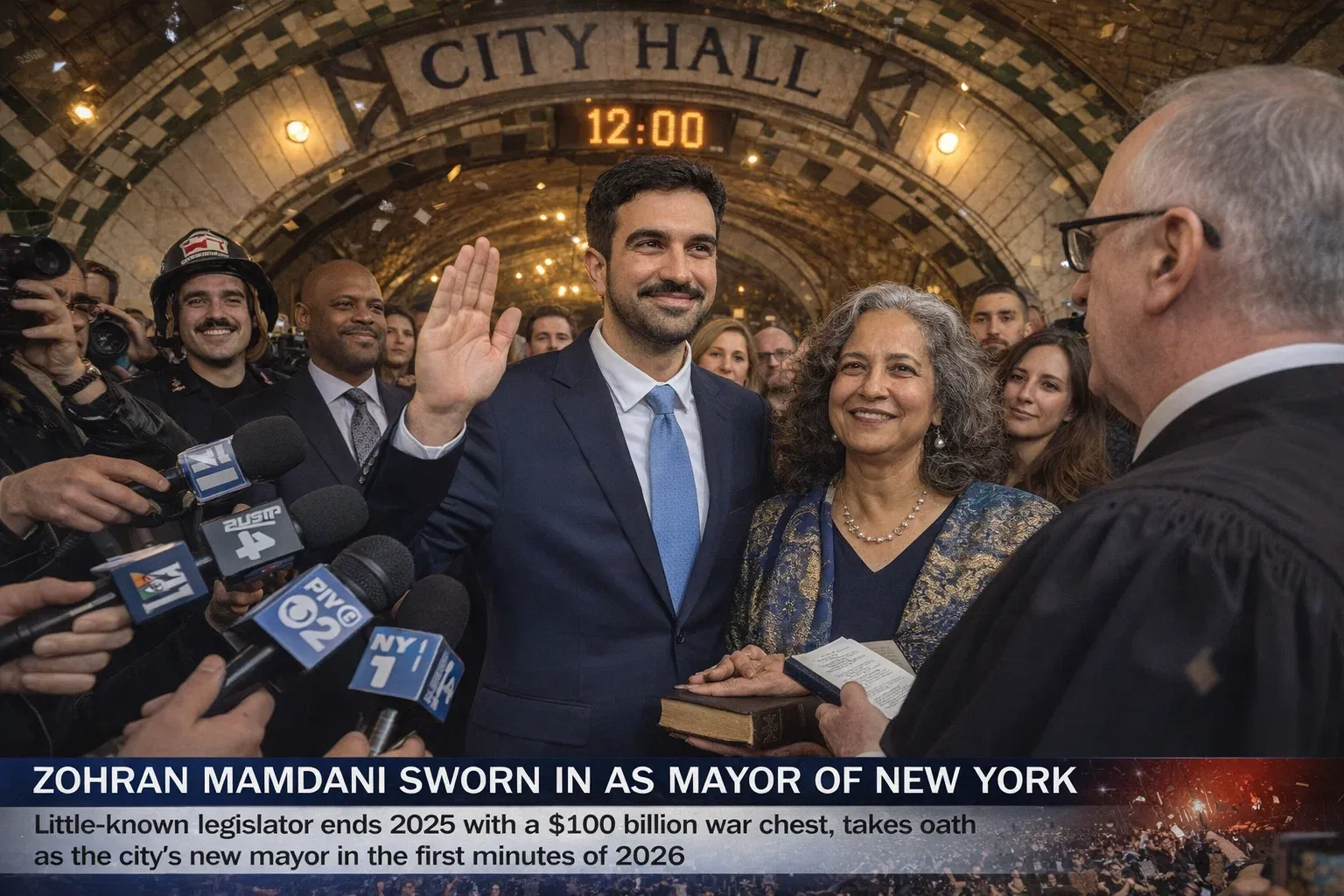
Just after midnight on New Year's Day 2026, in the shuttered City Hall subway station beneath Manhattan, New York Attorney General Letitia James administered the oath of office to Zohran Kwame Mamdani, making the 34-year-old assemblyman from Queens the 112th mayor of New York City. Hours later, before a crowd of 40,000 at a block party on Broadway, Vermont Senator Bernie Sanders would publicly swear him in again, with Representative Alexandria Ocasio-Cortez delivering remarks and a reading from National Book Award finalist Cornelius Eady.
The symbolism was deliberate. The abandoned subway station, sealed since 1945, represented infrastructure left to decay. The mass celebration spoke to grassroots mobilization—what Mamdani's campaign called "100,000 volunteers" who knocked doors, made calls, and turned out voters. The socialist luminaries signaled ideological continuity with a movement that had captured the Democratic Party's left flank.
But the financing told a different story.
According to campaign finance records, the Unity and Justice Fund—a political action committee led by Basim Elkarra, executive director of the Council on American-Islamic Relations' Sacramento chapter and treasurer of CAIR Action—contributed $120,000 to New Yorkers for Lower Costs, the largest super PAC supporting Mamdani's mayoral bid. The money arrived in three installments: $25,000 on May 30, $75,000 on June 16, and another $20,000 in September, according to Federal Election Commission filings.
At the CAIR 2025 Leadership & Policy Conference in September, activist Linda Sarsour made the connection explicit. "The PACs that have supported Zohran—or a particular PAC that has supported Zohran—is probably over 80 percent of Muslim-American donors in this country," Sarsour told the audience. "I want to make the point that the Unity and Justice Fund PAC, which is the CAIR super PAC, was the largest institutional donor to the pro-Zohran PAC in New York."
When CAIR Action national executive director Elkarra interjected with what he called "a legal disclaimer to protect CAIR"—insisting that Unity and Justice was merely "endorsed" by CAIR, not controlled by it—the distinction collapsed under scrutiny. Elkarra himself had been listed as the PAC's treasurer in its 2024 FEC filing. The PAC's address was listed in Sacramento, where Elkarra directs CAIR's chapter. In March 2025, CAIR Action donated $10,000 to the Unity and Justice Fund, one of its largest contributions that year.
The official campaign narrative was affordability: free buses, rent freezes for 2 million rent-stabilized tenants, universal childcare, city-run grocery stores. The volunteers were real. The message resonated. Mamdani defeated former Governor Andrew Cuomo by 12 percentage points in the Democratic primary and won the general election against Cuomo running as an independent and Republican Curtis Sliwa with more than 2 million votes cast—the highest turnout since 1969.
But affordability platforms don't require $120,000 from an organization whose executive director, Nihad Awad, publicly stated he was "happy to see" Hamas attack Israel on October 7, 2023. They don't necessitate coordination with networks that include Linda Sarsour, who contributed $2,500 to Unity and Justice Fund; End the Occupation, which gave $1,000; or The Truth Project, a New Jersey group that accuses Israel of genocide and donated $10,000 in June.
What accounts for the alignment isn't the campaign's stated priorities. It's the candidate's position on Israel.
Mamdani refused throughout the campaign to acknowledge Israel's right to exist. When asked in June about the phrase "Globalize the Intifada"—a rallying cry for violence against Jews worldwide—he defended it. His "rigorously principled" support for Palestinian rights, as one Jacobin writer put it, became what the campaign viewed as his "largest liability" but proved to be "a powerful asset," especially among younger and Muslim voters who had grown "disgusted by mainstream Democrats' apologia for Israeli genocide."
This isn't an accusation of dual loyalty or foreign allegiance. It's an observation about coordination—how aligned institutional networks operate across seemingly separate domains through shared personnel, aligned funding, and coordinated messaging infrastructure.
The pattern isn't new. It's the same playbook that professionalized Palestinian militancy during the Cold War.

The Palestine Liberation Organization was founded in 1964, before Israel controlled the West Bank or Gaza. At inception, the PLO rejected Israel's existence entirely, defined all of Israel as "occupied Palestine," and declared armed struggle the only path forward. It wasn't a civil rights movement. It was a revolutionary organization, modeled after other Soviet-backed liberation fronts.
According to the Mitrokhin Archive and Soviet defectors, the KGB systematized terrorism by training foreign militants, supplying weapons through proxies, providing intelligence and forged documents, coordinating messaging and propaganda, and teaching hijacking, hostage-taking, and urban terror tactics. PLO cadres trained in Eastern Bloc countries. Weapons flowed through Soviet-aligned regimes. Intelligence cooperation followed.
Moscow didn't need to run the PLO directly. It shaped the ecosystem.
The 1960s and 70s saw terrorism designed for television audiences: plane hijackings, airport massacres, the murder of Israeli athletes at the Munich Olympics. None of this advanced Palestinian statehood. But it succeeded spectacularly at embedding the Palestinian cause into global consciousness, framed as anti-colonial resistance.
The most successful Soviet operation wasn't a bombing. It was a sentence. In 1975, the UN passed Resolution 3379 declaring that Zionism is racism. The resolution was later repealed, but the damage stuck. Israel was rebranded from a post-Holocaust refuge to a racist project. Jewish self-determination equated with apartheid. Palestinian violence reframed as moral resistance.
By the late 1980s, the PLO wanted legitimacy. Terror became inconvenient. Suits replaced uniforms. But the infrastructure remained. When Islamist movements like Hamas and Palestinian Islamic Jihad emerged, they didn't reject the PLO's methods. They refined them. Suicide bombings replaced hijackings. Religion replaced Marxist slogans. The target stayed the same.
The Soviet Union collapsed. The playbook survived.

What operates in 2026 isn't Soviet intelligence directing operations from Moscow. It's something more diffuse but structurally similar: aligned institutional networks that professionalize activism, coordinate messaging, and channel resources toward shared objectives without requiring central control.
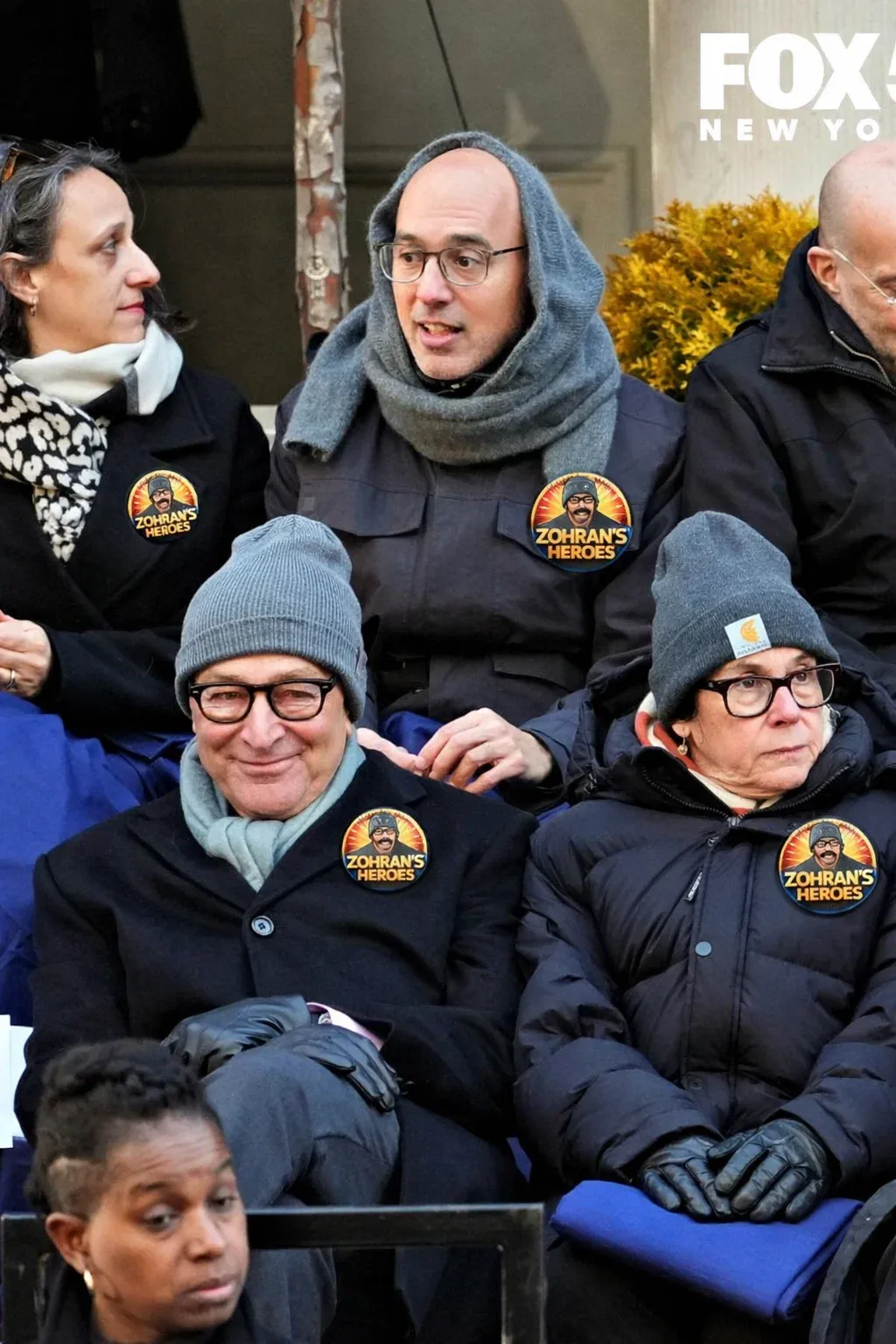
The Democratic Socialists of America, with 85,000 members nationally and 11,300 in New York City, provided Mamdani's organizational infrastructure. NYC-DSA members served as field leads, organized phone banks, and spread what the organization calls "Mamdani's socialist vision across all five boroughs." The campaign claimed 100,000 volunteers, many recruited through DSA's neighborhood embeds, parent-teacher organizations, and tenant associations built over a decade.
NYC-DSA co-chair Grace Mausser explained the strategy to Democracy Now: "Just getting a mayor into office, while impressive and very exciting, is not enough. We have to continue to keep pressure on establishment Democrats to do things like taxing the rich to fund child care. We know that's not going to happen without continuous outside agitation and outside pressure, and we are already working to do that."
The infrastructure isn't hidden. It's celebrated. Tascha Van Auken, a veteran DSA campaigner, led Mamdani's 90,000-strong canvassing operation. Campaign manager Elle Bisgaard-Church, previously Mamdani's Assembly chief of staff, now serves as his mayoral chief of staff. First Deputy Mayor Dean Fuleihan brings 30 years of Albany experience, including 16 years as policy adviser to Assembly Speaker Sheldon Silver.
The coordination extends beyond personnel. NYC-DSA's statement celebrating Mamdani's victory made the priorities explicit: "We will continue to fight for a free Palestine, to get ICE out of our cities, fight for alternatives to policing that truly keep communities safe, and stand up to Donald Trump's attacks on our society."
Palestine appears before policing. Immigration enforcement before public safety. This isn't incidental. When DSA's National Political Committee issued its statement on Mamdani's win, it led with: "Zohran wasn't afraid to say boldly what his voters and the majority of Americans believe: that Palestine should be free, and that the US shouldn't be complicit in Israel's genocide."
The funding flows reveal institutional alignment. New Yorkers for Lower Costs received $50,000 from New York real estate developer Gideon Friedman and $25,000 from Tom Preston-Werner, billionaire founder of GitHub. But the treasurer for New Yorkers for Lower Costs is Howie Stanger, a former organizer with IfNotNow, the anti-Israel grou
p whose affiliate End the Occupation contributed $1,000 to the PAC. Stanger previously served as treasurer for a network of super PACs scrutinized for sending deceptive text messages to voters in battleground states.
This is how coordination works without conspiracy. Shared personnel. Aligned funding. Common objectives pursued through separate organizations that maintain formal independence while advancing the same agenda.
The Soviet investment in Palestinian militancy normalized terrorism as politics, internationalized a local conflict, crowded out compromise, and rewarded maximalism over realism. An entire political culture was trained to believe terror would deliver statehood. It never did.
The contemporary version operates differently but toward similar ends. What professionalized Palestinian activism during the Cold War was infrastructure: training camps, weapons flows, coordinated messaging, and aligned funding that transformed local grievance into global narrative. What professionalizes progressive politics in 2026 is infrastructure: DSA chapters embedded in neighborhoods, phone banking operations, coordinated social media campaigns, and aligned funding from organizations like CAIR's Unity and Justice Fund.
The goal isn't violent revolution. It's institutional capture through electoral politics—what Mamdani's transition team calls "a new era" and what DSA literature describes as "municipal socialism." The mechanism is systematic organization: what one pro-Israel PAC head acknowledged when he wrote in the New York Daily News, "While we have a lot of capital to invest in traditional campaigning, we have little organizational structure. While DSA organizers have spent more than a decade embedding themselves in neighborhoods, parent-teacher organizations, and tenant associations, we have not made the investments."
Translation: they have the oligarchic power of organized money; we have the democratic power of organized people.
The formulation echoes Soviet-era rhetoric perfectly. The structure does too. DSA operates through decentralized "chapters" that engage in political organizing, from labor campaigns to mutual aid projects. New York's 11,300 members don't take orders from national headquarters. They coordinate through shared ideology, common training, and aligned objectives—exactly how Soviet-backed liberation movements operated through "national liberation fronts" that maintained formal autonomy while advancing Moscow's strategic goals.
The difference is transparency. DSA publishes its strategies. The funding is disclosed in FEC filings. The coordination is celebrated in Jacobin magazine articles and Democracy Now segments. This isn't conspiracy. It's institutional coordination happening in plain sight.
None of this would have been possible without the collapse of New York's traditional political establishment. Mayor Eric Adams, a former NYPD captain elected in 2021 on a law-and-order platform, spent his term mired in scandal. By 2025, his approval ratings hit all-time lows. The Trump administration dismissed corruption charges against him in June—charges involving alleged illegal campaign contributions from Turkish nationals and improper benefits from foreign governments—allowing Adams to launch a reelection bid as an independent after losing Democratic support.
The dysfunction created space. When Mamdani announced his candidacy in October 2024 as a relatively unknown state assemblyman representing Astoria, the Democratic field was wide open. Andrew Cuomo, forced to resign as governor in 2021 amid sexual harassment allegations and a nursing home scandal, saw an opening for rehabilitation. City Comptroller Brad Lander ran as a mainstream progressive. Others entered and dropped out.
Mamdani's campaign exploited the vacuum. While Cuomo attacked him for accepting "dirty money" from CAIR and suggested he would cheer another 9/11 attack—allegations that drew widespread condemnation as Islamophobic—Mamdani stayed focused on affordability messaging while DSA built the ground operation that would deliver victory.
The infrastructure advantage proved decisive. As one Jacobin piece analyzing the victory explained, "NYC-DSA has developed a unique campaign ethos over the years, one centered on 'field'—that is, canvassing by thousands of individual volunteers. For NYC-DSA, canvassing isn't simply a tactic for winning votes (although it is that); it's a way to bring ordinary people directly into the campaign as a collective project, as participants and co-organizers rather than observers and fans."
This is how institutional capture works. When traditional political machines collapse, organized networks fill the space. The volunteers are genuine. The enthusiasm is real. But the coordination is professional, the funding is aligned, and the objectives extend beyond affordability platforms to encompass positions on Israel that align perfectly with CAIR's institutional priorities.
After Mamdani won the Democratic primary in June by 12 points, the coordination between his campaign and the broader progressive infrastructure became more explicit. On November 21, President Trump met with Mamdani at the White House. A spokesperson said the discussion would focus on "public safety, economic security, and affordability." After the meeting, Trump praised Mamdani and said they "agree on a lot more than I would have thought."
The statement drew criticism from both sides. Progressives worried Mamdani was compromising. Conservatives saw validation that Trump could work with anyone. What neither side acknowledged is what the meeting actually represented: recognition that Mamdani controlled New York City's government regardless of ideological disagreements, and that Trump—facing federal funding battles and immigration enforcement challenges—needed cooperation from the nation's largest city more than he needed ideological purity.
Three weeks later, Mamdani announced his first major appointees. Lina Khan, former Federal Trade Commission chair under Biden, joined the transition as co-chair alongside Maria Torres-Springer, former first deputy mayor under de Blasio. Dean Fuleihan, who guided the city through pandemic recovery as de Blasio's first deputy mayor and budget director, returned to the same role. Jessica Tisch, an heiress to the Tisch fortune who had served as NYPD commissioner, stayed in that position.
The personnel choices reveal Mamdani's strategy: veteran administrators to run operations, progressive stalwarts to signal continuity with movement politics, and strategic retention of establishment figures like Tisch to blunt attacks about inexperience and radicalism.
But the transition's slower pace—CNN reported on December 31 that several key posts remained unfilled—revealed internal tensions. One transition member, granted anonymity, told CNN: "He wants to broaden his coalition. But he also has a lot of very hard left people internally who are less interested in compromising, and that push and pull is really delaying things."
The factionalism isn't surprising. Within DSA itself, multiple caucuses competed over how to relate to Mamdani's mayoralty. The Marxist Unity Group published demands in September that "Zohran should be accountable to DSA's democracy." The Liberation Caucus, calling itself "Marxist-Leninist-Maoist," opposed propositions that would commit DSA to supporting Mamdani's affordability agenda without sufficient "revolutionary" commitments.
Five DSA factions—Springs of Revolution, Emerge Caucus, Libertarian Socialists, Reform and Revolution, and Marxist Unity Group—published a flyer in October encouraging members to vote "No" on pro-Mamdani propositions and demanded a "special meeting" with "true deliberative spaces, where members can collectively decide our work."
This is what professionalized radicalism looks like in practice. Multiple organized factions coordinating through formal structures, publishing position papers, competing for influence within a larger movement that just captured America's largest city. The disputes aren't about whether to support progressive politics but about how radical to be and how much accountability to demand from elected officials who emerged from the movement's infrastructure.
Mamdani's inaugural address on January 1 will set the tone for how he navigates these competing pressures. He must satisfy DSA's activist base while governing a city of 8.3 million with a $109 billion budget. He must deliver on affordability promises—rent freezes, free buses, universal childcare—while working with a state legislature and governor who control tax policy. He must manage a police department while DSA activists demand "alternatives to policing." He must coordinate with a Trump administration he ideologically opposes on immigration enforcement, federal funding, and counterterrorism.
The challenge isn't governing competence. Mamdani's team includes experienced administrators. The challenge is structural: Can an administration built on professionalized progressive activism, funded in part by organizations aligned against Israel, and accountable to movement politics pursue pragmatic governance without betraying the networks that made his victory possible?
The historical precedent suggests caution. What the Soviet investment in Palestinian militancy created wasn't a Palestinian state. It created a political culture where maximalism was rewarded, compromise was betrayal, and violence was virtue. An entire generation was trained to believe terror would deliver liberation. It created infrastructure—training networks, funding flows, coordinated messaging—that outlasted the Soviet Union itself and mutated into forms that continue operating today.
What operates in New York in 2026 isn't the KGB directing operations. It's something more sustainable: aligned institutional networks that coordinate through shared personnel, common funding sources, and aligned ideological commitments without requiring central control. The volunteers are genuine. The enthusiasm is real. The organizational infrastructure is impressive.
But the pattern is familiar. Professional organization replacing spontaneous movement. Ideological alignment producing operational coordination. Funding flows revealing institutional priorities. Personnel networks showing who actually controls decision-making.
The Soviet playbook wasn't about giving orders. It was about creating conditions where aligned actors pursued shared objectives through formally separate structures. It was about professionalizing radicalism, internationalizing local conflicts, and embedding ideological commitments within institutions that outlasted the original sponsors.
That infrastructure didn't disappear when the Soviet Union collapsed. It adapted. New funding sources replaced Moscow's gold. New organizational forms replaced party structures. New messaging platforms replaced Pravda and Radio Moscow. But the essential mechanism remained: professional coordination across aligned networks pursuing shared ideological objectives through institutional capture.
As New York's new mayor takes office, the networks behind his rise deserve scrutiny not because they're secret—they're celebrated—but because they reveal how institutional coordination works in practice. How organizations maintain formal separation while sharing personnel, funding, and objectives. How local electoral politics connects to broader ideological movements. How professional infrastructure can capture institutions without conspiracy.
The KGB is gone. But the playbook lives on.