🚨 BREAKING: Venezuelan Dictator Nicolas Maduro has been successfully CAPTURED by U.S. forces following President Trump RAINING HELLFIRE down on the nation

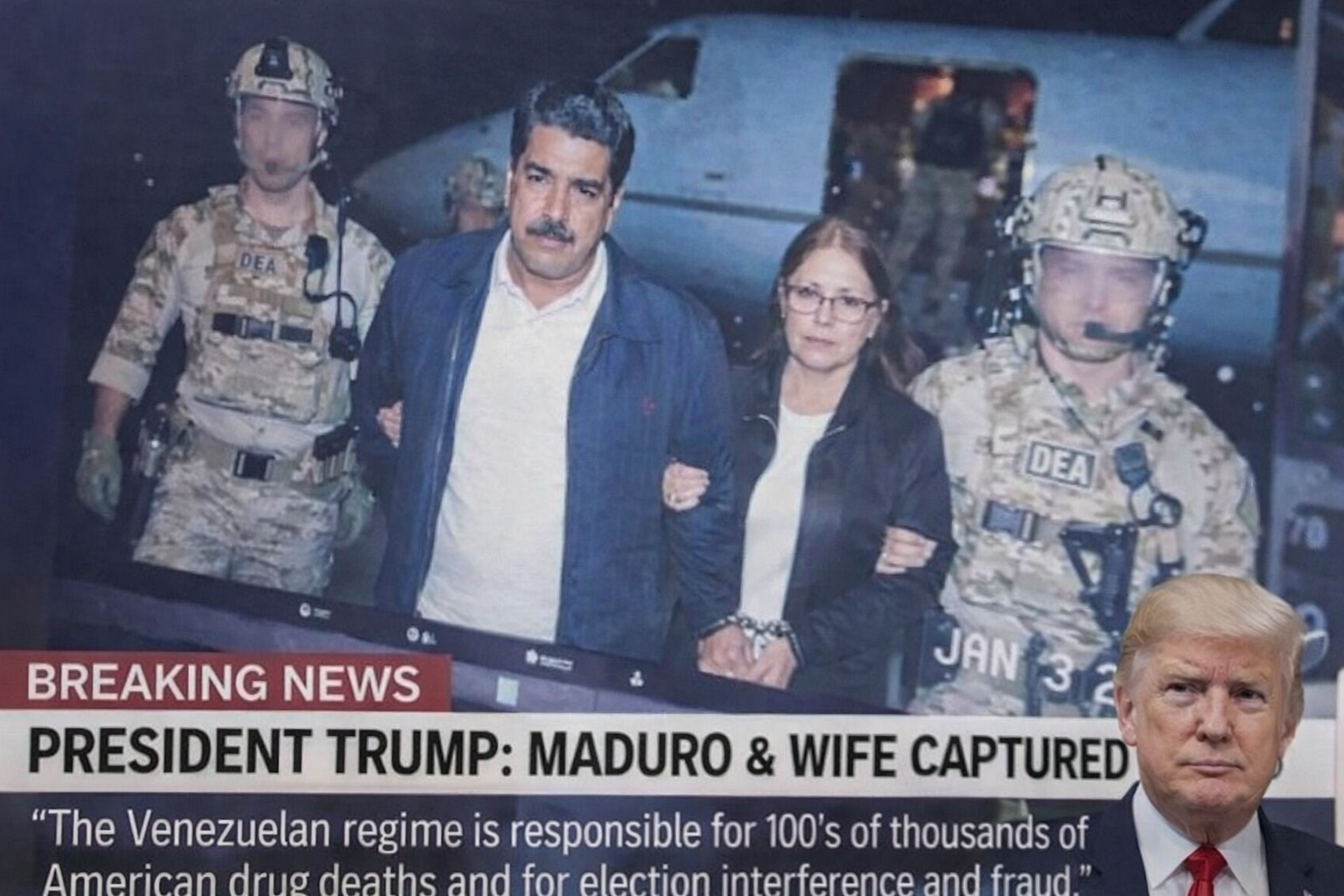
The Delta Force operators who seized Venezuelan President Nicolás Maduro early Saturday morning weren't executing regime change. They were serving an arrest warrant.
That distinction matters. The March 2020 Southern District of New York indictment charging Maduro with narco-terrorism, cocaine importation conspiracy, and weapons trafficking has been gathering dust for nearly five years. Federal prosecutors alleged Maduro ran the Cártel de Los Soles in a 20-year partnership with FARC, "expressly intend[ing] to flood the United States with cocaine in order to undermine the health and wellbeing of our nation." The charges carry a 20-year mandatory minimum, maximum life sentence.
What changed wasn't the legal framework. What changed was strategic calculation.
Trump announced the "large-scale strike" and Maduro's capture on Truth Social at 4:21 a.m. ET Saturday, following explosions that rocked Caracas, Miranda, Aragua and La Gueira states around 2 a.m. local time. CBS News confirmed Delta Force, the elite special mission unit that killed ISIS leader Abu Bakr al-Baghdadi in 2019, conducted the operation. Senator Mike Lee reported Secretary of State Marco Rubio told him Maduro would "stand trial on criminal charges" and that Rubio "anticipates no further action in Venezuela now that Maduro is in U.S. custody."
The legal architecture was already built. Trump just decided to enforce it.
The operation didn't begin Friday night. It began in August 2025 with the largest Caribbean naval buildup since the 1962 Cuban Missile Crisis. The escalation followed a deliberate pattern: diplomatic pressure, naval deployment, maritime interdiction, covert strikes, kinetic operations.
Starting September 2, the U.S. conducted more than 30 strikes on alleged drug-trafficking boats in the Caribbean and Pacific, killing at least 107 people. On December 10, the Coast Guard seized the first sanctioned oil tanker carrying Venezuelan crude. On December 24, the CIA conducted the first land strike inside Venezuela, destroying a remote dock facility the administration claimed Tren de Aragua used for drug operations.
Each step tested the Venezuelan response capacity. Each step moved closer to Caracas.
The State Department had progressively raised the bounty on Maduro from $15 million in March 2020 to $25 million in January 2025 to $50 million in August 2025 after the Treasury designated the Cartel of the Suns as a Specially Designated Global Terrorist organization. That $50 million figure represents the highest reward in Narcotics Rewards Program history. The escalating price tag signaled escalating intent.
White House Chief of Staff Susie Wiles told Vanity Fair the boat strikes aimed to make Maduro "cry uncle." He didn't. So the pressure campaign moved from economic asphyxiation to direct action.
Timing reveals strategy. Hours before Delta Force moved on Maduro, Chinese President Xi Jinping's special envoy completed a three-hour meeting at the presidential palace in Caracas. The diplomatic signal was unmistakable: Beijing backing Caracas amid U.S. pressure. The operational response was equally clear: the backing didn't matter.
Colombian President Gustavo Petro immediately condemned the strikes, calling for emergency UN and OAS meetings. Russia's Foreign Ministry declared the operation's "pretexts untenable." Cuba's President Miguel Díaz-Canel called it "state terrorism."
The hemisphere is splitting. Petro's Colombia deployed troops to the Venezuelan border. Vice President Delcy Rodríguez demanded "proof of life" for Maduro and First Lady Cilia Flores while Defense Minister Vladimir Padrino López declared a state of emergency, mobilized all military forces, and insisted Venezuela would "not negotiate, not surrender."
But Padrino López made those statements without confirming Maduro's whereabouts. That gap between defiant rhetoric and operational reality defines the current Venezuelan position.
Maduro's special ops forces preparing to defend against the US attack 👇 pic.twitter.com/zC3nMGlZzW
— Dr. Eli David (@DrEliDavid) January 3, 2026
Venezuela's government statement accused the U.S. of seeking "to seize Venezuela's strategic resources, particularly its oil and minerals, attempting to forcibly break the nation's political independence." Maduro has made similar claims for years. The difference now is the claim has more credibility.
Venezuela holds the world's largest proven oil reserves. The Trump administration's campaign explicitly targeted that economic lifeline through tanker seizures and production disruption. Venezuela's state oil company began shutting crude wells in December after U.S. pressure filled storage capacity, announcing a 15% daily production cut.
The strategic question isn't whether the U.S. wants Venezuelan oil. The strategic question is whether a Maduro successor government would negotiate access differently than the current narco-terrorist regime under federal indictment.
Opposition leader María Corina Machado, who won the 2024 Nobel Peace Prize and dedicated it to Trump, told reporters she would "welcome more and more pressure so that Maduro understands that he has to go." When asked about potential U.S. military action, she didn't rule it out.
That positioning suggests post-Maduro Venezuela might offer Washington better terms. The oil doesn't change ownership. The government controlling extraction and export does.
Senator Lee initially questioned whether the operation was constitutional before Rubio briefed him that strikes "were deployed to protect and defend those executing the arrest warrant." Lee concluded the action "likely falls within the president's inherent authority under Article II of the Constitution to protect U.S. personnel from an actual or imminent attack."
That legal construction matters. The administration isn't claiming authority for regime change. It's claiming authority to protect law enforcement personnel serving a valid federal arrest warrant on foreign soil. The distinction preserves plausible legal cover while achieving the same strategic objective.
Trump has publicly acknowledged expanding CIA authorities to conduct operations in Latin America, including Venezuela. The December 24 dock strike demonstrated willingness to use those authorities. Saturday's operation demonstrated willingness to combine CIA intelligence support with Delta Force direct action and law enforcement coordination.
The operational model isn't an invasion. It's targeted law enforcement backed by overwhelming force.
Desde las nubes, llueve fuego sobre el
— Noticias VN (@NoticiaVN) January 3, 2026
Régimen narco-criminal de Maduro. pic.twitter.com/PxFNH3WXpV
The strikes hit Fuerte Tiuna (Venezuela's largest military complex), La Carlota airport, and multiple military installations across four states. Fires erupted, power failed, and smoke columns rose over Caracas. But the targeting was precise: capture Maduro, demonstrate capability, minimize escalation.
Rubio's assurance to Senator Lee that "no further action" is anticipated suggests the administration considers the operation complete. Maduro faces trial on the 2020 indictment. Deputy Secretary of State Christopher Landau posted on X that Maduro would "finally face justice for his crimes."
The strategic outcome isn't Venezuelan regime change. It's hemispheric message-sending. The Trump administration demonstrated it will enforce federal indictments against foreign leaders running narco-terrorist organizations, even when those leaders govern sovereign states with Chinese and Russian backing.
That demonstration has implications far beyond Caracas.
The operation proves the U.S. maintains the intelligence penetration, operational capability, and political will to execute complex special operations missions deep inside hostile territory against hardened targets. It proves neither Chinese diplomatic support nor Russian condemnation creates meaningful deterrence. It proves the five-year indictment wasn't empty paperwork but enforceable law.
The question for other leaders under federal indictment isn't whether the U.S. can reach them. Saturday morning answered that. The question is whether they believe similar enforcement is coming.
Trump called it "a brilliant operation." The real brilliance wasn't tactical execution. Delta Force has conducted harder missions. The brilliance was strategic patience: letting the indictment age, building the escalation ladder, choosing the moment when Chinese envoys and Russian condemnations couldn't prevent the inevitable.
35 years ago, on January 3, 1990, U.S. forces captured Panamanian leader Manuel Noriega following Operation Just Cause. Noriega also faced federal narco-trafficking charges. The parallel is deliberate.
The message to Caracas, Beijing, and Moscow: federal indictments have consequences. Sometimes it just takes five years to deliver them.
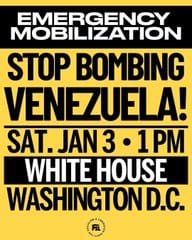
Right on cue, the Party for Socialism and Liberation and the ANSWER Coalition are already mobilizing protests over Trump’s moves against the Maduro regime in Venezuela.
🚨 Here is Venezuela’s President Nicolas Maduro challenging Elon Musk to a fight and Elon accepting
— MAGA Voice (@MAGAVoice) January 3, 2026
President Trump could do the funniest thing ever pic.twitter.com/k8fs9jlycf