Mamdani Outsourced His Rent Freeze to a Government Office. Taxpayers Are Footing the Bill.
Mayor Mamdani says Organize NYC is civic engagement. The five-page canvassing script tells a different story. So does the $2 million in DSA cadre on the public payroll. So does the woman running it. The pressure campaign has a new address: City Hall.

Building on reporting and analysis by John Ketcham and Christian Browne of the Manhattan Institute, first published in the New York Post on May 3, 2026, with additional reporting from the Post's coverage of the Mass Engagement payroll.
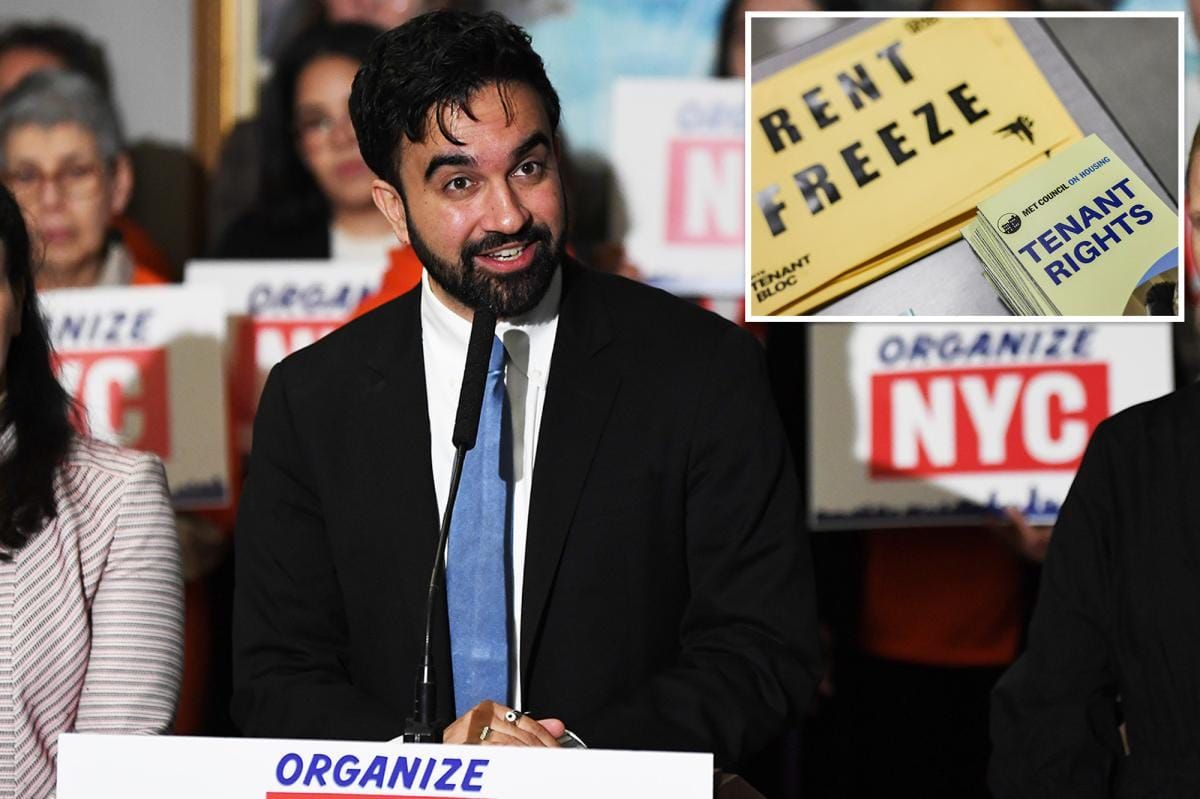
Last Wednesday, Mayor Zohran Mamdani stood at 760 Grand Concourse in the Bronx and announced something he called Organize NYC.
The framing was civic. The stagecraft was a campaign.
Mamdani was flanked by his Office of Mass Engagement Commissioner Tascha Van Auken, his Mayor's Office to Protect Tenants Director Cea Weaver, and tenant organizers from CASA. Not a landlord in sight. Not a property owner. Not a representative of the people who actually own the buildings on which the entire conversation depended.
That was the tell.
Zohran Mamdani was elected mayor of New York City in part by mobilizing an army of volunteer door-knockers.
— Washington Free Beacon (@FreeBeacon) April 30, 2026
Now, he wants to use the same tactic to “freeze the rent,” @IraStoll reports.
Mamdani introduced the “Office of Mass Engagement” on Wednesday, pressing New Yorkers to… pic.twitter.com/eDJc64I1hC
Mamdani told reporters that only 400 people testified at last year's Rent Guidelines Board hearings. He called this a failure of civic engagement. He announced that the city would now deploy taxpayer resources to fix it. The first target of this great democratic awakening would be the very board that holds the power to approve or reject the rent freeze he promised on the campaign trail and cannot deliver by fiat.
The mayor insists the operation is neutral. His hand-picked organizers will fan out through the boroughs. They will canvass tenants. They will tell them when the hearings are. They will not, the mayor swears, encourage anyone to take any particular position.
Read the script.
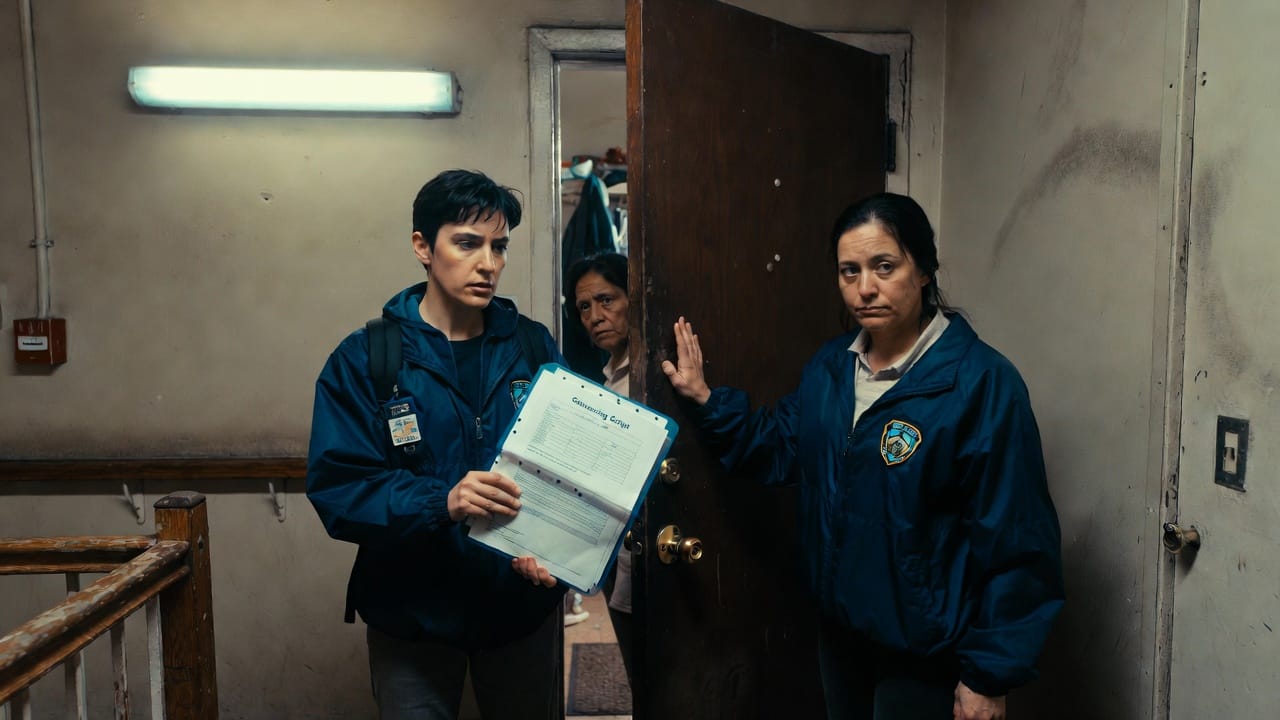
City Hall released a five-page canvassing guide. The vast majority is directed at rent-stabilized tenants. Two short sentences mention landlords. The administration did not invite landlord groups to the launch event. It invited a tenant organizer from CASA who wrote an op-ed last month explicitly calling for a rent freeze.
This is the operation. The framing is participation. The product is pressure. John Ketcham and Christian Browne of the Manhattan Institute, writing in the New York Post this weekend, called it correctly: a thinly veiled, taxpayer-funded effort to embed campaign-style political organizing inside city government and dress it up as civic virtue.
WHO RUNS IT
The woman running Organize NYC is Tascha Van Auken. Her résumé tells the story.
Van Auken managed Julia Salazar's 2018 state senate campaign. She managed Phara Souffrant Forrest's 2020 state assembly campaign. She served as Deputy Campaigns Director at the New York Working Families Party, where she ran the 2022 We Can't Wait slate. She joined Mamdani's mayoral operation in December 2024 as the only field staffer, working out of her apartment. She finished that campaign as field director, having run an army of more than 100,000 volunteers and three million door knocks.
New York, let's get organized.
— Mayor Zohran Kwame Mamdani (@NYCMayor) April 29, 2026
In a city of over 8 million, just 400 people showed up to speak at the last Rent Guidelines Board hearing — where decisions about rents are made.
We can do better.
If we want a city that works for tenants and landlords alike, we need New Yorkers… pic.twitter.com/M6qBtebnu7
She is not a civic engagement specialist. She is a campaign field director. A senior cadre of the New York City Democratic Socialists of America, the political organization that has elected nearly every name listed above.
Mamdani has placed her on the public payroll at a salary of roughly $250,000.
He has placed thirteen more activist staffers under her at salaries running between $80,000 and $150,000. The total runs to nearly $2 million in taxpayer money. The job descriptions, first reported by the New York Post in March, read like the org chart of a campaign field operation. Borough directors. A campaign director. A deputy director of "co-governance," a term lifted directly from DSA organizing literature.
One Democratic strategist told the Post the announcement read like a Soviet politburo job listing. Another asked why the mayor didn't simply call it the Director of Re-Election.
The criticism lands harder coming from Democrats.
THE LEGAL PROBLEM
Ketcham and Browne identified the precise rule that Organize NYC appears to violate. Conflicts of Interest Board Rule §1-13 prohibits public servants from using city personnel, equipment, or resources for non-city purposes. It is not ambiguous.
Organize NYC exists to serve a campaign promise. Mamdani himself has said so. The Office of Mass Engagement, in the mayor's own words, exists to bring the people-powered movement that elected him to the work of governance.
That is not civic engagement. That is the conversion of a private political organization into a permanent municipal arm, paid for by every taxpayer in the five boroughs whether they voted for the man or not.
The deeper legal problem is structural. The Rent Guidelines Board is independent by law. The mayor cannot freeze rents. He has admitted this in interviews since taking office. He cannot directly pressure the RGB without exposing any resulting rent freeze to immediate court challenge.
So he built an indirect pressure operation and gave it a public-engagement label.
It is a basic principle of administrative law that the government may not do indirectly what it is forbidden to do directly. Ketcham and Browne made this point with prosecutorial clarity in the Post, and they are right.
If the canvassing operation produces a one-sided show at the RGB hearings, and the RGB then votes to freeze rents under that pressure, the resulting decision will be ripe for legal challenge as a coordinated end-run around the board's independence. The lawsuit will write itself.
Mayor Mamdani Makes an Announcement Alongside OME Commissioner Van Auken
— Mayor Zohran Kwame Mamdani (@NYCMayor) April 29, 2026
https://t.co/y3gG9cUbge
THE TENANT ORGANIZER PROBLEM
Cea Weaver's presence at the rollout undermined the entire civic engagement script.
Weaver runs the Mayor's Office to Protect Tenants. Before that she ran Housing Justice for All, the statewide coalition that lobbied for rent regulation expansion in 2019. She founded the New York State Tenant Bloc, which mobilized 20,000 tenants to vote for a citywide rent freeze. She served as a policy advisor to the Mamdani campaign. She is a member of DSA. Her resurfaced social media posts described homeownership as a weapon of white supremacy.
This is the woman now appearing at a press conference for what the mayor describes as a neutral civic engagement campaign.
A real estate source quoted by the Post put it plainly. The administration is standing onstage with one of the most prominent rent-freeze advocates in the country and asking the public to believe the operation has no preferred outcome.
No one in New York City believes that. Mamdani does not believe it. Van Auken does not believe it. Weaver does not believe it. The CASA organizer who wrote the rent-freeze op-ed does not believe it.
The pretense is the point. It is what allows the operation to function inside the rules.
THE PRECEDENT
The architecture matters more than the first deployment.
Once Mamdani has built a taxpayer-funded organizing arm capable of being directed at any independent body, he can redeploy it. As Ketcham and Browne warned in the Post, MTA Chair Janno Lieber may find Organize NYC at his next fare hearing. Police precinct community councils. Procurement reviews. Rezoning commissions. Anywhere a quasi-independent body holds power that the mayor cannot directly exercise.
This is what makes Organize NYC dangerous as policy and not merely as theater. It is a delivery system. The cargo can be swapped out.
A reporter at the launch of the Office of Mass Engagement asked Mamdani directly whether the apparatus would be used to pressure Governor Hochul on the millionaire's tax. The mayor would not say no. He gave the answer political operatives give when the answer is yes but the moment is wrong to say so.
The voters who came to this country from places where the state ran the citizens' organizations, where the rent strike committee met under the same letterhead as the housing authority, recognize the syntax. The slogans about lasting power and mass governance are not new. The phrase co-governance was not coined in Brooklyn in 2024. It has a longer history.
What is new is the address. It is City Hall.
The mayor cannot deliver his rent freeze through law. He has chosen to deliver it through pressure. He has put the pressure operation on the public payroll. He has named DSA cadre to run it. He has told New Yorkers that the office exists to make their voices heard while writing scripts that elevate one voice over the other.
This is not civic engagement. This is a permanent campaign apparatus.
The next round of hearings begins in June. Watch who shows up. Watch who paid for them to be there.
 Gene Goodwin
 Gene Goodwin
Credit where credit is due: the legal framework laid out above, the §1-13 analysis, and the precedent warning about MTA fare hearings come from the May 3, 2026 New York Post column by John Ketcham and Christian Browne, both attorneys at the Manhattan Institute. The reporting on the Mass Engagement payroll, the leaked job descriptions, and the canvassing-script imbalance comes from the New York Post's news side.