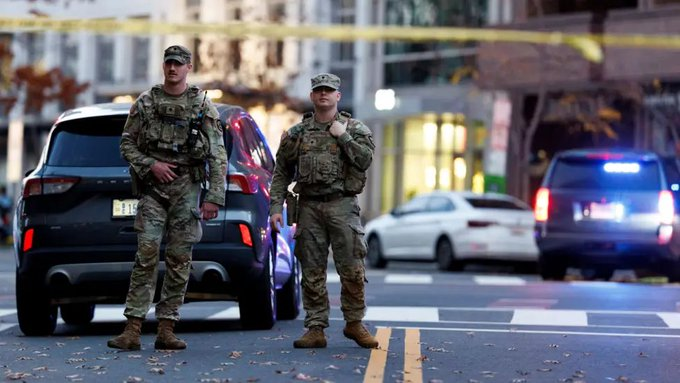
National Guardswoman Sarah Beckstrom dead at 20 shot by a crazed Afghan refugee

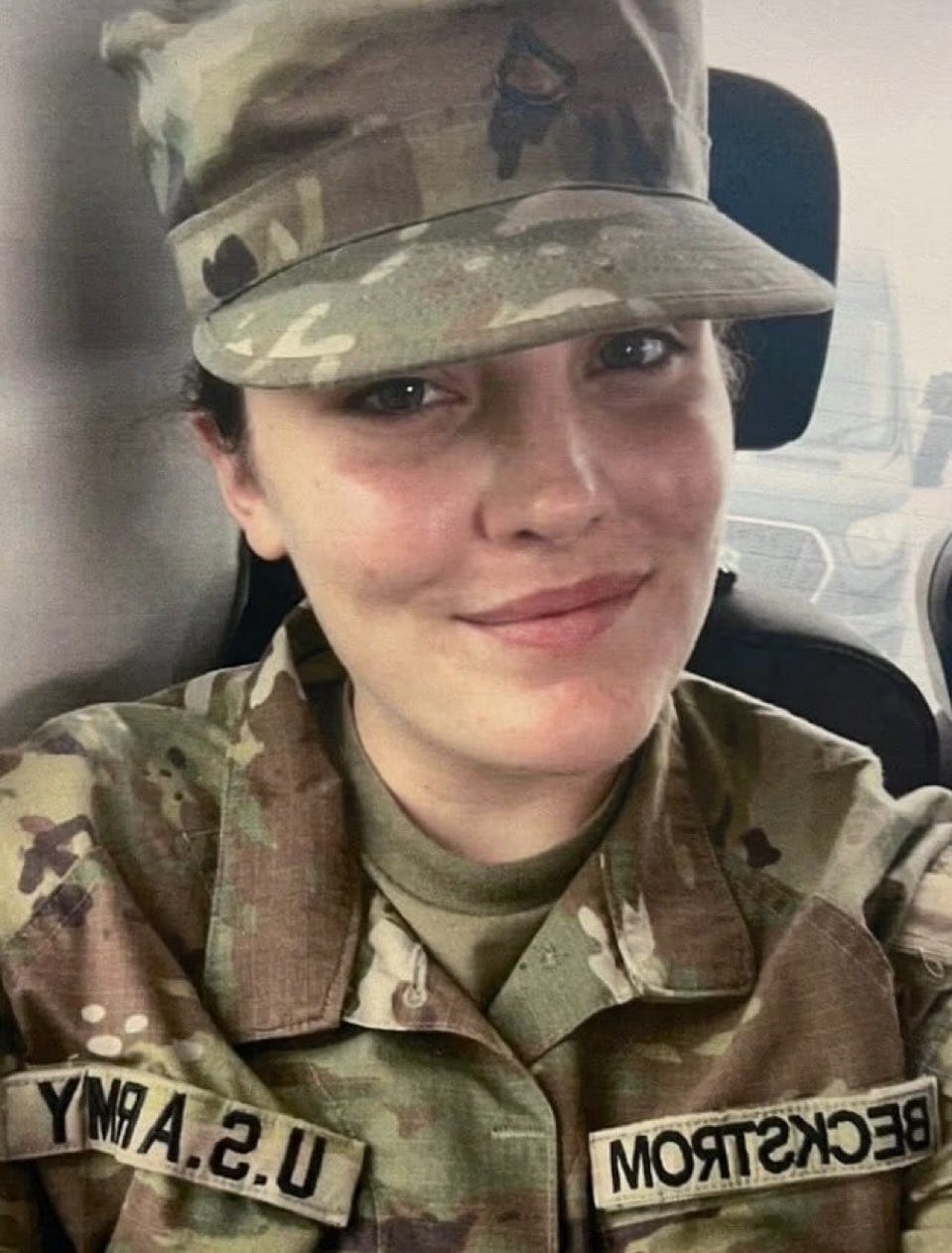
Twenty-year-old Sarah Beckstrom volunteered to work Thanksgiving so others could be home with family. Hours later, she lay dying in a Washington hospital, shot in the chest and head by an Afghan refugee America had promised to save. The bullet came from a man the CIA had trained, armed, and paid: a member of the elite "Zero Units" death squads who fought America's dirtiest battles in Afghanistan's mountains and valleys.
Her father held her hand as she slipped away. "She has a mortal wound. It's not going to be a recovery," Gary Beckstrom told reporters hours before his daughter died. President Trump announced her passing during a Thanksgiving call to service members: "She's just passed away. She's no longer with us. She's looking down at us right now."
The tragedy exposes an uncomfortable truth. America's humanitarian instincts, weaponized by bureaucratic incompetence and political expediency, created a national security disaster that was entirely predictable and entirely preventable.
Rahmanullah Lakanwal entered the United States on September 8, 2021, under Operation Allies Welcome, the Biden administration's signature program to evacuate vulnerable Afghans after the chaotic Kabul withdrawal. The administration assured Americans that every Afghan underwent "rigorous" vetting: biometric screenings, database checks, counterterrorism reviews conducted by 400 personnel across U.S. intelligence agencies.
FBI Director Kash Patel shredded that narrative Thursday morning: "When the prior administration made the decision to allow thousands of people in without doing a single background check or vetting, that's how you miss every single sign."
But here's where the story gets complicated. The reality contradicts both the Biden administration's promises and the Trump administration's current blame game. A senior U.S. official confirmed to multiple news outlets that Lakanwal passed every vetting checkpoint. He passed when he started working with the CIA around 2011, when he was probably just 15 years old with a forged birth certificate. He passed again during Operation Allies Welcome in 2021. He continued passing continuous annual vetting checks. "In terms of vetting, nothing came up," the official stated flatly. "He was clean on all checks."
This wasn't a vetting failure in the traditional sense. It was something far more insidious. The vetting worked exactly as designed, yet still produced catastrophic results. The system cannot detect what it's not configured to find. Nobody bothered to ask whether creating thousands of highly trained killers, subjecting them to years of extreme psychological trauma, then abandoning them in a foreign country might produce adverse outcomes.
Think about what that means for a moment. Every box got checked. Every database query returned clean. Every biometric scan matched. The bureaucracy functioned precisely as intended. And a 20-year-old National Guard member still died on a Washington street the day before Thanksgiving.
A Department of Justice report released in June 2025 admitted what everyone already knew: "the need to immediately evacuate Afghans overtook the normal processes required to determine whether individuals attempting to enter the United States pose a threat to national security." Translation: speed trumped safety. Political optics mattered more than security protocols. The report noted 55 individuals evacuated under Operation Allies Welcome were later identified on terrorism watch lists. By August 2022, according to Senator Chuck Grassley, 1.6 percent of the more than 100,000 Afghan refugees had "links to terrorism or other derogatory information." That's over 1,600 people.
Army Specialist Sarah Beckstrom of Summersville, West Virginia, has passed away 😢
— Wake Up NJ 🇺🇸 New Jersey (@wakeupnj) November 28, 2025
President Trump just announced it after yesterday’s Afghan attack in DC
This is absolutely awful, please pray 🙏, not only for this family, but all those who serve and protect us pic.twitter.com/UoonrCCzM2
And here's the kicker that both parties want to ignore: The Trump administration granted Lakanwal asylum in April 2025, four months into Trump's second term, after he applied in December 2024. Both administrations share culpability. Biden's team prioritized the chaotic evacuation that put optics over security. Trump's team continued processing applications from a manifestly broken system. Neither wanted to acknowledge the fundamental problem because doing so would require admitting their approach was wrong.
Lakanwal wasn't a random refugee seeking safety. He wasn't an interpreter or a driver or a clerk who helped American forces with paperwork. He served in NDS-03, known as the Kandahar Strike Force, one of five elite CIA-backed paramilitary units called "Zero Units" due to their numerical designations (01, 02, 03, etc.). Operating from "Firebase Gecko," the former compound of Taliban founder Mullah Omar, these units conducted the deadliest counterterrorism missions in Afghanistan's southern provinces: Kandahar, Helmand, Uruzgan.
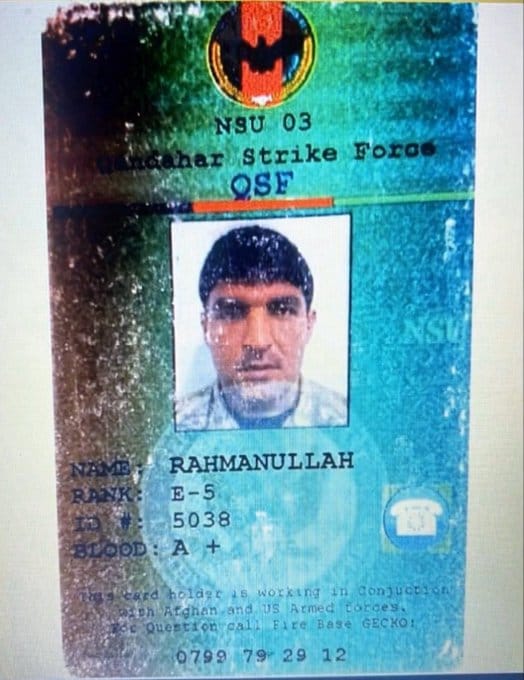
CIA Director John Ratcliffe confirmed the basics without elaborating on what that actually meant: Lakanwal "previously worked with the U.S. Government, including CIA, as a member of a partner force in Kandahar that ended in 2021 following the withdrawal from Afghanistan."
Let's be clear about what "partner force" means in CIA speak. According to a former senior Afghan general who commanded these operations, Zero Units were "the most active and professional forces, trained and equipped by the CIA. All their operations were conducted under the CIA command." These weren't advisors sitting in air-conditioned offices translating documents. They weren't support staff washing dishes at military bases.
They were CIA-paid killers trained by American special operations soldiers to hunt Al-Qaeda and ISIS leaders plotting attacks against the United States.
Rolling Stone's investigation into Zero Units revealed something remarkable about their operational security: they never suffered an insider attack. Not once. No Afghan member ever turned on U.S. advisers during the entire war. The reason was a strict vetting process where recruits could only join if vouched for by family members already inside the unit. Lakanwal's brother reportedly commanded the same unit he joined, likely when Lakanwal was still a teenager with a forged birth certificate claiming he was 18. (It was common practice at the time. Few official birth records exist in Afghanistan. Young men desperate to work with American forces would age themselves on paper. The CIA likely knew and didn't care as long as they could shoot straight.)
But Zero Units earned another reputation beyond tactical excellence: they were accused of war crimes.
Human Rights Watch documented what they called "serious laws-of-war violations, some amounting to war crimes, that extends to all provinces in Afghanistan where these paramilitary forces operate with impunity." The allegations included family executions, torture, and indiscriminate civilian killings. Activist groups called them death squads. The CIA vehemently denies these allegations, dismissing them as Taliban propaganda designed to discredit effective counterterrorism operations.
The truth probably lives in the gray zone where most war crimes actually occur. These were highly effective operators trained for surgical strikes who, over years of sustained combat in Afghanistan's brutal counterinsurgency, saw and committed acts that shattered their psychological resilience. Night raids into compounds where women and children might be present. Split-second decisions about who poses a threat. Interrogations that crossed lines. Combat creates moral injury even when soldiers follow rules. When the rules bend or break entirely, the damage compounds.

A childhood friend of Lakanwal told The New York Times what military psychologists could have predicted: years with the Zero Units had destroyed him. "When he saw blood, bodies, and the wounded, he could not tolerate it. It put a lot of pressure on his mind." Lakanwal reportedly tried to cope through self-medication with marijuana. Towards the end of his service in 2021, he married a second wife and divorced her within days, a sign of severe mental instability that would have been obvious to anyone paying attention.
Here's what nobody in the federal government wants to acknowledge because it indicts their entire approach to the Afghan withdrawal. The U.S. government created highly trained killers, subjected them to years of extreme psychological trauma conducting night raids and close-quarters combat in one of the most brutal counterinsurgencies in modern history, then dropped them into American communities with essentially zero mental health support or cultural integration assistance.
Zero Unit members weren't translating documents or driving supply trucks. They were kicking in doors at 2 AM, clearing rooms where insurgents might be hiding behind women and children, making split-second life-or-death decisions, watching friends die in ambushes. Night after night. Year after year. Then one day in August 2021, the war ended. Not with victory parades or gradual drawdowns that allowed psychological decompression. It ended with desperate evacuation flights and the Taliban rolling into Kabul.
After arriving in Bellingham, Washington, with his wife and five children, Lakanwal lived quietly for four years. Neighbors described him as polite but withdrawn, keeping to himself. Multiple law enforcement sources told CBS News that investigators believe Lakanwal "suffered from paranoia and other mental health challenges" and believed authorities were trying to deport him, which may or may not have been based in reality but was real enough in his mind to drive him across the country with a loaded revolver.
A former Afghan commando said Lakanwal was "deeply troubled by the death of a close friend and fellow Afghan commander in 2024, whom he said had unsuccessfully sought asylum in the U.S." Imagine that for a moment. You fought alongside Americans for a decade. You were promised protection. You made it out. But your brother-in-arms, who did the exact same job, who faced the same Taliban death threats, got left behind. Now he's dead. And you're living in a foreign country where nobody understands what you've been through, where you can't find steady work that utilizes your skills, where you're isolated from the tight-knit military unit that was your entire social support system.
The psychological profile fits a pattern security experts have warned about for decades: combat veterans experiencing severe PTSD, survivor's guilt, and alienation, now operating in an environment where they perceive threats that may or may not exist. Add substance abuse as a coping mechanism. Add cultural dislocation. Add paranoia about deportation. You get a ticking bomb.
Yet when Lakanwal drove cross-country from Washington state to Washington D.C., when he waited near the Farragut West Metro Station with a .357 Smith & Wesson revolver, when he "came around the corner" and immediately opened fire on National Guard members who'd been sworn in just 24 hours earlier, nobody intercepted him because nothing in the vetting system was designed to flag psychological deterioration.
The system screened for terrorist affiliations and criminal records. It didn't screen for trauma, paranoia, or the mental health consequences of turning human beings into weapons and then discarding them.
Operation Allies Welcome evacuated approximately 76,000 Afghans in the chaotic final weeks of America's longest war. The moral imperative seemed crystal clear at the time: America owed protection to those who'd risked everything supporting U.S. forces against the Taliban. Translators who'd helped American soldiers navigate Afghan villages. Drivers who'd transported supplies under threat of IED attacks. Embassy staff who'd processed visas and maintained diplomatic relations. And yes, commandos from elite units who'd fought America's deadliest battles.
But moral clarity doesn't excuse operational negligence. Good intentions implemented incompetently produce disasters regardless of how righteous the underlying motivation.
The Department of Homeland Security's Inspector General released a damning report in 2024 that tried to bury its most explosive findings in bureaucratic language. It acknowledged "data inaccuracies in some of the files of Afghans who came through the program." That's government-speak for "we have no idea who some of these people actually are." The speed of evacuations meant traditional screening protocols were abandoned entirely. Congressman Clay Higgins warned in October 2021, just weeks after Lakanwal's arrival, that "some of these individuals are being paroled into the interior of the United States, or they are even prematurely leaving military bases before undergoing proper and necessary vetting."
Those warnings were dismissed as racist fear-mongering. Vice President JD Vance recalled the social pressure applied to anyone questioning the evacuation's execution: "I remember back in 2021 criticizing the Biden policy of opening the floodgate to unvetted Afghan refugees. Friends sent me messages calling me a racist."
This is how policy disasters happen in modern America. The tribal instinct to defend "our side" regardless of legitimate security concerns produces catastrophic outcomes because political considerations override operational requirements.
When substantive criticism of immigration vetting becomes socially unacceptable, when legitimate questions about screening procedures get dismissed as bigotry, systems fail. Not because the critics are always right, they often aren't, but because the inability to have honest conversations about tradeoffs and risks means problems don't get addressed until people die.
The Biden administration prioritized demonstrating humanitarian commitment over ensuring security. Speed mattered more than thoroughness because the images of Afghans clinging to evacuation planes created political pressure to act decisively. Never mind whether acting decisively produced good outcomes, what mattered was being seen to care.
The Trump administration, despite all its tough rhetoric about immigration, granted Lakanwal asylum in April 2025. Why? Because processing the backlog of applications mattered more than acknowledging the system was fundamentally broken. Both actions reflected political imperatives, virtue signaling on one side and bureaucratic box-checking on the other, that subordinated national security to convenience.
Multiple federal agencies touched Lakanwal's case over more than a decade. Each one checked boxes. Each one followed protocols. Each one passed him to the next link in the chain. And at the end of that chain, Sarah Beckstrom bled out on a Washington street.
The CIA recruited, trained, and paid him for roughly ten years. They taught him how to conduct night raids, clear buildings, identify high-value targets, and use lethal force effectively. They paid his salary. They operated him as an intelligence asset in one of the most dangerous counterterrorism environments on Earth. Then in August 2021, when Kabul fell, they evacuated him along with thousands of other Zero Unit members.
The National Counterterrorism Center vetted him before entry in 2021. They ran his name through terrorist databases. They checked his fingerprints. They reviewed his background. Everything came back clean because technically it was clean. He'd never been arrested. He had no known terrorist affiliations. His service record with the CIA was exemplary. Check, check, check. Approved for entry.
U.S. Citizenship and Immigration Services approved his asylum application in April 2025. They reviewed his case. They confirmed his identity. They verified his service to U.S. forces. They granted him permanent status. Another set of boxes checked. Another bureaucratic milestone achieved.
None of these agencies flagged him as a potential threat. Why? Because the vetting system screens for known terrorist affiliations, criminal records, and watch list matches. It doesn't screen for psychological instability, trauma-induced paranoia, or cultural dislocation. It's a system designed to catch terrorists, not to prevent them from being created through the very operations we conduct.
Think about the absurdity of this for a moment. We trained this man to kill. We paid him to conduct high-risk operations in extremely violent environments. We exposed him to sustained psychological trauma. Then we evaluated whether he posed a threat using criteria that have nothing to do with the actual risk factors we created.
Zero Unit veterans face unique bureaucratic obstacles that reveal how broken the system truly is. Advocates note that standard green card applications include questions like "Have you EVER received any type of military, paramilitary, or weapons training?" When Zero Unit members truthfully answer yes, because they were trained by the CIA to be elite commandos, their applications stall indefinitely. The system treats CIA-trained counterterrorism operators the same as potential threats, creating legal limbo for the very people America promised to protect.
This represents the bureaucratic equivalent of strategic stupidity. Evacuate elite fighters who've conducted classified operations for a decade. Subject them to screening processes that can't assess their actual risk profile. Grant them asylum based on past service rather than current stability. Provide essentially zero integration support. Then act surprised when some of them become threats.
Former CIA officer Geeta Bakshi founded FAMIL, a nonprofit dedicated to resettling Zero Unit veterans, precisely because she recognized the system was catastrophically failing them. She'd worked with these men in Afghanistan. She understood the psychological toll of what they'd experienced. She knew they needed specialized support to transition from elite commandos to American civilians. But her organization operates on donations and volunteer effort while federal agencies that created the problem spend millions on bureaucracy that makes everything worse.
These aren't abstract policy questions. They're human beings who fought America's battles, many now struggling with PTSD, substance abuse, and survivor's guilt while navigating a bureaucracy that alternately ignores and stigmatizes them. Some, like the Zero Unit members who've successfully integrated, find ways to cope through community support and mental health treatment. Others, like Lakanwal, deteriorate until they snap.
The United States faced legitimate moral obligations to Afghans who fought alongside American forces. Nobody serious disputes this. Translators who risked Taliban execution to help U.S. troops deserved protection. Embassy staff who maintained diplomatic operations under threat deserved evacuation. Zero Unit commandos who conducted the most dangerous counterterrorism missions deserved asylum.
But fulfilling those obligations didn't require abandoning security protocols or common sense. It required thoughtful integration strategies that acknowledged the psychological realities of combat veterans. This isn't rocket science. Military psychologists have understood combat trauma for generations. The principles for successful veteran reintegration are well-established. The federal government simply chose not to apply them.
First, establish mandatory psychological screening and ongoing mental health support for all combat veterans entering under Operation Allies Welcome. Not as a punitive measure or a barrier to entry, but as recognition that years of counterinsurgency warfare produce trauma requiring professional intervention. Screen for PTSD, depression, substance abuse, and other risk factors. Provide treatment. Monitor progress. This isn't complicated. The VA does it for American veterans, albeit imperfectly. The same principles apply to Afghan commandos who fought the same war.
Second, create culturally tailored integration programs rather than dispersing refugees across the country with minimal support networks. Zero Unit members operated in tight-knit teams where trust and mutual support meant the difference between life and death. Isolating them in unfamiliar communities, cut off from their military brotherhood, exacerbates alienation and paranoia. Settle them in clusters where they can maintain social connections. Provide language training. Offer employment assistance that recognizes their skills rather than treating elite commandos as generic refugees.
Third, maintain continuous monitoring protocols beyond annual vetting checks. Social services engagement. Mental health check-ins. Community integration assessments. Early intervention when individuals show signs of deterioration. This requires money and personnel, which is why it didn't happen. Box-checking compliance costs less than actually helping people, so bureaucracies default to box-checking.
Fourth, provide transparent communication about asylum status and deportation policies. If Lakanwal believed authorities were targeting him for removal, whether that belief was grounded in reality or paranoid delusion, clear information might have mitigated his spiral. The opacity of immigration bureaucracy makes everything worse for people already dealing with trauma and cultural dislocation.
Fifth, balance evacuation speed with security requirements. The moral imperative to protect Afghan allies didn't justify abandoning screening protocols entirely. Slower, more deliberate processing in third countries would have allowed proper vetting without abandoning people to Taliban retribution. Pakistan, Qatar, and other nations hosted temporary facilities. Use them. Take the time to screen properly. Accept that doing it right matters more than doing it fast.
None of this happened because it required coordination across multiple agencies, sustained funding commitments, and political will to implement unglamorous bureaucratic processes that don't produce headlines or photo opportunities.
Instead, both administrations chose theatrical gestures. Biden's mass evacuation proved American compassion to progressive audiences horrified by the Kabul airport chaos. Trump's sweeping bans and reviews demonstrated toughness to conservative audiences demanding accountability. Neither approach addressed the fundamental problem: you cannot train people to kill, traumatize them through years of combat, then integrate them into civilian society without comprehensive support systems.
The policies both sides pursued were optimized for political consumption, not operational effectiveness. Biden wanted to show he cared about Afghan allies. Trump wanted to show he was tough on security. Sarah Beckstrom paid the price for both administrations prioritizing appearances over outcomes.
Sarah Beckstrom will never celebrate another Thanksgiving. She won't graduate college or start a career. She won't get married or have children. Her father won't walk her down the aisle. Her mother won't become a grandmother through her. All of those future moments, the accumulated potential of a 20-year-old life, ended on a Washington street because multiple federal agencies failed at basic competence.
Andrew Wolfe, 24, remains hospitalized, "fighting for his life" after being shot multiple times. His recovery, if he survives, will involve months of rehabilitation and likely permanent disabilities. Their families face decades processing grief that shouldn't exist, trauma that was entirely preventable.
This tragedy didn't have to happen. That's what makes it so infuriating. Not that it was unforeseeable, random bad luck, an unpredictable act of violence that nobody could have prevented. This was entirely foreseeable. Security experts warned about exactly this scenario. Psychologists explained the risk factors. Advocates for Zero Unit veterans described the gaps in support services. All the information existed. All the warning signs were visible.
The tragedy was preventable not through better vetting in the traditional sense, Lakanwal passed every checkpoint because he had no criminal record or terrorist ties. It was preventable through recognizing that combat trauma plus cultural dislocation plus perceived threats equals catastrophic risk, then implementing systems to identify and intervene before violence occurs.
But that would have required treating Afghan refugees as complex human beings rather than political props. It would have required sustained investment in boring, unglamorous support services that don't generate headlines. It would have required coordination between agencies that prefer operating in silos. It would have required politicians to prioritize long-term outcomes over short-term optics.
Attorney General Pam Bondi announced prosecutors will pursue the death penalty against Lakanwal. "There WILL BE JUSTICE for Sarah," she declared on social media. That's appropriate from a legal standpoint. Lakanwal murdered a National Guard member and attempted to murder another in a premeditated attack. The evidence appears overwhelming. If convicted, execution represents legitimate punishment for an unconscionable crime.
But executing Lakanwal doesn't fix the systemic failures that produced this outcome. It doesn't prevent the next tragedy.
President Trump announced he will "permanently pause migration from all Third World Countries" and ordered comprehensive reviews of all Afghan refugees admitted under Biden. This represents predictable political theater that addresses symptoms rather than causes. The problem isn't Afghan refugees broadly. The problem is the specific failure to provide adequate mental health support and integration services for combat veterans experiencing severe trauma.
Banning entire categories of people because one individual committed violence is the policy equivalent of burning down your house because you found a spider. It feels decisive. It demonstrates action. It satisfies people demanding "something must be done." But it doesn't solve the actual problem, which is that the United States created thousands of highly trained combat veterans, subjected them to extreme psychological stress, then abandoned them without proper support systems.
The 76,000 Afghans evacuated under Operation Allies Welcome include translators, embassy staff, aid workers, and yes, Zero Unit commandos. The vast majority have integrated successfully, found employment, and contributed to their communities. Collective punishment for the actions of one individual represents lazy policymaking that ignores the nuanced reality in favor of politically convenient narratives.
Absolutely. Without question. These were people who risked their lives and their families' lives supporting American operations against the Taliban. Abandoning them to Taliban retribution would have been morally unconscionable and strategically stupid, signaling to future allies that America abandons those who help us.
No. The false choice between compassion and security produced this disaster. Slower processing in third countries would have allowed proper screening and mental health assessment without abandoning people. The chaotic airport scenes made for dramatic television, but they also made for terrible policy.
Possibly. We'll never know because it was never attempted. Maybe Lakanwal's deterioration was so severe that even comprehensive mental health treatment wouldn't have helped. Maybe his paranoia was so entrenched that no intervention could have penetrated it. But maybe proper screening would have identified him as high-risk. Maybe ongoing therapy would have provided coping mechanisms. Maybe a support network of other Zero Unit veterans would have prevented his isolation. We didn't try, so we'll never know.
Almost certainly not. Because real reform requires acknowledging that both immigration restrictionists and humanitarian advocates oversimplify complex realities. It requires admitting mistakes, which politicians hate doing. It requires sustained funding for boring support services, which doesn't generate exciting headlines. It requires treating refugees as complex human beings rather than political symbols.
Democrats want to defend Operation Allies Welcome because admitting it was poorly executed undercuts their humanitarian narrative. They'll point to the 76,000 Afghans who've integrated successfully and argue this represents an isolated incident. They'll dismiss security concerns as Republican fear-mongering. They'll avoid discussing the DHS Inspector General reports documenting vetting failures because those reports complicate the story they want to tell.
Republicans want to use this tragedy to vindicate their restrictionist immigration positions. They'll argue it proves Biden was reckless and Trump is right to crack down. They'll demand bans and reviews and enforcement actions that make good soundbites but don't address root causes. They'll avoid discussing Trump's role in granting Lakanwal asylum because that complicates the story they want to tell.
The truth resists partisan categorization. America's Afghan policy failed catastrophically not because officials were too compassionate or too restrictive, but because they prioritized political narratives over operational competence.
Both parties treat immigration as a values statement rather than a practical challenge requiring nuanced solutions. Progressives signal compassion through broad admissions policies. Conservatives signal toughness through sweeping bans. Neither approach optimizes for actual outcomes because optimizing for outcomes is harder than optimizing for political positioning.
Sarah Beckstrom volunteered to work on Thanksgiving so others could spend the holiday with family. She represented the best of American service: selfless, dedicated, willing to sacrifice personal comfort for collective good. She was murdered by a system that treats human beings as political pawns rather than complex individuals requiring thoughtful integration strategies.
Both administrations share responsibility. Both deserve condemnation.
The Biden administration prioritized humanitarian theater over security protocols. The Trump administration continued processing applications from a known-broken system while claiming to be tough on security. Neither invested in the unglamorous work of actually integrating combat veterans from a foreign culture into American society.
The question facing American policymakers, assuming any of them care about more than their next election, is whether our political system retains enough capacity for honest assessment to prevent the next preventable tragedy. Or whether partisan point-scoring will continue dominating policy discussions until more National Guard members die on American streets, killed by refugees the government failed to properly evaluate, treat, or integrate.
The answer, based on decades of observation and zero evidence of institutional learning, seems painfully obvious.
Politicians will give speeches about Sarah Beckstrom's sacrifice. They'll attend memorial services and issue press releases. They'll use her death to advance whatever immigration policies they already supported before she was murdered. The bureaucracies that failed her will conduct reviews that produce reports that gather dust. Lakanwal will likely be executed, which provides emotional satisfaction but doesn't fix anything.
And the next Zero Unit veteran struggling with PTSD, isolated in an unfamiliar country, self-medicating with substances, spiraling into paranoia, will receive the same inadequate support systems that failed Lakanwal. Until maybe he snaps too. And we do this all over again, with different victims but the same preventable failures.
That's the real tragedy beyond Sarah Beckstrom's death. Not just that it happened, but that nothing will be learned from it. Not really. Not in ways that produce meaningful change. Because meaningful change requires honest assessment of complicated tradeoffs, and American politics has lost the capacity for honest assessment of anything.