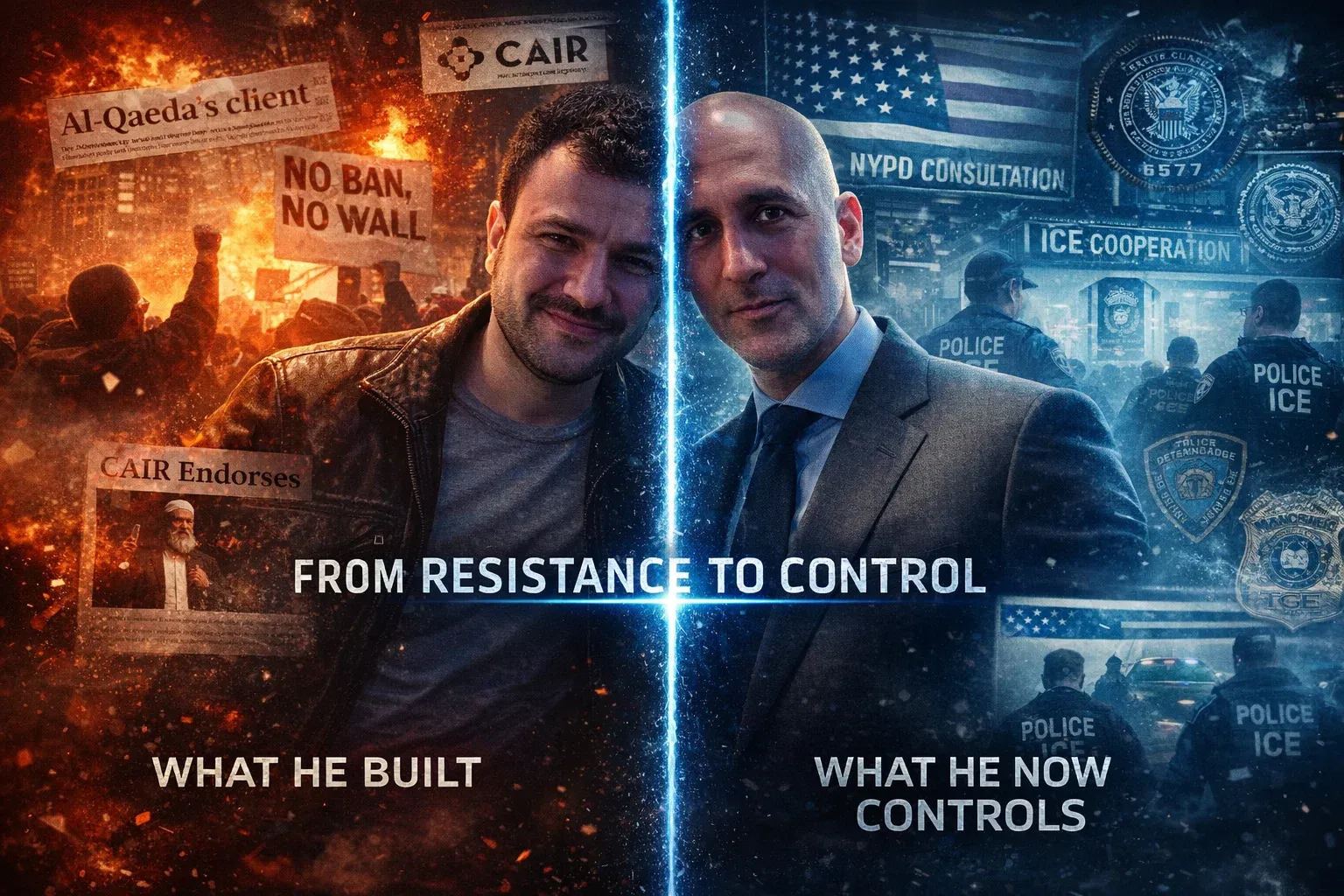
NYC's New Chief Counsel Built the Legal Infrastructure That Now Defends Campus Protesters and ICE Detainees—And His Network Reveals How Progressive Capture Actually Works

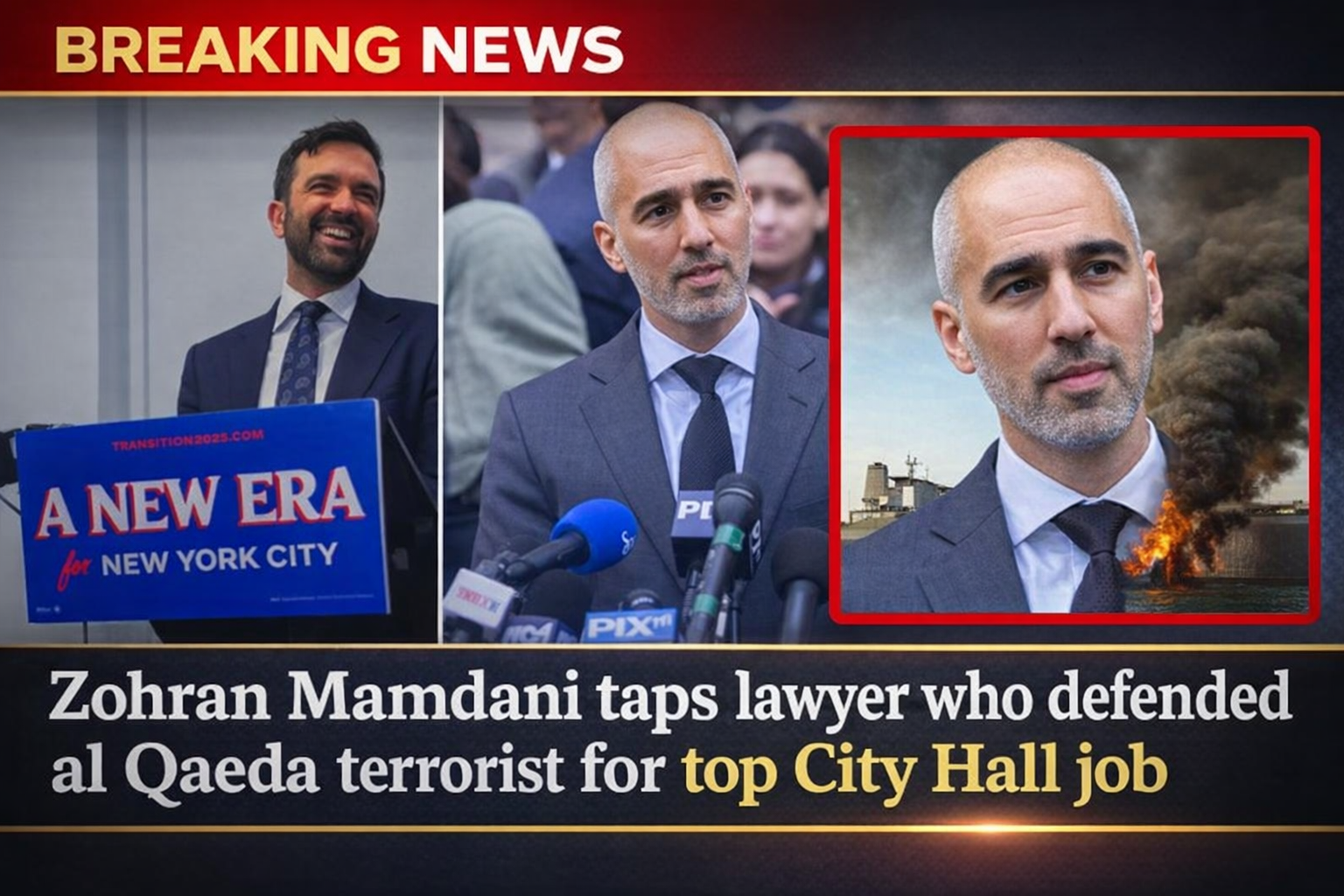
On December 31, 2025, New York City Mayor Zohran Mamdani appointed Ramzi Kassem as Chief Counsel—the mayor's top legal adviser, responsible for shaping enforcement policy on protests, immigration cooperation, and police procedures across America's largest city. The appointment passed with minimal scrutiny despite Kassem's remarkable public record: he founded the legal clinic that coordinates defense for anti-Israel campus protesters, represented an Al-Qaeda operative whose brother-in-law flew into the Pentagon on 9/11, and recently accepted an award where he urged Muslims to "follow" an imam who testified for the Blind Sheikh and appeared on prosecutors' 1993 World Trade Center bombing list.
The question isn't whether Kassem has controversial clients or associations—lawyers represent unpopular defendants, that's the system. The question is what his appointment reveals about how institutional capture actually operates: not through conspiracy, but through personnel networks, funding flows, and procedural positioning that create coordinated outcomes without requiring central command.
Kassem's path from activist legal clinic to the White House to City Hall demonstrates a mechanism that operates across progressive institutions: build anti-enforcement infrastructure, secure funding from overlapping philanthropic networks, move personnel into government positions where they can shape policy, then watch as the ideology embedded in the infrastructure becomes official procedure.
This is how anti-enforcement becomes enforcement policy.
In 2009, Ramzi Kassem founded CLEAR (Creating Law Enforcement Accountability & Responsibility) at CUNY School of Law. The organization's stated mission is to represent clients "against government policies and practices deployed under the guise of 'national security' and 'counterterrorism.'"
CLEAR quickly became the go-to legal resource for campus activists and immigration enforcement resisters. When Columbia University's anti-Israel protest movement erupted in 2024, both the Columbia protest coalition and Within Our Lifetime—the group led by CLEAR alumni Nerdeen Kiswani and Fatima Mohammed—directed followers to contact CLEAR for legal assistance.
This wasn't coincidence. Kassem had built a pipeline: campus activists facing consequences knew exactly where to get legal defense, ICE detainees knew which clinic provided representation, protesters knew which organization coordinated their legal strategy. The infrastructure created dependency, and dependency created influence.
By 2022, that infrastructure had proven valuable enough that the Biden White House brought Kassem in as Senior Policy Advisor on immigration, watchlisting, screening, and profiling policy—placing him in direct collaboration with the National Security Council. The activist lawyer who built legal resistance to enforcement policy was now helping write that policy at the federal level.
Then, on January 1, 2026, he became Chief Counsel to the Mayor of New York City.
CLEAR operates as a clinic within CUNY School of Law, but multiple sources describe it as "largely funded" by George Soros's Open Society Foundations. This matters because Open Society funds multiple nodes in the same network:
Open Society Foundations grants include:
MacKenzie Scott's Yield Giving adds another layer:
Solidaire Network then redistributes to:

The pattern reveals itself: the same philanthropic sources fund both the enforcement-resistance legal infrastructure (CLEAR) and the broader progressive criminal justice apparatus (Vera Institute), while simultaneously funding the campus protest organizations that rely on that legal infrastructure.
This isn't coordination through conspiracy. It's coordination through aligned funding incentives. Organizations funded by the same sources naturally develop compatible objectives and overlapping personnel networks.
Vera Institute provides a useful comparison point. Founded in 1961 with Ford Foundation support, Vera has received:
The same progressive philanthropic ecosystem that funds CLEAR's anti-enforcement work funds Vera's "criminal justice reform" initiatives. MacKenzie Scott, whose recent grants to Solidaire fund campus protest organizations, also funds Vera Institute. The money flows through different channels but creates overlapping networks with compatible ideologies.
Mamdani’s NYC Chief Counsel Ramzi Kassem urges Muslims to follow Linda Sarsour & Siraj Wahhaj and donate to CAIR, an org accused of illegal political ops in 22 states. @lsarsour claims CAIR funded most of Mamdani’s campaign. pic.twitter.com/mQhEBm81bI
— Canary Mission (@canarymission) January 5, 2026
When CAIR-NY welcomed Kassem's appointment, calling it "a powerful affirmation of the city's commitment to justice, civil rights and the rule of law," they weren't being subtle. CAIR's Executive Director Afaf Nasher had already served on Mamdani's transition team. The organization was publicly celebrating the installation of an ideological ally in a position to shape city enforcement policy.
But the October 2025 CAIR gala, where Kassem received the "Civil Rights Hero Award," revealed even more about his network. According to MEMRI reporting and Mark Levin's show summary, while accepting CAIR's "Defender of Truth" award, Kassem:
Who someone publicly praises reveals what values they'll bring to government. Let's examine who Kassem holds up as models:
Linda Sarsour:
Zahra Billoo:
Imam Siraj Wahhaj:
This isn't guilt by association. Kassem isn't connected to these figures—he's publicly endorsing them as models to follow. When someone in a position to shape law enforcement policy says to "follow" an imam who appeared on the 1993 WTC bombing list and defended the Blind Sheikh, that reveals priorities.
Mamdani's appointee for NYC's new top attorney, Ramzi Kassem, spoke in a Zoom meeting advising pro-Hamas protesters on who should break the law, and just how far they could go, based on their immigration status and the risk of legal consequences.
— Canary Mission (@canarymission) January 2, 2026
The call was titled "Emergency… pic.twitter.com/MriSTclh8s
Kassem now serves as Chief Counsel to the Mayor of New York City. The position controls:
He's not just a lawyer anymore. He's the architect of legal strategy for a city of 8 million people.
Consider what this means in practice:
When campus protests erupt at CUNY or Columbia, the mayor's Chief Counsel—who founded the legal clinic that coordinates defense for those protesters—will advise on enforcement response.
When ICE seeks cooperation from NYPD, the mayor's Chief Counsel—who spent two years at the Biden White House shaping immigration policy and whose entire career focused on resisting "national security" enforcement—will advise on cooperation protocols.
When questions arise about surveillance of mosques or monitoring of activist organizations, the mayor's Chief Counsel—who publicly urged donations to CAIR and called its most controversial figures "treasures"—will advise on legal boundaries.
This is how anti-enforcement ideology becomes enforcement policy: through personnel who built anti-enforcement infrastructure moving into positions where they control enforcement procedures.
to be continued...