Qatar's Deception: The Hidden Hand Behind Hamas' Rise

In the glittering halls of Doha's palaces, where oil wealth flows like the Persian Gulf tides, Qatar has long mastered the art of diplomatic sleight-of-hand. Publicly, it positions itself as a neutral mediator, a benevolent force urging peace in the Middle East. Privately, however, the tiny emirate has funneled billions into the coffers of Hamas, the Islamist terror group whose rockets and tunnels have scarred Israel for decades.
Bill Gates delivers a keynote address at #DohaForum25, highlighting how innovation, global cooperation, and scalable solutions can drive progress where it’s needed most. 🌍✨ @BillGates pic.twitter.com/DJxfvnknQR
— Doha Forum (@DohaForum) December 6, 2025
This isn't mere philanthropy—it's statecraft laced with jihadist ambition, a calculated bid to export Qatar's brand of political Islam while undermining rivals like Saudi Arabia and Egypt. As the world grapples with the aftermath of October 7, 2023—when Hamas's savagery claimed 1,200 lives and kidnapped 253 innocents—Qatar's role demands unflinching scrutiny. The facts, buried under layers of propaganda and half-truths, paint a damning portrait of duplicity.
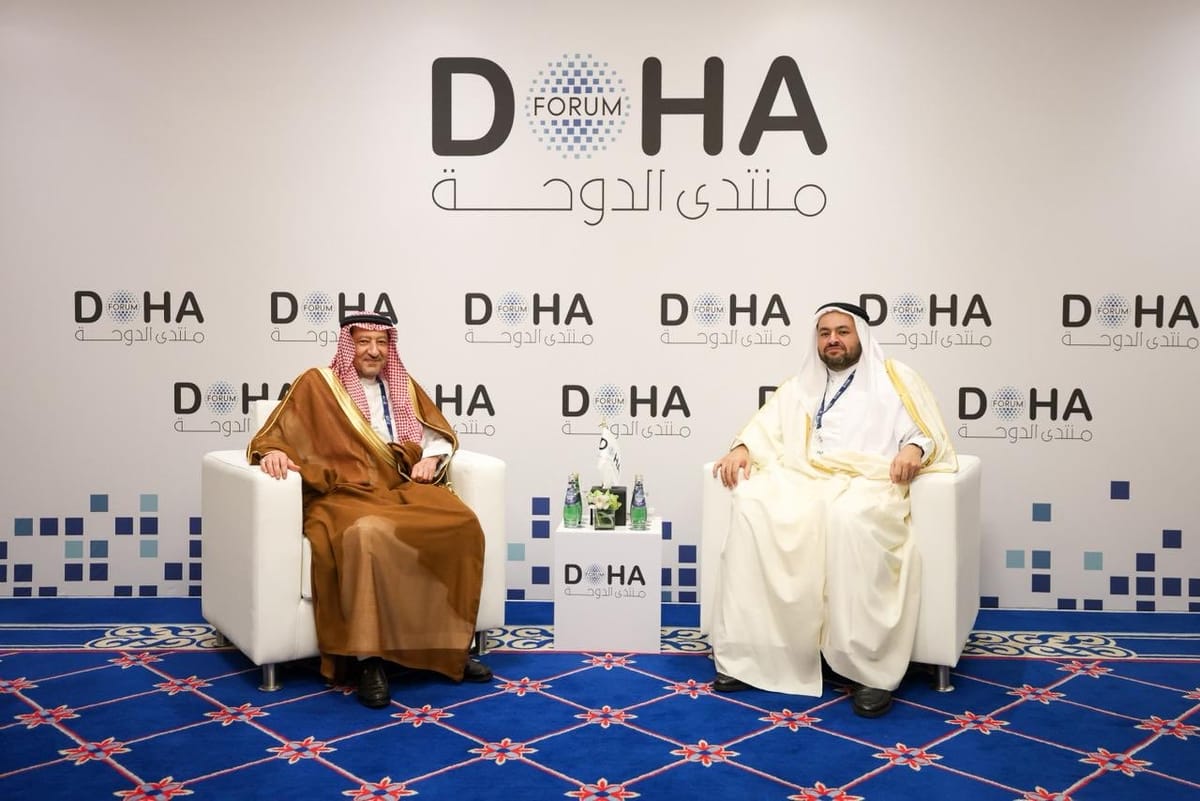
The facade began to crack wide open on December 7, 2025, during the Doha Forum, an annual gathering of global elites where Qatar burnishes its image as a bridge-builder. There, in a staged interview with American provocateur Tucker Carlson, Qatar's Prime Minister and Foreign Minister, Sheikh Mohammed bin Abdulrahman Al Thani, faced the uncomfortable spotlight. Carlson, no stranger to controversy, opened with the elephant in the room: accusations that Qatar finances terrorism and shelters Hamas's leadership.
BREAKING: Tucker Carlson tells the Emir of Qatar that he is buying a place in Doha.
— Eyal Yakoby (@EYakoby) December 7, 2025
Why didn’t Tucker ask about how spreading the gospel is banned in Qatar? pic.twitter.com/br3Xp109ql
The PM's response was a masterclass in deflection—"propaganda" and "lies," he scoffed, pinning blame on the U.S. and Israel while insisting Doha has "never financed Hamas." It was a bold claim, one that crumbles under the weight of evidence amassed by U.S. intelligence, Israeli intercepts, and even Hamas's own admissions.
To understand Qatar's entanglement with Hamas, one must rewind to 1997, when the emirate launched Al Jazeera, the satellite behemoth that would become the megaphone for Islamist fervor. From its inception, the Qatari-funded network amplified jihadist narratives, glorifying suicide bombings and framing Palestinian militants as heroic resisters. Critics, including Israeli courts in 2024, have labeled it "Hamas's propaganda and intelligence arm," citing captured documents showing Al Jazeera reporters embedded with terror cells on October 7.
One such operative, Ismail Abu Omar, filmed himself chanting "Allahu Akbar" amid the carnage at Kibbutz Nir Oz, his dual role as Hamas deputy commander and Al Jazeera "journalist" exposed in IDF-released files. Al Jazeera didn't just report; it recruited, radicalized, and relayed orders, turning airwaves into weapons. By 2007, as Hamas seized Gaza in a blood-soaked coup against Fatah—executing rivals by hurling them from rooftops—Qatar emerged as the group's staunchest patron, the only Arab state alongside Turkey to endorse the takeover.
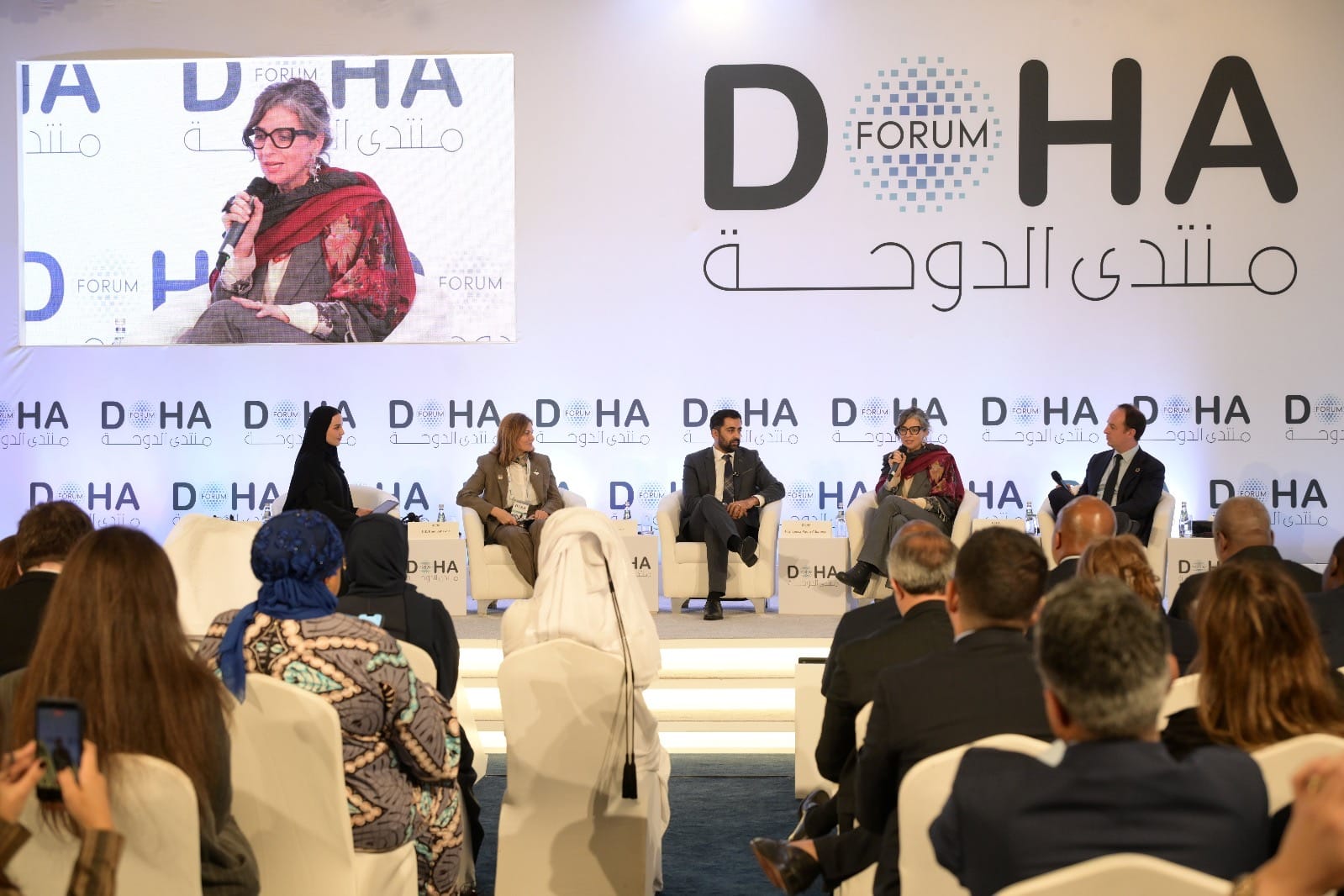
H.E. Sheikha Al Mayassa bint Hamad bin Khalifa Al Thani, Chairperson of Qatar Museums, Doha Film Institute and Qatar Leadership Centre, speaks at “Humanity’s Next Chapter: Innovation and Impact from the Global South” at #DohaForum25. @almayassahamad @Qatar_Museums @QatarCreates pic.twitter.com/jzoAvQKxEp
— Doha Forum (@DohaForum) December 6, 2025
The financial floodgates opened soon after. In 2008-2009, at the Doha Summit, Hamas leader Khaled Meshaal sat shoulder-to-shoulder with then-Emir Hamad bin Khalifa Al Thani, who pledged $250 million to "repair" Gaza's war damage—a euphemism for bolstering the terror enclave's infrastructure. This was no one-off; it marked the birth of a symbiotic alliance. Qatar's "aid" poured in monthly: $30 million cash suitcases crossing into Gaza via Israel's Erez checkpoint, ostensibly for salaries and fuel but siphoned by Hamas for rockets and tunnels.

By 2023, the tally exceeded $1.8 billion, per U.S. and Israeli estimates—funds that intelligence reports confirm directly fueled Hamas's military buildup, including the October 7 assault. Hamas leaders didn't mince words in gratitude. In 2009, former Prime Minister Ismail Haniyeh hailed Qatar's "unconditional support" for defying Gaza's blockade. By 2021, as $360 million flowed annually, Hamas thanked Emir Tamim bin Hamad Al Thani for "vital projects" that sustained their rule. Captured diaries from Haniyeh himself reveal Qatar as Hamas's "main artery," with the emir personally raising $11 million for the "resistance" in 2021—discreetly, to evade scrutiny.
Qatar's enablers? The Obama and Biden administrations, which leaned on Doha to host Hamas's political bureau in 2012, ostensibly for "indirect communications." Israel, under Netanyahu, greenlit the cash infusions from 2018-2023, viewing a fortified Hamas as a counterweight to Palestinian statehood—a cynical divide-and-rule ploy that backfired catastrophically. Mossad oversaw deliveries, yet reports from Shin Bet chief Nadav Argaman warned Netanyahu in 2019-2020 that Hamas's military wing was skimming millions for terror ops. Qatar promised mediation; instead, it delivered impunity. Hamas's Doha exiles—Haniyeh, Meshaal, Khalil al-Hayya—lived in opulence, directing atrocities from five-star suites while Qatar vetoed U.S. bills labeling it a terror financier.
This isn't new. Qatar's terror dalliances trace to the 1990s, when it sheltered Muslim Brotherhood ideologues like Yusuf al-Qaradawi, whose Al Jazeera sermons urged violence against Jews and Americans. In 2003, U.S. Congress flagged Qatari charities funneling to al-Qaeda. By 2014, Treasury Undersecretary David S. Cohen accused Doha of harboring blacklisted financiers who roamed free. Rare voices pierced the veil early. In 2009, then-U.S. Defense Secretary Robert Gates lamented, "I don’t know instances in which Qatar aggressively goes after the [terror finance] networks of Hamas, Taliban, or Al-Qaeda." Echoing from 2003, congressional alerts decried Qatari-backed entities as "a source of financial support for terrorist and violent extremist groups." And in a 1999 cable, as Hamas sought exile, Qatari officials welcomed them as "guests," sans political curbs—a sanctuary that endures.
#DohaForum2025 opens with a warning on declining global justice, as #Qatar’s PM calls for stronger accountability and mediation, bringing leaders together to tackle conflicts, AI in warfare, and shifting U.S.–China relations. pic.twitter.com/H4Wl3WSJBt
— AnewZ (@Anewz_tv) December 6, 2025
Post-October 7, Qatar's mediation charade persists, brokering brief truces while shielding Hamas. In November 2023, it facilitated a hostage swap, yet U.S. pressure in 2024 urged expelling leaders if deals faltered—whispers of closure denied by Doha. Al Thani's Carlson interview? A PR coup, timed amid scrutiny of Doha's $2 billion+ in U.S. university donations, accused of seeding anti-Israel bias. Qatar lobbies fiercely—$180,000 monthly to firms like Lumen 8—to whitewash its image, even as Al Jazeera's Arabic feed glorifies Hamas "operations."
The human cost? Gaza's civilians, pawns in this proxy game, endure Hamas's tyranny—tunnels over schools, rockets over aid. Qatar's "humanitarian" billions, per a 2025 Universidad de Navarra analysis, propped up occupation while blaming Israel. On X, voices like @LauraLoomer rage: "Qatar funds Hamas... and Tucker’s cozying up?" @joelpollak skewers Al Thani's evasions: "He ignored funding for the Muslim Brotherhood and terror." Deeper dives, like Saeed Ghassemine's Substack on "Qatar's Circle of Terrorist Friends," expose Doha's web: $1.8 billion to Hamas, plus Taliban and Brotherhood ties.
Qatar's rebrand—World Cup glamour masking slave labor and extremism—fools no one anymore. As Al Thani vows no "check" for Gaza's ruins, remember: those ruins were built with Qatari cement. The emirate's game endangers us all, subsidizing savagery under diplomacy's veil.
Until the West demands accountability—expel Hamas, freeze assets, shutter Al Jazeera's incitement—Qatar's lies will echo louder than its billions