THE CONFISCATION PIPELINE:
The New York Post called Mayor Mamdani's housing plan what it is: legalized theft. What the Post left unexamined is the machinery underneath. The named architect, the foreclosure math, and the receiving network waiting for transferred title.

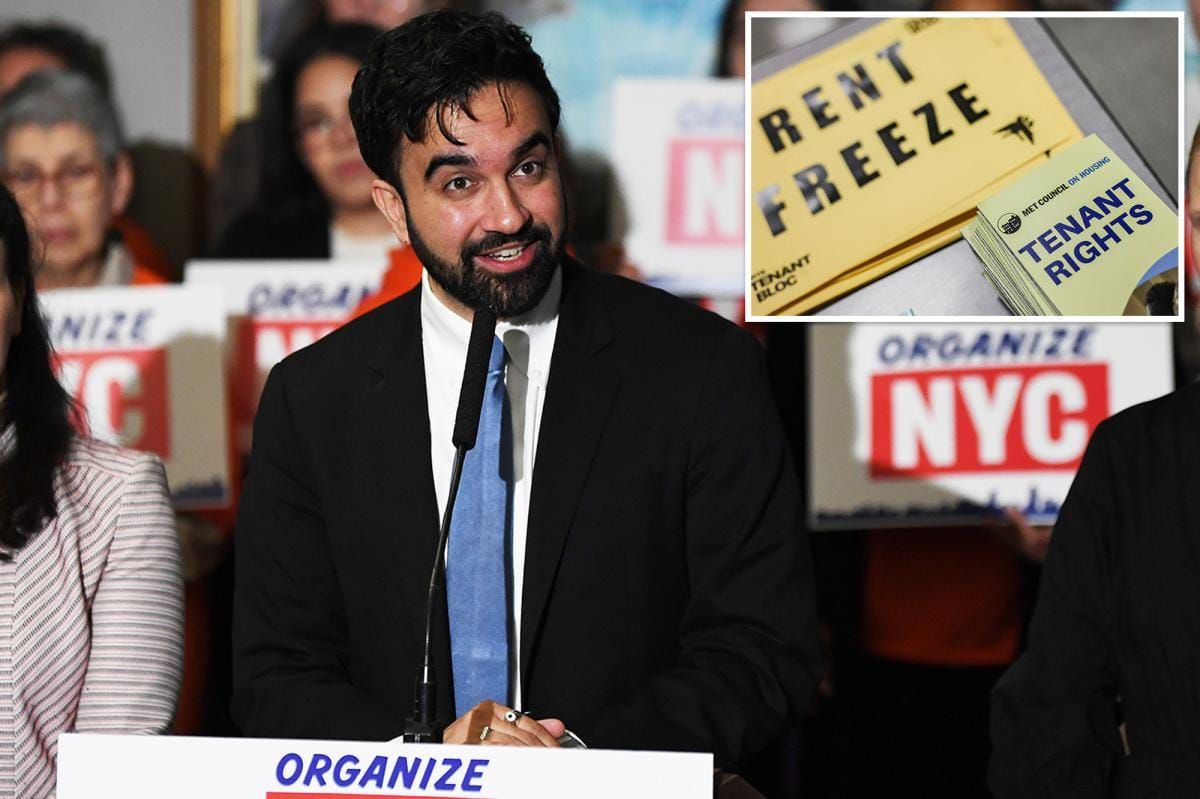
Mamdani's Housing Plan Names the Mechanism, the Post Names the Math
The New York Post editorial board, in a piece published the morning of May 27the , identified the operative phrase buried inside Mayor Zohran Mamdani's housing plan. The mayor pledged, in the document released Tuesday, to take "aggressive legal action to remove negligent owners and property managers" and to "transfer ownership to responsible stewards," including "community land trusts, nonprofits or even the tenants themselves."
The Post called the program what it is. Expropriation. Legalized theft. A pillar of socialism dressed in zoning language.
The Post got the diagnosis right. What it left unexamined was the machinery underneath. The named operatives. The activist coalitions. The foreclosure math. The network of recipients waiting to receive the transferred title.
Start with the arithmetic that the mayor put on the table. Four hundred thousand affordable homes over ten years at a total cost of $22 billion. Divide the dollars by the units. The figure comes to $55,000 per home. New York construction under prevailing union terms runs between $500,000 and $800,000 per unit. The mayor's number is short by a factor of ten.
IT BEGINS…
— End Wokeness (@EndWokeness) May 26, 2026
NYC Mayor Zohran Mamdani unveils plan to "transfer ownership" from landlords to "the community" pic.twitter.com/uybGFPk5eD
This is not a budget. It is a press release.
The Post caught a second number that does not survive scrutiny. Mamdani blamed NYCHA's collapse on Ronald Reagan. The Post pulled the federal data. Washington spent $1.1 billion on public housing operations in 1983. By 2023 the figure had climbed to $5.1 billion, a fivefold increase against an inflation factor of roughly 3.1 across the same span. Federal commitment grew at nearly twice the inflation rate.
NYCHA is broken because the government runs it. Not because Washington starved it. The capital repair backlog inside the existing portfolio now sits at $78 billion under the federal monitor's most recent count. Tenants wait months for elevators, years for boilers, indefinitely for mold remediation.
This is the model the mayor proposes to scale by 400,000 units.
The Post named Cea Weaver as the official driving the plan. Weaver was the campaign coordinator for Housing Justice for All. She co-founded the Tenant Bloc. Her published writing, her podcast appearances, and her conference remarks line up around a single thesis. The goal of tenant policy is to make private rental ownership unprofitable, force foreclosure, and transfer the assets to public or community control.
That is not interpretation. That is her stated program, repeated in venues that nobody from the City Hall press corps bothers to attend.
The foreclosure math is already running. Rent-stabilized building operating costs rose between 6 and 9 percent annually from 2021 through 2025 under figures published by the Rent Guidelines Board. Permitted rent increases over the same period averaged under 3 percent. Thousands of stabilized buildings are in technical default or at the edge of it. The Post noted the trend in a single sentence. The Post was being polite.
A continued rent freeze does not preserve affordability. It detonates the balance sheets. The buildings stop generating enough cash to service their mortgages. They enter pre-foreclosure. The city, citing "negligent ownership," steps in. The aggressive legal action the mayor promised begins.
This is the engineered pipeline. The Post saw the exit. The entrance and the conveyor belt sit upstream.
Now the receiving network. The mayor used three categories. Community land trusts. Nonprofits. Tenants themselves. He did not name entities. The relevant ecosystem in New York City is small and traceable.
 Gene Goodwin
The East New York Community Land Trust leads the CLT side. Its partners include the Urban Homesteading Assistance Board and Cooper Square Committee. The nonprofit operator pipeline runs through RiseBoro, Cypress Hills LDC, and several entities woven into the DSA-aligned tenant infrastructure. Housing Justice for All, the coalition Weaver coordinated before joining the administration, occupies the connective tissue. Its donor list overlaps with the Tides network and several Singham-funded entities documented in prior coverage at this publication.
Transfer the foreclosed buildings to this network and the underlying physics does not change. The math of rent-stabilized operation still does not pencil. The buildings still fail. They simply fail under aligned management. Inside an ownership ring that reports, politically, to the same coalition that produced the mayor.
That distinction is the entire point of the exercise.
NYC Mayor Mamdani's Tenant Director, Cea Weaver:
— End Wokeness (@EndWokeness) January 5, 2026
"We'll transition from treating property as an individual good to a collective good. Whites especially will be impacted." pic.twitter.com/RZSdCs8oEa
The wage mandate compounds the squeeze. The plan imposes a $40-per-hour total compensation floor on construction work and expands project labor agreements across new development. Industry estimates put the combined cost lift between 30 and 50 percent. The Post flagged this and moved on. The arithmetic deserves a second pass. Higher unit cost means fewer homes built per dollar. Fewer homes mean tighter supply. Tighter supply means continued upward pressure on private rents. Higher private rents stress more stabilized buildings. More stressed buildings enter the foreclosure pipeline.
Every component of the plan reinforces the same outcome. Manufactured insolvency on the private side. Pre-positioned recipients on the receiving side. Public funds flowing to operators selected for political alignment rather than operational competence.
The political theory underneath this is not concealed. It is published. Weaver's coalition has produced position papers describing private ownership of rental housing as the problem to be solved. Several DSA-aligned housing academics at the New School have published variations on the thesis since 2019. Tenant Bloc materials describe the long-term objective as decommodification, which is the academic register for confiscation.
The Post used the plain word. Theft. The publication deserves credit for not laundering the policy through the euphemisms its authors prefer.
Gene Goodwin
Three indicators to watch over the next 90 days.
First, the executive order or budget line that funds the aggressive legal action the mayor promised. The dollar figure will reveal the scope of the planned receivership campaign. Anything above $50 million signals serious intent.
Second, the city's published selection criteria for "responsible stewards." If the criteria favor coalition-aligned CLTs and nonprofits over operationally proven managers, the receiving network is being pre-positioned through procurement rather than statute.
Third, the next Rent Guidelines Board vote. A second consecutive freeze will accelerate the stabilized-portfolio foreclosure timeline by 12 to 18 months under the projections circulating among the city's larger property managers.
NYC Tenant Director Cea Weaver says the enemy of renters justice is regular "White, middle-class homeowners" pic.twitter.com/BSDRp3ZyAI
— End Wokeness (@EndWokeness) January 15, 2026
The verdict was correct as far as it went. The mayor's plan does not solve the housing shortage. It manufactures the conditions for forced transfer. It names the recipients in advance. It funds the legal machinery to execute the transfer. It calls the result affordable housing.
The tenants the mayor promises to protect will live, in five years, inside buildings owned by entities that report to the same political coalition that produced the administration. The buildings will be in worse condition than they are now. The waitlists will be longer. The repairs will be slower. The property that funded New York's middle-class rental stock for a century will be off the books and inside the coalition.
We can see the outline. The full shape comes into focus only when the receiving network is named, the architect is identified, and the foreclosure pipeline is described from entrance to exit.
Credit where it belongs. The New York Post editorial board put the operative quote in print and called the policy by its real name on the same morning the plan dropped. The rest of the city's daily press treated the document as a housing announcement. It is not. It is a transfer schedule.
The buildings are the inventory. The owners are the targets. The coalition is the consignee.
🚨 Mamdani’s Tenant Pick: “Use the Schools” and Tenant Associations as “Sites of Resistance”
— Stu Smith (@thestustustudio) January 5, 2026
Mamdani just appointed Cea Weaver to run the Mayor’s Office to Protect Tenants.
In an October clip, she says NYC should use public schools, PTAs, and tenant associations as “sites of… pic.twitter.com/nogQ10MpdT