Havana Built a Rapid-Response Network Inside the United States. The Map of Its Targets Is Now a Federal Document.
A 99-page State Department report documents a 50-group network tied to Havana, a 24-hour mobilization plan targeting military bases and federal buildings, and a partner map of 1,335 US sites the department calls a target guide.

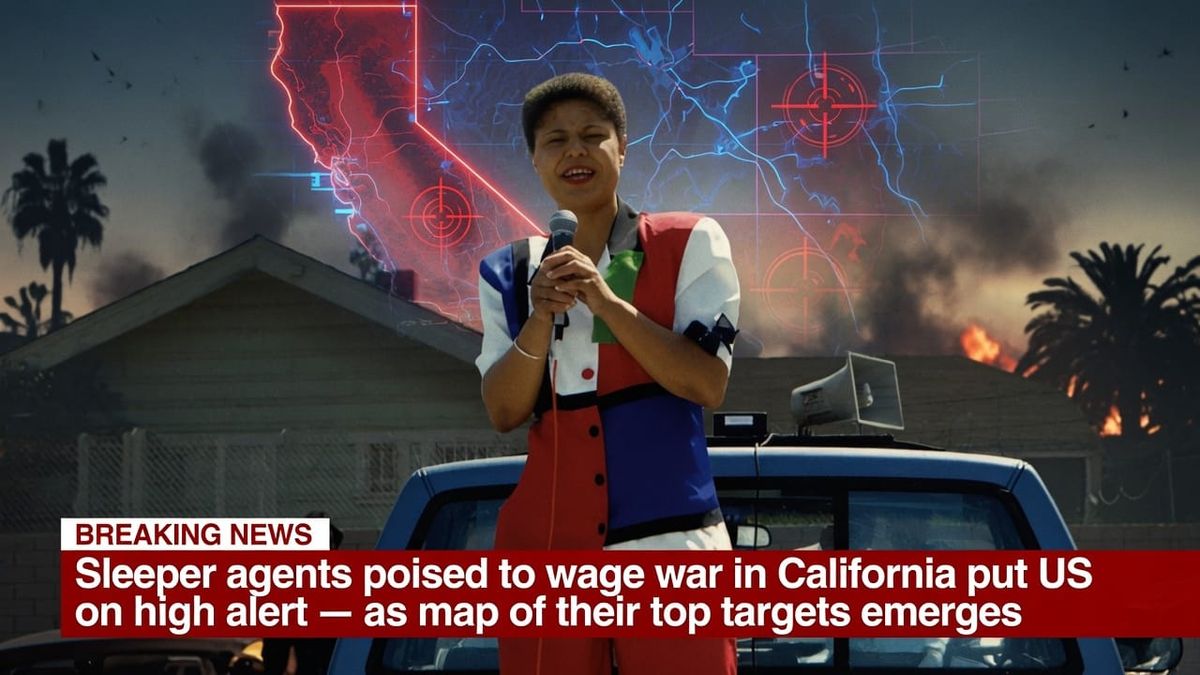
The State Department has now put a number on it. Fifty groups. One 24-hour mobilization plan. A map of 1,335 American targets that a federal report calls a target guide.
The 99-page report, published Monday and titled Cuba the Capital of 21st Century Communism, does not describe a protest movement. It describes infrastructure. At the center sits the National Network on Cuba, a coalition of more than fifty organizations that includes the Democratic Socialists of America, Communist Party USA, and CODEPINK. The record shows what that coalition built: a rapid-response plan that commits its members to coordinated nationwide action within 24 hours of an imminent threat or a US military move against Cuba.
Just reviewed the July 20, 2026 State Dept report on Cuba. The sheer scale of these front organizations operating in the US (ICAP, CodePink, DSA) is insane.
— Gene Mikhov (@genegmb) July 20, 2026
They are deeply embedded in our academic and activist circles.
Funding all traces back to networks like Neville Roy… pic.twitter.com/N9ZU3UMOj4
The plan names its own targets. Military bases. Recruitment offices. Federal buildings and courthouses. ICE detention centers and field offices. And, in the document's own words, sports arenas during high-visibility events. Its stated purpose is to make it politically and materially costly for the US government to wage war on Cuba. That is not a slogan. That is an operational objective with a target list attached.
Last week, we were honored to send a delegation of 40 DSA elected leaders & rank-and-file members from chapters big & small across the country to #Cuba, where they delivered hundreds of pounds of solidarity aid & learned about the achievements & challenges of Cuban socialism. pic.twitter.com/SD1hul0PB7
— DSA (@DemSocialists) October 20, 2025
Follow the map. A separate resource circulated by the Black Alliance for Peace, an organization the State Department report identifies as a frequent collaborator with Havana, plots 1,335 military and law enforcement sites across the Americas. The group calls it the Map of US Militarization in Our Americas. The State Department calls it a target guide. The distinction matters less than the instruction attached to it: the group urges activists to use the map to find facilities in their communities and strategize how and where to organize and agitate. A map of federal installations, distributed with a directive to act on them, is not advocacy. It is targeting.
California is the reason the map is not abstract. The state carries one of the densest concentrations of military installations in the country: Navy, Marine Corps, Air Force, Space Force, and Army, from San Diego County through the Central Coast. A 24-hour mobilization plan built around military bases is a plan built around California first.
The network has political cover, and the report names it. Los Angeles Mayor Karen Bass traveled to Cuba with the Venceremos Brigade as a young activist in 1973, a group that ferried Americans to communist Cuba for what it called work, education, and political exchange, and she later helped organize its activities in Southern California. She returned as a member of Congress, including a 2016 delegation alongside President Obama during the normalization push. When Fidel Castro died that year, she called him Comandante en Jefe and described his death as a great loss to the people of Cuba. The report places her in the lineage it is documenting. The DSA, meanwhile, is active in Los Angeles politics and has backed multiple elected officials at City Hall. The network does not operate outside the system. It operates inside it.
Now follow the foreign contact, because that is where the coalition stops being domestic. The report traces Cuban influence over these movements through the Cuban Institute of Friendship with Peoples, known as ICAP. This is not an inference. In June, Secretary of State Marco Rubio sanctioned ICAP, designating it a political subdivision, agency, or instrumentality of the Government of Cuba that supports Cuban intelligence and counterintelligence activity. A designated arm of a hostile intelligence service, founded under Castro, has maintained relationships with US universities, student groups, and activist movements. CODEPINK and other National Network on Cuba member groups have sent delegations to the island in recent years. The wire runs one way: from Havana's intelligence apparatus, through a designated front, into the American coalition holding the target map.
The money is already under federal scrutiny. CODEPINK's centimillionaire backer, Neville Roy Singham, is being examined by the Southern District of New York for potential financial crimes, and the funding streams behind several network groups are being worked by Treasury and the Justice Department. This is the same Singham infrastructure that has surfaced across the pro-Havana, pro-Beijing activist ecosystem. The designation of ICAP, the SDNY scrutiny of Singham, and the Treasury review of the funding streams are three federal actions pointed at the same network. They are not separate stories. They are one.
A State Department official called it a very serious and distinct threat, and noted that some organizations in the broader network have been involved in violent action in the past. The same official located the danger precisely: as Cuba has grown more isolated, it has handed Russia, China, and Iran more control over its economy and more room to run intelligence operations from its soil, ninety miles from Florida.
If you are reading this report today, pay close attention to the National Network on Cuba section.
— Stu Smith (@thestustustudio) July 20, 2026
Do you remember former NNOC co-chair Calla Walsh?
Where is she nowadays? pic.twitter.com/nd4ROXZ8Gi https://t.co/grZhg0ePrJ
So here is the record, stacked. A foreign intelligence front, designated by the Secretary of State. A domestic coalition of more than fifty groups tied to it. A 24-hour plan that names military bases, federal buildings, and ICE facilities as targets. A map of 1,335 sites the government calls a target guide. A funding network under active federal investigation. Each element is documented. Each connects to the next.
The question is no longer whether the network exists. The State Department has already answered that in 99 pages. The question is what the domestic law enforcement and counterterrorism agencies now looking carefully at it are prepared to do before the 24-hour clock the plan describes ever starts to run. The designation is written. The map is published. The plan is drafted. The only variable left is whether anyone acts on the report the way its authors clearly intend the network to act on the map.
📬 Share, Comment, and Support Our Work
Share this. Restack it. Forward the email. That's the whole ask.
Support the work. The reporting linked above took weeks of tracing records, filings, and on-the-record statements. It doesn't happen on faith. If you find it useful, become a paid subscriber and help fund the next one.