The COVID Feeding Program That Fed Zero Kids and Funded Maldives Vacations Instead


Minnesota fraudsters billed taxpayers $47 million for 18 million meals they never served. Then they went shopping.
Let's talk about efficiency. About how government programs work when nobody's checking the receipts. About what happens when you combine emergency COVID funding, minimal oversight, and a nonprofit called "Feeding Our Future" that apparently fed nobody's future except the people running the scam.
In Minnesota, defendants billed the state $47 million claiming they'd served 18 million meals to hungry children at more than 30 locations. They served zero meals. Not a single one. And then they went to the Maldives.
CBS News just obtained dozens of files and photos from federal trials showing exactly where the money went. Overwater villas with private pools at the Radisson Blu Resort Maldives. A 2021 Porsche Macan. Lakefront property in Minnesota. First class tickets to Istanbul and Amsterdam. Wire transfers to China and Kenya. Stacks of cash photographed and texted between defendants with messages like "$270,000 dollars" and "You are gonna be the richest 25 year old InshaAllah [God willing]."
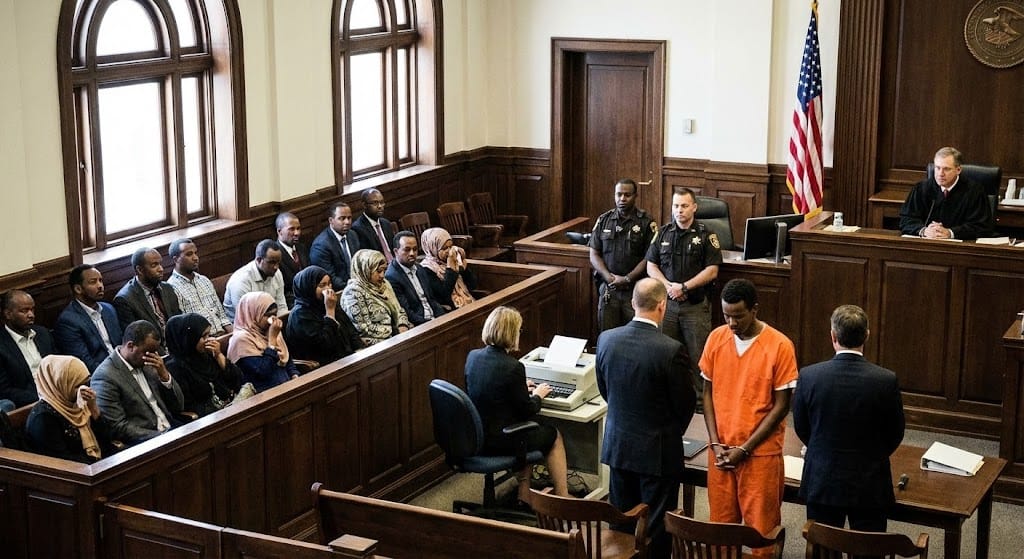
Abdimajid Mohamed Nur, 24 years old, got 10 years in prison and was ordered to pay $48 million in restitution. At his sentencing, U.S. District Judge Nancy E. Brasel told him: "Where others saw a crisis and rushed to help, you saw money and rushed to steal."
Abdiaziz Shafii Farah, 36, got 28 years. He owned Empire Cuisine and Market, a Minnesota restaurant that contracted with the nonprofit Feeding Our Future to cook and provide meals to children. Prosecutors proved he billed the state for $47 million claiming 18 million meals at 30+ locations. He didn't distribute a single meal. Instead, he made six wire transfers worth over $1 million to banks in China between February and July 2021. He took sea planes to Maldives resorts. Videos show him popping champagne at a private pool villa in July 2021.
So far, 61 people have been convicted. Hundreds of millions in taxpayer funds are gone. And the question everyone's asking is: how did this happen?
The answer is simpler than you think.
COVID emergency funding came with a built-in problem: speed over scrutiny. The logic was sound. Kids needed food. Schools were closed. Families were struggling. Get money out fast, worry about verification later.
Programs like the Federal Child Nutrition Program, administered through state agencies, normally had oversight mechanisms. Site visits. Meal counts. Documentation requirements. But COVID was an emergency. Rules got waived. Reimbursement got expedited. The money had to flow.
Enter nonprofits like Feeding Our Future, which contracted with the Minnesota Department of Education to distribute federal funds to organizations that would feed children. Feeding Our Future's job was to sponsor meal sites, monitor compliance, and ensure kids actually got fed.
Instead, Feeding Our Future became a pass-through for fraud. Organizations would claim to be feeding thousands of kids at multiple locations. They'd submit invoices. Feeding Our Future would approve them and request reimbursement from the state. The state would pay. Nobody was checking whether meals were actually being served because COVID emergency protocols had stripped out the verification requirements.
The mechanism was perfect. Federal money flows to state agencies. State agencies contract with nonprofits. Nonprofits sponsor meal providers. At each step, everyone takes their cut. And at the bottom, where meals are supposed to be served to children, nothing happens. Just invoices claiming millions of meals that never existed.
Empire Cuisine and Market claimed to serve 18 million meals. That's not a small operation. That's industrial-scale food service. You'd need massive kitchens, supply chains, distribution networks, staff. You'd have truck routes, delivery schedules, site coordinators. You'd have thousands of kids showing up daily at 30+ locations to eat.
None of that existed. Just invoices. And the state paid $47 million based on those invoices.
Here's the beautiful cruelty of the scam. The program was designed to feed hungry children during a pandemic. The fraudsters billed for feeding those children. The state paid with federal emergency funds. The children went hungry. And the people who stole the money meant to feed them went to the Maldives.
The documents tell the story. Confirmation emails for overwater villas with private pools. Receipts for lakefront Minnesota property. Wire transfer records showing millions moving to Chinese banks. First class ticket purchases. Photos of a 2021 Porsche Macan. Text exchanges showing boxes stuffed with $270,000 in cash.
One defendant texted: "You are gonna be the richest 25 year old InshaAllah." He was right. You steal tens of millions from a COVID feeding program with minimal oversight, you get rich fast. Until federal prosecutors start comparing meal claims to actual food purchases and realize the math doesn't work.
The investigation revealed massive discrepancies. Organizations claiming to serve thousands of meals daily had grocery receipts showing they'd bought enough food for maybe dozens. Sites claiming hundreds of children per day had no record of children ever being there. Meal counts that would require full commercial kitchens were supposedly coming from residential addresses.
But by the time investigators figured this out, hundreds of millions were gone. Wired to China. Wired to Kenya. Spent on cars and property and resort vacations. The kids who were supposed to get fed never saw a dime. They never saw a meal. They just saw their poverty exploited as the justification for fraud.

The fraud itself is straightforward. Criminals saw an opportunity, filed fake invoices, and stole money. That happens. What's harder to explain is how $47 million in payments got approved for an operation that never cooked a single meal.
Someone at Feeding Our Future was supposed to monitor these sites. Someone was supposed to verify meal counts. Someone was supposed to notice that Empire Cuisine and Market was billing for 18 million meals without the infrastructure to produce them.
Someone at the Minnesota Department of Education was supposed to audit these reimbursement requests. Someone was supposed to cross-check meal counts against food purchases. Someone was supposed to visit sites and confirm children were actually being fed.
None of that happened. Or if it happened, it was so perfunctory that organizations billing for millions of meals they never served sailed through approval.
The House Republicans who launched a probe into Minnesota Gov. Tim Walz's handling of the cases are asking the right question: how did state oversight fail this catastrophically? But the answer isn't partisan. It's structural.
COVID emergency funding prioritized speed over verification. The entire federal response was built on the assumption that fraud prevention would slow down assistance too much. So verification requirements got waived. Oversight got reduced. Money flowed based on claims rather than proof.
That created opportunities for massive fraud because the people supposed to prevent fraud were told not to slow down the process. The state agencies paying out millions had limited tools to verify whether meals were being served. The nonprofits sponsoring providers had financial incentives not to look too carefully at their own partners. And the federal government providing the funds had created a system where getting money out fast was the metric of success.
The result: hundreds of millions stolen, 61 people convicted, and kids who needed food getting nothing while fraudsters celebrated at Maldives resorts.
Now there's a new question: did any of the stolen money fund terrorism? Treasury Secretary Scott Bessent said Sunday on "Face the Nation" that Treasury is investigating whether money made its way to al Qaeda affiliate al Shabaab, which is based in Somalia. "A lot of money has been transferred from the individuals who committed this fraud," Bessent said. "Much of that money has gone overseas, and we are tracking that both to the Middle East and to Somalia."
The documents show millions wired to Kenya. They show Farah texting someone to "please send $1000 to Mogadishu bakara," a reference to a former al Shabaab stronghold famous for the 1993 "Black Hawk Down" incident where 18 American servicemembers died.
But federal investigators who've been working these cases for years say there's no evidence of terrorism funding. Andy Luger, the former U.S. Attorney who prosecuted these cases from 2022 until January, told CBS News: "The vast majority of the money that these folks made went to spending on luxury items for themselves. There was never any evidence that this money went to fund terrorism nor was there any evidence that was the intent of the 70 people we indicted."
So what's the truth? The money went overseas. Some went to Kenya. Some went to China. Some probably went to Somalia. But whether it funded terrorism or just bought property, cars, and luxury goods for fraudsters and their families, investigators say the evidence points to personal enrichment, not ideological terrorism.
Rep. Ilhan Omar said Sunday that any link between the fraud and terrorism would be "a failure of the FBI." She's not wrong. If hundreds of millions in stolen taxpayer funds were funding terrorist organizations, that's an intelligence failure of staggering proportions. But the more mundane explanation is probably correct: criminals stole money, spent most of it on themselves, and sent some overseas to family or to launder through foreign accounts.
The terrorism angle serves a political purpose. It makes the fraud seem more sinister, more threatening, more worthy of investigation. And it provides cover for asking harder questions about oversight failures that let this happen.
But the actual crime is simpler and more infuriating: people stole money meant to feed hungry children during a pandemic and used it to buy Porsches and Maldives vacations while the children went hungry.

Here's where it gets harder to track. Multiple defendants wired millions to Chinese banks. Farah alone sent over $1 million to China between February and July 2021. Other defendants sent similar amounts.
Officials told CBS News that finding the ultimate recipients of money routed through China will be "challenging" because it can be "an investigative black hole." That's diplomatic language for: once money hits Chinese banks, U.S. investigators lose the trail.
China doesn't cooperate with U.S. financial investigations the way European countries or even most developing nations do. Chinese banking privacy laws are opaque. Shell companies are easy to create. Money can be moved, converted, and dispersed through layers that U.S. investigators can't penetrate without Chinese government cooperation, which isn't forthcoming.
So millions of taxpayer dollars meant for feeding American children are now somewhere in the Chinese financial system, possibly funding real estate purchases, possibly funding businesses, possibly sitting in accounts controlled by people who'll never be identified or charged.
The Kenya transfers are easier to track. Nearly $3 million went to Kenyan accounts. Kenya cooperates with U.S. investigations. Banks there respond to legal requests. It's possible to trace where that money went, who received it, and what it funded.
But the China money? Gone. Into the black hole. Hundreds of millions in COVID relief funds, stolen by Minnesota fraudsters, wired to Chinese banks, and effectively disappeared from any U.S. accountability.
This isn't a story about sophisticated financial crime. It's a story about opportunists who saw emergency funding with minimal oversight and filed fake invoices until they had millions.
It's a story about a nonprofit called Feeding Our Future that was supposed to help feed children but instead facilitated fraud on a massive scale.
It's a story about state oversight so inadequate that organizations could bill for 18 million meals they never served and get paid $47 million without anyone noticing.
And it's a story about what happens when the priority is getting money out fast rather than making sure it goes where it's supposed to go. You get fraud. Lots of fraud. Hundreds of millions in fraud. And champagne at the Maldives while American kids go hungry.
The fraudsters are getting sentenced. Nur got 10 years and owes $48 million. Farah got 28 years. Sixty-one people convicted so far. More investigations ongoing. But the money's mostly gone. Spent on cars and property and luxury vacations. Wired to China where it's untraceable. Wired to Kenya where maybe investigators can follow it. Wired to Somalia where the terrorism question hangs unanswered.
The kids who were supposed to get fed? They got nothing. Not a single meal. Just the knowledge that their poverty was profitable for someone else.
That's the real crime. Not the Porsches or the Maldives resorts or even the millions wired overseas. The real crime is that a program designed to feed hungry children during a pandemic became a wealth transfer mechanism from taxpayers to fraudsters, and the children went hungry the entire time.
61 convictions. Hundreds of millions stolen. Zero meals served.
What's more infuriating: that people stole COVID relief funds, or that oversight was so bad they got away with it for years? Drop it in the comments.
Share this if you think emergency funding shouldn't mean zero accountability for where the money goes.
Subscribe for more stories about who pays when the system prioritizes speed over verification.