The CUNY Purge of Jews

The City University of New York used to be the place where ambition met opportunity, no questions asked. A sprawling, chaotic, gloriously democratic machine that turned generations of kids from the outer boroughs into doctors, lawyers, novelists, and billionaires. In a city that is still one-fifth Jewish, CUNY was, for a very long time, quietly and unapologetically a Jewish success story. The names on the buildings, the donors, the presidents, the deans—they reflected that fact without fanfare.
Then something shifted.
By March 2023 a small group of professors and activists calling themselves SAFE CUNY published a short, blunt report that landed like a grenade in academic circles. The headline fact was impossible to ignore: zero Jews in the top eighty senior leadership positions across the entire system. Not one. Chancellor, executive vice chancellors, vice chancellors, associate vice chancellors, and the presidents of all twenty-five campuses.
The count included Félix Matos Rodríguez at the top, Wendy Hensel as provost, Hector Batista running operations, Mohamed Attalla overseeing facilities, and every single campus head from Vincent Boudreau at City College to Ayman El-Mohandes at the School of Public Health. The last two holdouts, Jennifer Raab at Hunter and Pamela Silverblatt in the central office, had both walked away that spring. Raab after twenty-two years, Silverblatt after two decades. The report called it the end of a deliberate, multi-year campaign of attrition.
The numbers were brutal. New York City is home to roughly 1.7 million Jews. Random chance alone would put about sixteen of them in those eighty jobs. The probability of zero was described as less than one in ten to the twenty-third power. That is not a rounding error. That is a message.
The mechanisms were quieter than you might expect. Fewer recruitment trips to Jewish high schools, even ones a subway stop away from campus. Advertising budgets quietly redirected away from The Forward and the Jewish Week. Diversity initiatives that quietly reclassified Jews as “white” and therefore outside the circle of protected minorities. A faculty union, the Professional Staff Congress, passing resolution after resolution branding Israel an apartheid state, debating BDS, and creating an atmosphere in which supporting Israel became professionally hazardous. Professors like Jeffrey Lax at Kingsborough said they were shouted down in union meetings, called Zionist pigs, told their views were unwelcome.
I love how they only start yelling free Palestine once a Jewish man walks past.
— Amelia Adams (@neuroticjewgay) June 6, 2023
Credit: CUNY SJP pic.twitter.com/3Y8XXh9cwA
Then came the appointments that felt like punch lines. In 2021 CUNY named Saly Abd Alla chief diversity officer. She had spent years as civil rights director for CAIR-Minnesota, an organization whose national leadership has a long record of anti-Zionist rhetoric. Her office became the gatekeeper for antisemitism complaints. Jewish groups called it a fox-guarding-the-henhouse move. When a Lehman College student reported being called a kike in class, the complaint went nowhere.
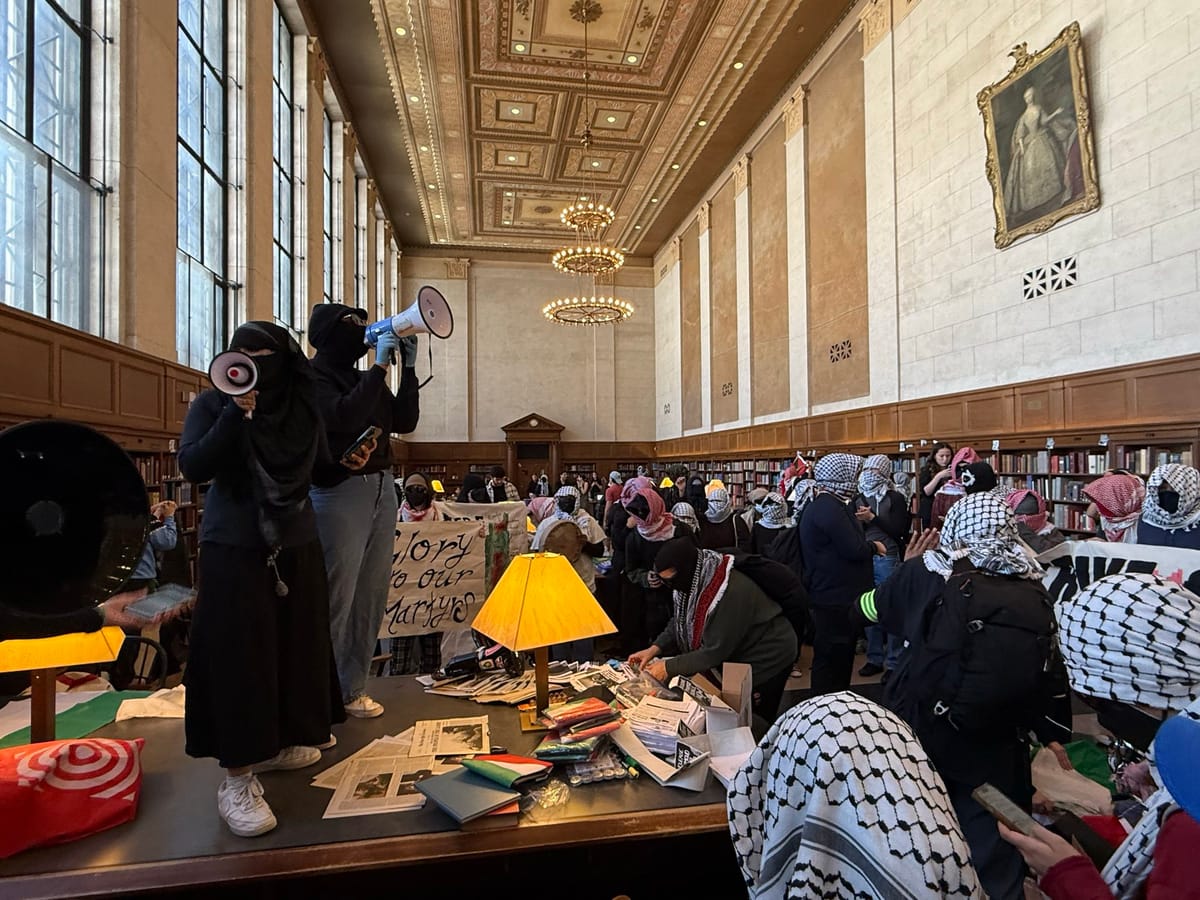
"Palestine calls this University Intifada!"
— Citizen Free Press (@CitizenFreePres) April 25, 2024
Gaza encampment just set up on CUNY University Grounds in NYC. Protesters are flooding in. pic.twitter.com/Zc8Lubmw1G
After October 7, 2023 the temperature rose fast. Swastikas on bathroom walls at City College. Jewish students at Baruch taunted outside a kosher restaurant about murdered hostages. Protesters at Hunter chanting “Zionists out of CUNY” and “globalize the intifada.” A Jewish professor at Kingsborough receiving death threats after speaking up. Audio from a City College interfaith event in late 2025 where moderator Fatima Mohammed called Hillel director Rabbi Jonah Steinberg an “openly Zionist infiltrator” while the room applauded. Nerdeen Kiswani, the protest fixture who once said Zionists deserve to die, showing up at multiple campuses to scream at Jewish students.
CUNY Gaza Solidarity Encampment going strong at CCNY 140th and Convent Ave. From the river to the sea, Palestine is almost free! pic.twitter.com/fmdGAhqcoj
— Within Our Lifetime (@WOLPalestine) April 29, 2024
The Lippman Report, delivered to Governor Hochul in September 2024, tried to thread the needle. Jonathan Lippman, former chief judge of New York, spent ten months talking to hundreds of people and walking thirteen campuses. He found an alarming number of unacceptable incidents. He called the complaint system a black box. He said most of the trouble came from a small, vocal minority. He recommended thirteen fixes: a new central hate-and-discrimination office, a revamped reporting portal, mandatory training, reasonable protest rules, climate surveys, partnerships with Hillel and the Museum of Jewish Heritage. CUNY responded with money—seven hundred fifty thousand dollars for programs—and partnerships. Brooklyn and Queens Colleges got A grades from the ADL in 2025. An Advisory Council on Jewish Life was created. Yet lawsuits keep coming, complaints keep piling up, and the debate over definitions of antisemitism, especially after Mayor Mamdani revoked IHRA executive orders in January 2026, keeps the wound open.
BREAKING: CUNY for Palestine is caught on camera assaulting police officers as they riot in the streets of NYC and chant “Allahu Akbar.”
— Eyal Yakoby (@EYakoby) February 27, 2025
These extremists are a threat to our society. pic.twitter.com/9A6BlHQNdP
What ties the two stories together is the same quiet, relentless logic. A small group decides on a boundary that cannot be crossed. They refuse to budge. Everyone else, wanting to avoid the fight, adjusts a little. Then a little more. Over years the adjustment becomes the new normal. The system renormalizes around the minority’s demand. In the 1930s German universities a handful of National Socialist student leaders, never more than a few percent of any campus, demanded “Aryan” purity. Lectures were disrupted. Jewish professors boycotted. The tolerant majority—administrators, colleagues, students—yielded step by step. Then came the 1933 civil-service law and the purge of fifteen to twenty percent of the faculty. Berlin lost a third. Heidelberg a quarter. Once the rigid minority set the tone, the institution remade itself in their image.
CUNY is not 1930s Germany. The stakes are not the same. There is no state terror, no Enabling Act. But the mechanism is eerily similar. A committed minority insists. The flexible majority accommodates. And slowly, almost imperceptibly, the place changes shape.
"We at CUNY Law organized for the entire student body to walk out in solidarity with our Palestinian brothers and sisters back home for the genocide they're facing."
— BreakThrough News (@BTnewsroom) November 9, 2023
BT's @KeiPritsker LIVE from Shut It Down for Palestine NYC
WATCH: https://t.co/OLwRUFyrGQ pic.twitter.com/FqMnP7K40w
The old CUNY was built by people who understood that opportunity should not come with a loyalty test. The question now is whether that version can be recovered, or whether the new version—the one shaped by the few who will not compromise—is the one that will endure.