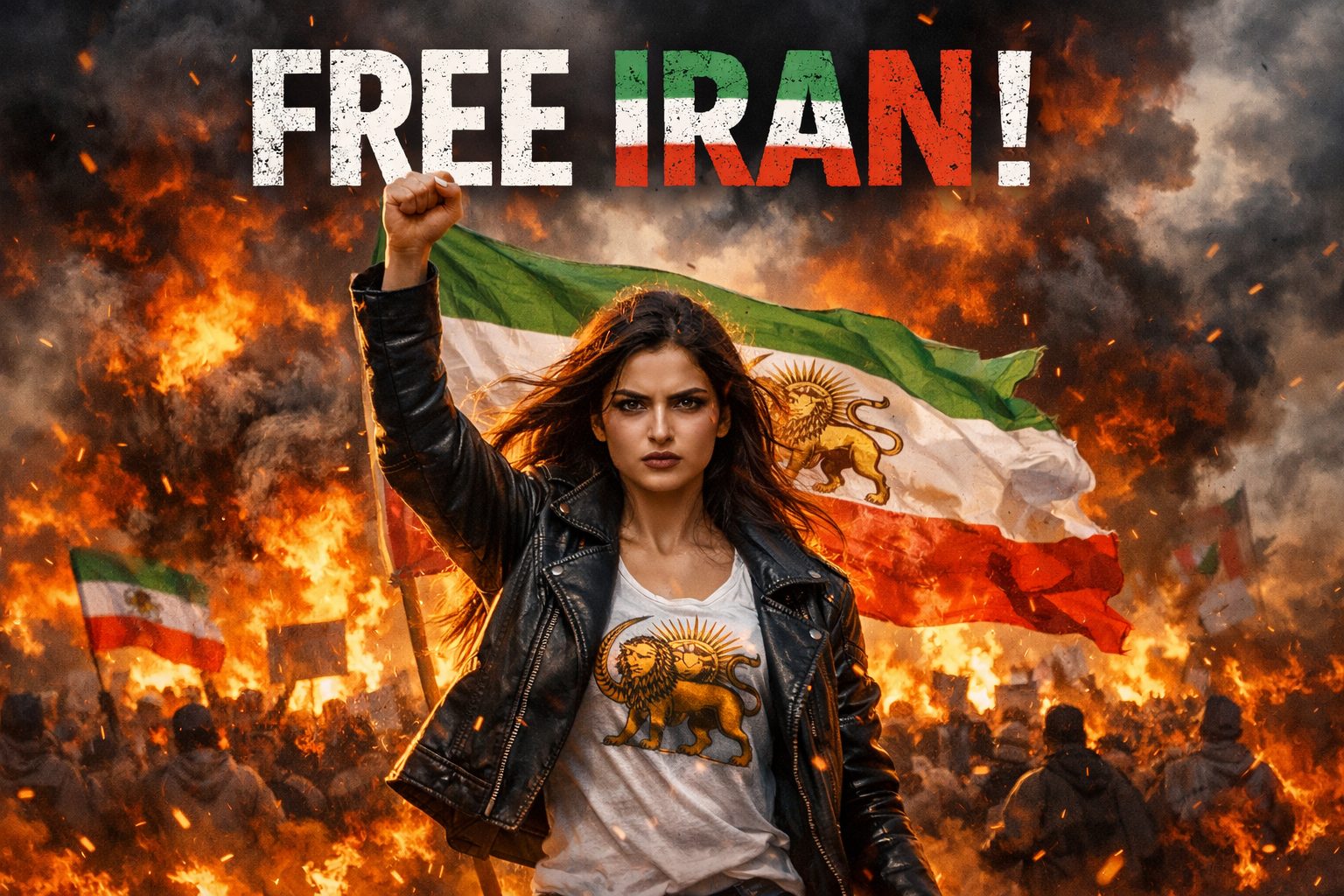
The IRGC's Massacre in Iran: Where Are All the Justice Warriors Now?
During these protests,, most of the day I spend on X with Goldie Ghamari, there is no one who is fighting harder for the liberation of Iran. As of January 15, 2026, the Islamic Revolutionary Guard Corps (IRGC) has orchestrated what may be the largest massacre in modern Iranian history—and the deafening silence from those who typically champion human rights is nothing short of obscene. With death tolls ranging from a confirmed 2,403 (according to the U.S.-based Human Rights Activists News Agency) to as high as 12,000-20,000 (according to multiple sources, including Iran International, CBS News, and medical officials inside Iran), the IRGC has transformed Iranian streets into killing fields. Yet the self-proclaimed defenders of justice remain conspicuously quiet.
The IRGC: A State-Sanctioned Death Machine
Make no mistake: this is not a police force maintaining order. This is a military organization explicitly designed to protect an ideological regime at any cost, and that cost is being paid in Iranian blood. The IRGC—designated a terrorist organization by multiple countries, including the United States—has deployed its most brutal tactics against unarmed civilians demanding basic economic relief and political freedom.
Amnesty International's verified video evidence from January 8 shows IRGC agents in Razavi Khorasan province firing "directly and without warning" at protesters and bystanders. A medical worker from Mashhad told Amnesty that on the night of January 9, "the deceased bodies of 150 young protesters were brought into one hospital and then taken to Behesht Reza Cemetery near Mashhad." The authorities buried people quickly before they were even identified, then notified families afterwards—treating human beings like garbage to be disposed of before anyone could document the crime.
Remember when I was accused of "Islamophobia" for speaking out against Islamic terrorism?
— Goldie Ghamari | گلسا قمری 🇮🇷 (@gghamari) January 10, 2026
Iranians are burning mosques across the country while chanting Iran.
Keep in mind... These mosques are used as secret military bases and hubs of terrorism.
😂🙏❤️ pic.twitter.com/Iw0lLBOrl1
In Azna, Lorestan province, a protester shared a verified video showing an IRGC agent firing at peaceful demonstrators near the county governor's office. At least six protesters were killed there, including 16-year-old Taha Safari, whose body the authorities continue to withhold from his family. In Malekshahi, Ilam province, IRGC agents opened fire from inside a Basij base without regard for who they shot. Three people were killed instantly. Among the dead was a 15-year-old boy named Mostafa.
ایستادهایم تا پایان ✌️#جاویدشاه pic.twitter.com/thMGdBk7m6
— شهرک اکباتان | Ekbatan (@shahrak_ekbatan) January 14, 2026
The IRGC has used "military-grade weapons," according to Iran International, with protesters shot in the head, chest, and abdomen with live ammunition. Six hospitals in Tehran alone recorded 217 deaths on January 8, mostly from gunshot wounds. Videos verified by Amnesty International show security forces firing from rooftops, deploying snipers, and using continuous gunfire against fleeing civilians.
The Attempted Cover-Up
The IRGC's brutality is matched only by its desperation to hide the evidence. On January 8, the regime imposed a near-total communications blackout that has now exceeded 144 hours. Internet access was cut. International phone calls were blocked. The regime even jammed Starlink satellite internet that activists were using to document atrocities.
Why? Because the IRGC knows what it has done. Distressing footage from the Kahrizak Forensic Medical Centre near Tehran shows at least 205 distinct body bags in a makeshift overflow morgue. One video shows a screen displaying photos of the deceased with a numerical counter reaching 250—the staggering number of bodies being processed at just one facility. Eyewitnesses describe rooms so full of bodies "the door would not even open."
The regime's Information and Communications Technology Minister claimed the internet shutdown would be "temporary"—a lie designed to buy time to bury the evidence and terrorize witnesses into silence. Security forces have been visiting private hospitals across Tehran, threatening medical staff to hand over names and addresses of those being treated for protest injuries. This is the behavior of an organization that knows it has committed crimes against humanity.
Where Is the Outrage?
Here's where the hypocrisy becomes truly stomach-turning. Where are the celebrity activists who never miss an opportunity to virtue-signal about injustice? Where are the UN human rights advocates who can convene emergency sessions at the drop of a hat for other causes? Where are the college campus protesters who mobilize thousands over perceived slights?
The UN High Commissioner for Human Rights issued a statement saying he was "horrified"—and then what? Words. Just words. The UN Security Council scheduled a briefing for January 15, but will there be consequences? Sanctions? Accountability? Or just more performative hand-wringing while the IRGC continues its slaughter?
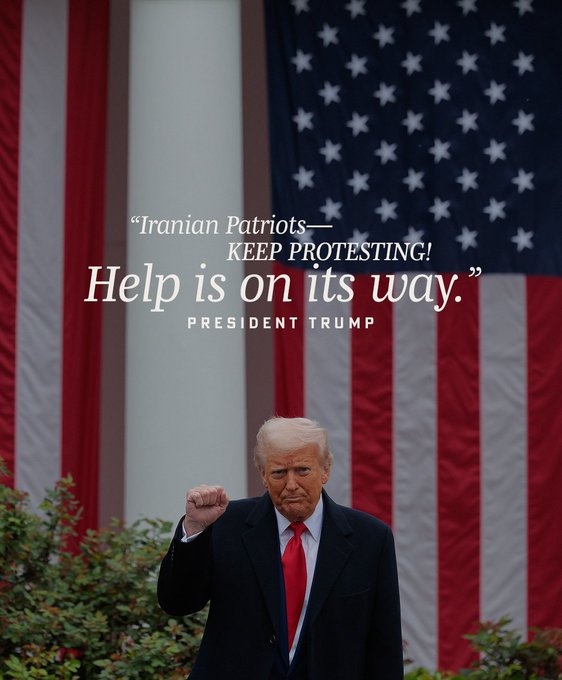
Amnesty International and Human Rights Watch have done admirable work documenting these atrocities, with Amnesty calling for "global diplomatic action to signal an end to impunity." But where are the mass rallies in Western capitals? Where are the social media campaigns that can mobilize millions for other causes in hours? Where are the Hollywood celebrities posting black squares and demanding action?
The silence is deafening, and it reveals an uncomfortable truth: for too many self-proclaimed human rights advocates, caring about injustice is selective. It's trendy when it's fashionable, convenient when it doesn't challenge their political priors, and abandoned when the victims don't fit the preferred narrative.
This footage released before the internet blackout in Iran shows the Islamic Regime’s forces storming a hospital to hunt down injured protesters.
— The Persian Jewess (@persianjewess) January 14, 2026
The Regime is shooting to kill in the streets and then coming back to pick off anyone they missed.
Absolute brutality. Pure evil. pic.twitter.com/padSyJO0X7
The IRGC's Ideological Commitment to Repression
Understanding the IRGC requires understanding its nature. As Iran International noted, "Tehran's most ideologically committed forces—particularly within the IRGC and the security services—are widely expected to resist collapse at almost any cost. For these actors, collapse would not simply mean loss of office but could entail prosecution, exile or worse. Their commitment to repression is therefore existential, reinforced by decades of indoctrination and deeply entrenched interests in a closed political system."
This is not a police force that can be reformed. This is an ideological army that views peaceful protesters as existential threats. Supreme Leader Ali Khamenei personally ordered the crackdown, calling protesters "rioters" who "should be put in their place." The IRGC's Lorestan provincial corps declared that the period of "tolerance" was over, pledging to target "rioters, organizers and leaders of anti-security movements...without leniency."
Iran's Attorney General Mohammad Movahedi Azad went further, warning that anyone participating in demonstrations is an "enemy of God"—a designation that carries the death penalty under Iranian law. The Judiciary Chief Gholamhossein Mohseni-Ejei personally visited Tehran prisons on January 14, ordering immediate executions and emphasizing speed: "If we want to do a job, we should do it now...If it becomes late, two months, three months later, it doesn't have the same effect."
This is state-sanctioned mass murder, planned at the highest levels, executed by the IRGC, and covered up through a coordinated information blackout.
The Human Cost
Behind the statistics are human beings whose stories deserve to be told. Farhad Zatparvar, a 39-year-old two-time World Classic Bodybuilding champion, wrote in his final Instagram post: "We only want our rights, the voice that has been stifled for forty years must be shouted out." The IRGC shot him dead.
Mehdi Salahshur, an artist and sculptor from Mashhad, a married father of two who owned a stone-carving workshop and taught sculpture to young people—killed by IRGC gunfire.
Ahmadreza Amani, 28, training to become a lawyer, interning with the Yazd Bar Association. The government buried his body four days after killing him, then told his family where to find it.
Shayan Asadollahi, a hairdresser with dreams of modeling. Ahmad Jalil, 21, and Sajjad Valamanesh, 28, both shot with live ammunition in Lordegan. Vahab Mousavi and 15-year-old Mostafa, killed together in Azna.
IRANIANS ARE NOT GIVING UP.
— Goldie Ghamari | گلسا قمری 🇮🇷 (@gghamari) January 14, 2026
THEY ARE STILL ON THE STREETS OF IRAN FIGHTING BACK AGAINST THE TERRORIST ISLAMIC DICTATORSHIP. pic.twitter.com/99ixBRzTYY
A 20-year-old eyewitness in Azna described seeing IRGC forces shoot a teenager "no more than 15 years old" near the city's main police station. "Security forces shot the boy, and he fell into a roadside drainage ditch," the witness said. "I saw them with my own eyes." The boy wasn't moving anymore. Before the internet was shut down, the witness said he feared "the world would never know what was happening in his hometown. Maybe it does not matter to the world, because Azna is so small."
But it does matter. Every single life matters. And the fact that the so-called international community has largely responded with tepid statements and bureaucratic procedures is a moral obscenity.
A fearless 11 year old Iranian boy with a message to his people:
— The Persian Jewess (@persianjewess) January 15, 2026
“I ask you to come out to the streets. We have nothing to lose…The Islamic Regime must leave our country….We will fight. We will die. We will take back our country.” pic.twitter.com/wQpBIEnY9B
Crimes Against Humanity
Hengaw, the Norway-based human rights organization, has formally argued that these massacres constitute crimes against humanity under customary international law and the Rome Statute. The organization called for the "Responsibility to Protect" (R2P) commitment to be invoked, urging "the international community [to] seriously consider all lawful mechanisms provided under international law, including binding coercive measures under the Charter of the United Nations."
The criteria are clear: "government forces, acting within a coordinated, widespread, and systematic policy of repression, [committing] acts including the premeditated killing of civilian protesters" resulting in "mass killings of protesters in various parts of" Iran. This isn't police brutality. This isn't excessive force. This is systematic extermination of civilians for political purposes.
Iranian Nobel Peace Prize laureate Shirin Ebadi warned on January 9 about the possibility of a "massacre under the cover of a sweeping communications blackout." She was right. And now that the massacre has happened, where is the international response commensurate with the crime?
The Test of Our Values

This moment is a test—not for Iran, but for the rest of us. It reveals whether our commitment to human rights is genuine or merely performative. Whether we stand with the oppressed regardless of political convenience, or only when it's trendy. Whether we're willing to confront evil when it wears the garb of anti-Western ideology, or only when it fits our preferred narratives.
The IRGC is counting on our silence. They're counting on our short attention spans, our political tribalism, our willingness to look away when confronting injustice becomes uncomfortable. They're counting on the fact that as long as they kill people fast enough and hide the bodies efficiently enough, the world will move on.
We cannot let them be right.

Every person who has ever posted a hashtag about justice, every organization that claims to defend human rights, every government that professes to stand for freedom—this is your moment. The Iranian people are dying in the streets, shot by an ideological army that views peaceful protest as terrorism. Their bodies are piling up in morgues, buried before families can identify them, their names erased from official records.
If we remain silent now, our previous proclamations about justice ring hollow. If we cannot muster the moral courage to condemn these atrocities and demand accountability, then we should stop pretending we care about human rights at all.