The Light in the Tunnels
Light in the Tunnel
I've watched the video three times now. Each time, I tell myself I won't cry. Each time, I fail.
Six young Israelis sit in a Hamas tunnel somewhere beneath Gaza. It's December 2023—they've been captive for 80 days. They fashion a menorah from paper cups. Someone produces candles. They light them, one by one, and sing "Ma'oz Tzur," the ancient Hanukkah hymn about God saving the Jewish people from tyrants who sought to destroy them.
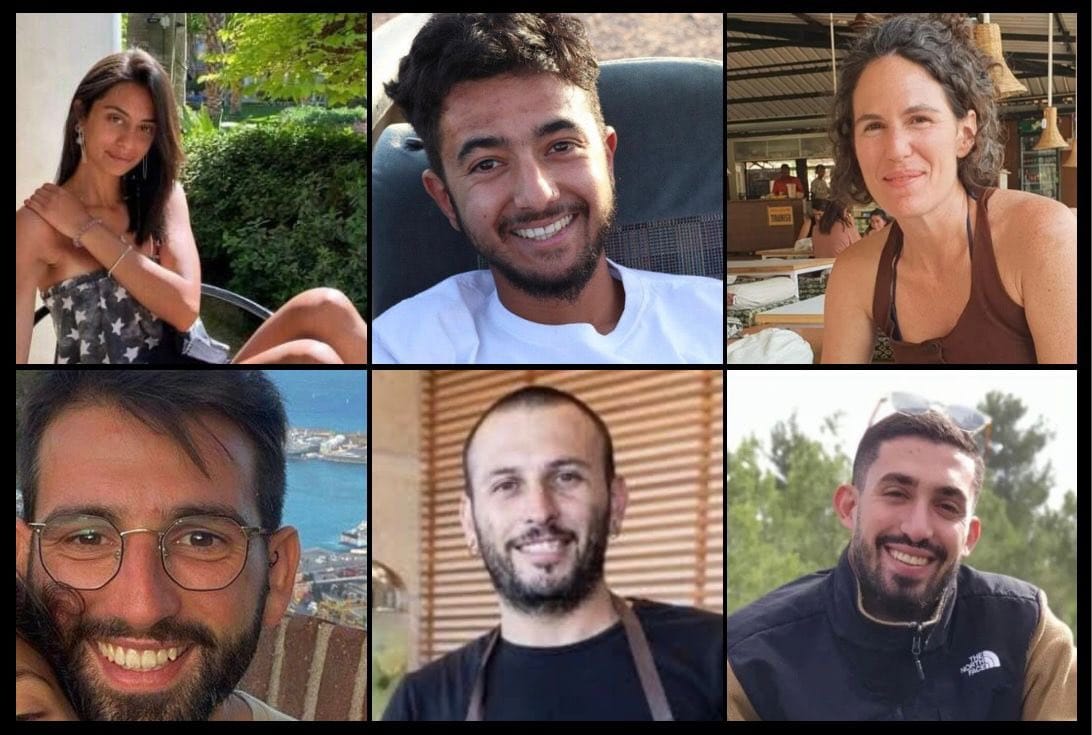
Hersh Goldberg-Polin is there, his left arm ending at the elbow—blown off by a Hamas grenade on October 7. Eden Yerushalmi, who hid among the bodies of her friends at the Nova festival before being dragged away. Ori Danino, who escaped but went back to try to save others. Alex Lobanov, whose wife was pregnant when he was taken, who never got to meet his second son. Carmel Gat, kidnapped from her parents' home while her mother was murdered. Almog Sarusi.
Hersh Goldberg Polin: “There’s a verse for each time they’ve tried to destroy us.”
— Hen Mazzig (@HenMazzig) December 11, 2025
Eden Yerushalmi: “we need to add another verse”
The six hostages celebrating Chanukah in captivity before Hamas executed them. 💔 pic.twitter.com/D4P5RAlHSc
The "Beautiful Six," they would later be called. Beautiful because they were young and full of life. Beautiful because even in that hell, they created community. Beautiful because they lit Hanukkah candles in a terrorist tunnel 60 feet underground.
Eight months after this video was filmed, Hamas terrorists shot all six of them to death.
The footage was meant to be propaganda. Hamas filmed hours of material—the hostages playing cards, eating fruit, counting down to New Year's Eve. Look, the terrorists wanted to say, we're treating them well. But they never released it. Maybe because even Hamas understood what the video actually shows: the indomitable will of the Jewish people to remain Jewish, even when everything has been taken from them.
"Where are the sufganiyot?" Eden asks, joking about Hanukkah donuts.
"We're waiting for Roladin in Israel," Hersh responds, referencing a famous Israeli bakery.
They would never taste those donuts. They would never go home.
At one point, Hersh reflects on their situation. "There's that picture of the Hanukkiah with a Nazi flag above it," he says, referring to a famous 1931 photograph taken by a German Jewish woman named Rachel Posner. She had placed her family's menorah in the window of their home in Kiel, Germany, directly across from Nazi headquarters. Behind the candles, visible in the photograph, is a Nazi flag. On the back of the photo, she wrote: "Death to Judah, so the flag says. Judah will live forever, so the light says."
Hersh understood. In that tunnel, with no windows and no sky and no freedom, with only the hatred of his captors and the makeshift candles and his five fellow captives—Hersh understood that he was part of an ancient story. The story of a people who light candles in the darkness. Who refuse to go quietly. Who choose life even when surrounded by those who choose death.
"This situation is not that far from the Holocaust," one of them says.
Rachel Goldberg-Polin says goodbye to her only son Hersh 💔: "Ok sweet boy, go now on your journey. I hope it's as good as the trips you dreamed about because finally, my sweet boy, finally, finally, finally, finally you are free.
— Israel ישראל (@Israel) September 2, 2024
I will love you and I will miss you every… pic.twitter.com/9pYbMX6YhJ
He was right. And he was also wrong.
And then, today, as I write this—today, on the first night of Hanukkah 2025—two gunmen opened fire on Jews gathered at Bondi Beach in Sydney, Australia, for a "Chanukah by the Sea" celebration. Fifteen dead. Among them: Alex Kleytman, a Holocaust survivor who came to celebrate the holiday he'd observed for nearly 90 years. A 12-year-old girl. Rabbi Eli Schlanger, who organized the event. A French citizen named Dan Elkayam. More than 40 wounded. Families running from the beach, children crying, the sound of automatic weapons fire where there should have been the sound of children singing Hanukkah songs.
A father and son, armed with long guns and improvised explosives, decided that Jews lighting Hanukkah candles was something worth killing for. In Australia. In 2025. On the first night of the festival of lights.
One thousand people had gathered on that beach to do exactly what Hersh and Eden and Ori and Alex and Carmel and Almog had done in that tunnel beneath Gaza: to light candles, to sing songs, to refuse to disappear. And terrorists came for them too.
 Art Vendeley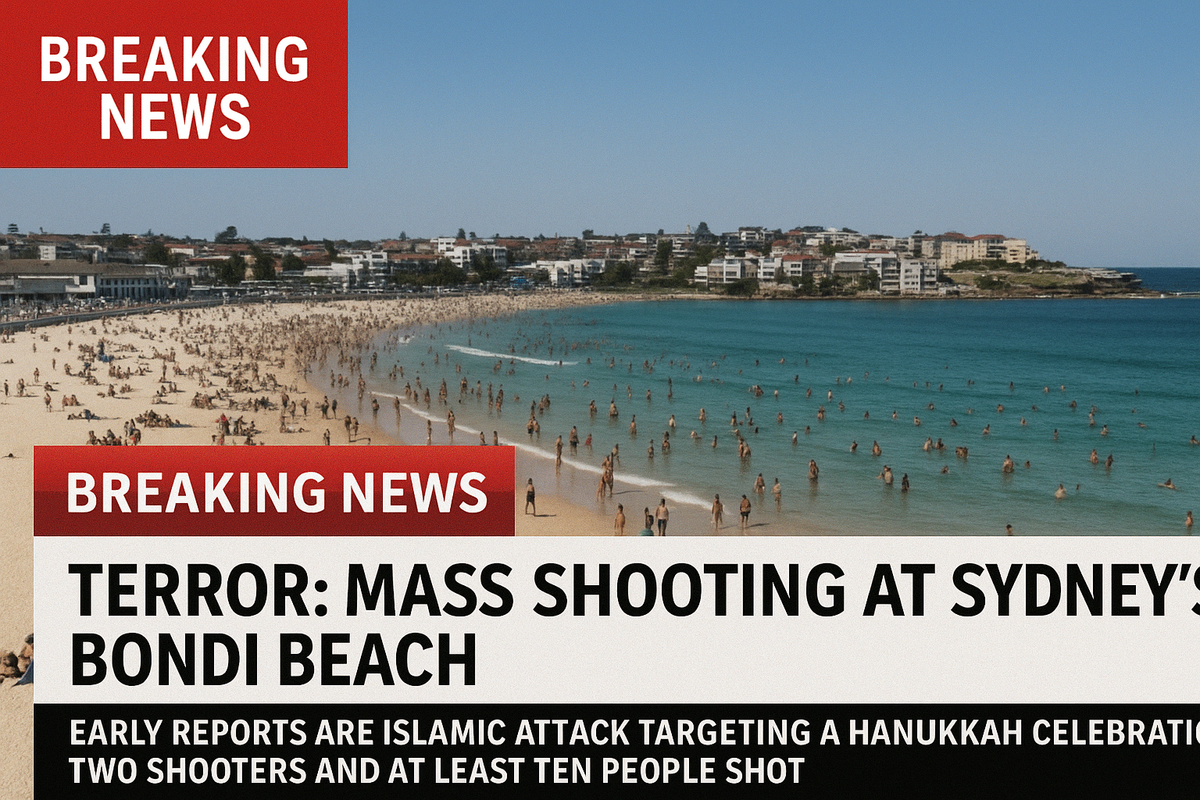
Because here's what the Nazis didn't have to contend with: cameras. Social media. The IDF. A Jewish state with the most powerful military in the Middle East that would move heaven and earth to find its children.
The Israeli military did find them. But not in time. By the time soldiers reached the tunnel in Rafah on August 31, 2024, all six had been executed—shot at close range by their captors just days earlier, as ceasefire negotiations collapsed and Israeli forces closed in.
The tunnel where they died was narrow, cramped. Soldiers found plastic bottles filled with urine. A crude toilet. Blood on the walls and floor.
This is what the world calls "resistance."
This is what university students chant for when they scream "from the river to the sea."
This is what happens when the international community pressures Israel to show "restraint" and "proportionality" in response to a terrorist organization that kidnaps civilians, holds them in underground dungeons, films them for propaganda, and then murders them in cold blood.
This is what happens when antisemitism becomes normalized again, when "anti-Zionism" provides cover for the oldest hatred, when criticism of Israel morphs into hunting Jews on beaches in Australia.
I keep thinking about Rachel Goldberg-Polin, Hersh's mother, who spent 331 days advocating for her son's release. Who met with world leaders, gave countless interviews, became the face of the hostage families' desperate campaign. Who held onto hope even as the months dragged on.
When she saw the video of Hersh lighting Hanukkah candles in the tunnel, she said: "What heroes. Six young luminous people who did everything right and they stayed alive and they did their part, and for us to claim we brought them back, in bags, bags of children to their parents, please don't count Hersh among the people you saved."
Bags of children. That's what came home from Gaza.
Bodies on Bondi Beach. That's what came from a Hanukkah celebration in Sydney.
The families chose to release this footage now, just days before Hanukkah begins again. They want the world to see what their children endured. They want the world to understand what it means to be Jewish in a world that still, always, wants to extinguish our light.
But here's what Hamas didn't understand when they filmed this propaganda, and what the Bondi Beach terrorists don't understand: You can't show Jews lighting Hanukkah candles and expect the world to feel anything other than what we feel—pride, grief, rage, and an iron determination that this will never happen again. You can't murder Jews for celebrating Hanukkah and expect us to stop celebrating.

The Maccabees lit the oil that shouldn't have lasted. Rachel Posner lit her menorah in the window across from Nazi headquarters. Six young Israelis, held captive in a terrorist tunnel, fashioned candles from paper cups and sang ancient songs about the Jewish people's refusal to disappear. And tonight, Jews around the world will light their menorahs in windows for all to see—for the Beautiful Six, for Alex Kleytman who survived the Holocaust only to be murdered celebrating its opposite, for the 12-year-old girl who will never light a second candle, for every Jew who has ever refused to hide their light.
Hersh was wrong about one thing: This situation was far from the Holocaust. In the Holocaust, there was no IDF. There was no Jewish state. There was no one coming. There was no armed civilian at Bondi Beach who tackled a gunman and ripped the rifle from his hands.
This time, we fight back. This time, we have a state. This time, the world watches in real time.
We just didn't come fast enough for the Beautiful Six. We didn't protect the Jews on Bondi Beach.
But we're still here. And we're not going anywhere.
The candles the Beautiful Six lit in that tunnel burned out long ago. The candles at Bondi Beach were never lit—the terrorists saw to that. But the light they represent—the light of Jewish continuity, of Jewish resistance, of Jewish life in the face of those who worship death—that light still burns.
It burned in Kiel in 1931. It burned in the Warsaw Ghetto. It burned in a tunnel beneath Gaza in December 2023. And it will burn tonight in every Jewish home, in every window, visible to the entire world, as we remember those who chose to light candles in the darkness, even when they knew the darkness might win.
We light these candles for them. We light them because they couldn't extinguish our light, not in Kiel, not in Warsaw, not in the tunnels of Gaza, not on the beaches of Sydney. We light them because Hersh was right: Judah will live forever, so the light says.

Tonight, the first night of Hanukkah, we light one candle. Tomorrow, two. Eight nights of defiance. Eight nights of memory. Eight nights of light.
May their memories be a blessing. May their light never go out. And may we have the courage to keep lighting candles, no matter what darkness comes for us.
Because that's what Jews do. We light the candles. We sing the songs. We refuse to disappear.
Always.
If this story resonates with you, support independent journalism that refuses to look away. Share this piece. Read more at The Unredacted. And join the conversation in the comments—because silence in the face of this darkness is not an option.