They Got Tenure: How the Weather Underground Won the Fifty-Year War
Jonah Raskin watched a Weatherman build a bomb in a Manhattan apartment in 1971. He went into denial. Then went into denial again. In 2026 many years later, the politics of that kitchen table run New York City. The bomb-makers got tenure. The romance was always the playbook

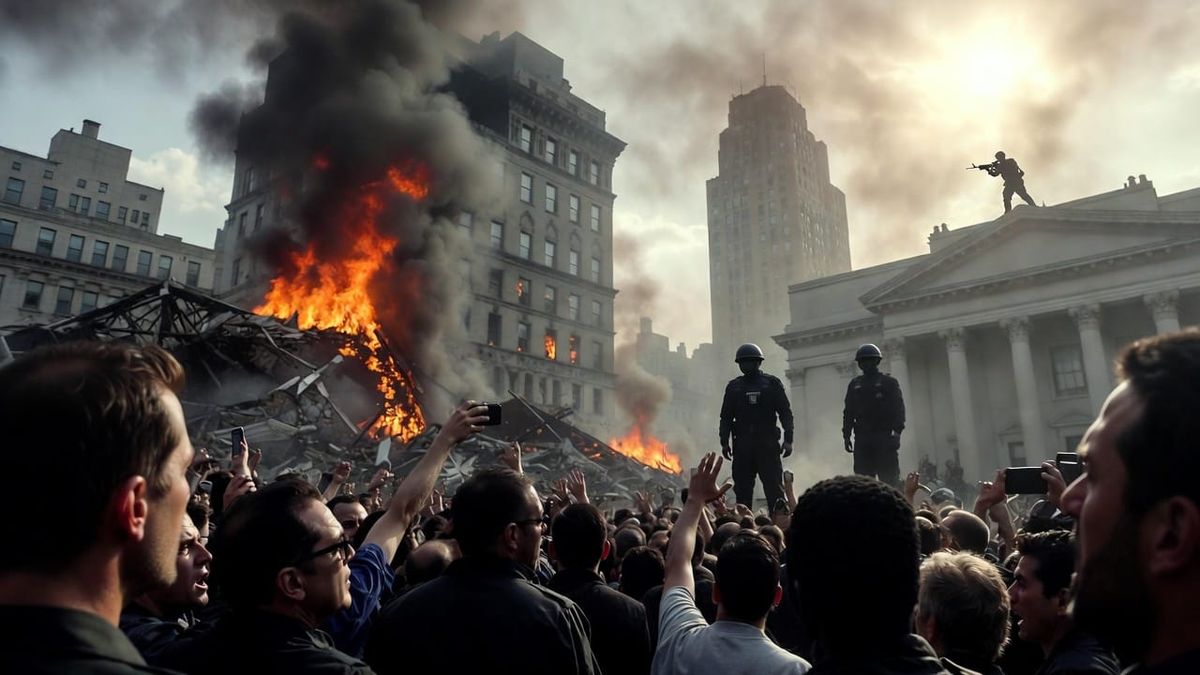
A bomb shed in Syosset. Two ISIS recruits at Gracie Mansion. A gunman at the Hilton. The romance was always the playbook.
This piece draws on Jonah Raskin's 2019 Tablet essay "Prairie Fire Memories," a firsthand account from a man who was inside the Weather Underground's orbit in the early 1970s — married to one of the fugitives, in the room when bombs were built, and honest enough four decades later to call the romance what it was. Credit where it's owed.
A fifteen-year-old in Syosset, Long Island, drew a swastika above a urinal in the boys' bathroom at Syosset High School. Nassau County Police, doing their job, traced the graffiti back to the kid's address on Patricia Lane. What they found in a detached shed four feet from the house was not a juvenile mischief problem. Nitroglycerin. Aluminum powder. Aluminum sulfide. Hydrogen sulfide. Acids and oxidizers and fuels stored under a clear plastic tarp riddled with holes and held together with tape. The bomb squad determined the chemicals were too unstable to transport.
They had to be destroyed on site, in a residential neighborhood, while neighbors watched. The teenager's father, Francisco Sanles, 48, paid for the chemicals at Lowe's and Home Depot. He drove his son to the stores. He did not supervise his son while the boy heated, cooled, and combined them. Father and son told police they were building rockets. Neither was qualified to handle any of it. Sanles is charged with criminal possession of a weapon, criminal facilitation, endangering the welfare of a child, and reckless endangerment. The son is charged with criminal possession, criminal mischief, aggravated harassment, and the swastika.
Six weeks earlier, on March 7, two men aged 18 and 19 — Emir Balat and Ibrahim Kayumi — drove from Pennsylvania to Manhattan with a notebook and a bomb. Federal prosecutors later disclosed the contents of the notebook. It listed the ingredients and equipment for the device, the construction steps, an alternate plan involving a vehicle, and a target list: "festivals," "parades," "protest," "celebrations."
Emir Balat and Ibrahim Kayumi, the Islamic terrorists who tossed a BOMB at anti-Islam protesters in NYC, have pleaded NOT GUILTY to federal terrorism charges.
— Libs of TikTok (@libsoftiktok) April 15, 2026
IT'S LITERALLY ON VIDEO pic.twitter.com/1hOfJsAiJO
On the dashcam recording captured during the drive, Kayumi told Balat: "All I know is I want to start terror bro." Outside Gracie Mansion, during a Ramadan-week protest, they threw an improvised explosive device containing triacetone triperoxide — TATP, the explosive of the London Underground bombings and the Bataclan. Both men told investigators they were inspired by ISIS. Both told prosecutors they hoped to kill up to sixty people. The device failed to detonate. The mayor and his wife were not home.
The mayor is Zohran Mamdani. He was sworn in on January 1. He is the first Muslim mayor in New York City history. He is also the candidate of the Democratic Socialists of America, an organization whose Manhattan and Brooklyn chapters have spent the past three years issuing statements that read — line by line — like extracts from documents the Weather Underground was distributing in 1974. This is not a coincidence. It is a lineage. And the man who can tell you exactly how the lineage was built is a retired Sonoma State professor named Jonah Raskin, who watched a Weatherman build a bomb in his apartment in 1971 and walked away from the romance four decades before most of his comrades worked up the nerve to do the same.
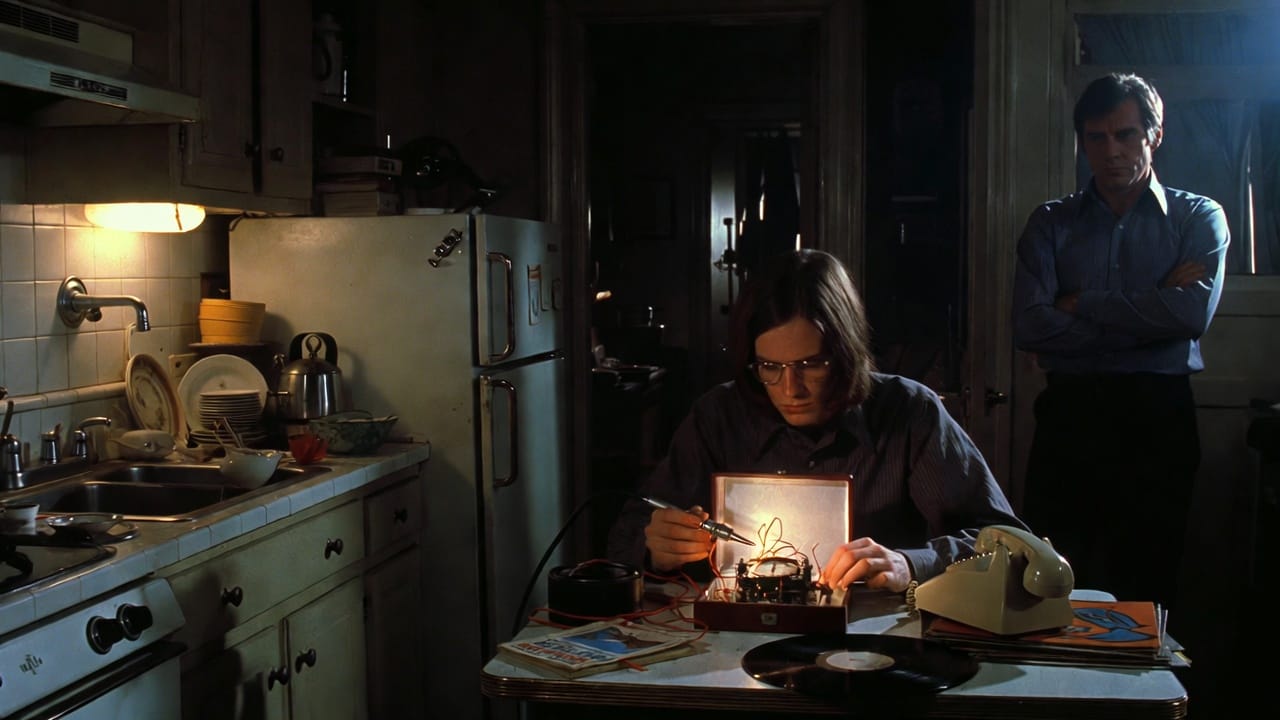
Read Jonah Raskin's account of the Weather Underground and one detail jumps off the page. He watched a man build a bomb in front of him. Wires, a clock, a cigar box. He watched another fugitive burn the wrappers from sticks of dynamite. He went into denial. Then he went into denial again.
That is the Weather Underground in miniature. Privileged kids playing at revolution. A father confessor brought in to absorb the secrets. Dynamite in a Manhattan basement. Three corpses on West 11th Street in March 1970 — Diana Oughton, Ted Gold, Terry Robbins — killed by their own device while building it. The bomb was meant for soldiers and their dates at a dance at Fort Dix.
The Weather leadership did not go to prison for any of it. They surrendered in 1980. Bill Ayers became a professor of education in Chicago. Bernardine Dohrn became a clinical law professor at Northwestern. Their foot soldiers did the time. David Gilbert is serving life. Judith Clark did 38 years. The leadership got tenure.

Weather was a class operation. The manifesto they produced in 1974, Prairie Fire, required money, a clandestine printing network, gloves on every page, and a legal front in San Francisco. It required, in Raskin's words, "college-educated, crafty radicals with prosperous, generous friends and family members 'above ground'" to distribute it. Ayers's father was the CEO of Commonwealth Edison. Dohrn went to law school at the University of Chicago. The vanguard had trust funds. Prairie Fire is not a historical artifact. It is the operating manual for a politics that won.
The title comes from Mao. "A single spark can start a prairie fire." The Weathermen took it as license to substitute their own will for objective conditions. They were going to be the spark. They would force the prairie to burn.
It did not burn. The American working class did not rise. Vietnam ended. Nixon resigned. The country moved on. The fugitives discovered they had bombed empty bathrooms in the Capitol and the Pentagon and signed off on communiqués written in a private dialect nobody outside their cells could read.
So they wrote Prairie Fire instead. One hundred fifty-six pages of self-criticism that never quite criticizes the self. The word "imperialism" appears on nearly every page. The word "Holocaust" appears almost not at all. There were Jews everywhere in Weather — Mark Rudd, Naomi Jaffe, Kathy Boudin, David Gilbert, Ted Gold — and not one of them, Raskin notes, identified as Jewish. They identified with Cubans, with Palestinians, with anyone except their own people, six million of whom had been gassed thirty years before they put on the noms de guerre.
 Gene Goodwin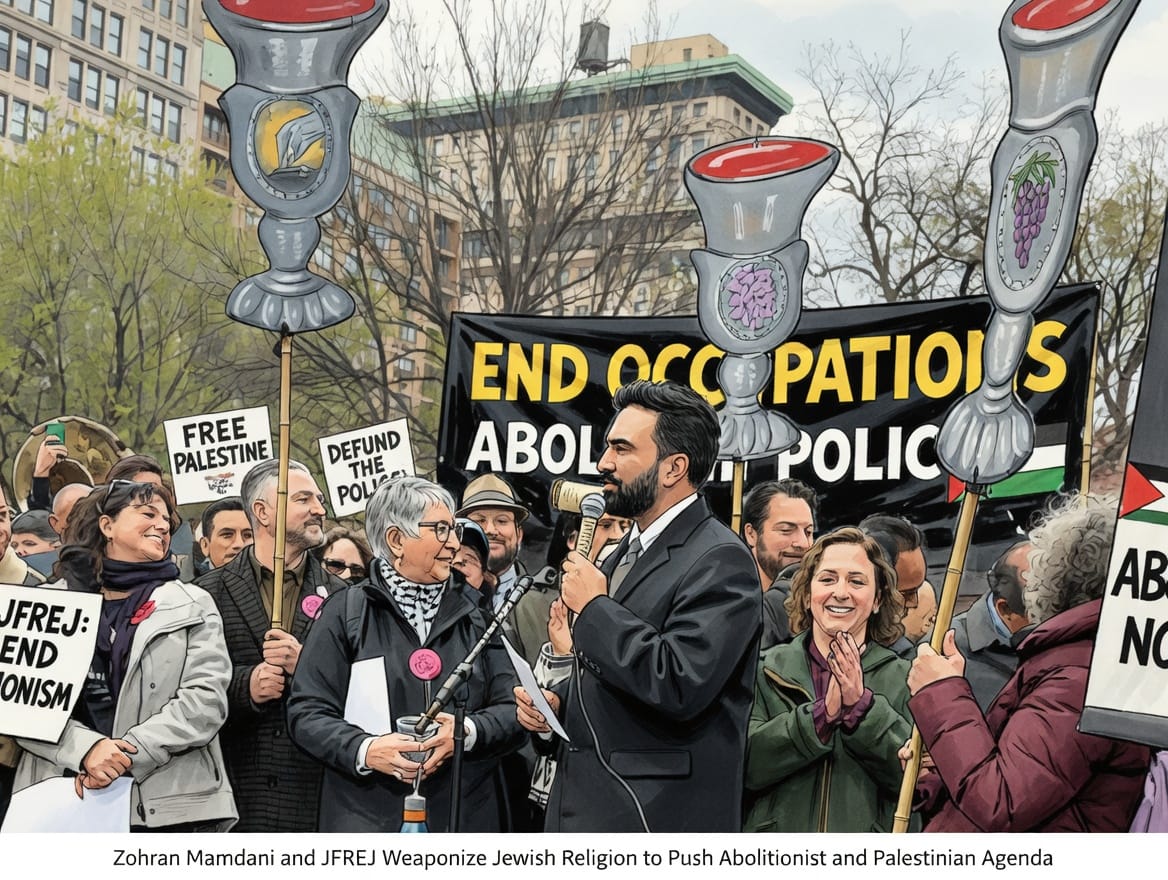
Ted Gold, before he blew himself up on West 11th Street, said this out loud. If revolution required extreme repression, he told a comrade, "We'll have to have fascism." Nobody in the underground objected.
Now look at the Mamdani administration's first four months.
The Democratic Socialists of America runs the political infrastructure that put the new mayor in Gracie Mansion. The administration's first hundred days included the revocation of the IHRA definition of antisemitism and the repeal of the city's anti-BDS executive order. Jews for Racial and Economic Justice, which provided the moral cover for both moves, has documented adjacencies to Neville Roy Singham's funding network — the same network that has channeled hundreds of millions of dollars into the constellation of pro-Hamas, pro-Hezbollah, pro-Beijing front groups operating in American cities.
Calla Walsh, who co-founded a group called Unity of Fields, publishes from Beirut. Unity of Fields published an "Underground Manual" — the word is theirs — instructing followers how to form cells, select targets, evade law enforcement, and use sledgehammers bought with cash. The manual borrows its operational logic from Palestine Action UK, which the British government has designated a terrorist organization. The lineage to Weather is not a metaphor. It is a footnote.
The bomb-making instructions have been updated. The romance has not. The grandchildren of the West 11th Street townhouse are running the city. The Prairie Fire Organizing Committee, the legal front Weather created in 1975 to "go to the people," fizzled in its day. Its descendants — DSA's Socialism Conference, the Working Families Party's training programs, the JFREJ pipeline — did not.
Gene Goodwin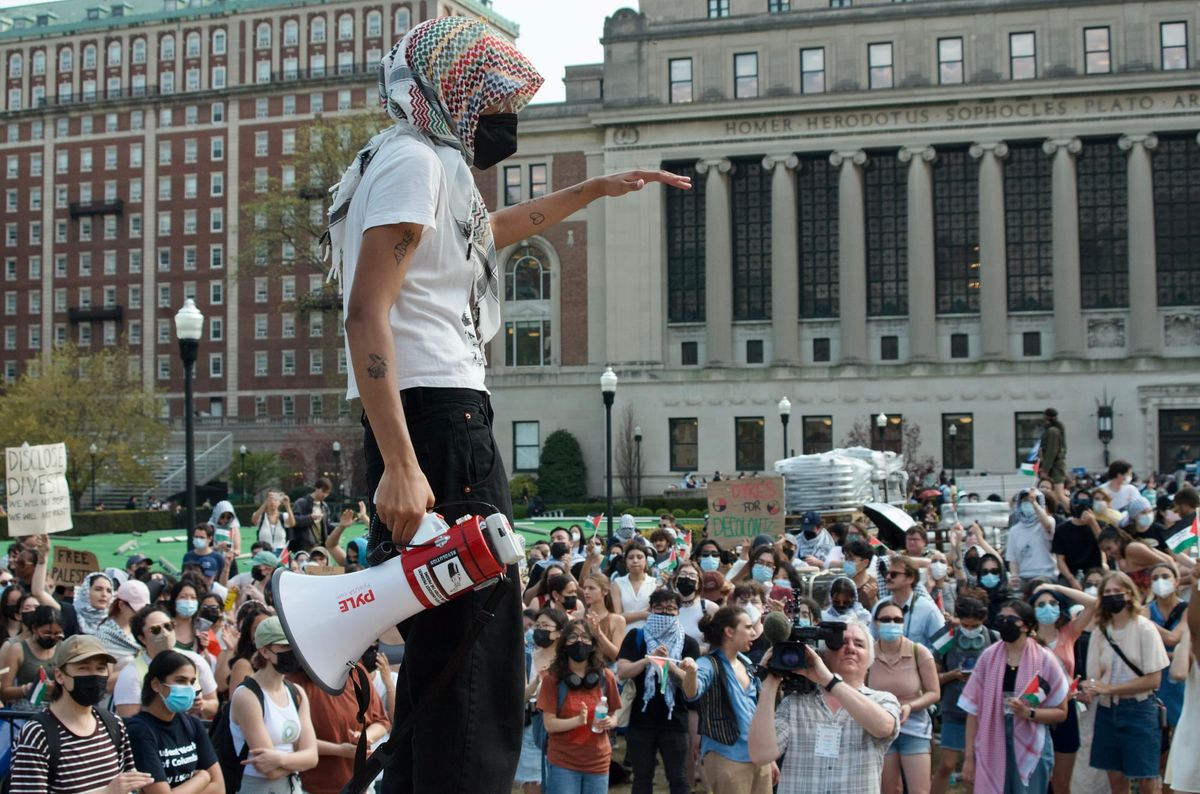
What Raskin understood, sitting in his New York apartment in 1971 and watching a man build a bomb, was that the politics rotted from the inside. "Life underground had produced a warped view of political, social, and cultural life in the United States." That sentence is the whole thesis. The vanguard cannot see the country it claims to liberate because it is hiding from it. By the time the picture is finished, the people in it are not Americans anymore. They are obstacles. The Weather leadership decided in 1969 that white working-class men did not count, that Black Panthers counted as a vanguard the white kids should follow at a distance, and that Jews counted only insofar as they could be repurposed as anti-Zionists. Every one of those judgments has now been institutionalized.
Read Prairie Fire today and the strangest thing is how familiar it sounds. Not the Marxist jargon — that has been swapped for the language of decolonization, accountability, and harm. The structure. The certainty. The willingness to declare entire categories of people enemies. The fluency with violence in the abstract paired with squeamishness about its consequences in the particular.
Saturday night, April 25, 2026. The White House Correspondents' Dinner, the Washington Hilton — the same hotel where John Hinckley shot Ronald Reagan in 1981. A man named Cole Tomas Allen traveled by train from California, via Chicago, carrying guns and knives. He tried to storm the ballroom while the President of the United States was on stage. Authorities recovered what they describe as an anti-Christian declaration. Acting Attorney General Todd Blanche on Sunday called it the third attempt on Donald Trump's life in less than two years. Allen was arraigned Monday on charges of attempting to assassinate the president. The Secret Service hustled the president off stage as the gunshots cracked.
Three Trump assassination attempts in twenty months. Two ISIS recruits with TATP outside Gracie Mansion. A father and son with nitroglycerin in a Long Island shed and a swastika in a high school bathroom. None of these are isolated incidents. They are the prairie burning.
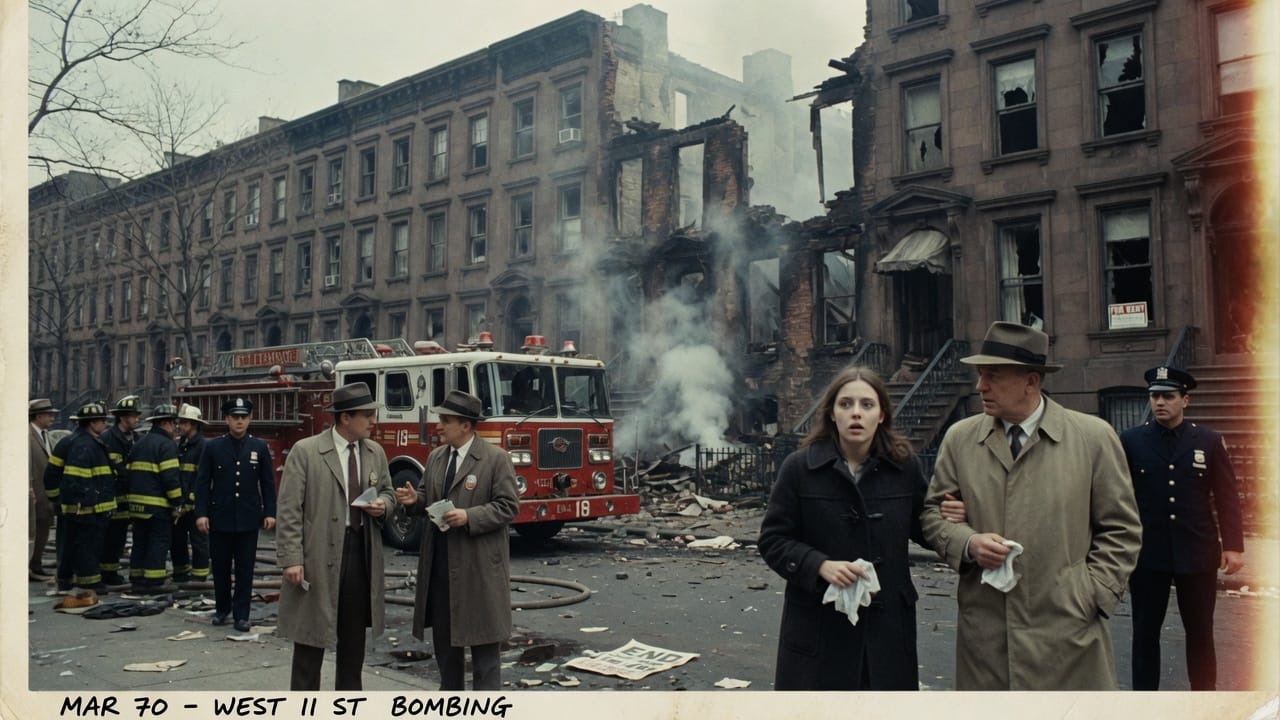
The romance Raskin walked away from is the lit match. The denial he wrote about — watching a bomb get built and choosing not to see it — is the political culture that produced this month. The Weathermen got tenure. The grandchildren got radicalized. The bombs got smaller, more numerous, and harder to track. Some of them carry ISIS notebooks. Some of them carry swastikas. Some of them carry an "anti-Christian declaration" onto an Amtrak from California. The category errors of 1969 — the willingness to designate entire groups of Americans as legitimate targets — have metastasized into a culture in which any sufficiently demonized public figure is a candidate for the next assassin.
Gene Goodwin
Stay alert. Watch your neighborhood. The Sanles shed in Syosset is not the last shed. The kid in the bathroom drawing the swastika is not the last kid. The romance is still doing what romance always does: it produces casualties, and it produces them on a schedule the romantic refuses to admit he is keeping. Raskin saw it in a Manhattan kitchen in 1971 and went into denial twice before he found the courage to leave. We do not have the luxury of the second denial.
Hat tip to Jonah Raskin, professor emeritus at Sonoma State, whose 2019 Tablet essay "Prairie Fire Memories" supplies the firsthand reporting this piece is built on. Raskin's honesty about the Weather Underground — and about his own romance with it — remains a model for what serious reckoning looks like.