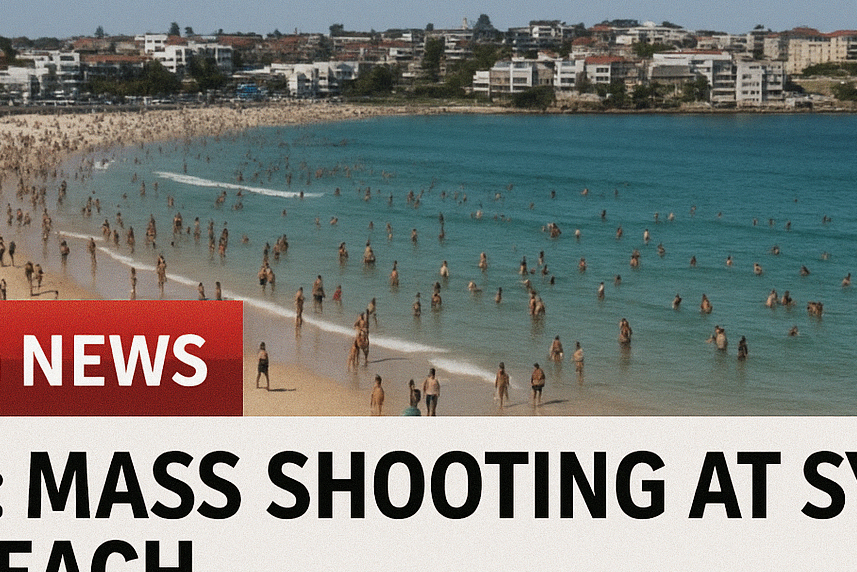
15 dead at Hanukkah celebration. The warning signs were everywhere.

The names matter. Start with those.
Alex Kleytman, 87, pushed his body over his wife Larisa as the first shots rang out across Bondi Beach Sunday evening. Both were Holocaust survivors who had emigrated from Ukraine decades ago and built a life together in Sydney. They came to Bondi every year for Chanukah by the Sea. Alex died shielding Larisa from a bullet. After surviving Nazi persecution in Siberia as a child, he was killed by antisemitic terrorists on an Australian beach.
Alex Kleytman was born in 1938 in Ukraine.
— Visegrád 24 (@visegrad24) December 14, 2025
He survived the Holocaust as a young boy.
He was murdered today at the age of 87 in an Islamist terror attack targeting the Jewish community of Australia. pic.twitter.com/z6Zh2jrhdK
Rabbi Eli Schlanger, 41, organized the event. London-born, father of five including a two-month-old baby, he had served the Bondi Jewish community for 18 years. He was walking through the crowd, talking with families, performing mitzvot, when the gunfire started. Last year he posted a video about combating rising antisemitism: "Be more Jewish, act more Jewish and appear more Jewish." He lived by that philosophy until a terrorist's bullet ended his life while he was hosting a celebration of light.
Rabbi Eli Schlanger, who was murdered today by terrorists while celebrating Hanukkah at Bondi Beach in Sydney, leaves behind a wife and four children.
— Vivid.🇮🇱 (@VividProwess) December 14, 2025
I’m heartbroken. pic.twitter.com/pr86xTPmQn
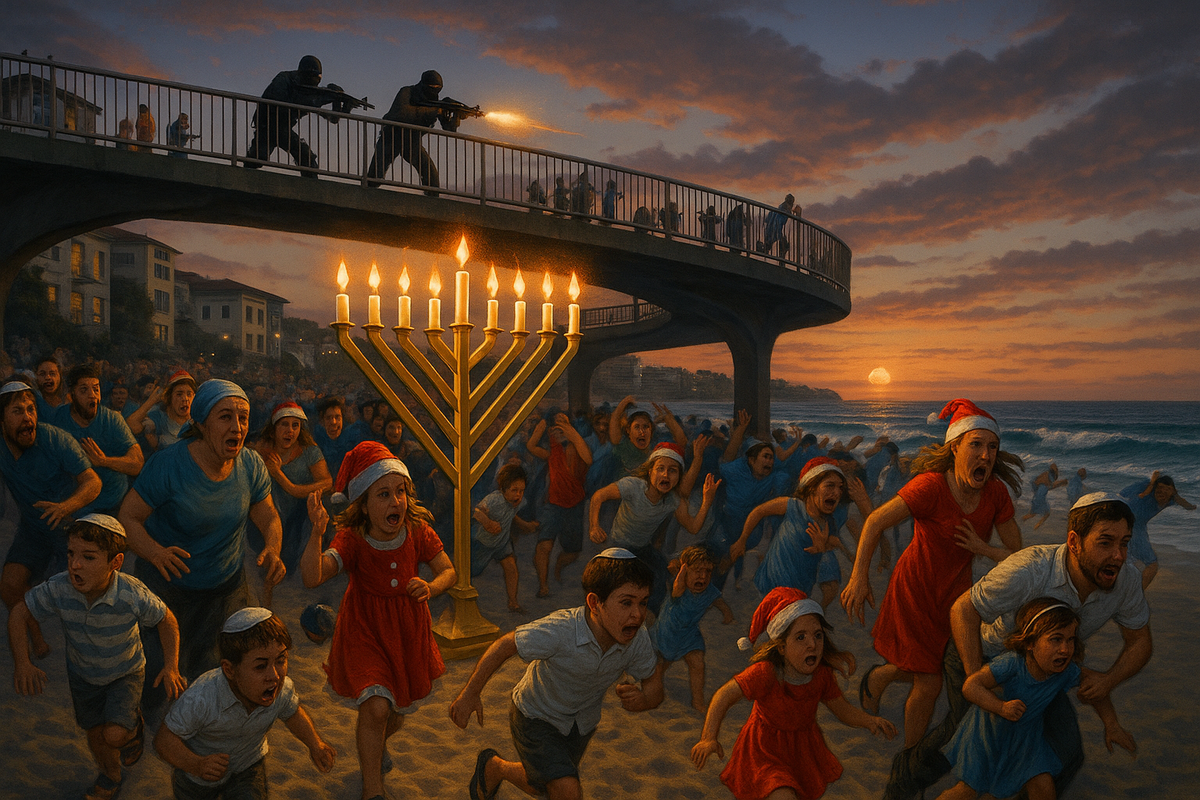
Matilda Britvan, 10 years old. Her aunt Lina Chernykh told Channel 9 she was "like a sun" wherever she went. She was at Bondi Beach with her parents, younger sister, and friends when two gunmen opened fire from a footbridge at 6:45 p.m. Matilda died that night.
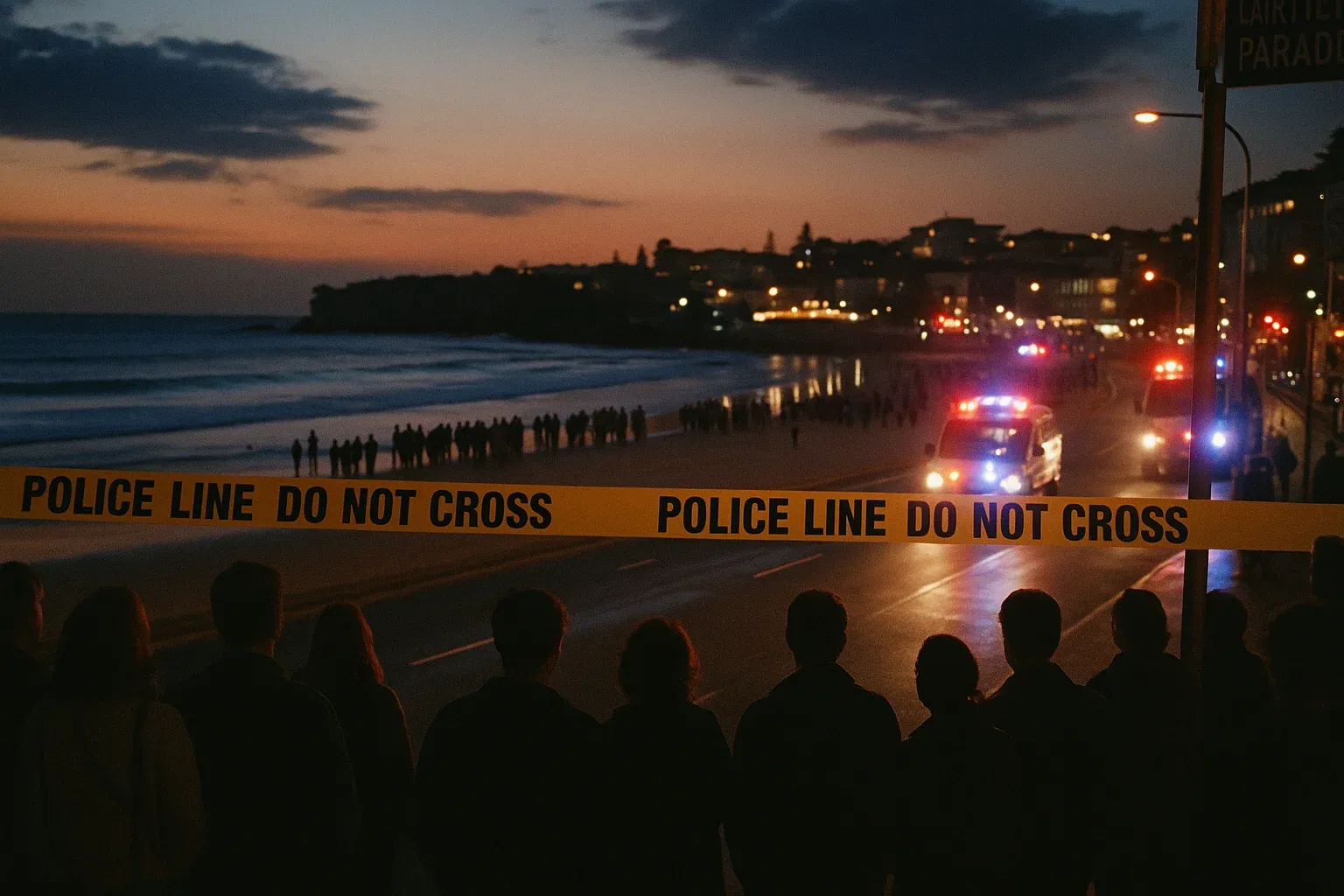
These are three of at least 15 dead. Forty-two more were hospitalized, including four children. Two police officers were shot. The attack lasted approximately 10 minutes before police killed one gunman and critically wounded the other. Australian authorities have designated it a terrorist attack specifically targeting the Jewish community on the first night of Hanukkah.
Matilda Bee Britain was robbed of her life at age 10 by Islamic terrorists. She is the youngest victim of the Bondi Beach Chanukah massacre in Sydney. pic.twitter.com/RyGgHVO6NQ
— Marina Medvin 🇺🇸 (@MarinaMedvin) December 15, 2025
The suspects are Sajid Akram, 50, shot dead at the scene, and his son Naveed Akram, 24, now in critical condition under police guard. Both had pledged allegiance to Islamic State, according to Joint Counter Terrorism Team sources who spoke to ABC News. An ISIS flag was found in their vehicle along with two improvised explosive devices.
Here is what Australian Security Intelligence Organisation knew about Naveed Akram before Sunday's massacre.
The Investigation That Closed Too Soon
In October 2019, ASIO opened a file on Naveed Akram. The trigger was his association with a Sydney-based Islamic State terrorism cell. One member of that cell, Isaak El-Matari, had been arrested in July 2019 and later convicted of preparing terrorist attacks in Australia and attempting to establish himself as ISIS's "Australian commander." Naveed Akram was in El-Matari's orbit.
ASIO examined Akram for six months. Prime Minister Anthony Albanese confirmed this Monday, explaining that intelligence services "examined on the basis of being associated with others" but concluded "there was no indication of any ongoing threat or threat of him engaging in violence." The assessment closed in early 2020.
Five years and nine months later, Naveed Akram and his father walked onto Bondi Beach carrying semiautomatic shotguns they fired into families celebrating Hanukkah.
The gap between the 2019 investigation and the 2025 massacre raises questions Australian authorities now must answer. What specifically did ASIO assess in those six months? What criteria determined Akram presented "no ongoing threat"? Who made that determination? When did they last review the file? Did anyone reassess Akram's threat level as antisemitic violence surged across Australia in 2023 and 2024?
According to security sources speaking to ABC News, investigators from the Joint Counter Terrorism Team are now examining precisely how Akram's case was handled and whether warning signs were missed. They face a resource constraint problem that plagues intelligence agencies worldwide: thousands of individuals with extremist ideology, only a fraction likely to commit violence, insufficient personnel to maintain surveillance on all of them.
But Naveed Akram was not merely an ideological extremist. He had documented connections to a convicted ISIS cell member. That should have kept him in a different category.
Australia took away its citizens’ guns, but 10 people at Bondi Beach are dead anyway because terrorists don’t care about gun laws.
— Don Keith (@RealDonKeith) December 14, 2025
The only thing the Australian government did was make sure its unarmed, law-abiding, citizens are now sitting ducks, unable to defend themselves. pic.twitter.com/xzwEziEpxk
The Father's Firearms
Sajid Akram arrived in Australia in 1998 on a student visa. He transferred to a partner visa in 2001 and held resident return visas through subsequent trips overseas. Home Affairs Minister Tony Burke provided this timeline Monday. Sajid became a licensed firearms holder approximately 10 years ago, joining a gun club and obtaining a recreational hunting license. He owned six firearms, all legally registered.
NSW Police Commissioner Mal Lanyon confirmed Sajid "met the eligibility criteria for a recreational hunting license" and "was a member of a gun club." All firearms were recovered at the scene Sunday night.
This is where the personnel network becomes crucial. Sajid Akram held a firearms license for a decade. His son was investigated by ASIO in 2019 for ties to an ISIS cell. Did firearms licensing authorities have access to that information? Should the father's license have been reviewed when the son came under counterterrorism investigation? NSW Police have not yet addressed these questions publicly.
The family lived in Bonnyrigg in Sydney's western suburbs. Neighbors described them as quiet. Naveed worked as a bricklayer for an employer who told media Naveed had been with him for six years, "a hard worker who never had time off." Two months ago Naveed reported breaking his wrist while boxing and requested all his entitlements paid early. "You can't help but think, him getting all his money out, what's he going to spend it on," the employer said.
Naveed told his mother Sunday morning he was going on a fishing trip to Jervis Bay with a relative. Instead he and his father drove to Bondi Beach, stayed briefly in Campsie, then walked to the Hanukkah celebration carrying weapons and explosives.
The Hero and the Response
Ahmed al-Ahmed, 43, owns a fruit shop. Father of two. When the shooting started, he tackled one gunman from behind, wrestling the shotgun away despite being shot twice. Video footage captured al-Ahmed pointing the captured weapon at the disarmed terrorist, then raising his hand as police arrived. NSW Premier Chris Minns called it "the most unbelievable scene I've ever seen" and visited al-Ahmed in hospital Monday. Prime Minister Albanese praised his heroism. So did U.S. President Trump and billionaire Bill Ackman, who offered rewards.
Al-Ahmed's bravery saved lives. It also exposed a security failure. Approximately 1,000 people attended Chanukah by the Sea. The Roscoe Street police station sits 150 yards from the beach. Yet no dedicated security was assigned to the event despite Australia recording a documented surge in antisemitic incidents.
The Executive Council of Australian Jewry documented 1,713 antisemitic episodes in 2024, up from 1,200 in 2023. Between October 2023 and September 2024, reported incidents increased nearly five times over pre-October 2023 averages. PBS and Times of Israel reported a 700% spike in antisemitic incidents post-October 7, 2023.
Rabbi Schlanger himself addressed this in a 2024 interview with Chabad.org, noting attendance at the annual Bondi Beach Hanukkah event had doubled in response to rising antisemitism. He said security had been heightened in recent years. What that heightened security consisted of, and why it failed to prevent two armed men from opening fire for 10 minutes, remains unclear.
The Contradictions
Albanese has condemned the attack forcefully, calling it "pure evil" and ordering flags at half-mast. His government announced Monday it will examine tightening Australia's already strict gun laws, including limiting gun licenses to Australian citizens only. This would have excluded Sajid Akram, who held resident status but not citizenship.
Yet Albanese's critics, including Israeli Prime Minister Benjamin Netanyahu, point to a different record. Netanyahu stated in August 2025 that Albanese's government was "pouring fuel on the antisemitic fire" through its criticism of Israel's conduct in Gaza. Australian Jewish community leaders have expressed frustration that antisemitism warnings were repeatedly raised with authorities before Sunday's attack, producing an insufficient response.
Robert Gregory, CEO of the Australian Jewish Association, told CNN that grief has turned to anger within the community. "The government appointed a commissioner on antisemitism that's made some recommendations which have not been adopted yet," Gregory said, citing university campuses and media outlets as identified "hotspots." He characterized Albanese's gun law proposals as "deflection."
Dionne Taylor, communications manager for the Australia Israel Jewish Affairs Council, told CNN: "We are not surprised by last night's attack. We are shocked, but we are not surprised. Every attack that has happened up until last night was the warning sign that last night was inevitable."

The Akram case now forces Australian authorities to answer specific questions about institutional decision-making: Who assessed Naveed Akram in 2019? What standard determined he presented no threat? When do closed threat assessments get reopened? How do firearms licensing and counterterrorism databases communicate? Why was a major Jewish holiday event inadequately secured despite documented rising threats?
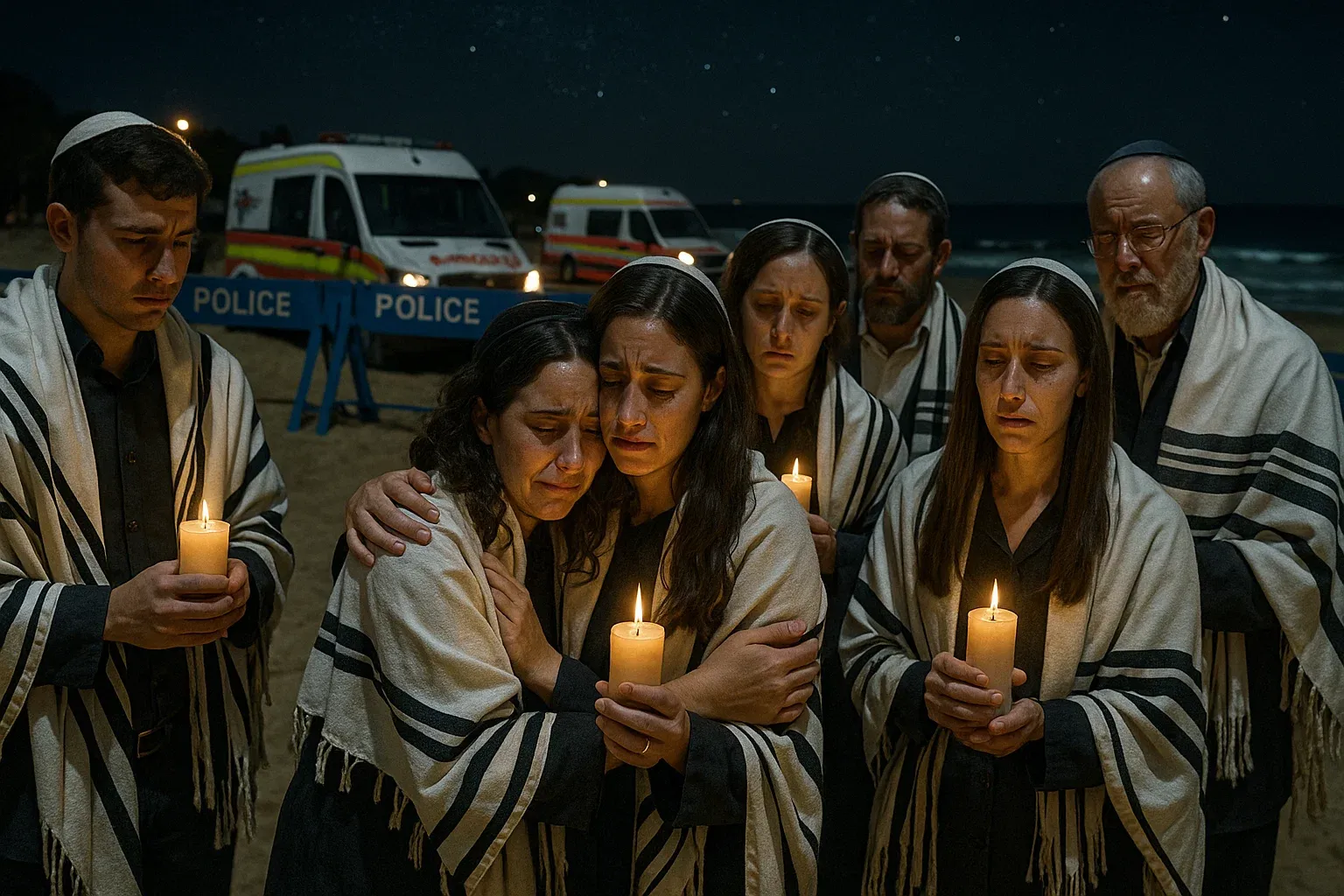
Fifteen people are dead. Their names are Alex Kleytman, Rabbi Eli Schlanger, Rabbi Yaakov Levitan, Matilda Britvan, Reuven Morrison, Dan Elkayam, Peter Meagher, Tibor Weitzen, Marika Pogany, and at least six others whose identities remain under official review. They died at a celebration of light because the systems designed to protect them failed at multiple levels across six years.
The investigation continues. The questions demand answers.
Palestine activist went to the Bondi memorial to protest.
— Drew Pavlou 🇦🇺🇺🇸🇺🇦🇹🇼 (@DrewPavlou) December 15, 2025
Absolutely sickening. pic.twitter.com/7YNdFnKNwy
an