Beijing's Bot Army Has Names, Addresses, and a Customer List
Leaked documents from Chinese Academy of Sciences spinoff GoLaxy show Beijing has built an AI propaganda system targeting Taiwan, Hong Kong, and every member of the 117th US Congress. Its customers include the PLA. The receipts are real.

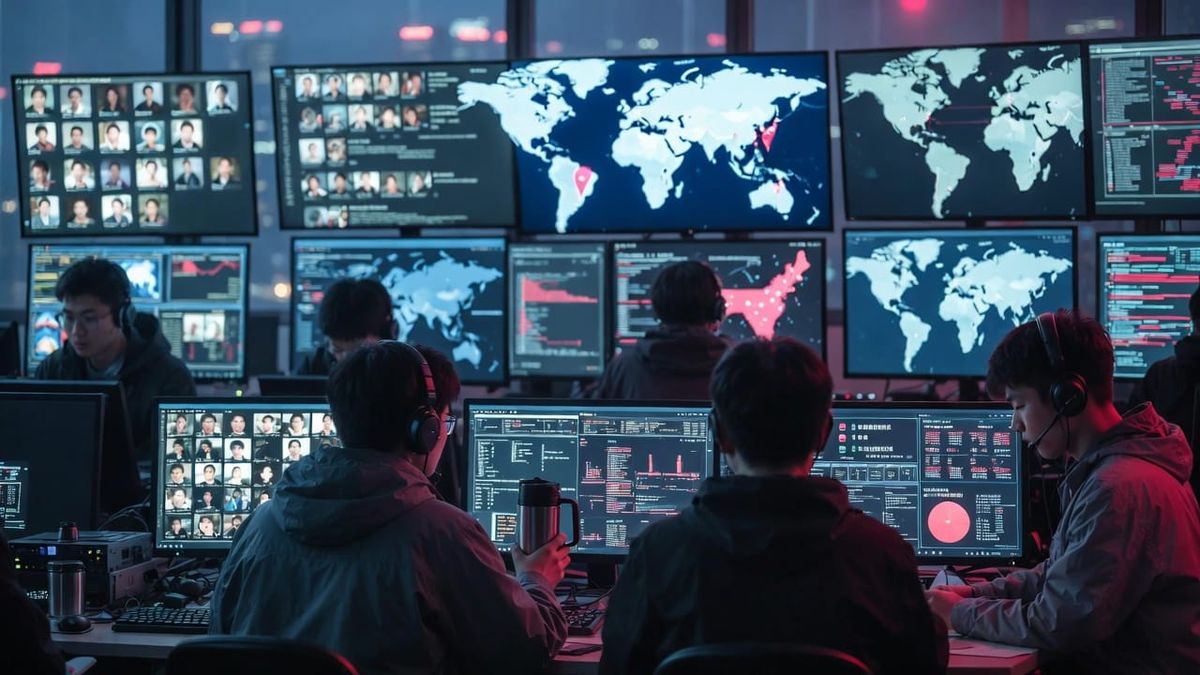
The People's Republic of China is no longer content with sloppy bot networks and copy-pasted Twitter spam. Beijing has graduated. According to 399 pages of leaked internal documents from a company called GoLaxy, the regime has commissioned a turnkey artificial intelligence system built to monitor, target, and manipulate political opinion in Taiwan, Hong Kong, the United States, and every Belt and Road corridor where Chinese interests run. The system was built by engineers inside the Chinese Academy of Sciences. Its customers include the People's Liberation Army.
The documents were obtained by researchers Brett J. Goldstein and Brett V. Benson, first reported by The New York Times in August 2025, and now analyzed in granular detail by Athena Tong and the Digital Intelligence Team at Doublethink Lab. Tong's report, published this month, is the basis for what follows. The picture she draws is grim. The Chinese Communist Party has industrialized the production of synthetic political reality.
GoLaxy, known in Mandarin as Zhongke Tianji, is a spinoff from the Institute of Computing Technology at the Chinese Academy of Sciences. Its flagship product is called GoPro. The pitch document, addressed to senior Academy leadership, opens with a complaint. America, the authors write, has been running influence operations against China on Hong Kong, Xinjiang, COVID-19, and trade. Xi Jinping has personally demanded that the regime "dare to unsheathe the sword" and seize the initiative in the online opinion war. GoPro is the sword.

It has four parts. First, it scans the global information environment for political trends. Second, it identifies real human targets. During the Hong Kong National Security Law protests, the system filtered 180,000 Hong Kong Twitter users and flagged roughly 3,000 key figures and 100 influencers for tailored attention. Third, it generates content. The AI writes posts, paraphrases existing material, and produces long-form content calibrated to the target audience. Fourth, it deploys that content through an army of "humanized" bot accounts on Facebook, Twitter, Telegram, and other platforms. One central dashboard. One operator. Thousands of synthetic citizens.
The personas are not theoretical. GoLaxy's own internal sheet, page 280 of the leak, lists ten of them by name, with phone numbers and email addresses. Doublethink confirmed that the email accounts are real, that most are linked to functioning phone numbers, and that eight are tied to Medium and Pinterest accounts. A screenshot of the operator dashboard lists 3,692 personas in total. Four Facebook and X accounts named in the documents remain online. One is still active. Their friend lists pull in other suspected GoLaxy assets posing as Taiwanese citizens, posting in traditional characters, and reposting PRC state media.
That is the apparatus. Now look at the targets.
Taiwan first. GoLaxy maintains a structured knowledge graph of Taiwanese politics with one classification field labeled "attitude toward China." Pro or anti. Every party, every politician, every legislator slotted into the matrix. The profiled names include Tsai Ing-wen, Lai Ching-te, Ko Wen-je, Su Tseng-chang, Chen Chu, and Wang Ting-yu. The data includes 6.2 million news and social media items, 23 million entries of closed-source Taiwan household registration data, and 5,000 key target social media accounts subjected to what the documents call "virtual-real mapping," meaning the online persona has been tied to a real human being. The internal taxonomy sorts Taiwanese citizens into "Hardliners," "Moderates," "Swing Voters," and "Objectivists." Each category has its corresponding "opposite." A parallel project commits to building "at least 100 digital human identities across 10 virtual scenes" capable of dialogue in Taiwan Mandarin, Taiwanese Hokkien, and English.
This is not analysis. This is preparation for a campaign.
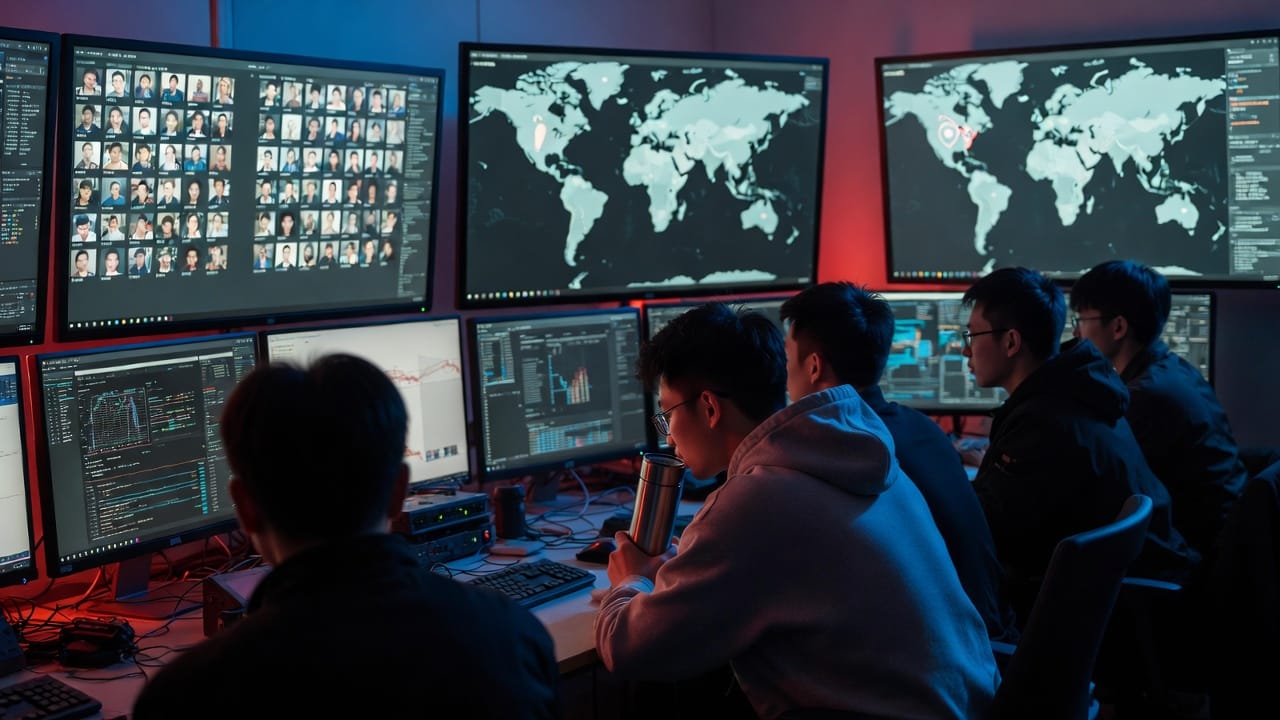
The United States is in the queue. GoLaxy's American file holds data on every member of the 117th Congress and every 2022 congressional candidate, more than 4,000 "establishment figures, Trump supporters and right-wing forces," 5,000 journalists, 1,000 academics, 10,000 researchers, 20,000 American companies, and over 200 American military organizations including specific drone squadrons and numbered regiments. The system includes a dedicated US Elections dashboard with modules for primary tracking, swing-state analysis, campaign finance ingestion from FEC and OpenSecrets data, candidate activity heat maps, and post-election speech analysis. One small detail: the prototype heat map was rendered, in the leak, over a tiled map of West Lake in Hangzhou. The engineers had not yet bothered to swap in a US basemap. The intent is there. The wiring is being soldered.
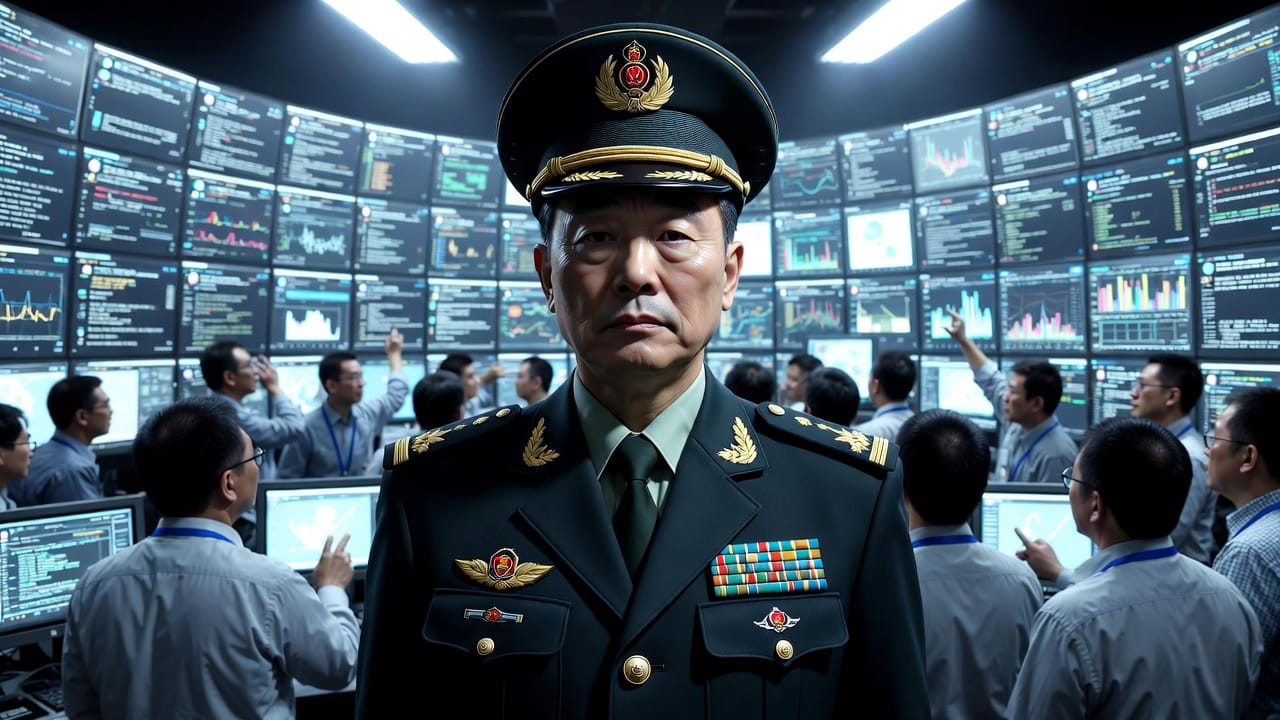
Now the customers. They are listed by name on page 379. The Cyberspace Administration of China, which runs Beijing's internet control regime. The Science and Technology Department of the Central Military Commission, which directs the People's Liberation Army's research and development. The Taiwan Affairs Office, which manages cross-strait subversion. And PLA Unit 61716, also known as Base 311, the military command in Fuzhou whose specific mission is psychological warfare against Taiwan. GoLaxy is not a private vendor with government clients. It is a contractor for the Chinese military's political warfare directorate.
Its partners are equally telling. Xiamen Meiya Pico, the state-owned cybersecurity firm placed on the US Entity List in 2019 for its role in Xinjiang. IFLY Digital, an iFlytek subsidiary on the same Entity List for the same reason. Beijing Zhongke Ruijian, another Chinese Academy of Sciences spinoff. Baidu, which the Pentagon was reportedly considering in November 2025 for the 1260H list of Chinese military companies. The PRC's commercial AI sector and the PRC's repressive security apparatus are not adjacent. They are the same organism.
The documents reach further still. Belt and Road corridors: Pakistan, Iraq, Cambodia, Indonesia, Myanmar, Nigeria, Ethiopia, the Democratic Republic of Congo, Angola, Afghanistan, Kazakhstan, Uzbekistan. South China Sea claimants. The Philippines, where GoLaxy has cataloged Filipino models, political philosophers, embassies, teachers' unions, and individual ACT-CIS organizers. The Hong Kong dissident networks. The Tibetan and Uyghur diasporas, framed in the GoPro pitch documents as "hostile targets" and "subcritical groups" who must be "split or neutralized" through what the authors openly call "cognitive warfare."
The leak, finally, came from a disgruntled employee. The final two pages of the documents are a complaint about toxic working conditions and underpayment. Senior developers, the employee writes, were capped at 30,000 renminbi per month, roughly 4,200 American dollars. Master's-level data analysts made less than 20,000 renminbi. The men building the regime's most ambitious information weapon were not getting rich. They were getting tired. One of them gave the documents to researchers, and they now sit on a server at Vanderbilt University.
Two conclusions follow. The first is that the Chinese Communist Party has built, at industrial scale, the machinery to fabricate political consensus inside Taiwan and along the entire perimeter of Chinese strategic interest, the United States included. The second is that the machine is held together by underpaid engineers with poor operational security, working for partners whose corporate filings are public, on platforms whose terms of service they openly violate. The vulnerability is real. So is the case for sanctions. The European Union has begun considering them against Russian disinformation contractors. Washington should be on the same page. Beijing's bot farms have names, addresses, and bank accounts. Let them feel the weight of all three.
Athena Tong's full analysis is published at Doublethink Lab. Read it. Cite it. Build on it.