Brooklyn on Fire: The Mob Comes to Midwood
A masked mob stormed a Brooklyn synagogue for the second time in a week. Teenagers were arrested defending it. The NYPD's buffer zone plan hasn't been filed. This is what governance looks like when it's losing.

Brooklyn is being invaded by Violent Jihadis. pic.twitter.com/yU73diaVMS
— The Unredacted (@theunredacted) May 12, 2026
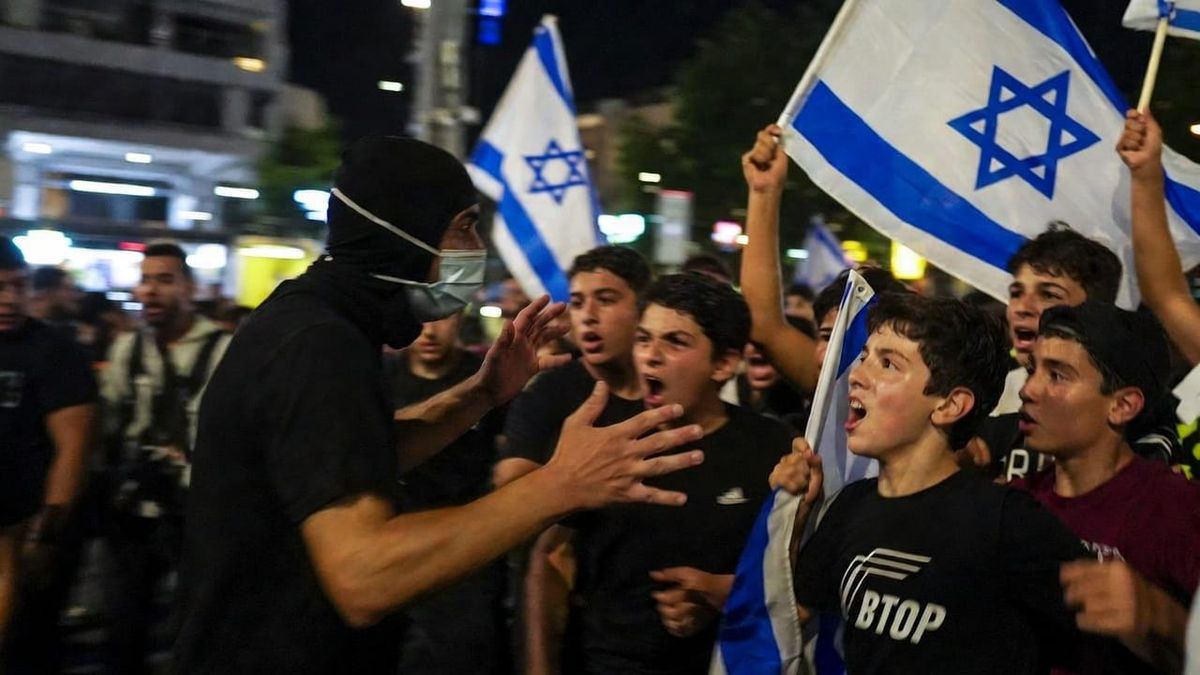
A mob descended on a Brooklyn synagogue Monday night. They chanted that Palestine is "ours alone." They yanked a girl's hair and nearly threw her into a parked car. They hurled objects at counter-protesters while police formed lines between them and the Jews they came to terrorize. Three people were detained. The street outside Young Israel Senior Services of Midwood looked like a warzone.
This is New York City in May 2026. This is Zohran Mamdani's New York.
The demonstration was organized by Pal-Awda NY/NJ, the same group that brought a mob of two hundred to the historic Park East Synagogue in Manhattan six days earlier. That was May 5. This was May 11. They are not slowing down. They are accelerating. Anyone telling you this is spontaneous outrage over a real estate event hasn't been paying attention. This is a campaign. It has coordinators, it has a schedule, and it has a political logic — one that the city's ruling class is either too cowardly or too ideologically compromised to name out loud.
Pal-Awda framed the Midwood event as a response to a "Land Sale" — an evening hosted by Young Israel promoting real estate opportunities in Israel and the West Bank. In their public statement, the group declared that "neither of these protests would have happened" had venues not chosen to host what they called "illegal sales of stolen Palestinian land." Read that again. A political activist organization is telling Jewish institutions in New York City what events they are permitted to hold inside their own walls. And the city's government is responding with buffer zone proposals and forty-five-day planning deadlines.
🚨 | A group of local teenage Jewish boys walk together singing loudly and defiantly as they trail just behind a large, rowdy mob of pro-Palestinian thugs marching through the streets of Midwood Jewish neighborhood. pic.twitter.com/rrhnGheoFG
— Ghost Cowboy (@GhostCowboyX) May 12, 2026
This is what accommodation looks like when it's losing.
The crowd that showed up in Midwood carried banners reading "Israel is killing children." They chanted slogans designed to maximize confrontation. One masked agitator — face covered with a medical mask, as has become standard operational practice for people who do not wish to be identified while committing acts of violence — grabbed a teenage girl by the hair and swung her toward a parked car. Another man squared up against a group of young counter-protesters and screamed at them in the street. The NYPD eventually took three people into custody, two of them pro-Israel teenagers who threw objects during the melee. Their supporters marched alongside the officers chanting for their release.
Teenagers defending a synagogue got arrested alongside the agitator who incited the violence. That detail deserves more attention than it has received.
Pal-Awda is not a fringe operation. It does not operate in a vacuum. It functions within a dense ecosystem of anti-Zionist organizing groups that have been professionalized, funded, and politically mainstreamed over the past several years. Their events do not materialize from nowhere. Someone prints the banners. Someone coordinates the dates. Someone is watching to see what the city does — and does not do — in response.
NOW: Police Take Down protester and detain him during confrontations near Young Israel Synagogue of Midwood between protesters of "Land Sale" event and Israel supporters in Brooklyn pic.twitter.com/NUphG0ckfR
— Oliya Scootercaster 🛴 (@ScooterCasterNY) May 12, 2026
What the city has done, so far, is propose a buffer zone law. City Council Speaker Julie Menin introduced it after the Park East riot. The legislation requires the NYPD to develop protocols for erecting temporary fencing around houses of worship when protests are imminent. It was enacted April 25. It set a forty-five-day deadline for the NYPD to submit a plan to Menin and to the mayor's office. As of Monday night, while the mob was in Midwood and a teenage girl was being thrown toward a car, the NYPD had not submitted its proposal.
The law was still being planned. The mob was already there.
This is the operational reality of governance-by-process in a city where the political leadership is philosophically aligned, at least in part, with the movement creating the problem it is nominally trying to manage. Mamdani did not build Pal-Awda. But he was built by the same coalitions that provide Pal-Awda its political oxygen — the Democratic Socialists of America, the Working Families Party, and the network of progressive donor infrastructure that has systematically remade New York City politics over the past decade. He is not an innocent bystander to this moment. He is its product.
That matters because the question being asked on the streets of Brooklyn is not really about real estate in the West Bank. The question is whether Jewish institutions in New York City can function normally — host events, welcome guests, conduct communal life — without requiring a police cordon and a forty-five-day municipal planning process. The answer, right now, is no. And the people responsible for that answer are not only the masked agitators screaming in the street. They are also the officials who looked at the Park East riot and responded with paperwork.
State Senator Sam Sutton condemned the demonstration. Pal-Awda responded to him by name, dismissing his condemnation and doubling down on the framing that Jewish institutions hosting Israel-related events are themselves responsible for the violence directed at them. This is the logic of the abuser who explains that he would not have had to hit you if you had not made him angry. It is also, increasingly, the logic that goes unchallenged in New York's political press, in its nonprofit sector, and in its city government.
Two demonstrations in one week. The same organizers. The same escalation. The same target.
NOW: Pepper spray released as confrontations continue between protesters of "Land Sale" event and Israel supporters, outside of Young Israel Synagogue of Midwood, in Brooklyn pic.twitter.com/8fRHtmKPn4
— Oliya Scootercaster 🛴 (@ScooterCasterNY) May 12, 2026
There is a word for a pattern of organized mob action designed to intimidate a religious minority into abandoning its communal and civic activities. It does not require scare quotes. It does not require both-sidesing. It requires a city government willing to name it and treat it accordingly — not as a zoning problem or a permitting question or an opportunity for a forty-five-day study.
The NYPD was in the street Monday night doing what police do, holding lines and making arrests. They were doing their jobs. The question is what the people above them — the mayor, the council, the apparatus of city government — are doing with theirs.
So far, the answer is: drafting plans.
Meanwhile, in Midwood, a girl got her hair yanked outside a synagogue while a masked mob chanted that the land belongs to them alone.
Pro jih@dist terrorists. Walk around Midwood a jewish neighborhood and try to intimidate everyone with the help of the nypd. Who gave these cockaroachs the freedom to do as they please pic.twitter.com/EaQQlHpqRb
— just me 🇺🇸 🇮🇱 (@PhuckYourVax) May 12, 2026