CAIR's Double Game: $1,000 for Campus Chaos, $100,000 for Political Power

A Muslim nonprofit rewarded expelled students while simultaneously bankrolling a socialist mayoral candidate. The pattern reveals a coordinated operation.
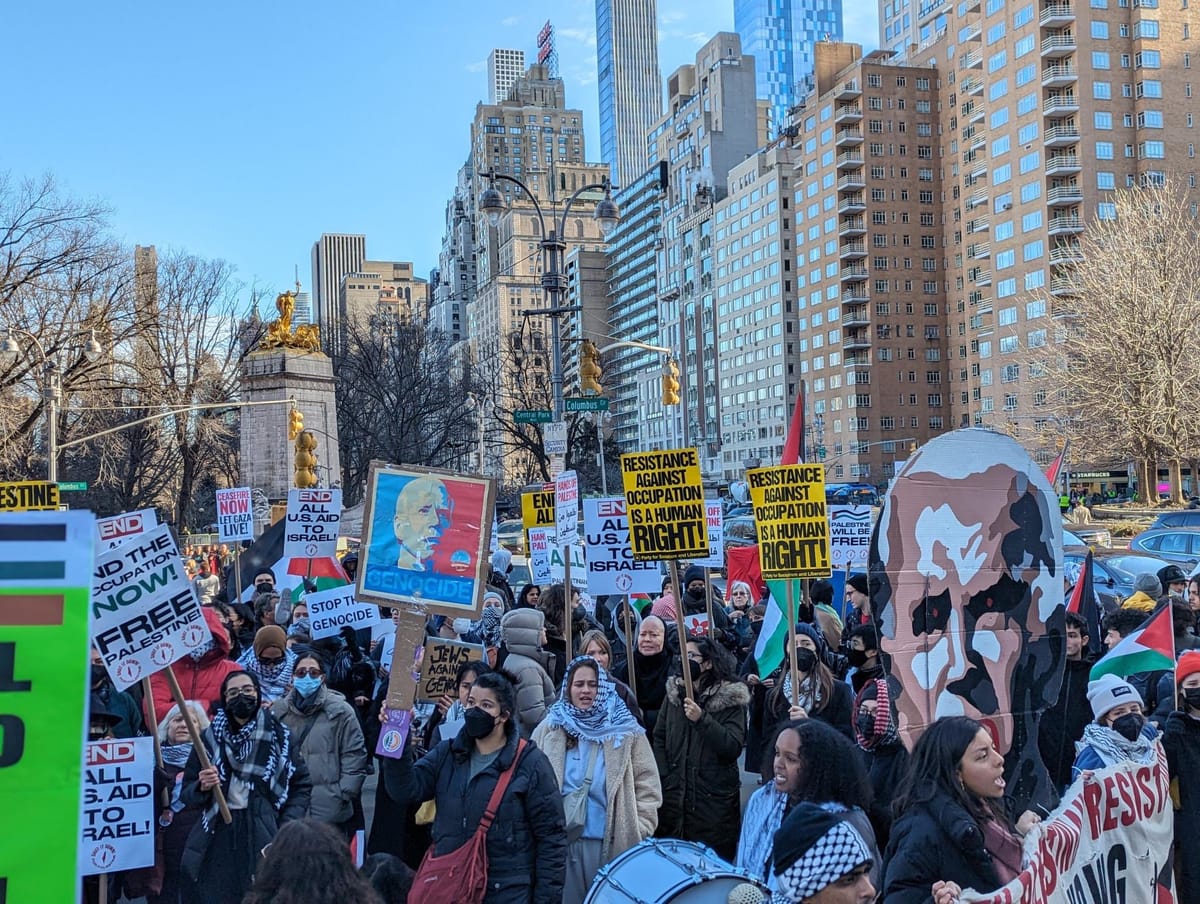
In October 2024, the California chapter of the Council on American-Islamic Relations distributed $20,000 in grants to student activists who had faced disciplinary action for leading pro-Palestinian campus protests. The nonprofit called it the "Champions of Justice Fund."
The students called it compensation. Most observers failed to notice that while CAIR was paying expelled students to make noise on campuses, CAIR's political arm was simultaneously funneling $100,000 into Zohran Mamdani's New York City mayoral campaign.
Lisa Fithian is a professional agitator who instructed anti-Israel activists @Columbia during a violent takeover of a campus building. Fithian, who has been arrested many times, is also trainer for a group working to end the naval blockade of Gaza. https://t.co/nVbtcOfFnm pic.twitter.com/0t8BtCvzOc
— Canary Mission (@canarymission) July 1, 2024
The money was given to students who faced penalties for leading pro-Palestinian protests before and after the Hamas attack on Israel on October 7 2023, according to a bombshell report by the Network Contagion Research Institute (NCRI) and the Intelligent Advocacy Network (IAN).
The two operations were not separate initiatives. They were part of the same machinery.
The mechanics are straightforward. CAIR raised more than $100,000 from California donors specifically to award $1,000 checks to students disciplined by universities for their participation in anti-Israel encampments. The organization positioned itself as corrective to institutional overreach. It was, in fact, something closer to a parallel power structure.
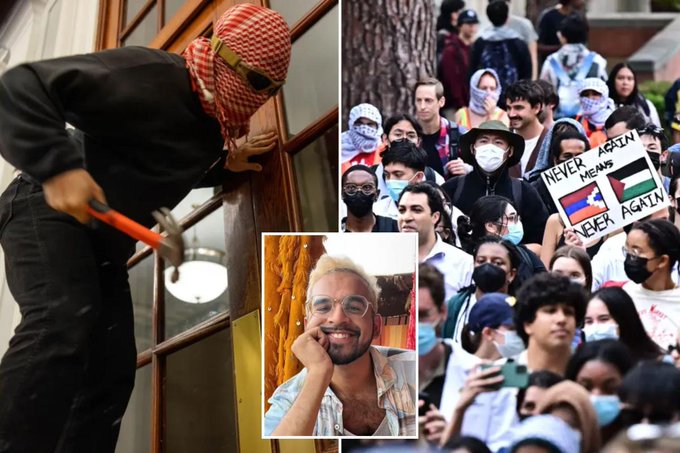
When Columbia University expelled students for occupying Hamilton Hall in April 2024, CAIR's fund could compensate them. When Harvard imposed no discipline on Ibrahim Bharmal for assaulting a Jewish student, then awarded him a $65,000 fellowship, and then hired him, CAIR paid him $1,000 anyway. Each institution ratified the previous one's abdication. The message was clear: activism in service of the correct cause produces no consequences. It produces rewards.
But the campus operations were only half the operation. While CAIR's "Champions of Justice Fund" was distributing checks to expelled students, CAIR's Unity and Justice Fund PAC was investing $100,000 in Zohran Mamdani's bid for New York City mayor. The timing was not coincidental. Mamdani is a member of the Democratic Socialists of America who has refused to acknowledge Israel's right to exist and has defended the phrase "globalize the Intifada"—a rallying cry for violence against Jews. CAIR's PAC split the contribution: $25,000 on May 30, 2024, and $75,000 on June 16.

The New York Free Beacon reported that the money went to New Yorkers for Lower Costs, the largest PAC supporting Mamdani. "The backing of the Unity and Justice Fund and other anti-Israel organizations suggests New Yorkers for Lower Cost's true interest in Mamdani lies in his anti-Israel views," the outlet noted.
Mamdani's campaign gained steam following endorsements from progressive figures and a Democratic primary upset victory over former Governor Andrew Cuomo. By the general election, he was leading in polls. And CAIR was among his single largest institutional backers.
The question is not whether CAIR contributed to Mamdani's campaign—campaign finance records confirm it did. The question is what the dual operation reveals about how movements coordinate at scale.
CAIR is under investigation by the Department of Justice for financial misrepresentation of federal funds. Between 2022 and 2024, the organization received $7.2 million in taxpayer money designated for resettling Afghan refugees. It helped 177 people out of the 1,800 it was supposed to serve. The Post reviewed CAIR's filings and found much of the money could not be accounted for.

CAIR was named an unindicted co-conspirator in the 2007 Holy Land Foundation terrorism financing trial. Five HLF leaders were convicted of funneling over $12 million to Hamas. Federal court records found "ample evidence" connecting CAIR to the Palestine Committee, a U.S. group founded by the Muslim Brotherhood to advance Hamas.
Yet none of this prevented American institutions from engaging with CAIR as though it were a legitimate civil rights organization. Universities accepted CAIR-funded students back onto their campuses. New York voters were presented with a mayoral candidate substantially backed by CAIR's money. The organization operated without friction because institutions had abdicated the capacity to defend themselves.
This is how institutional capture works. Not through violent takeover, but through the systematic exploitation of institutional weakness. CAIR did not overthrow American universities or democratic processes. It moved into the vacuum created by their surrender.
The campus operations created pressure from below. The electoral campaign channeled that pressure into power from above. CAIR was the connective tissue linking both. Students expelled from Columbia and Harvard created a constituency of activists who believed the system was unjust. CAIR paid them to believe it. Mamdani offered them a political vehicle. CAIR paid for that vehicle. When Mamdani won the mayoral election in November, he would govern over the very institutions that had capitulated to the activists CAIR had funded.
Linda Sarsour, a Palestinian-American activist serving as senior political advisor to Mamdani, publicly acknowledged CAIR's role in his campaign. "The PACs that have supported Zohran, or a particular PAC that has supported Zohran is probably over eighty percent of Muslim-American donors in this country," she said. In a since-deleted Instagram livestream, Sarsour indicated that pressure on the new mayor would continue: "When Zohran gets inaugurated in January, and as we move forward with this mayor, we have to be the people outside."
In other words, the funding came with expectations. CAIR and its allied networks did not simply back a candidate. They backed a candidate they could pressure to deliver on their agenda.
CAIR legal director Amr Shabaik responded to questions about the organization's operations by deploying a standard institutional capture tactic. "The false claims alleged are part of a larger defamation campaign targeting Muslim Americans by fringe anti-Muslim groups," he said. The response was not a denial. It was a reframing. To question CAIR was to engage in bigotry. This rhetorical move has become nearly universal in American institutional life.
What emerges from the available evidence is an organization that operates across two spheres simultaneously. On campuses, CAIR funds activism that destabilizes institutions. In electoral politics, CAIR funds candidates who will eventually govern those institutions. The two operations are not contradictory—they are complementary. Disruption from below creates the conditions for capture from above.

When campus administrators capitulated to activist pressure, they did not protect their institutions. They ensured that the activists would eventually control them. When voters elected Mamdani, they did not choose a mayor. They chose the constituencies that CAIR had built and funded to constrain him.
This is the real scandal. Not that CAIR has murky funding sources or connections to organizations the federal government has scrutinized. Institutional capture does not require secrecy. It requires institutional weakness. American universities and democratic processes were weak enough that a single organization could colonize them by simply moving into the space they abandoned.
CAIR did not have to overthrow anything. American institutions surrendered themselves.