How Chicago's Sanctuary Architecture Built the Conditions for Sheridan Gorman's Death
DHS confirmed it Sunday: Jose Medina-Medina entered illegally under Biden in May 2023. Arrested for shoplifting in Chicago a month later. Released. Sanctuary ordinance blocked ICE notification. Sheridan Gorman, 18, is dead. Two systems. One outcome.

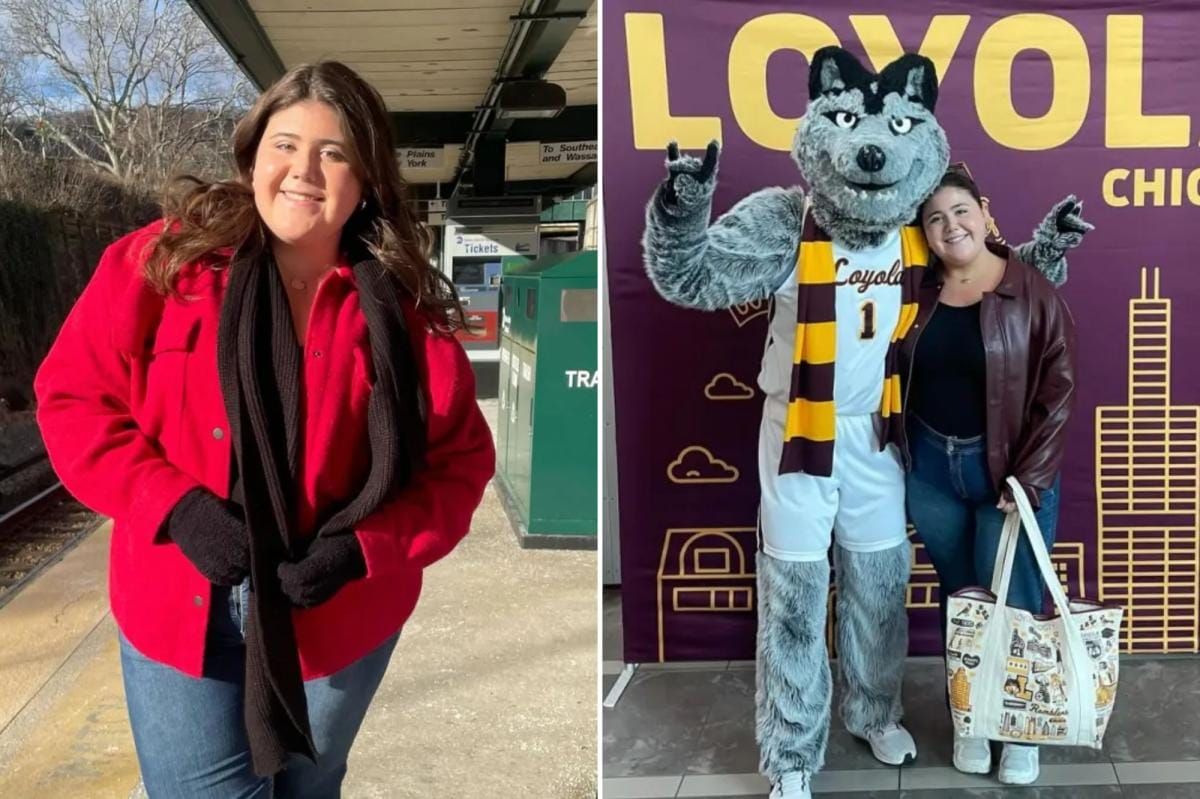
At 1:30 in the morning on March 19, 2026, 18-year-old Sheridan Gorman was walking the Chicago lakefront near Loyola University's Rogers Park campus with a group of friends. She was a freshman from Yorktown, New York, just months into the life she had chosen. A masked man approached the group. When Gorman tried to run, he shot her in the head.
She was pronounced dead at the scene.
By Sunday, the Department of Homeland Security had a name: Jose Medina-Medina, 25, a Venezuelan national. DHS confirmed he had been caught at the southern border and released under the Biden administration in May 2023. One month later, Chicago police arrested him for shoplifting from a Macy's. The city, operating under its Welcoming City Ordinance, released him without notifying Immigration and Customs Enforcement.
He had been released twice. And he was still in Chicago.
SAY HER NAME: Sheridan Gorman (18)
— End Wokeness (@EndWokeness) March 22, 2026
She was kiIIed while waking in Chicago by a Venezuelan illegal whose name is still not "disclosed" by authorities pic.twitter.com/dsGFbU1y35
Two Systems, One Outcome
The death of Sheridan Gorman sits at the intersection of two parallel policy architectures that rarely face each other in direct accountability: federal catch-and-release border processing, which put Medina-Medina inside the United States in 2023, and Chicago's sanctuary framework, which kept him there after a criminal arrest.
Neither system was designed with Sheridan Gorman in mind. But both systems produced her fate.
Chicago's Welcoming City Ordinance prohibits city agencies, including the Chicago Police Department, from cooperating with ICE unless the individual has an active criminal warrant or represents a documented public safety threat. The Cook County Sheriff's Office operates under a parallel policy barring the sharing of custody information with federal immigration authorities in the absence of a criminal warrant. A shoplifting arrest does not meet that threshold. Medina-Medina walked out.
The Trump administration has been fighting Chicago's sanctuary regime in federal court since February 2025. The DOJ lawsuit targets the Illinois TRUST Act, Chicago's Welcoming City Ordinance, and Cook County's ICE detainer policy, arguing all three violate the Supremacy Clause of the U.S. Constitution. The case was still pending when Gorman was shot.
The Border Handoff
The sequence matters. In May 2023, under what DHS now characterizes as "open border policies," border agents apprehended Medina-Medina and released him into the United States interior. This was not an anomaly. From 2021 through 2024, the Biden administration's catch-and-release processing model resulted in the release of millions of migrants pending immigration court hearings, many with no supervision and court dates years into the future.
Medina-Medina's release meant he had legal presence in the country but no binding enforcement mechanism tethering him to any outcome. One month after crossing, he was in Chicago, the third-largest city in America, inside a sanctuary jurisdiction where, by design, local police cannot function as an extension of federal immigration enforcement.
When Chicago police arrested him for shoplifting in June 2023, they had an individual in custody who had entered the country unlawfully just weeks earlier. DHS, according to its own statement, was not notified. The Welcoming City Ordinance did not permit it. He was released.
What happened between June 2023 and March 2026 is not yet fully documented.
The Geography of Accountability
Brick apartment buildings with ivy and gardens in Rogers Park, Chicago lakefront
Rogers Park is the northernmost neighborhood in Chicago, a dense urban lakefront community where Loyola's campus meets residential streets. It is, by most accounts, a neighborhood in transition, with longstanding community ties and persistent public safety concerns. The stretch of lakefront where Gorman was shot is blocks from student housing.
DHS Acting Assistant Secretary Lauren Bis did not soften her language on Sunday. "She was failed by open border policies and sanctuary politicians who released this illegal alien twice before he went on to commit this heinous murder," Bis said. She called on Governor J.B. Pritzker and Chicago's leadership to commit to holding Medina-Medina without releasing him back into the public.
Mayor Brandon Johnson, who signed an executive order last year prohibiting the use of city property for federal immigration operations, has not yet issued a public response specific to the Gorman killing. Governor Pritzker's office had not released a statement by publication time.
The silence from those officials is its own data point.

What the Advocates Won't Say
Defenders of sanctuary policy argue, with some empirical backing, that such policies do not increase overall crime rates and may actually improve public safety by encouraging immigrant communities to cooperate with local police. The Cato Institute testified earlier this month that noncitizens reported 2.5 million crimes to police between 2017 and 2023, at higher rates than U.S.-born Americans.
That is a legitimate argument in a policy debate. It does not explain what happened to Sheridan Gorman.
The structural critique is narrower and harder to dismiss: Chicago's ordinance, as written, creates a firewall between local law enforcement and ICE that applies regardless of the facts of any individual case. A person caught entering the country illegally, arrested for theft weeks after crossing, triggers no notification, no detainer, no flag. The policy treats every case as equivalent, which means it treats none as urgent. Medina-Medina was not a hypothetical. He was a specific person, with a specific history, and the system produced a specific result.
The Trump administration's enforcement surge in Chicago, designated "Midway Blitz" and launched in September 2025, resulted in nearly 3,000 arrests. Critics documented that 88 to 95 percent of the arrests across targeted cities involved individuals without criminal convictions. That means the dragnet was wide and undiscriminating. But Medina-Medina, with a prior arrest, would have been among the profiles the administration claims to prioritize.
He was not caught.
Venezuelan migrant arrested after New York teen Sheridan Gorman is fatally shot near Loyola Chicago campus https://t.co/VmYHUYzYfW pic.twitter.com/xez72sMkj0
— New York Post (@nypost) March 22, 2026
A Family's Silence, and What It Carries
Loyola University Chicago President Mark C. Reed wrote to students on Thursday: "This is a tragic loss, and our hearts go out to Sheridan's family, loved ones, and all who knew her." The university offered no further comment on the specific circumstances of the killing.
Gorman's family released a statement that her university described as a "heart-rending tribute." She was 18 years old, from Westchester County, New York, who had come to Chicago to begin something. She had been at Loyola for months. She was walking near the lake at 1:30 in the morning with her friends, the way college freshmen do, in a neighborhood that borders a campus that bills itself as a community.
The question is not whether Chicago should be a sanctuary city. That debate has legitimate arguments on both sides, and it will continue in federal court. The question is whether a policy designed to protect immigrant communities from civil enforcement sweeps should also function as a structural barrier that prevents any communication between local police and federal immigration authorities following a criminal arrest, regardless of the individual's history, regardless of the circumstances of their entry, regardless of what happens next.
That question is now inseparable from Sheridan Gorman's name.
Who Answers
DHS is calling on Pritzker and Chicago's elected leadership to ensure Medina-Medina remains in custody. The federal government's active lawsuit against the city, Cook County, and the State of Illinois remains in court. The criminal case against Medina-Medina is in its earliest stages; he had not been formally charged as of Friday.
The accountability architecture here is layered and deliberately diffuse. Biden-era border processing set the initial condition. Chicago's sanctuary regime managed the downstream. The courts are litigating the constitutional question. And a family in Yorktown, New York, is planning a funeral.
Nobody's hand is fully clean. Nobody is in a hurry to say so.
If you know someone affected by sanctuary policy enforcement gaps, or have documents related to Chicago's ICE notification procedures, reach out directly. Share this piece with anyone who represents you in city, county, or state government.
Ask them a single question: what has changed since Thursday? Subscribe for the follow-up.
Disclosures
This article is based on publicly available reporting from the New York Post, Fox News, Chicago Tribune, The Post Millennial, and official DHS statements released March 22, 2026. All factual claims are sourced and cited. This piece represents the author's analysis and editorial judgment. The author has no financial relationship with any party named. Jose Medina-Medina had not been formally charged as of the time of this writing; he is a suspect and is presumed innocent until proven guilty in a court of law.
Source Attribution: DHS statement via Fox News/Bill Melugin; NY Post breaking news report; The Post Millennial; Borderless Magazine DOJ lawsuit coverage; Brennan Center Chicago enforcement analysis; Cato Institute sanctuary testimony.