Peredyshka: What Tehran Signed at Versailles
Trump signed a memorandum at Versailles. Tehran signed something else. The clause that survives translation is the one preserving the Resistance Front, and the doctrine behind it has a Soviet name.

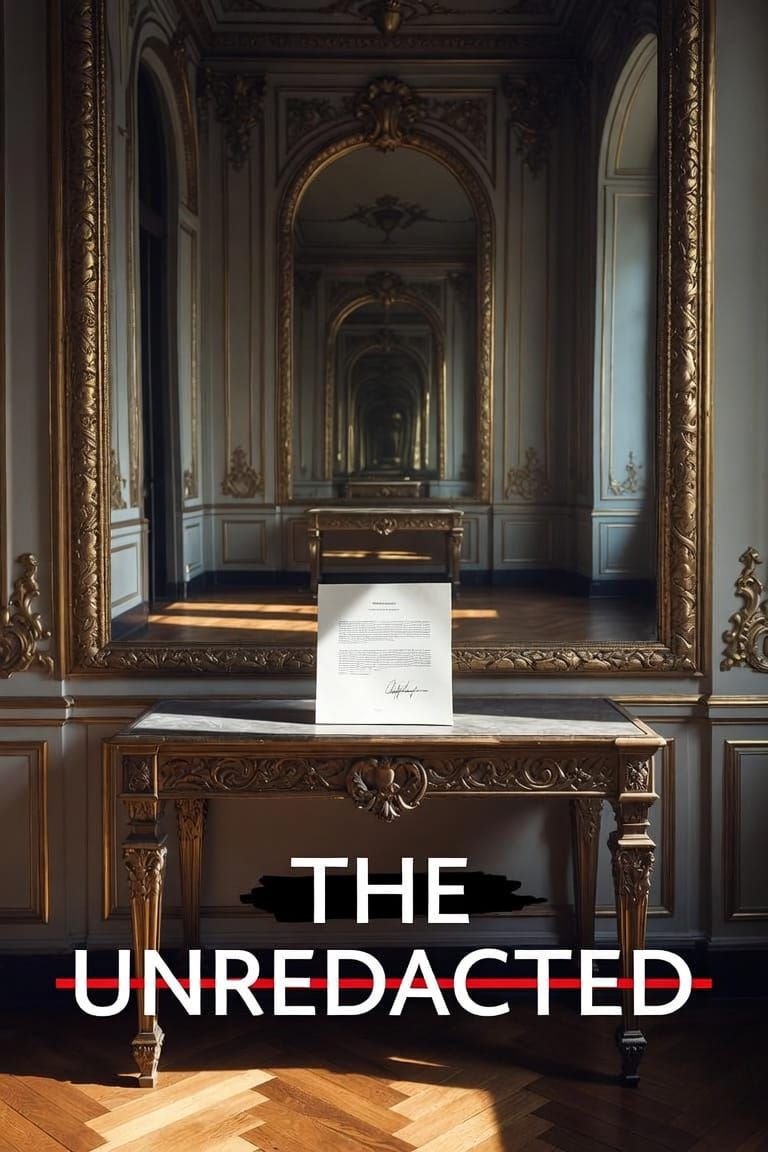
On June 17, in the Hall of Mirrors that has hosted the formal ends of empires, Donald Trump signed a fourteen-point memorandum of understanding with the Islamic Republic of Iran. Masoud Pezeshkian signed it electronically. Pakistan mediated. The naval blockade lifts in thirty days. The Strait of Hormuz reopens. Frozen funds release. Sixty days to a final deal.
Read the Western coverage and you will see the word "peace." Read what Tehran told its own people, in its own language, and you will not.
The new supreme leader, Mojtaba Khamenei, has not been photographed since an Israeli strike killed his father and most of his family in February. He issued a statement. He did not call the agreement peace. He said he held "a different view." He said he approved it only after Pezeshkian, as head of the Supreme National Security Council, gave him a specific assurance: that the rights of the Iranian nation and "the Resistance Front" would be safeguarded.
‘Bravo’ says Macron after Trump signs Iran MoU at Versailles dinner. ‘Great job’ pic.twitter.com/5nDjGku4xS
— Danny Kemp (@dannyctkemp) June 17, 2026
Those three words are the whole document. Everything signed at Versailles is negotiable. The Resistance Front is the non-negotiable that had to be guaranteed before a pen touched paper.
This is not subtext I am supplying. Khorasan, a conservative daily close to Iran's chief negotiator, called the MOU what it is: an agreement that ends the current war and resolves nothing, a text that delays the final battle and gives both sides time to rebuild. Iran International reported the same split across Tehran's press. Worthy News quoted analysts describing a declaration engineered to preserve revolutionary posture while the regime regroups. Even the assessment carried at Fox read Khamenei as authorizing a "tactical pause" in "a forever war."
When the target's own state media and the adversary's own analysts arrive at identical wording, the deception is no longer working. The point of recovering it is that the playbook predates the parties using it.
Soviet doctrine had a category for this. Peredyshka. The breathing space. Lenin's term for the Treaty of Brest-Litovsk in 1918, when the Bolsheviks surrendered a third of European Russia to Germany not because they accepted the terms but because they needed the clock. The treaty was an instrument of survival disguised as an instrument of settlement. The signature was real. The intention behind it was the opposite of what the signature implied. Within a year the terms were void and the Front had been rebuilt.
The Resistance Front with Hezbollah in Lebanon, the militias in Iraq, what remains of the proxy architecture, the war degraded but did not dismantle. The clause Khamenei extracted is not a footnote to the nuclear file. It is the load-bearing wall. Tehran will discuss centrifuges. Tehran will discuss Hormuz. Tehran secured, in advance and in writing, that the network it uses to project force will not be on the table.
🚨 The man who allegedly digitally signed the MoU with @POTUS and @VP just went on Iranian state TV and explained why he is willing to “deal with” the United States, which he describes as “the killers of our martyred leader.”
— Stephanie (@stephsvox) June 17, 2026
The same agreement reportedly states that… pic.twitter.com/3siUtX9tUy
Watch the verbs in his statement. The officials worked "out of compassion and goodwill." Trump acted "out of desperation." This is not the grammar of a party that believes it lost. It is the grammar of a party narrating a retreat as a maneuver, for an audience that has to keep believing the maneuver is temporary.
The negotiators meet at the Bürgenstock resort above Lake Lucerne. They will produce paper. The Western capitals will photograph the paper. The question that paper cannot answer is the one Brest-Litovsk already answered a century ago: what does the signatory plan to do with the time the signature buys.
Khamenei told his negotiators not to yield to the enemy's position. He said future talks do not mean Iran accepts Washington's view. He said this while signing. He was not being inconsistent.
He was telling you which word was real.