The China Axis Runs Through Caracas: Why Trump's Venezuela Confrontation Matters

The profoundest truth of war is that the issue of battle is usually decided in the minds of the opposing commanders, not in the bodies of their men."B.H. Liddell Hart
On November 29, President Trump declared Venezuelan airspace closed to unauthorized flights. International carriers canceled routes, GPS signals over Caracas went dark, and the Maduro regime scrambled to approve U.S. deportation flights in a bid to avoid complete isolation. The move came days after Trump made a fifteen-minute phone call to Nicolás Maduro offering him a choice: resign and take your family to a safe haven, or face the consequences. Maduro countered with demands for amnesty, sanctions relief, and dismissal of International Criminal Court charges. Trump hung up.
Within a week, the USS Gerald R. Ford carrier strike group was steaming into the Caribbean with twelve warships and fifteen thousand personnel. Trump revoked Chevron's oil license, cutting off billions in revenue to PDVSA, Venezuela's state oil company. Airstrikes destroyed drug-smuggling vessels linked to the Cartel de los Soles, the military-run drug syndicate that turns Venezuelan ports into distribution hubs for Chinese fentanyl precursors headed to Mexican cartels. Over eighty killed in those operations, with land incursions promised soon.
This represents the first time since the Reagan administration that an American president has confronted Venezuela's socialist regime with force rather than accommodation. The question is why it took so long and what institutional interests were served by protecting Maduro's narco-state for nearly three decades.
🇻🇪🇺🇸 Freedom for Venezuela will come from the skies. pic.twitter.com/yBxEDqQRGe
— WAR (@warsurveillance) November 30, 2025
The answer lies in the same elite consensus that produced the Iran nuclear deal and the China opening: a belief that American interests are best served by managing adversaries rather than confronting them, by enriching hostile regimes in hopes they'll moderate, and by prioritizing access to resources and markets over the security consequences of empowering enemies. Hugo Chávez rose to power in 1999 promising a Bolivarian revolution. He proceeded to nationalize the oil industry, forge alliances with Iran, Russia, and China, and turn Venezuela into a beachhead for anti-American forces in the Western Hemisphere. Washington's response was to continue business as usual.
The institutional logic was straightforward. American oil companies had investments in Venezuela. Wall Street banks held Venezuelan debt. The foreign policy establishment believed engagement would moderate Chávez's rhetoric and preserve American influence. When Chávez died in 2013 and Maduro took over, the policy continued. Obama normalized relations with Cuba in 2015, effectively legitimizing the broader socialist bloc in Latin America. His administration's rationale for the Iran nuclear deal applied equally to Venezuela: isolation doesn't work, engagement produces results, and American credibility requires keeping our word to adversaries who never keep theirs.
The same personnel networks that sold the Iran deal defended Maduro. Ben Rhodes, Obama's deputy national security adviser and architect of the Iran deal communications strategy, framed Latin American policy in identical terms. Engagement with Cuba would produce democratic reform. Sanctions relief for Iran would produce moderation. The common thread was that confronting hostile regimes was counterproductive, that American power was best exercised through incentives rather than pressure, and that the real problem was American imperialism rather than the behavior of dictators who murder dissidents, support terrorism, and flood our country with drugs.
Biden continued the pattern. In 2022, his administration lifted some Venezuela sanctions in a desperate bid for oil as gas prices spiked. The stated rationale was that Venezuelan production could replace Russian supplies after the invasion of Ukraine. The actual effect was to provide Maduro billions in revenue that kept his regime afloat through the 2024 election, which he stole, triggering protests that killed dozens. Biden responded by reimposing some sanctions while maintaining others, a half measure that satisfied no one and accomplished nothing except preserving the illusion that American policy was working.
The institutional interests served by this approach are clear. Oil companies maintain access to Venezuelan reserves, the largest in the world. Investment banks continue servicing Venezuelan debt. The foreign policy establishment preserves its belief that American power should be exercised through multilateral institutions and diplomatic engagement rather than unilateral force. And progressive advocacy groups maintain their narrative that American imperialism, not socialist dictatorship, is the root cause of Latin American poverty.
Trump's approach is different because it serves different interests. His base elected him to secure the border, and Maduro emptied Venezuelan prisons to send criminals north as part of the migration wave. They elected him to confront China, and Beijing props up Maduro with loans and technology while extracting billions through debt-trap deals. They elected him to address the fentanyl crisis, and Venezuelan ports serve as gateways for Chinese precursor chemicals mixed into deadly powders by Mexican cartels with Maduro's explicit cooperation.
Secretary of State Marco Rubio understands the stakes. As a Cuban American senator from Florida, he's watched socialist regimes destroy the region for decades. He's argued that Venezuela's collapse would liberate not just Venezuela but Cuba and Nicaragua, breaking what he calls the socialist triangle. His confirmation hearing testimony emphasized that Maduro is a narco-terrorist whose regime exists to facilitate Chinese and Russian penetration of the Western Hemisphere. Rubio ties Venezuela policy directly to border security, arguing that stemming migration requires eliminating the conditions that drive it.
The Venezuelan diaspora provides the political foundation for confrontation. Over two hundred thousand Venezuelan exiles in Florida voted for Trump in November, helping flip Miami-Dade County Republican for the first time since 1988. María Corina Machado, the banned opposition leader who won a Nobel Peace Prize for her work documenting Maduro's crimes, calls Trump's pressure necessary and overdue. Juan Guaidó, recognized by Trump as Venezuela's legitimate president during his first term, frames the current military buildup as the path to democracy that diplomatic engagement never produced.
Maduro's response reveals the weakness of his position. He congratulated Trump on his election win, framing it as an opportunity for a fresh start. He's rotated sleeping locations to avoid assassination, bolstered security with Cuban advisers, and delivered anti-imperialist speeches to rallies. But when Trump declared Venezuelan airspace closed, Maduro immediately approved U.S. deportation flights, a pragmatic concession that contradicts his revolutionary rhetoric. The regime understands that Trump, unlike his predecessors, is willing to follow through on threats.
Manolo De Los Santos of The People’s Forum, an org critics say is bankrolled by foreign interests, just led a rally for Maduro’s Venezuela.
— Stu Smith (@thestustustudio) December 2, 2025
He calls Washington a “genocidal regime,” says Venezuela’s only “crime” is having oil, warns Trump could bomb the country “any hour now,”… pic.twitter.com/0PuxAF3Pli
The institutional resistance to Trump's Venezuela policy follows predictable lines. Bipartisan senators have invoked the War Powers Resolution, demanding congressional authorization for military action. Progressive advocacy groups warn of quagmire, refugee crises, and chaos comparable to Iraq. The foreign policy establishment argues that regime change never works and that Trump's approach will destabilize the region. Oil companies want sanctions lifted so they can resume operations. All of them share a preference for the status quo over the uncertainty of actually solving the problem.
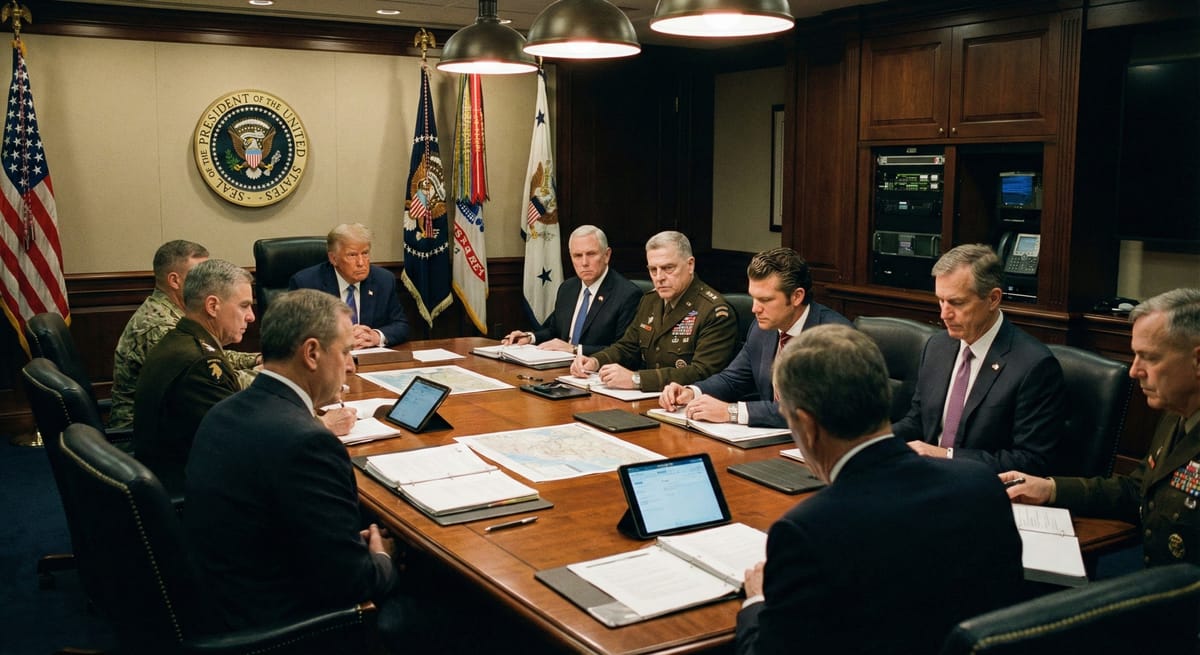
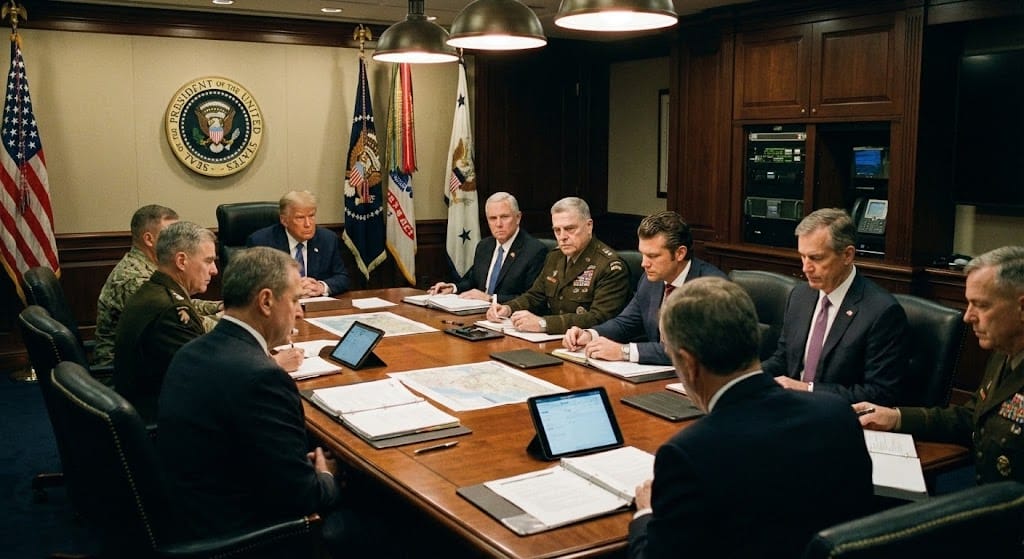
Trump's legal authority is stronger than critics acknowledge. Operations targeting narco-terrorism fall under existing statutes that don't require congressional authorization for limited military action. The strikes on drug-smuggling vessels were conducted under authorities that date to the Reagan era War on Drugs. A full invasion would require congressional approval, but covert operations, targeted strikes, and economic warfare remain within executive discretion. Trump's December 1 national security meeting with Rubio, Defense Secretary Pete Hegseth, and CIA Director John Ratcliffe reportedly discussed options that stop short of invasion while accomplishing the same objective: making it impossible for Maduro to govern.
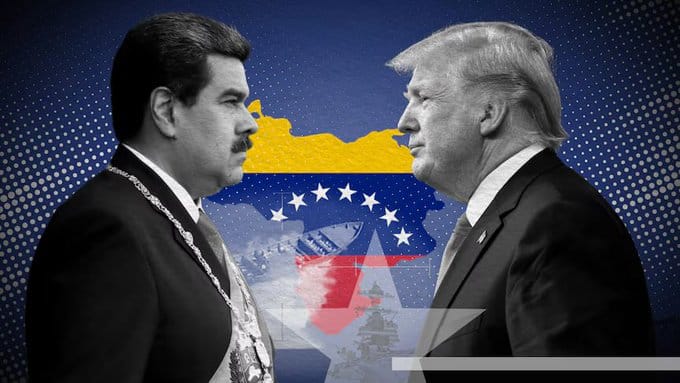
The strategic logic is straightforward. Venezuela under Maduro serves as a Chinese and Russian foothold ninety miles from our border. Iranian drone factories operate in Maracay. Russian mercenaries guard gold mines. Chinese telecommunications infrastructure provides surveillance capabilities that extend to monitoring American communications. Maduro's drug cartels flood American communities with fentanyl that killed over 70,000 Americans last year. His regime empties prisons and mental institutions, sending criminals north to overwhelm border infrastructure. Every day Maduro remains in power costs American lives and strengthens adversaries positioning themselves for great power competition.
What distinguishes Trump's approach from previous administrations is that he treats Venezuela as part of a broader China axis that includes Iran and Russia. The same elite consensus that produced Kissinger's China opening in 1972 convinced subsequent presidents that engaging adversaries would moderate their behavior. Fifty years of evidence proves otherwise. China used access to American markets and technology to build a military capable of challenging us globally. Iran used sanctions relief from the nuclear deal to fund proxies that attack American interests throughout the Middle East. Russia used European dependence on its energy to finance invasions of Georgia, Crimea, and Ukraine. Venezuela used American restraint to build a narco-state that exports chaos to our hemisphere.
Trump promised to end this pattern, and Venezuela provides the test case. If he succeeds in removing Maduro, it demonstrates that American power, properly applied, can achieve objectives that diplomacy and economic incentives cannot. It would restore deterrence, showing adversaries that threatening American interests produces consequences rather than negotiations. It would secure Venezuela's oil resources from Chinese control, eliminate a major fentanyl distribution hub, and stem migration at its source. Most importantly, it would break the institutional consensus that American strength should be subordinated to multilateral institutions and diplomatic engagement.
The Venezuelan people have made their choice clear. They voted against Maduro in 2024 despite regime intimidation and fraud. They've fled by the millions when staying meant starvation and repression. María Corina Machado's opposition movement risks arrest and death to organize resistance. Trump's offer to Maduro wasn't imperialism. It was an opportunity to leave with his family and his stolen billions intact. Maduro's rejection means he's chosen the alternative.
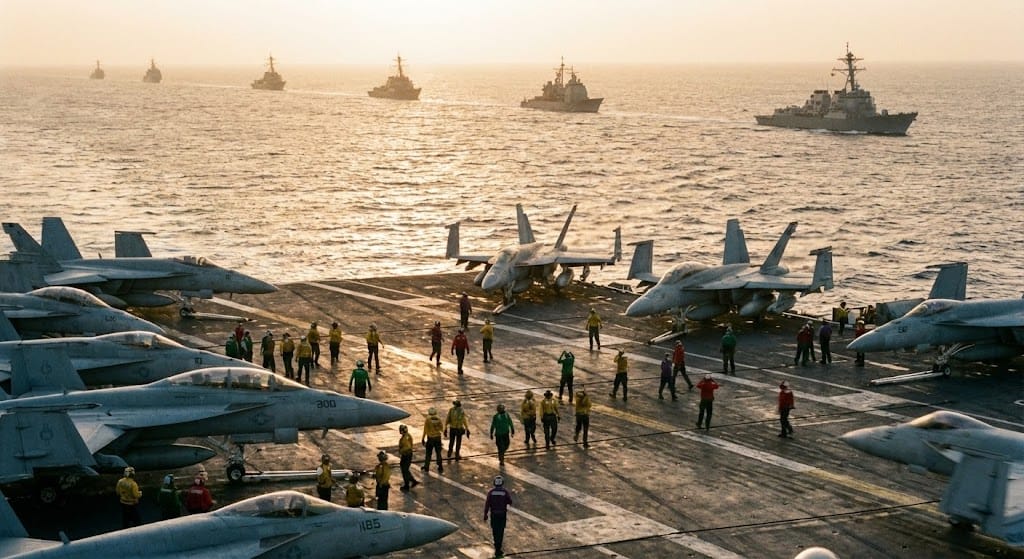
As December begins, watch the Caribbean. The carrier group remains on station. Deportation flights resume amid heightened tensions. Maduro vows resistance while scrambling to accommodate American demands. Trump promises land operations targeting cartel infrastructure. The institutional establishment warns of disaster while defending policies that produced the current catastrophe. The difference is that Trump answers to voters who elected him to solve problems, not to State Department bureaucrats who built careers managing them.
The joke writes itself: Washington spent twenty-five years protecting a narco-terrorist regime that floods America with fentanyl and criminals, then acts shocked when a president finally does something about it.
The Venezuelan confrontation represents something larger than one dictator in one country. It's a test of whether American leadership can be restored after decades of managed decline. It's a question of whether our institutions serve American citizens or the interests of a transnational elite that profits from accommodating our enemies.
The choice is clear:
Continue the policy of engagement that enriched China, legitimized Iran's nuclear program, and protected Maduro's narco-state while American communities buried fentanyl victims...
Or restore the principle that American power exists to defend American interests.
Trump's Venezuela policy represents the latter. It prioritizes border security over oil company profits. It treats Chinese penetration of our hemisphere as the national security threat it is. It recognizes that deterrence requires consequences, not endless negotiations with adversaries who pocket concessions while escalating aggression.
🇻🇪🚨| Breaking: Russia and China ABANDON dictator Maduro:
— WAR (@warsurveillance) December 1, 2025
"At the peak of his conflict with the United States, Venezuela has lost the support of its main allies. Despite his anti-US rhetoric, Russia, China, and Iran will not intervene in the conflict,"
Source: WSJ pic.twitter.com/Pzw6Bc4H75
What do you think about Trump's Venezuela confrontation?
Drop your thoughts in the comments below. This is the conversation Washington doesn't want to have, which is exactly why we need to have it.
Share this article with someone who needs to understand what's really happening in Venezuela and why it matters to every American community dealing with the fentanyl crisis and border chaos.
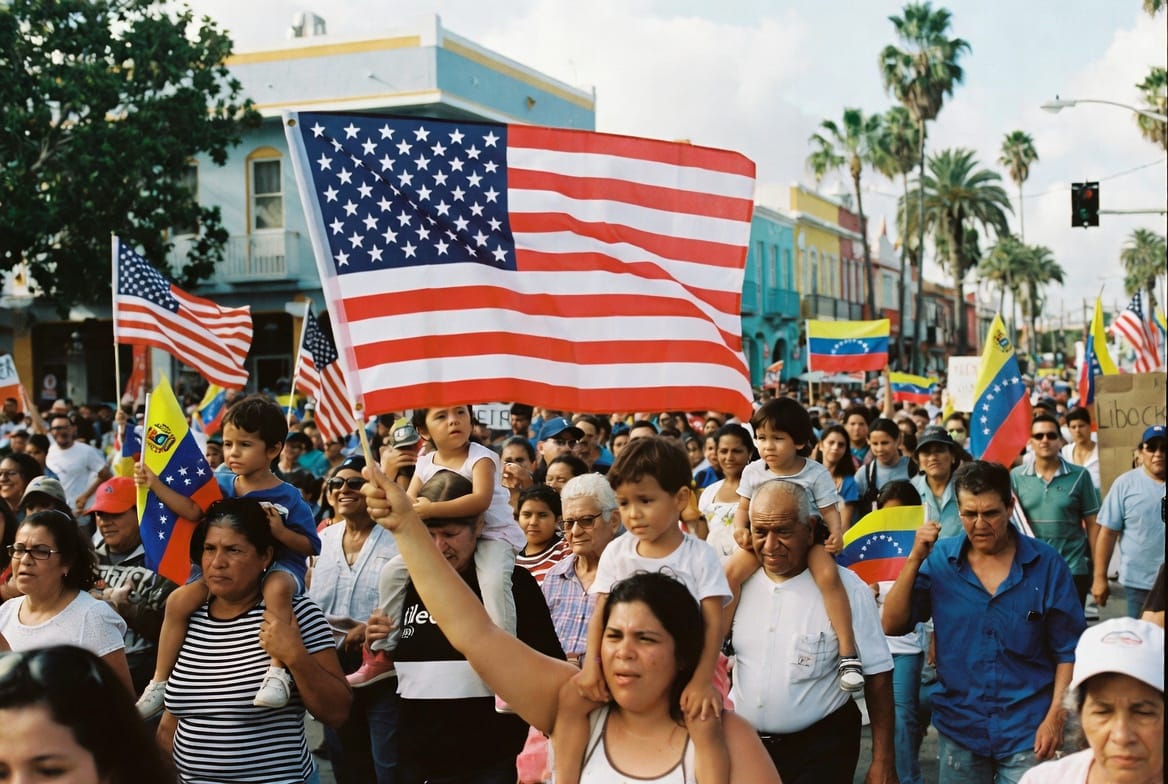
For too long, we've been told that American strength is dangerous, that confronting enemies provokes conflict, that our best strategy is managing decline while enriching adversaries who hate us. Trump's Venezuela policy rejects that framework entirely.
America isn't the problem. America is the solution.
When American power is directed by leaders who answer to American voters rather than international institutions and corporate interests, we win. We secured our hemisphere from Soviet expansion during the Cold War. We can secure it from Chinese and Russian penetration now. We defeated fascism and communism in the 20th century. We can defeat the narco-socialist regimes that poison our communities and destabilize our borders in the 21st.
The Venezuelan people deserve freedom from tyranny. American communities deserve freedom from fentanyl and criminal aliens. Our hemisphere deserves freedom from Chinese colonization and Russian military infrastructure.
Trump's approach offers something previous administrations refused to provide: the will to actually solve the problem instead of managing it for another generation.
That's not imperialism. That's leadership. And it's about time.
⚠️ TRANSPARENCY DISCLAIMERS
AI Assistance Disclosure: This article was created with AI models applying investigative journalism techniques and fact checking. The analytical framework and argumentative approach reflect editorial direction rather than autonomous AI generation.
Affiliate & Monetization Disclosure: This publication may contain affiliate links or participate in monetization programs. We may receive compensation when you click on certain links or engage with recommended products/services. This does not influence our editorial content or analysis. We only recommend resources we believe provide value to our readers.
Editorial Independence: Our commentary and analysis represent editorial perspectives based on documented facts and established reporting. We maintain independence from political campaigns, PACs, and advocacy organizations. Revenue from affiliate programs, subscriptions, or advertising does not influence our investigative approach or conclusions.
📢 JOIN THE CONVERSATION
Subscribe for more investigative analysis cutting through institutional narratives.
Share this article if you believe Americans deserve the truth about what their government is actually doing and why.
Follow us for continued coverage of the Venezuela confrontation and the broader fight to restore American sovereignty against the China axis.
The establishment wants this story buried. That's how you know it matters.
Make America Great Again isn't a slogan. It's a strategy. And it's winning.