The DoorDash Driver, the Viral Video, and the Felony Charges Nobody Saw Coming
A DoorDash driver filmed a passed-out customer half-naked in his own home, posted it to 30 million viewers, named him, and located him. Then she told police she was the victim. A grand jury disagreed.

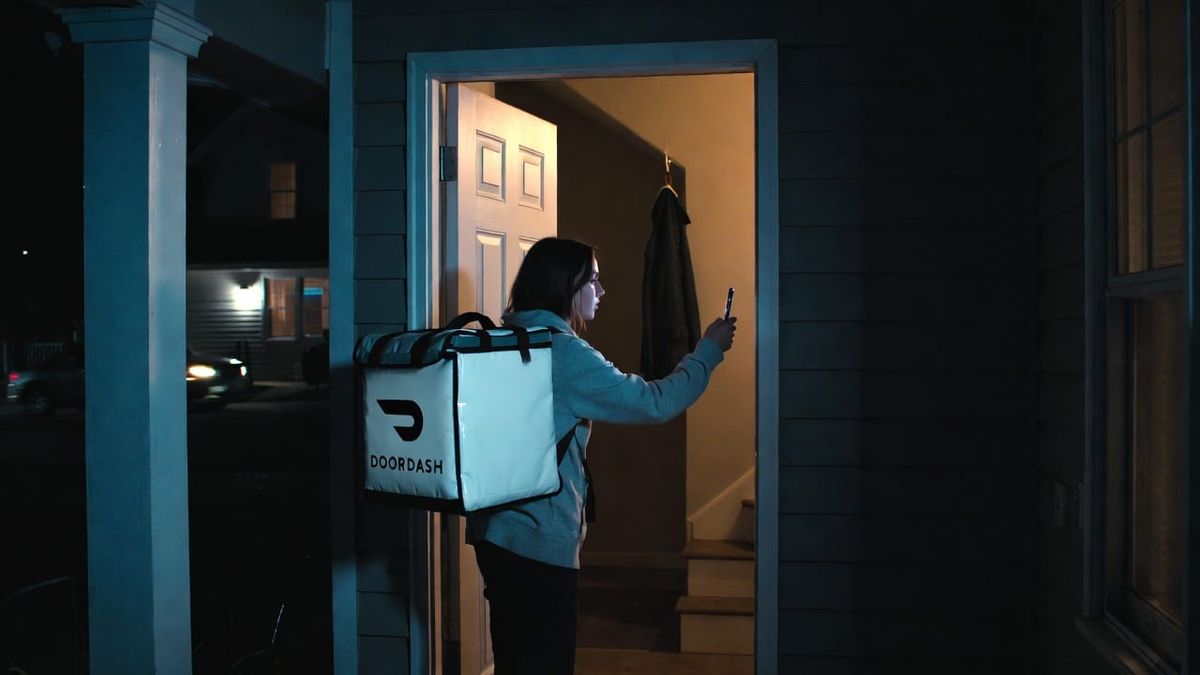
There is a version of this story that nearly took hold. A female delivery driver arrives at a customer's door. She finds a man lying exposed, genitals visible, the door open. She feels unsafe. She documents it. She warns other women. The internet rewards her with 30 million views.
That version lasted about as long as it took for a grand jury to look at the facts.
Last week, a grand jury in Oswego County, New York indicted Olivia Henderson, 23, a former Fashion Institute of Technology student turned DoorDash driver, on two felony counts: second-degree unlawful surveillance and first-degree dissemination of an unlawful surveillance image. She faces up to eight years in prison. She has pleaded not guilty.
The victim is a 27-year-old man whose name The Unredacted is not publishing. He was drunk. He had ordered Wendy's on DoorDash. He passed out on his couch with his pants and underwear around his ankles. He does not remember any of it.
What he remembers is waking up, checking the delivery confirmation photo, and seeing himself. Naked. Genitals uncensored. On his own couch, in his own home, in a photograph he did not consent to and a video he did not know existed.
Then he found the TikTok.
"This made me feel unsafe, humiliated, and upset," he stated to police on October 23, 2025. "She also posted my first name and my house number. I did not give permission for any photo or video to be taken of me or posted online. I want all applicable charges pursued."
He got them.
The delivery happened October 12, 2025, at his home in Oswego. Henderson arrived with the order, found the door open, saw the customer passed out on the couch. According to her own statement to police on November 11, she could see "the tip of his penis from outside the residence."
She filmed it. Not for evidence. Not to report a crime. She posted it to TikTok, where it gathered nearly 30 million views before it was pulled. She identified him by first name. She identified him by house number.
Henderson told investigators she records video of every delivery to protect herself from claims of non-delivery. That is a practice. Many drivers use it. Drivers do not post those videos to TikTok with identifying details of unconscious customers.
She also told police she reported the incident because she "did not want any other female delivery drivers to experience what I did." She argued that being a female delivery driver is dangerous and that reporting these dangers is important.
"The reason I felt unsafe was due to the potential of escalating behavior," she continued. "More specifically, if he did this to me and caused me to feel this way, I thought he might do something worse to the next delivery driver."
This is the argument. A man was drunk and unconscious in his own home. He posed a potential escalation risk to future female delivery workers. Therefore: film him, post him to 30 million people, name him, locate him.
It takes a particular kind of ideological formation to arrive at that conclusion and believe it. Henderson arrived there.
 Gene Goodwin
The TikTok machine does not operate on law. It operates on narrative, and the narrative Henderson offered fit the platform's reward structure precisely. Woman. Delivery driver. Unsafe. Exposure. Male customer. The engagement came fast and heavy. Thirty million views is not a small number. It is a number larger than the population of most American states. Thirty million people saw this man's genitals without his knowledge or consent, on a platform that ran the clip until it couldn't anymore.
The content moderation machinery that moves quickly against the wrong political opinions did not move quickly here. The algorithm did not flag it. The community did not report it into oblivion before the damage was done. It ran. It spread. It earned.
By the time Henderson sat down with investigators in November, the video was gone but the harm was not. The man had been identified. He had been located. He had been seen by an audience larger than most cities, in his most vulnerable state, without a moment of his consent.
The post was the crime. Not the observation of the open door, not even the recording itself in its original form. The post. Henderson chose to make a private violation into a public spectacle, and she chose to do it on a platform that would reward her for it.
Gene Goodwin
Henderson was terminated by DoorDash. She remains free without bail as the case continues.
The charges she faces carry the weight of a system acknowledging that what happened to this man constitutes a serious harm. Second-degree unlawful surveillance, under New York law, covers filming a person in a state of undress without consent. First-degree dissemination of an unlawful surveillance image covers exactly what she did with that footage: posting it publicly, for an audience, for engagement.
The grand jury looked at the same facts Henderson presented and came to the opposite conclusion from the TikTok audience. Investigators determined that the victim "was incapacitated and unconscious on his couch due to alcohol consumption" when Henderson filmed him. The law does not ask whether the person filming felt endangered by a sleeping drunk. It asks whether the person filmed consented. He did not. He could not.
The law is occasionally useful.
DoorDash driver who allegedly recorded a naked customer on his couch before claiming to be the victim has been indicted by an Oswego County Grand Jury.
— Collin Rugg (@CollinRugg) May 2, 2026
23-year-old Olivia Henderson posted a viral TikTok of a man on his own couch before crying that DoorDash fired her.
Court… pic.twitter.com/tPRwLF4Wlo
The question this case will not resolve but cannot avoid asking is what it means that 30 million people watched this video and most of them probably thought they were on the right side of it. Henderson framed it as safety content. The internet accepted that framing. A man was publicly exposed in the most literal sense, and the machine that did it believed it was performing a service.
This is the ideological scaffolding that made it possible. A posture of victimhood is a currency. Claim the right kind of threat and you can do things that would otherwise be obviously wrong. Film a stranger in his underwear. Name him. Map him. Post him to the world. Call it documentation. Call it a warning. Watch the views accumulate.
Henderson did not invent this posture. She was trained in it by a platform culture that has spent years teaching users exactly which claims generate the most approval. She may have believed every word of her statement to police. That does not change what the grand jury found.
A man was asleep in his home. A stranger came to his door, filmed him without his consent, and broadcast that film to tens of millions of people while identifying him by name and address. He woke up to find himself a viral subject. He wants all applicable charges pursued.
The system is attempting to give him that.
Whether it succeeds will say something about whether law still means something when the audience has already rendered its verdict.
The Unredacted will continue to follow this case as it moves toward trial.