The Last Voice Henry Nowak Heard Was a Police Officer Calling Him a Liar
Henry Nowak was stabbed five times and told police he couldn't breathe. They believed his killer's lie, handcuffed the dying boy, and arrested him for assault. Now there is released footage, a resignation, an IOPC probe, and the timeline no apology survives.

"I Don't Think You Have, Mate"
An eighteen-year-old, stabbed five times, told Hampshire police he was dying. They took his murderer's word over his, put him in handcuffs, and arrested him as he lost consciousness. One officer has resigned. The press almost let it disappear.
There is a recording. The country has now seen it, which is the only reason anyone in authority is saying anything at all.
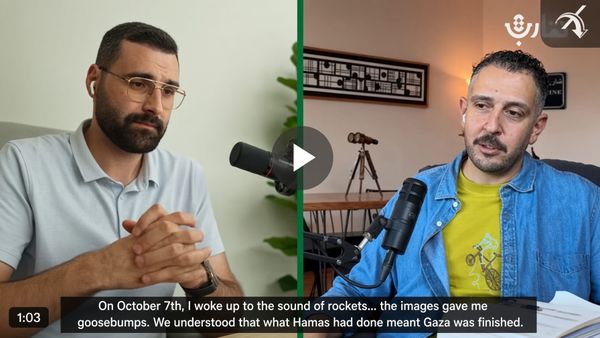
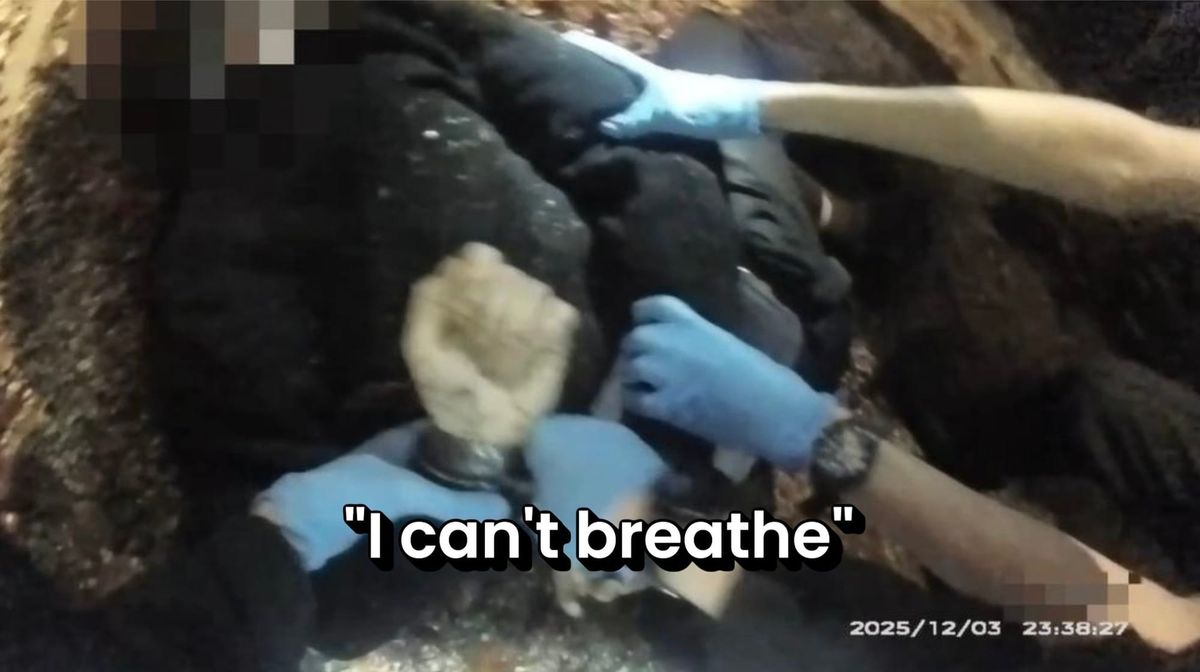
In his final moments, Henry Nowak told police officers nine times “I can’t breathe” and four times that he had been stabbed.
— Visegrád 24 (@visegrad24) June 1, 2026
In response police officer dragged him across the gravel, handcuffed and read him his rights.
It was the last thing Henry heard before he died. pic.twitter.com/nIPoPEgOWa
In it, an eighteen-year-old boy named Henry Nowak is bleeding to death on a Southampton street. He says he has been stabbed. He says it more than once. A police officer, standing over him, answers: "You've been stabbed? Whereabouts? I don't think you have, mate."
Henry was right. The officer was wrong. That is the entire case, and no inquiry, no apology, no carefully lawyered statement read to a camera after the verdict is going to move it. A boy told the police the truth about his own murder and the police preferred the version they had been handed by the man who killed him.
Follow the clock, because the clock is the indictment.
It is around half past eleven on the night of 3 December 2025. Henry Nowak, a first-year accountancy and finance student, is walking home alone along Belmont Road in Portswood after a night out with his university football team. His blood alcohol is below the drink-drive limit. He is filming on his phone. He has an exchange with a twenty-three-year-old named Vickrum Digwa, who is carrying a twenty-one centimetre blade openly on the street. The phone keeps recording. That footage will later be recovered from Digwa's own pocket, which tells you who ended the night in possession of the evidence and who ended it dead.
Digwa stabs him five times. One wound goes through the chest and into a lung. There are no other witnesses to the act itself. There do not need to be. Henry is now mortally wounded and he knows it. He climbs onto a bin and over a fence trying to get away, leaving a trail of his own blood on the pavement. Neighbours hear him shouting that he has been stabbed and that he is dying. This is a boy doing everything a human being can do to survive. None of it will matter, because of what the people around him choose to do next.
Southampton, England (June 2) — Rioting has broken out in the city where Henry Nowak was stabbed by an Indian and then arrested by police while dying.
— Andy Ngo (@MrAndyNgo) June 2, 2026
Police retreat as rioters throw street bins toward them. pic.twitter.com/rg9Vz3JxQm
Digwa does not call an ambulance. Think about that and hold it. The man who put a blade through a teenager's lung does not summon help for him. Instead, Digwa's family arrives before the police do. His mother takes the murder weapon and removes it to the family home. A jury will later convict her of assisting an offender for exactly that. The knife disappears. The story is already being built.
When a 999 call is finally made, it is made by Digwa's brother, and it is a work of fiction. It does not report a stabbing. It does not mention a weapon. It reports that the family has been "attacked racially by some white person," that they are "restraining him right now," that Henry is the aggressor. Henry Nowak, dying, cannot be heard on the call at all. Digwa's voice is audible in the background, confirming the lie. The prosecution will call the racism claim a fabrication. The trial judge, sentencing Digwa, will say he is sure Henry said nothing racist, that Digwa is the only person on the planet making the claim, and that it is completely at odds with the evidence.
So the officers arrive already poisoned. They have been told they are walking into an assault with a suspect being held at the scene. They find Henry slumped against the wall of a house, propped upright by Digwa's father, who tells them the boy "keeps dropping side to side, so I am just trying to keep him up." There is a blood trail on the street. There is a young man who cannot stand. And there is the family's account, delivered first, delivered with confidence, delivered by people who have already hidden the knife.
Southampton, England (June 2) — Rioting has broken out in the city where Henry Nowak was stabbed by an Indian and then arrested by police while dying.
— Andy Ngo (@MrAndyNgo) June 2, 2026
Police retreat as rioters throw street bins toward them. pic.twitter.com/rg9Vz3JxQm
The police believe the account. They handcuff Henry Nowak. They read him his rights. They arrest him for assault. He tells them he has been stabbed. The officer's reply is the sentence that will outlive every official statement Hampshire Constabulary ever issues: "I don't think you have, mate."
On the footage, the dying boy keeps trying. He says, "I am dying." Digwa, the man who stabbed him, tells him, "You're not dying, bro." About ten minutes pass. Henry says, "You stabbed me." Digwa denies it and complains that Henry recorded him. Henry's final words before he goes silent are not an accusation. They are a request. "Please brother, I can't breathe."
Only then does it begin to dawn on the officers. A female officer calls for an ambulance. Another, shining a torch into Henry's eyes, says his pupils are not even reacting. The handcuffs come off. CPR begins. A doctor is flown in by helicopter. None of it works, because by now it is far too late, and it had been too late for some time.
Henry Nowak is pronounced dead at the scene at thirty-seven minutes past midnight on 4 December 2025. From the stabbing to the declaration of death, just over an hour passed. For a meaningful stretch of that hour, the only victim on Belmont Road was in handcuffs, under arrest, listening to a police officer tell him he had not been stabbed while he bled out from a punctured lung.
The conviction came on 28 May 2026. Vickrum Digwa, guilty of murder and of carrying a blade in public. His mother, Kiran Kaur, guilty of assisting an offender. On 1 June he was sentenced to life with a minimum of twenty-one years. The judge said what needed saying about the killer.
What needed saying about the police took longer, and came wrapped in cotton wool. Once the verdict freed them to speak, Temporary Deputy Chief Constable Robert France delivered an apology engineered to apologise for as little as possible. He was sorry Henry could not be saved. He was sorry that Henry "had been handcuffed and arrested" as he lost consciousness, the passive voice carefully arranged so that no officer appears to have done anything. He stressed, repeatedly, that his people had been misled, that the killer lied on the call and lied to their faces, that the situation was complex. All true. None of it touches the actual failure.
Here is the failure, stated plainly. When a man tells you he has been stabbed and cannot breathe, the cost of believing him and being wrong is a few minutes of looking foolish. The cost of not believing him is a corpse. A competent force errs toward the boy bleeding on the ground, not toward the confident account of strangers who turned up with a story and without the knife. Hampshire's officers chose the other way, and Henry Nowak paid the entire price.
Henry Nowak protesters are clashing with riot police near the place where Henry was murdered in Southampton.
— Visegrád 24 (@visegrad24) June 2, 2026
The murder scene is located just in front of the murderer Vickrum Digwa’s home. The police are trying to stop the protesters from marching there pic.twitter.com/Yhuqpc9hf5
France also produced the line the whole apology was built to deliver. A pathologist, he said, concluded there was nothing officers could have done to save Henry's life. Read that for what it is. It is a shield. Even granting that the chest wound was unsurvivable, the officers did not know that when they put the metal on his wrists. They were not making a medical decision. They were making a decision about whose word to take, and they took the murderer's. The pathology report addresses whether Henry could have lived. It says nothing about whether he should have died a suspect.
One officer captured in the footage has now resigned. Three others are still serving, treated as witnesses. The Independent Office for Police Conduct is investigating, and its findings have not been published. Henry's father has said that instead of being treated as a dying victim, his son was arrested for assault, and that this was the last thing the boy heard. The family is demanding full transparency and asking the Home Secretary to ensure the IOPC has the independence to actually do its job. Elon Musk has called the conduct unconscionable and offered to fund a private prosecution. Crowds have filled the streets of Southampton, some of them violently. The political class discovered the story late and reluctantly, which is its habit when the facts are inconvenient.
And they are inconvenient. So make the comparison the press will not.
Two people said "I can't breathe" in police custody. One of them became a movement. Weeks of wall to wall coverage. Statues pulled down. A whole country told to reckon with itself. The other was Henry Nowak, eighteen years old, stabbed five times, handcuffed by the same police who chose to believe the man who killed him. He said those same three words while he bled out on a Southampton street, and the only reason you know his name is that ordinary people refused to let it die. One death the press could not stop talking about. The other it could barely be bothered to mention.
That gap is not an accident of news judgment. It is a decision about which deaths are useful and which are an embarrassment, and Henry Nowak's was an embarrassment from the first minute. The wrong victim, killed by the wrong attacker, defended too late by the wrong people. So the institutions built to inform you told you as little as they could, and the institution built to protect him spent his final minutes treating him as a criminal.
The IOPC will produce its report in time. There will be findings and recommendations and a great deal of language. But the country has already seen the footage, and it has already heard the sentence no review can soften. A boy said he had been stabbed and could not breathe.
A police officer told him, "I don't think you have, mate." Henry was right. The officer was wrong. And Henry is dead.
Video of the British police charging Henry Nowak protesters tonight as the protesters chant “Henry, Henry, Henry, Henry”
— Visegrád 24 (@visegrad24) June 2, 2026
🏴🇵🇱 https://t.co/1MN0vfShvR
 Gene Goodwin
 Gene Goodwin