The Legitimacy Launderers: How Omar's $30 Million Fortune Appeared Just as Fraud Charges Mounted

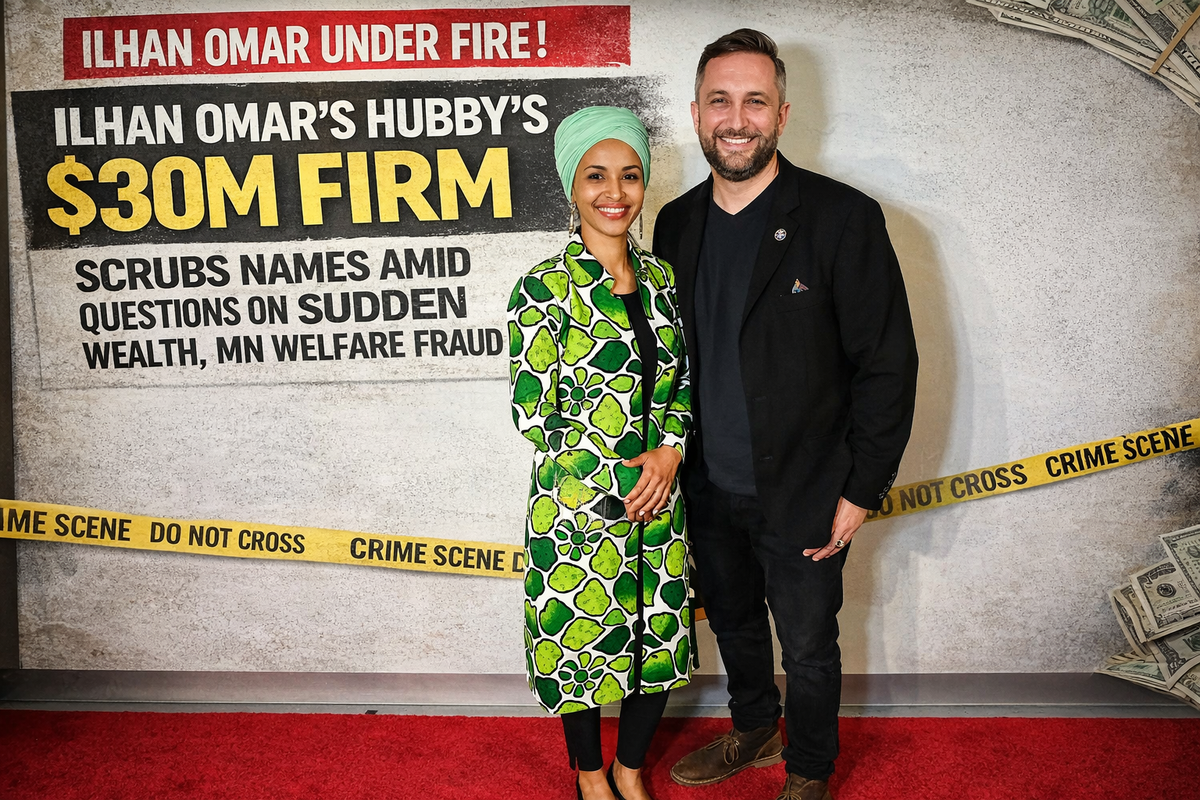
Between September and October 2025, as federal prosecutors announced charges against eight more defendants in Minnesota's massive welfare fraud scheme, the website for Rose Lake Capital quietly scrubbed the names and biographies of nine officers and advisors from public view. The venture capital firm, co-founded by Rep. Ilhan Omar's husband Tim Mynett in 2022, had been promoting its advisory board as a roster of Democratic Party insiders and Obama administration alumni. When scrutiny intensified around the $9 billion fraud scandal unfolding in Omar's district, the names disappeared.
The timing matters because the firm's claimed assets tell an impossible story. Court documents from February 2024 show Rose Lake Capital had exactly $42.44 in its bank account. Nine months later, Omar's financial disclosure valued Mynett's stake in the firm at between $5 million and $25 million. The other Mynett business listed on Omar's disclosure, a California winery called eStCru that had been worth no more than $50,000 at the end of 2023 with just $650 in its account, somehow ballooned to between $1 million and $5 million by year's end.
Together, these valuations catapulted Omar from a negative net worth when she entered Congress in 2019 to somewhere between $6 million and $30 million by the end of 2024. That's a 3,500 percent increase in one year, achieved while the congresswoman earned her $174,000 annual salary and faced mounting questions about her connections to nearly 90 people charged in what federal prosecutors call "staggering, industrial-scale fraud."

What makes Rose Lake Capital's rise particularly noteworthy is who was providing the legitimacy before their names vanished. The advisory board that disappeared from the website included former Obama Ambassador to Bahrain Adam Ereli, who once registered as a foreign agent for Qatar. Former Senator Max Baucus, Obama's Ambassador to China from 2014 to 2017, also lent his name to the firm. Keith Mestrich, the former CEO of Amalgamated Bank, which he described as "the institutional bank of the Democratic Party," served as another advisor. The roster included DNC Finance Chair associate Alex Hoffman and former DNC treasurer William Derrough.
None of these individuals has been charged with any crimes. But their presence on the website served a specific function. When a venture capital firm claims to manage $60 billion in assets despite operating from a WeWork office in Washington, D.C., and offers no details about its clients or investments, the credentials of its advisors become the product itself. Former ambassadors and party treasurers don't make a firm's business model legitimate, but they make it look legitimate to potential investors and partners who might otherwise ask uncomfortable questions about how career political operatives with no business or finance background suddenly run a firm valued in the tens of millions.
🚨 WTF?! During a speech in Minnesota, Ilhan Omar called the President of Somalia “OUR PRESIDENT”
— Nick Sortor (@nicksortor) December 25, 2025
Omar OPENLY violates her Oath of Allegiance every day.
REVOKE HER CITIZENSHIP, AND SEND HER BACK!
These people should have ZERO INFLUENCE in our country. pic.twitter.com/8EEEiV7zue
The pattern is familiar to anyone who watched the Obama administration's Iran Deal campaign or the Biden family's foreign business arrangements. Elite participation provides respectability. The mechanism doesn't require explicit coordination. It simply requires shared incentives and a willingness to not ask questions.
Omar's legislative work created the conditions that made the fraud possible. In March 2020, she introduced the MEALS Act, which modified the Department of Agriculture's food and nutrition programs to allow waivers on requirements for school meal programs during the pandemic. The legislation relaxed oversight at precisely the moment when fraudsters were setting up hundreds of fake meal sites across Minnesota.
The Safari Restaurant, where Omar held her 2018 victory party and appeared in promotional videos praising the meals program in 2020, became ground zero for the scheme. Co-owner Salim Ahmed Said was convicted in August of stealing more than $12 million by claiming to serve 3.9 million "phantom" meals. He spent the money on a $2 million Minneapolis mansion and a $9,000-a-month Nordstrom shopping habit. Another Omar campaign staffer, Guhaad Hashi Said, pleaded guilty to running a fake food site called Advance Youth Athletic Development, claiming 5,000 daily meals while pocketing $3.2 million.
When asked last week if she regretted the MEALS Act, Omar responded: "Absolutely not, it did help feed kids." The statement is technically accurate in the same way that saying the Paycheck Protection Program helped some small businesses is accurate. Both programs served their stated purpose while also creating massive opportunities for fraud that enriched politically connected operators.

The fraud expanded far beyond the meals program. First Assistant U.S. Attorney Joe Thompson said in December that fraud in Minnesota-run Medicaid services likely exceeds $9 billion across 14 "high-risk" state programs. The pattern repeats across autism therapy programs, housing stabilization services, and other social welfare initiatives. In each case, providers claimed to offer services, submitted fake documentation, and billed the government for work never performed. Many of the charged defendants are from Minnesota's Somali community, which Omar represents.
Rose Lake Capital's formation in 2022 came shortly after Omar faced ethics complaints for funneling $2.9 million in campaign funds to Mynett's previous political consulting firm, the E Street Group. Federal Election Commission records show those payments made up 78 percent of the firm's revenue and 56 percent of Omar's campaign expenditures during the 2020 cycle. The arrangement drew enough scrutiny that Mynett exited political consulting and pivoted to venture capital, a field in which court documents note he and his partner Will Hailer had "no prior experience or education in either business or finance."
Shortly after launching Rose Lake Capital, Omar formed the U.S.-Africa Policy Working Group, leading a group of 20 members of Congress "committed to building partnership with the continent of Africa." Both Omar and Mynett have since appeared at events hosted by the EBII Group, which facilitates international investments in Africa. At EBII's African Leaders and Partners forum in 2023, Omar called for a "$44 billion lifeline for African communities." The congresswoman's legislative priorities aligned remarkably well with her husband's new business focus. That's not coordination. That's just marriage.
The website scrubbing in September and October suggests someone recognized how the optics might deteriorate. When a fraud scandal that could reach $9 billion is unfolding in your district, and your husband's venture capital firm suddenly claims tens of millions in value despite having less than $50 in the bank nine months earlier, having Obama administration officials prominently featured on your website creates questions. Better to remove the names and let the firm's claimed $60 billion in assets under management speak for itself.
The fundamental question isn't whether any individual broke the law. Prosecutors will determine that. The question is how American institutions have been configured to allow this pattern to repeat. A congresswoman introduces legislation that relaxes oversight. Fraud explodes in her district. Her campaign funnels millions to her husband's firm. That firm pivots to venture capital with no relevant experience but plenty of Democratic Party connections. The firm's value multiplies impossibly fast. Elite credentials provide legitimacy. Websites get scrubbed when the scrutiny intensifies.
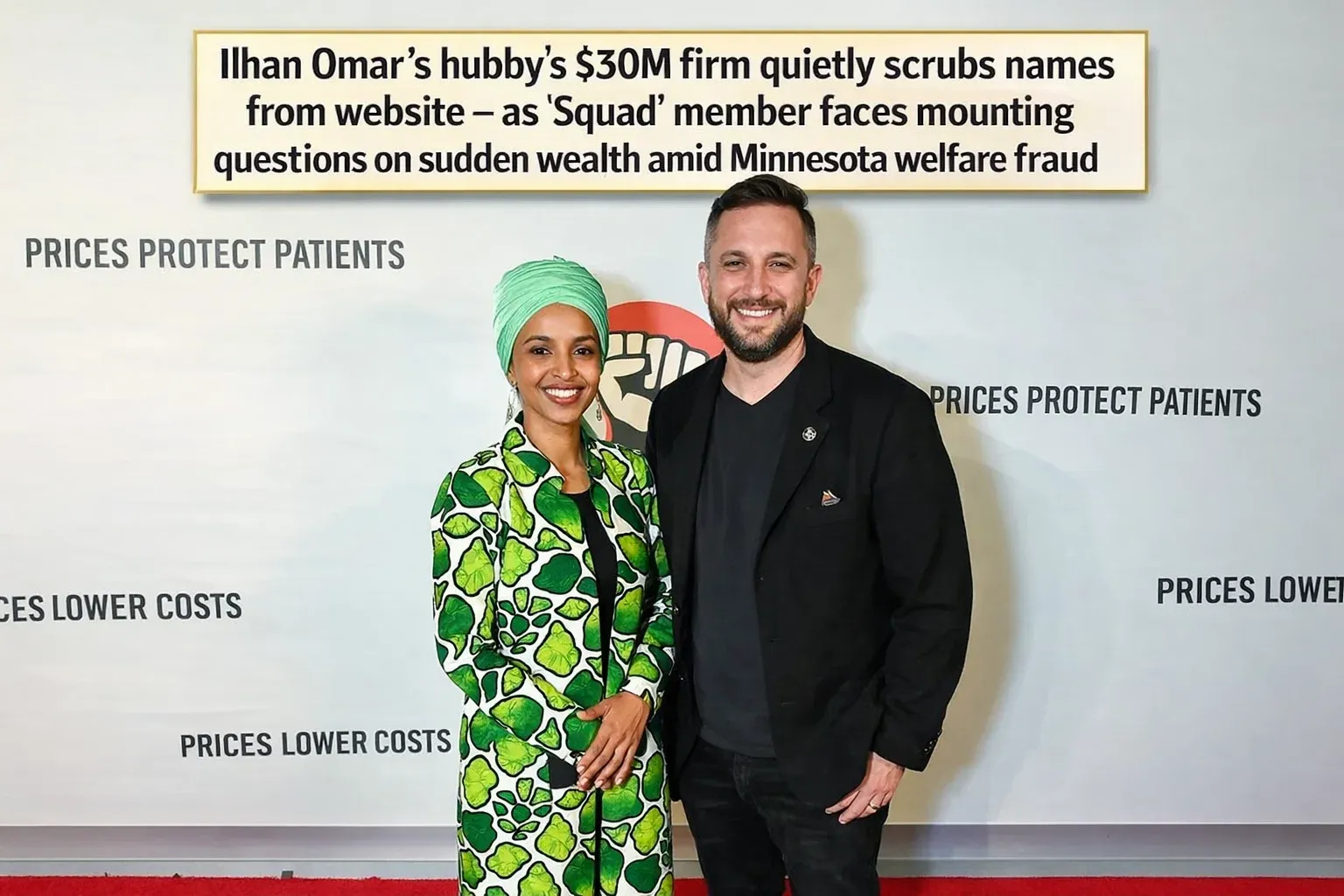
The mechanism works because at each step, plausible explanations exist. Maybe the firms really did find success. Maybe the timing is coincidental. Maybe the elite advisors genuinely believed in the business model. The beauty of the system is that it doesn't require anyone to cross bright legal lines. It just requires everyone to understand what serves their interests and to act accordingly.
When institutions surrender their gatekeeping function, when elite participation becomes decoration rather than due diligence, when oversight mechanisms exist primarily to be waived during emergencies, the distance between public service and private enrichment collapses. Omar entered Congress broke and emerged a multimillionaire while her constituents allegedly defrauded the government of billions. The advisors who lent their names to her husband's firm have moved on. The website reflects the new reality. And somewhere, a WeWork office in Washington, D.C., houses a venture capital firm that claims to manage $60 billion in assets.
The fraud in Minnesota will eventually wind down. Prosecutors will secure more convictions. Some money will be recovered, though most has already been spent on mansions and luxury cars and honeymoons in the Maldives. New oversight mechanisms will be implemented until the next emergency requires them to be waived. And career political operatives will continue discovering that their real value in the marketplace isn't their business acumen but their access to the institutions that determine who gets investigated and who gets to just update their website.
"This investigation is based on public financial disclosures, court documents, federal prosecutor statements, and archived website data. All figures regarding Rose Lake Capital's valuations come from Rep. Omar's congressional financial disclosure forms filed in May 2025. The $9 billion fraud estimate comes from First Assistant U.S. Attorney Joe Thompson's public statements in December 2025."
This investigation is based on public financial disclosures, court documents, federal prosecutor statements, and archived website data. All figures regarding Rose Lake Capital's valuations come from Rep. Omar's congressional financial disclosure forms filed in May 2025. The $9 billion fraud estimate comes from First Assistant U.S. Attorney Joe Thompson's public statements in December 2025."
Research Credits: