The Woodland Hills Broker: How Tehran's Arms Network Ran Through a San Fernando Valley Green Card
Green Card to Tehran’s Arsenal: How an LA Suburb Became a Hub for Iranian Drone Deals Fueling Sudan’s Slaughter

“The traitor is the one who betrays from within, cloaked in the very freedoms he seeks to undermine.
Shamim Mafi's arrest at LAX is not just a sanctions case. It's a map of how the Islamic Republic converts American permanent residency into forward operating infrastructure
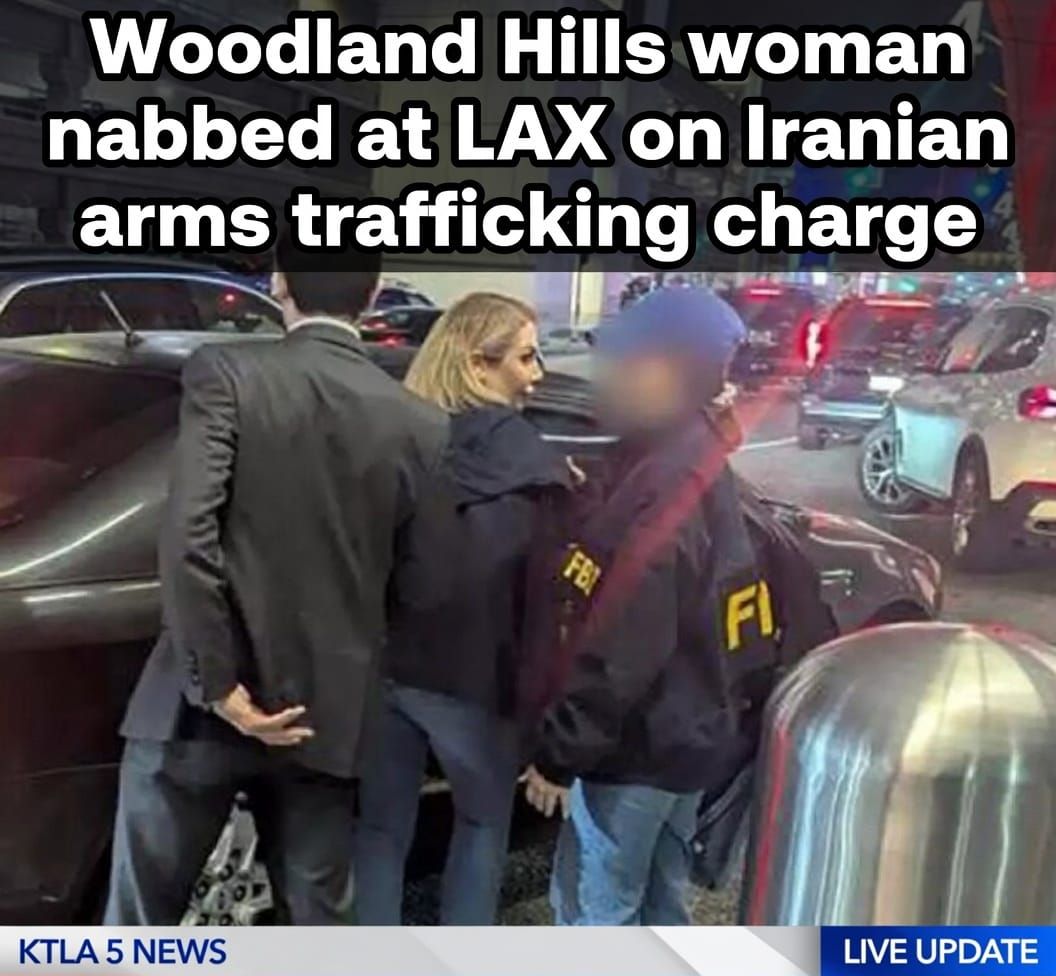
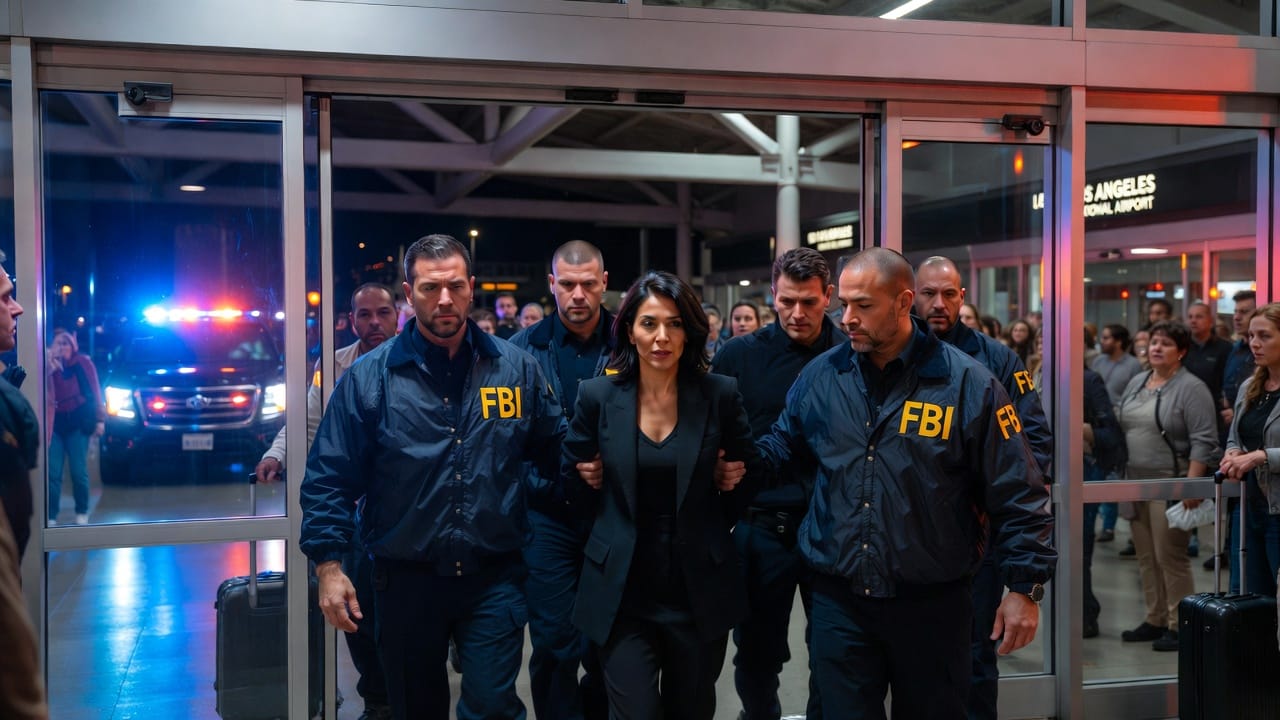
On Saturday night, April 18, 2026, FBI agents from the Los Angeles Field Office's Iran Counterintelligence Squad arrested 44-year-old Shamim Mafi at Los Angeles International Airport as she prepared to board a flight to Istanbul. The charge, unsealed Sunday: conspiracy to violate the International Emergency Economic Powers Act, 50 U.S.C. § 1705, by brokering the sale of Iranian-manufactured Mohajer-6 armed drones, bomb fuses, and millions of rounds of ammunition from Tehran to the Sudanese Armed Forces. Maximum penalty on conviction: 20 years.
That's the headline. The complaint runs 68 pages. It tells a more uncomfortable story. Mafi was a lawful permanent resident of the United States, admitted in 2016. She lived in Woodland Hills. She has been under federal surveillance in California since 2021. Her first husband, according to her own statements to the FBI, was an officer of Iran's Ministry of Intelligence and Security, known as MOIS, Tehran's foreign intelligence arm. Phone records cited by prosecutors document roughly 62 two-way contacts between Mafi and a MOIS officer between December 2022 and June 2025, running in parallel with arms deals worth, at minimum, $70.6 million.
She is presumed innocent until proven otherwise in court. If the allegations hold, they describe something the United States has had real trouble confronting. Lawful permanent residency was converted into operational cover for a hostile state's sanctions-evasion and arms-brokering apparatus, run from a suburban address twenty miles from a federal courthouse.
The Complaint
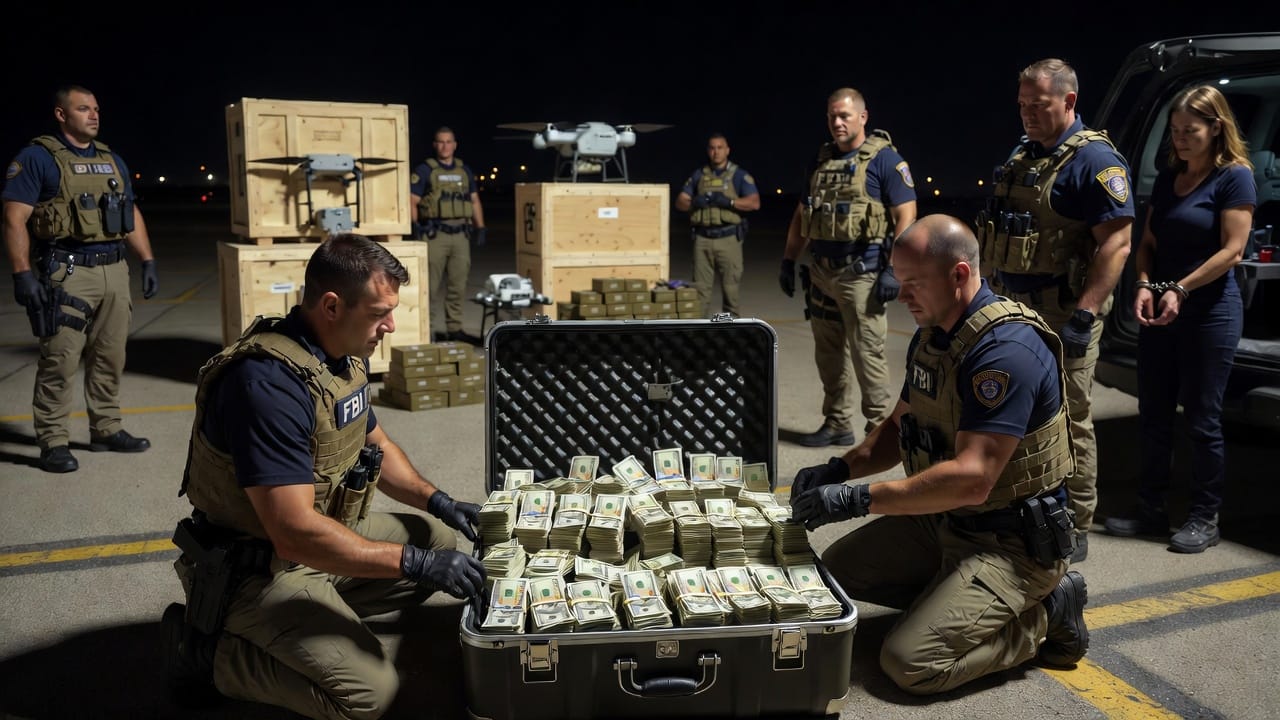
Federal prosecutors allege Mafi and an unnamed co-conspirator operated an Oman-registered shell called Atlas International Business LLC. Oman is a recurring node in Iranian sanctions-evasion tradecraft: strategically positioned, commercially permissive, and diplomatically convenient. Through Atlas, prosecutors say, Mafi brokered the following deals on behalf of the Iranian government:
- A contract exceeding $70.6 million for Mohajer-6 armed drones to Sudan's Ministry of Defense, supplied through Iran's Ministry of Defense and Armed Forces Logistics.
- 55,000 bomb fuses for the Sudanese military, for which Mafi reportedly submitted a letter of intent to Iran's Islamic Revolutionary Guard Corps.
- 10 million rounds of AK-47 ammunition.
- A separate proposed contract for 240 million rounds of ammunition.
Atlas reportedly received over $7 million in payments in 2025 alone. Payments were routed through Turkey and the United Arab Emirates to obscure their origin, the kind of structure that sanctions-evasion networks build as a matter of course. Mafi personally was paid nearly $7 million in fees, including for coordinating a Sudanese delegation's travel to Iran.
The charging instrument itself was filed on March 12, under seal. Mafi was arrested over a month later as she attempted to leave the country. According to the affidavit, she told investigators she is "more useful to them [MOIS] in Iran than in the United States." Prosecutors also note that she offered to provide the FBI with "extensive information about the Iranian financial system and money laundering channels used by the Government of Iran." That is a cooperation pitch that presupposes intimate knowledge of those same channels.
The Recruitment
The most revealing portion of the public filing is not the tonnage of ammunition. It is how prosecutors describe Mafi's trajectory from Iranian expatriate to alleged regime broker.
Mafi left Iran in 2013. She spent time in Istanbul, moved to Los Angeles, and received her green card in 2016 under the Obama administration. In 2020, according to court records summarized in reporting by IBTimes UK, the Iranian government seized properties Mafi had inherited from her father. MOIS then allegedly approached her with a proposition. Open a business in the United States. Work with us. The seized assets become leverage toward recovery.
This is textbook tradecraft. It isn't the recruitment of an ideologue. It is the recruitment of a vulnerable expatriate through financial coercion, using assets inside Iran's legal reach. The model scales. Any Iranian green card holder with seized, frozen, or vulnerable property inside the Islamic Republic, or with family members inside its borders, is a candidate for the same pitch. Mafi reportedly told the FBI she had never been tasked by MOIS to conduct activities on U.S. soil. The phone records suggest otherwise.
What Mafi lived was the public-facing cover: luxury vehicles, international travel, a prominent social media presence performing the role of successful entrepreneur. What she ran, according to prosecutors, was a logistics node for the Iranian arms export program, operated from a home address in Los Angeles County.
The Sudan Pipeline
The destination matters. Sudan has been at war with itself since April 2023, when the Sudanese Armed Forces and the Rapid Support Forces, erstwhile partners in a 2021 coup, turned on each other. Tens of thousands are dead. Famine warnings are active across multiple states. Roughly ten million people are displaced. It is the worst humanitarian catastrophe on the planet right now, and the scale is not close to anything else.
Iran has backed the Sudanese Armed Forces with drones and munitions. The Mohajer-6, the same platform Mafi allegedly brokered, has been photographed and geolocated over Sudanese battle spaces. For Tehran, Sudan is strategically useful on multiple axes: access to the Red Sea, proximity to Houthi operations in Yemen, a testing ground for drone hardware, and a revenue stream for a sanctioned economy. Every round, every fuse, every drone that transits from Iran through Oman to Port Sudan extends a war that is already killing civilians at industrial scale.
This is the part the federal complaint does not dwell on, because it doesn't have to. The dollar figures in the filing translate directly into ordnance delivered into a theater of mass civilian suffering. The $70 million drone contract isn't an abstraction. It is hardware that kills people.
The Pattern
Mafi's arrest is the fourth in a series of high-profile federal actions against Iranian nationals holding, or recently holding, legal status in the United States. The sequence, as far as the public record goes:
In early April, Secretary of State Marco Rubio revoked the visas of Fatemeh Ardeshir-Larijani, daughter of former Iranian Supreme National Security Council Secretary Ali Larijani, and her husband Seyed Kalantar Motamedi. Ardeshir-Larijani had held a faculty position at Emory University's Winship Cancer Institute. Both have since left the country and are barred from reentry.
On April 3, ICE arrested Hamideh Soleimani Afshar, the niece of slain IRGC Quds Force commander Qasem Soleimani, and her adult daughter in Los Angeles after Rubio terminated their LPR status. Afshar entered the United States on a tourist visa in 2015, was granted asylum in 2019, and became a green card holder in 2021. DHS has characterized her asylum claim as fraudulent on the basis of multiple return trips to Iran disclosed in her 2025 naturalization application. Her public record includes social media content celebrating attacks on U.S. military personnel and referring to the United States as the "Great Satan." Her husband is now barred from entry.
And now Mafi. She is the first of the group to face federal criminal charges rather than administrative immigration action, and the first alleged to have been actively operating a commercial arms pipeline rather than engaging in propaganda or adjacency to regime figures.
Three data points is the beginning of a pattern. What the pattern shows is that those assets have entered and remained here through the ordinary channels of U.S. immigration law: asylum, family-based petitions, employment-based visas, lawful permanent residency. They were not smuggled. They were admitted.
The Vetting Question
The uncomfortable question raised by the Mafi case isn't whether U.S. counterintelligence can eventually detect Iranian brokers operating on American soil. It can, and did. Mafi was reportedly under surveillance from 2021. The question is why she was admitted in 2016 in the first place, and what the vetting apparatus missed or declined to weight.
Mafi's declared profile at adjudication should have produced, at minimum, elevated scrutiny. An Iranian national with a past Istanbul residency. A first husband who was reportedly a MOIS officer. Frequent travel patterns consistent with Gulf commercial activity. Whether any of that triggered meaningful review is not a matter the public record addresses. It is a matter that Congress, if it is serious, will ask about.
The Soleimani Afshar case raises the same question in a different key. The asylum grant in 2019 preceded multiple return trips to Iran, the exact pattern of behavior that, as a matter of asylum law, undermines the underlying claim. Those trips were disclosed by Afshar herself on a 2025 naturalization application. DHS has since characterized the original claim as fraudulent. The administrative fix took six years from the initial grant.
The broader structural point: lawful permanent residency, once granted, is extraordinarily sticky. Revocation requires a finding, a process, and an appetite for enforcement. For the decade between Mafi's 2016 green card and her 2026 arrest, she could travel freely between Los Angeles, Tehran, Istanbul, and Muscat. That is the system performing exactly as designed, without a corrective layer calibrated for hostile-state intelligence exposure.
The Cooperation Play
One line in the complaint deserves attention. Mafi, prosecutors note, offered to provide the FBI with "extensive information about the Iranian financial system and money laundering channels used by the Government of Iran." Read one way, that is a criminal defendant positioning for leniency. Read another way, it is an acknowledgment of proprietary knowledge that can only be accumulated through the kind of sustained operational access the rest of the complaint describes.
If Mafi cooperates, and if the Department of Justice decides her cooperation is worth a deal, the resulting intelligence product could be the most significant Iranian sanctions-evasion debrief in a decade. Routes, counterparties, financial rails, identities of other brokers operating under similar cover. That is speculative. But it is the game prosecutors are now playing, and it is the reason the complaint was kept under seal for five weeks before the LAX arrest.

What to Watch
Mafi is scheduled to make her initial federal appearance in U.S. District Court in downtown Los Angeles on Monday afternoon, April 20. Several things to watch from here:
The co-conspirator. The complaint references an unnamed partner in the Atlas International Business operation. That person is either in U.S. custody, in a jurisdiction with an extradition arrangement, or being protected for operational reasons.
The charging decisions. The current complaint is a single-count IEEPA conspiracy charge. A full indictment, likely coming within 30 days, will tell us whether DOJ intends to pursue the broader network on material support, money laundering, FARA, and export control violations, or whether this stays narrow in service of a cooperation deal.
The broader revocations. Rubio has signaled that the green card actions against regime-adjacent figures are not a closed set. If the administration follows the Mafi case with additional LPR terminations tied to commercial or logistical connections to Tehran, rather than only to propaganda and familial ties, we are looking at a policy shift with real weight.
The Sudan end of the pipeline. Every fuse and round Mafi allegedly brokered transited somewhere, landed somewhere, was used somewhere. The physical pipeline runs from an Iranian port of origin, through an Omani intermediary, through Turkish or Emirati financial routing, into Sudanese receiving infrastructure. Much of that architecture is mapped in the underlying affidavit, some of which remains redacted. How much of that map the government is willing to make public will signal how aggressively it intends to disrupt the rest of the network.
The Woodland Hills Address
The detail that will stay with me from this case isn't the tonnage or the dollar figures. It is the geography.
Woodland Hills is a quiet neighborhood in the western San Fernando Valley. Tree-lined streets, affluent homes, public schools that are merely fine. A person living there is a person the surrounding blocks treat as a neighbor, not as an operator. For a decade, if the complaint is accurate, one of those neighbors was allegedly running logistics for an Iranian weapons pipeline into an African civil war, on behalf of a regime that has spent forty years calling this country its primary adversary, and doing so with documents lawfully issued by the United States government.
The question the Mafi case poses isn't whether the Islamic Republic has been operating inside the United States. The answer to that has been on the public record for years. The question is how many Mafis are on the block, and for how much longer the adjudication apparatus that admitted her will continue treating Iranian regime adjacency as a background detail rather than a disqualifying fact.
The complaint is unsealed. The arrest is made. The file is open. Monday afternoon in downtown Los Angeles is the next entry.
This piece is based on the public federal criminal complaint against Shamim Mafi (C.D. Cal., filed March 12, 2026, unsealed April 19, 2026), statements by First Assistant U.S. Attorney Bill Essayli, and reporting by the Associated Press, NBC Los Angeles, LA Magazine, IBTimes UK, and Fox News. Mafi is presumed innocent until proven guilty. Court filings reference an unnamed co-conspirator whose identity is not yet public.