Blood on the Platform: New York's Ancient Hatred Rides the C Train
A Bronx woman choked an Orthodox Jewish nurse on the C train while screaming blood libel. The city's mayor had, months earlier, quietly dismantled the legal architecture for naming exactly this kind of hatred.

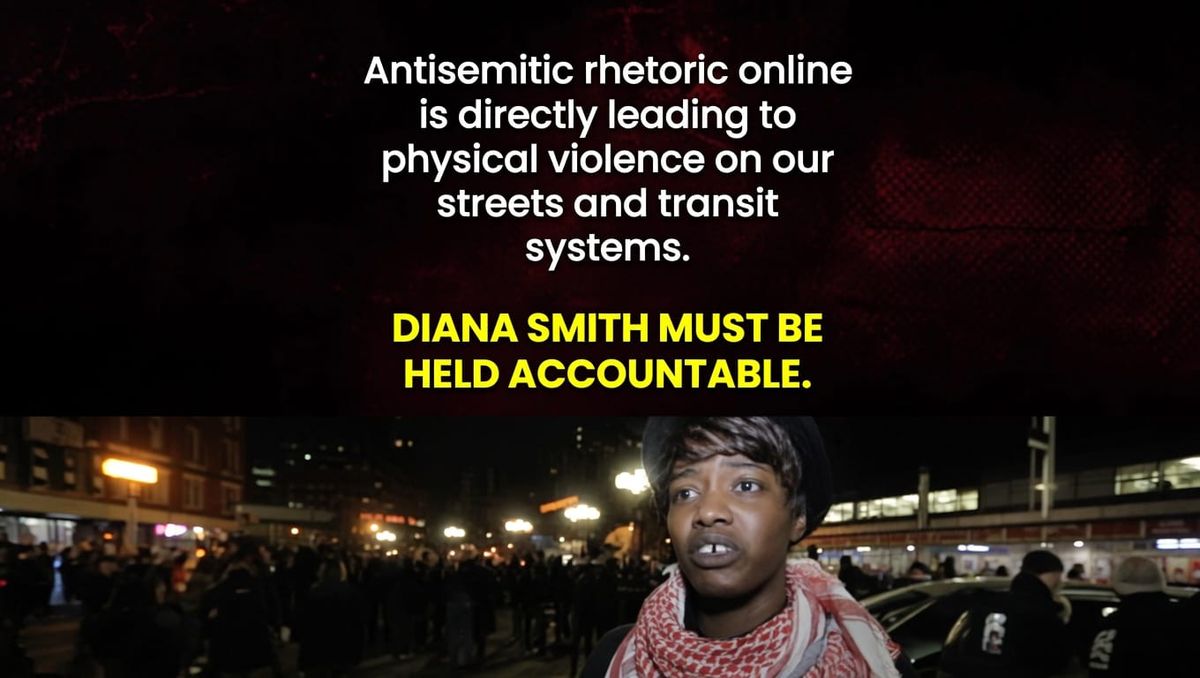
On a Sunday afternoon on the last day of May, a 23-year-old Orthodox Jewish nurse boarded a northbound C train at Jay Street and became, without warning, a character in a story that is more than a thousand years old.
At approximately 2:15 in the afternoon, a fellow passenger made her way through the car. She approached one couple and spoke, according to the victim, about the dangers of Jews stealing wealth. She told another pair that you could always see the reflection of a Jew. Then she found the nurse. She stared her down and smiled what the victim later described as a very eerie smile she will never forget.
The nurse stared back. She asked whether the woman could see her reflection. The woman said yes, and that she could smell it on her too.
Then she began screaming. Not random obscenities, not the ambient menace of a bad day underground, but something SPECIFIC AND VERY OLD: that she could smell the babies, that Jews eat babies, that Jews are eating kids. And then she grabbed the young woman by the throat.
My sister's friend sent me this video of her being assaulted on the NYC subway yesterday after being told "Jews eat kids."
— Shabbos Kestenbaum (@ShabbosK) June 3, 2026
After the video cut, the assailant began pulling the victim's hair out as well. (I can send media the pics).
Our Islamist Mayor has praised terrorists like… pic.twitter.com/EWcvhpXFUL
When bystanders began to stir, the woman offered them her own moral calculus: it was okay for a Jew to eat a kid, so why couldn't she choke one?
The victim, 5-foot-3, wearing religious attire that made her immediately legible as Jewish, was choked twice, kicked, and had a fistful of hair torn from her head with enough force to cause a concussion. She ran off at Canal Street and flagged police. The suspect was arrested on the platform. Court records show she was charged with hate crime assault, hate crime criminal obstruction of breathing, and aggravated harassment.
The victim spoke publicly afterward. She had been, she said, a ragdoll. She could not defend herself. There should have been a human barricade around her. She told CBS New York: "She lunged at me. She choked me twice. She kicked me. She ripped my hair out. It was a hate crime against the Jewish community. THIS WOULDN'T HAVE HAPPENED IF I WASN'T JEWISH."
The video she managed to capture before her phone was knocked away is not comfortable to watch. It should be required viewing.
WHO IS DIANA SMITH?
The suspect has been identified by police as Diana Smith, 34, of the Bronx. She is not a stranger to public life, and this is not her first encounter with the law.
Smith works publicly under the name Lädy Millard, presenting herself as a fashion designer turned visual artist and street painter. A graduate of the Fashion Institute of Technology, she founded what she describes as the Millard Boutique in 2002, operating out of a basement studio in SoHo. Her LinkedIn profile, which remained active after the arrest, lists a decade of experience in New York's creative industry and describes her current role as creative director at BRIC, Block Realty Investment Coin, a Solana-based cryptocurrency project with a white paper promising to democratize real estate investment through blockchain technology.
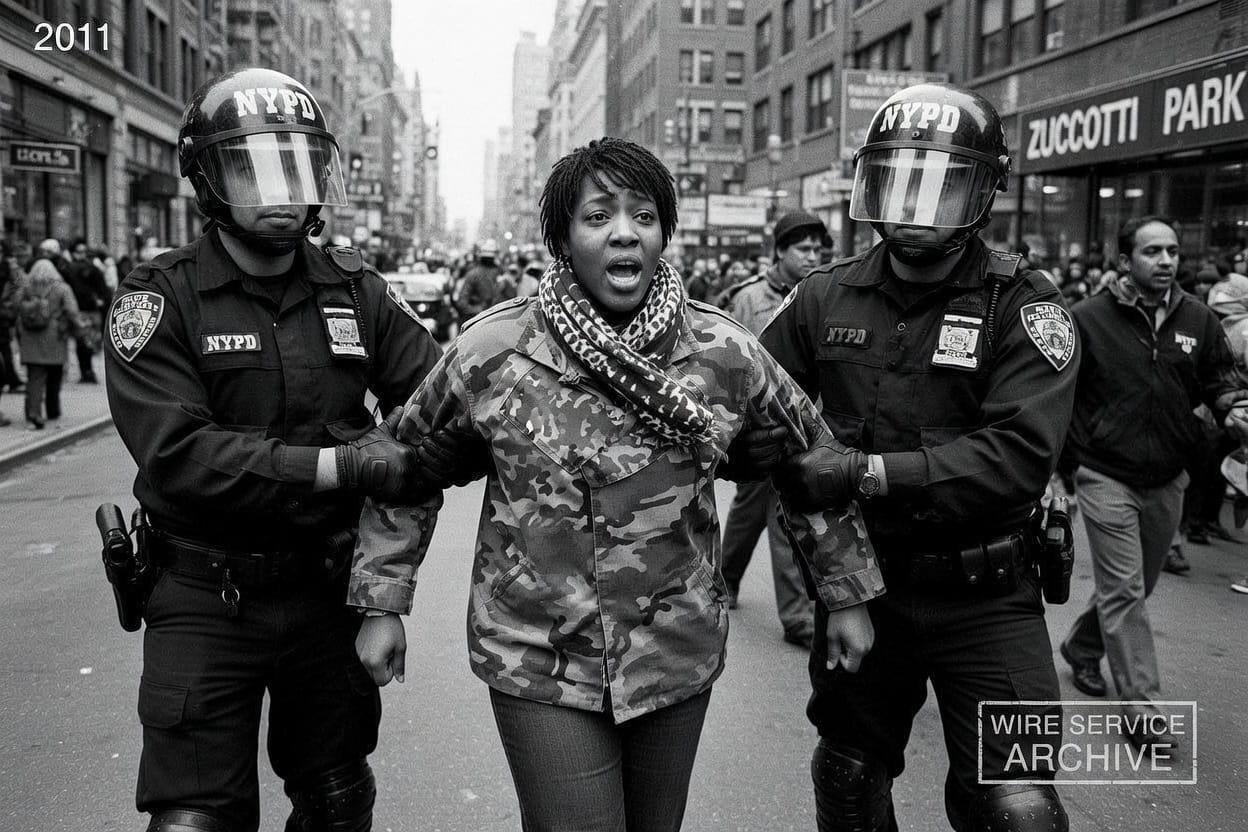
Public records and reporting by Canary Mission document that Smith was previously arrested during the Occupy Wall Street protests in 2011. In 2013, she was convicted of misdemeanor obstruction of governmental administration and sentenced to ten days of community service and three years of probation.
She screamed about Jews eating children on a Sunday afternoon on a packed New York City subway car. She has a prior conviction. She has a public identity, a professional brand, and a job title. She is not a stranger or a mystery. She is a person with a documented history, and the court system will now be asked to reckon with ALL OF IT.
THE ACCUSATION AND ITS ORIGINS
What the suspect screamed in that car was not a psychotic invention. It is a specific accusation with a specific name, a specific genealogy, and a very specific body count.
Blood libel, the charge that Jews murder non-Jewish children to use their blood in religious ritual, entered the Western historical record in Norwich, England, in 1144, when a monk named Thomas of Monmouth accused local Jews of ritually crucifying a boy named William. The idea spread rapidly across medieval Europe not because it was persuasive to sophisticated minds but because it was useful to particular social purposes. It gave communities permission to do what they already wanted to do: expel Jews, seize Jewish property, and kill.
From the Rhineland massacres of the Crusade era to the Damascus Affair of 1840 to the Kielce pogrom of 1946, one year after the end of the Holocaust, the libel operated as something close to a franchise model. The accusation was standardized; its local application was flexible; its results were reliably violent.
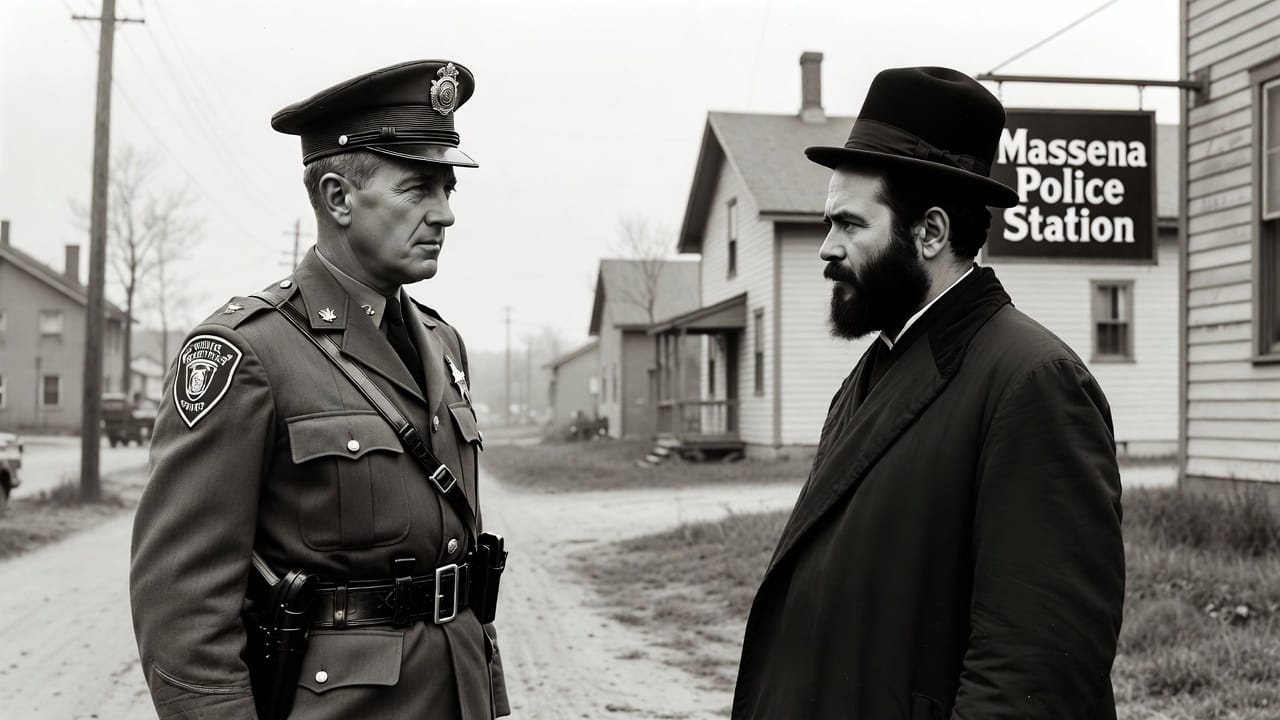
The libel reached the United States as recently as 1928, when, in Massena, New York, a state trooper interrogated the local rabbi about whether Jews required Christian blood for Yom Kippur observances. The mayor of Massena eventually apologized. The rabbi eventually left.
It persists not because people believe it literally, though some demonstrably do, but because it performs a function that no amount of historical refutation or public education has ever fully neutralized. It transforms the Jew from a person into a predator. Once that substitution is accomplished, violence ceases to be a crime and becomes something more like an act of self-defense.
WHAT WAS SCREAMED ON THE C TRAIN WAS NOT DERANGEMENT. IT WAS DOCTRINE. Old doctrine in a new city, and it has been doing this work for nine centuries.
The infrastructure that incubates this doctrine on the streets of New York is something this publication has traced in some detail. What happened outside Park East Synagogue earlier this year, when a mob gathered at a house of worship in broad daylight and met with no meaningful political response, belongs to the same pattern.
THE NUMBERS
NYPD data for May 2026:
41 confirmed antisemitic hate crimes 60%+ of all hate crimes in the city that month Jews = roughly 10% of New York's population 71% increase over May 2025 152 antisemitic incidents year-to-date through May
These figures are worth sitting with, because they tend to be processed too quickly, absorbed as evidence of a general social problem rather than as evidence of specific, ongoing failures of policy and political leadership. A community that represents one-tenth of the city's population is absorbing more than six-tenths of its hate crime victimization, and the trend line is pointing sharply upward. This is not ambient social friction. It is a specific and measurable phenomenon that has been building for two years, and it is building faster.
Hate crime enhancement statutes exist for exactly this kind of situation. Smith was arrested quickly, which is not a small thing. But ARREST IS A BEGINNING, NOT AN OUTCOME.
THE BYSTANDER PROBLEM
The video the victim captured before her phone was knocked away shows, in addition to the suspect's shouting, a subway car full of people who were present and who hesitated. The victim said afterward that only two witnesses stepped in briefly to help, and that the experience of being surrounded by onlookers who did nothing was almost as disturbing as the attack itself. When she went to identify the suspect after the arrest, multiple people approached her to say they had seen what happened and ask if she was all right.
"Of course I'm not OK. How is it that you saw what happened and just were a bystander?"
The question of bystander inaction in urban emergencies has a long literature, and some of the answers are structural: the diffusion of responsibility in crowds, the physical uncertainty of intervening in a violent situation, the freezing response that witnesses to sudden violence often experience. But there is another dimension to this particular hesitation, and it deserves to be named directly. In significant portions of New York's progressive political culture, identifying antisemitic violence as antisemitic violence has become a fraught and politically costly act. The language of Jewish victimhood is subjected to demands for proportionality and contextualization that are not applied to the victimhood of any other group. When political leadership cannot say the words cleanly, without qualification, ordinary people absorb that ambivalence. It settles into the air. It slows the hand.
🚨🚨🚨 HAPPENING NOW OUTSIDE PARK EAST SYNAGOGUE
— Rabbi Poupko (@RabbiPoupko) November 20, 2025
Antisemites have showed up outside Park East synagogue and are chanting for intifada.
The Rabbi of the synagogue is a holocaust survivor who remembers vividly the horrors of Kristallnacht.
Now, he gets to see the same human… pic.twitter.com/fFDtt8nOhV
WHAT THE MAYOR DID FIRST
There is a meaningful distinction between a political leader who fails to protect a community and one who takes active steps to dismantle the architecture of that protection. Zohran Mamdani, in five months as mayor of the city with the largest Jewish population in the Western Hemisphere, has managed to accomplish both.
On January 1, 2026, before signing any other initiative, Mamdani revoked two executive orders established under his predecessor specifically to protect Jewish New Yorkers. The first had codified the International Holocaust Remembrance Alliance definition of antisemitism as official city policy. The second had restricted city agencies from participation in BDS. Both were gone on his first day. He had announced his intention to do this in a September 2025 Bloomberg interview while still a state assemblyman.
The IHRA definition is not a piece of bureaucratic terminology. It is a practical instrument, developed over decades by governments, universities, and law enforcement agencies in multiple countries, for identifying and responding to the contemporary forms antisemitism actually takes — including forms that present themselves in the vocabulary of human rights and political solidarity rather than in the vocabulary of medieval hatred. The definition names the blood libel explicitly. It names conspiratorial claims about Jewish power. It names the dehumanizing rhetoric that has historically preceded violence. It was designed precisely to address the gap between what antisemitism looked like in the 1930s and what it looks like now.
Mamdani stripped it.
When pressed to replace it with any working definition at all, his antisemitism office offered a revealing answer. Phylisa Wisdom, executive director of the Mayor's Office to Combat Antisemitism, told a City Council hearing in April that the administration would not operate from any codified definition. The policy, she said, would be to understand antisemitism as "prejudice, violence, and discrimination against Jews because they are Jewish," a circular formulation that describes the phenomenon without providing any tools for identifying it in its modern forms, and that conveniently excludes precisely the vectors through which contemporary antisemitism most commonly travels: the conspiracy rhetoric, the antizionist dehumanization, THE BLOOD LIBEL SCREAMED ON SUBWAY PLATFORMS.
After that hearing, Wisdom declined to answer questions from Jewish Insider about whether she considered it antisemitic to celebrate the October 7 attacks, or the Hamas commander Yahya Sinwar who orchestrated them, as Mamdani's wife and members of his staff have done.
This pattern runs through the administration's approach to Jewish safety in ways that are not incidental. This publication documented the most explicit instance of it when Mamdani's first budget delivered $26 million to JFREJ to administer antisemitism prevention programs. JFREJ had lobbied aggressively for that precise dollar figure. It is also among the most vocal organizations opposed to the IHRA standard the mayor had just eliminated. The money went to an organization whose leadership helped create the definitional vacuum it is now being paid to address.
THE CONSEQUENCES ARE MEASURABLE
January 2026, Mamdani's first month in office, saw antisemitic hate crimes surge 182 percent compared to January of the prior year, with Jewish New Yorkers being targeted on average once per day. The Combat Antisemitism Movement documented those numbers. The NYPD confirmed them. The mayor responded with language about a politics of universality.
Senator Bill Cassidy opened a formal Senate oversight inquiry into Mamdani's antisemitism record in February, writing that revoking the IHRA definition made it easier for Jewish students and city employees to be threatened and discriminated against for their heritage. A group of Queens officials and civic leaders filed suit against the city, accusing the administration of stonewalling a Freedom of Information request about the reasoning behind the IHRA revocation. The ADL launched a monitoring initiative focused on the incoming Mamdani administration before he had taken office at all. The UJA-Federation, the Jewish Community Relations Council, and the New York Board of Rabbis issued a joint statement warning that his first-day actions had taken away two significant protections against antisemitism.
Israel's foreign ministry offered the shortest assessment:
"THIS ISN'T LEADERSHIP. IT'S ANTISEMITIC GASOLINE ON AN OPEN FIRE."
Mamdani has not commented on the May 31 attack.
THE IDEOLOGICAL CONTEXT
Mamdani is a supporter of BDS, openly and on the record. He has expressed a desire to see Israeli Prime Minister Benjamin Netanyahu arrested on the basis of an International Criminal Court warrant. He boycotted the Israel Day Parade on Fifth Avenue, which took place on May 31, the same afternoon the nurse was being choked on the C train three miles to the south. He has repeatedly declined to recognize Israel's right to exist as a Jewish state.
These facts matter not as biographical trivia but as the ideological context within which his policy decisions become legible. His administration has offered the argument that fighting antisemitism and opposing the Israeli government are separable commitments, and in the abstract they can be. In practice, the Mamdani administration has shown no sustained interest in any definitional framework that would allow it to recognize anti-Jewish discrimination when it arrives carrying the vocabulary of Palestinian solidarity. That is not a subtle or nuanced position. It is a structural gap, and it is one that bad actors have been exploiting with increasing confidence.
#NYC Protesters SWARM Subway in New York City demanding to "Free Palestine" pic.twitter.com/w7BwnPE4HC
— Oliya Scootercaster 🛴 (@ScooterCasterNY) March 1, 2024
The historical mechanics of how this gap is constructed and then used, how a government strips a minority community of its legal protections in advance of the violence rather than in response to it, is something this publication explored in The Protection Bond, tracing the same procedural logic from Tehran in 1979 forward to the present. The parallels are not reassuring.
WHAT THE VICTIM SAID
The nurse said afterward, plainly, that what happened would not have occurred if she were not Jewish.
She is right, and that plainness deserves recognition as a form of moral courage in a moment when the vocabulary available for naming Jewish victimhood is under persistent pressure to qualify itself. She stood on the Canal Street platform after being choked and beaten and asked aloud how it was possible that people had seen what was happening and done nothing. She said she kept telling herself she was not in Nazi Germany. She said she did not think New York was protecting Jews.
She was visibly Jewish. She was targeted because she was visibly Jewish. An accusation that has been used to justify the murder of Jews across nine centuries was screamed in her face before she was assaulted in front of a car full of witnesses on a Sunday afternoon in lower Manhattan. The facts are not complicated. They do not require supplementary context to become comprehensible. What they require is acknowledgment and the willingness to pursue accountability with the same energy and consistency that the city would direct toward any comparable bias crime against any other group.
Jewish New Yorkers have been navigating elevated threat since October 7, 2023. They move through public spaces, synagogues, subway cars, and streets in identifiable attire, with a level of vigilance that a city committed to its stated values of pluralism ought to find intolerable. The woman on the C train is not a symbol. She is a person who boarded a train on a Saturday afternoon and was nearly choked unconscious because of who she is. She deserves more than a press release.
 Gene Goodwin
WHAT THIS MOMENT REQUIRES
There is a recurring temptation, in writing about antisemitism in the contemporary American context, to close with a gesture toward complexity, a call for dialogue, an acknowledgment that urban social problems are difficult and that changing minds takes time. That temptation is worth resisting here.
The blood libel is not a misunderstanding. It is not a product of ignorance that education can dissolve. It is a technology of violence with a nine-century operational record, and it responds not to nuance but to clarity: to consistent enforcement, to a cultural and political consensus that certain ideas are not permissible vectors for grievance regardless of the political costume they happen to be wearing, and to leadership that is willing to name what is happening without qualification or triangulation.
antisemitism functions as a leading indicator, a signal that a society is beginning to tolerate a kind of violence against Jews that it will, if uncorrected, eventually tolerate against others. The Jewish experience has historically been the canary in the social mine, and the canary is not doing well.
41 confirmed antisemitic hate crimes in a single month. A woman choked on a subway floor. A mayor who dismantled the legal definition designed to identify exactly this kind of hatred on his first day in office and has said nothing about the attack since.
The question is not whether this is happening. The question is what New York, its government, its institutions, its civic culture, and the people on that subway car, intend to do about it.
Because the alternative is already visible. It rides the C train.
The Unredacted reports what others will not print and names what others will not say. If this work matters to you, consider becoming a paid subscriber.