Treasury's Designations and the Organizational Architecture the Soviets Perfected
OFAC designated Autistici Inventati, Palestine Action, and Masar Badil under E.O. 13224 on August 26, targeting the encrypted infrastructure, direct-action operations, and PFLP front organizations connecting far-left extremism across Italy, the UK, Brazil, and Germany.


The Front Behind the Front
OFAC designated three far-left entities under E.O. 13224 on August 26. The layered front structure connecting them to a designated Foreign Terrorist Organization follows a procedure documented in Eastern Bloc intelligence manuals sixty-five years ago.
In 1961, the Czech intelligence service StB produced an internal manual on the management of front organizations. The manual described a layered structure: the designated entity at the center, surrounded by a ring of nominally independent organizations that shared its leadership, its fundraising apparatus, and its strategic objectives while maintaining a separate public identity. The outer ring existed to do what the inner entity could not do under its own name. When one layer was compromised, the next layer continued operations under a different letterhead with the same staff, the same money, the same directives. The StB manual did not invent this architecture. It documented a procedure already standard across Soviet bloc intelligence services, refined over decades and exported to client movements worldwide.
On August 26, 2026, the U.S. Treasury Department's Office of Foreign Assets Control designated Masar Badil, a transnational organization, under Executive Order 13224. The designation basis: Masar Badil is owned, controlled, or directed by the Samidoun Palestinian Prisoner Solidarity Network. Samidoun was jointly sanctioned by the United States and Canada on October 15, 2024 as a front organization owned, controlled, or directed by the Popular Front for the Liberation of Palestine. The PFLP has been a designated Foreign Terrorist Organization since 1997.
Read that chain again. The PFLP operates through Samidoun. Samidoun operates through Masar Badil. When the United States and Canada sanctioned Samidoun in October 2024, a second organization was already in place, sharing Samidoun's fundraising operations, its senior leaders, and members of its Executive Committee. Three individuals already sanctioned in the 2024 action, Khaled Barakat, Mohammad Khatib, and Jaldia Abubakra, hold positions in both organizations. Two additional individuals were designated on August 26: Germany-based Zaid Abdulnasser and Brazil-based Rawa Alsagheer, both leaders or officials of Masar Badil.
One of Masar Badil's own senior leaders described the organization as "part of the same political project" as Samidoun.
The front behind the front. The procedure has not changed. The organizational genealogy runs in a straight line.
The PFLP's own history makes the lineage concrete. The organization was founded in 1967 by George Habash, a Marxist-Leninist who modeled the PFLP's structure on Soviet organizational doctrine. The PFLP received training, funding, and operational support from the Soviet Union and its Eastern Bloc allies throughout the 1970s and 1980s. That support included instruction in exactly the kind of layered front architecture that OFAC's August 26 designation now documents running through Samidoun to Masar Badil. The technique was not improvised. It was taught.
Soviet active measures doctrine identified a specific function for what it called "international front organizations." The World Peace Council, the World Federation of Trade Unions, the International Association of Democratic Lawyers. Each operated as a nominally independent body with its own leadership, its own charter, its own stated mission. Each was controlled by the Communist Party of the Soviet Union through the International Department of the Central Committee. The signature feature was not secrecy. It was deniability. The organizations operated openly. Their connection to Moscow was documented in internal files but publicly denied. When one organization was exposed, the response was not dissolution but rebranding. New name, same personnel, same funding channel, same directives.
Masar Badil is not a Soviet front organization. But the organizational procedure it follows is one the Soviets codified, the Eastern Bloc intelligence services exported, and the PFLP adopted from its Soviet patrons. Shared leadership across nominally separate entities. Shared fundraising. A public identity distinct from the controlling organization. Continuity of operations after the inner layer is sanctioned.
The server farm that screens its clients
OFAC designated two other entities on August 26 under the same Executive Order 13224 authority. Both exhibit features of the same organizational model, adapted to different operational domains.
Autistici Inventati is an Italy-based collective that provides encrypted email accounts, website hosting on foreign servers, chat and video conferencing, and a publishing platform called "Noblogs" to far-left groups. The organization describes itself as "anti-fascist" and "anti-militarist." OFAC's designation states it "exclusively provides its services to vetted individuals, collectives, and groups it perceives to be aligned with its ideology." The vetting is the operative word. Autistici Inventati screens applicants for ideological alignment before granting access.
One of the groups that cleared the ideological screen: the Kurdistan Workers' Party. The PKK has been designated as a Foreign Terrorist Organization by the United States, the United Kingdom, and the European Union for a campaign of violence dating to 1984.
Soviet-era front organizations performed a similar gatekeeping function. The fronts did not broadcast. They channeled. Access to the network, its communications infrastructure, its publishing apparatus, its coordination tools was mediated through an ideological vetting process that ensured only aligned actors received support. The vetting was the gate that allowed the infrastructure to serve operationally active groups while maintaining the front's public posture as a political or cultural organization. Autistici Inventati's intake process, which screens for ideological alignment and then provides encrypted digital tools to the groups that pass, follows the same procedural logic. The technology has changed. The gatekeeping function has not.
OFAC designated Autistici Inventati for having materially assisted, sponsored, or provided financial, material, or technological support for an act of terrorism.
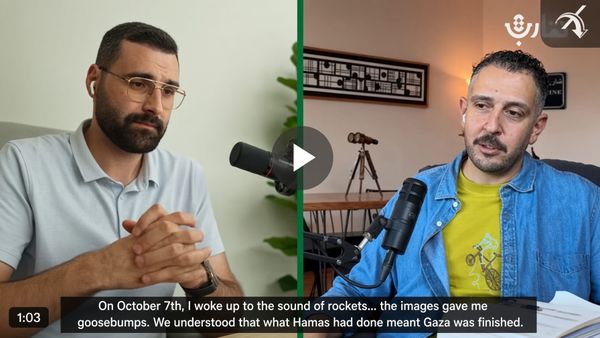
Every time you come across their crying tweets, remember them as they were in this video on October 7. pic.twitter.com/5RXx2ndxEk
— נועה מגיד | Noa magid (@NoaMagid) August 26, 2026
The demonstration effect
Palestine Action, the third designated entity, has operated out of the United Kingdom since July 2020. Treasury's designation documents attacks on British defense infrastructure and military installations, millions of dollars in damage to military equipment, and physical injuries to UK law enforcement personnel. The UK government proscribed Palestine Action under Section 1 of the Terrorism Act of 2000 in July 2025.
The detail OFAC adds to the UK proscription is the transnational dimension. Palestine Action "promoted its violent, criminal, and terrorist acts on social media, encouraging the use of similar tactics internationally, including within the United States and along the U.S.-Mexican border."
Soviet active measures doctrine had a term for this. "Demonstration effect." The purpose of a visible, publicized act of political violence was not only the immediate damage. It was the export of the operational model. A successful tactic carried out in one country and promoted internationally served as a template, a proof of concept for aligned groups elsewhere. The promotion was itself an operational act. Palestine Action's social media promotion of its attack methods for American use follows that procedure with digital tools the KGB's Service A could not have imagined but would have recognized instantly in function.
OFAC designated Palestine Action under the same E.O. 13224 provision as Autistici Inventati. Material support for acts of terrorism.
The legal framework and the policy context
The legal authority OFAC applied across all three designations is E.O. 13224, which defines terrorism as "violent acts and acts dangerous to human life, property, or infrastructure, that appear to be intended to intimidate or coerce a civilian population, or to influence the policy of a government by intimidation or coercion." OFAC's FAQ 1190 states explicitly that the United States does not sanction persons for political speech or constitutionally protected activities. The 2026 U.S. Counterterrorism Strategy identifies violent far-left terrorist groups as one of three major terrorist threats. The State Department acted on November 13, 2025, targeting Antifa groups. Treasury's action follows.
Secretary Bessent's language at the July Ministerial on The Resurgence of Political Terrorism framed the threat in terms the August 26 designations now operationalize: "globally networked and politically-motivated terrorists, particularly far-left terrorists, are increasingly embracing organized, deadly violence in pursuit of their objectives."
The procedures outlived the Soviet Union because they work.
Globally networked. The phrase is accurate, and it describes an organizational problem older than the groups being designated. The PFLP's front-behind-a-front architecture, Autistici Inventati's ideological vetting process for access to encrypted infrastructure, Palestine Action's transnational promotion of its attack model. None of these are novel organizational innovations. They are adaptations of a documented set of procedures developed by Soviet intelligence, exported to client movements, and inherited by successor organizations that may not know or care where the playbook originated.
A front organization that shares leadership and fundraising with the entity it fronts for, but maintains a separate name and public identity, is harder to designate, harder to sanction, harder to dismantle than a single named entity. When OFAC sanctioned Samidoun in October 2024, Masar Badil was already operational with the same leaders doing the same work under a different name. The architecture anticipated the sanction.
That is the point the StB manual made in 1961. The layered structure is not a disguise. It is a continuity device. The August 26 designations targeted three nodes across that structure. The procedure that generated them will generate the next node when the current ones are blocked. It has been doing so, under various names and across various continents, for more than sixty years.
The designations, mapped
Share, Comment, and Support Our Work
Share this. Restack it. Forward the email. That's the whole ask.
Support the work. The reporting above took real digging and a sourcing check before a word got published. If you want the bigger version of it, paid subscribers are what gets it there. Become one and help fund the next one.
Disclaimer: This website may contain images, videos, and other media that have been generated or modified using artificial intelligence (AI) tools. Such content is created for illustrative purposes and is not intended to represent real events, people, or objects.