Blood Money and Body Armor: How the UAE Hired American Veterans to Kill Its Political Enemies
$1.5 Million a Month to Kill a Politician: The UAE Mercenary Program That Used Your Tax Dollars Spear Operations Group ran a targeted killing program in Yemen. Its recruits were Special Forces, Navy SEALs, and Green Berets trained at U.S. taxpayer expense.

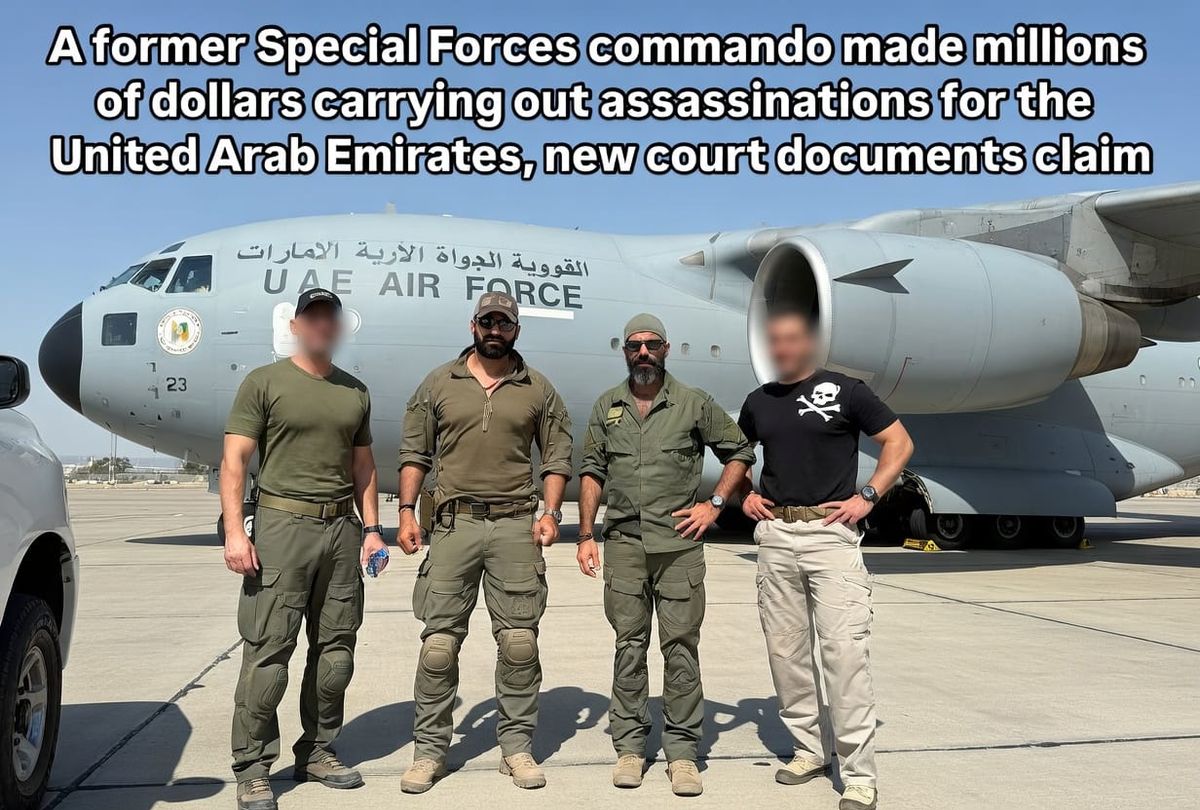
The price was $1.5 million per month, plus bonuses for confirmed kills. The recruits were former U.S. Special Forces operators, Navy SEALs, and Army Green Berets. The client was a U.S. ally. The targets were politicians.
A federal civil lawsuit unsealed in San Diego last week makes the institutional structure of that arrangement visible for the first time in a U.S. courtroom. The plaintiff is Anssaf Ali Mayo, a member of Yemen's parliament who survived a bombing at his party headquarters on December 29, 2015. He has lived in exile in Saudi Arabia ever since, separated from his wife and children, whom he sees once a year.
The defendants are Abraham Golan, an Israeli-Hungarian contractor who founded Spear Operations Group in Rancho Santa Fe, California, in August 2015; Isaac Gilmore, a former Navy SEAL who became Spear's chief operating officer; and Dale Comstock, a former Army Special Forces operator who allegedly ran the killing team on the ground for $40,000 a month plus bonuses. The lawsuit, brought under the Alien Tort Statute, accuses all three of war crimes, crimes against humanity, and attempted extrajudicial killing.
None of that is disputed. The defendants have already said it publicly.
"There was a targeted assassination program in Yemen," Golan told BuzzFeed News in 2018. "I was running it. We did it. It was sanctioned by the UAE within the coalition." In a 2024 BBC documentary, Gilmore confirmed that the UAE provided target cards to Spear. Mayo's name was on one of them.
The question now before the court is whether a U.S. federal venue will hold American citizens and a U.S.-based firm legally accountable for what amounts to a foreign assassination contract conducted under cover of an ally's military flag.
Who Set the Price and Who Brokered the Deal
The deal was not negotiated directly between Golan and the UAE government. It was brokered by Mohammed Dahlan, a former head of the Palestinian Authority's Preventive Security Organization in Gaza and long-standing adviser to UAE Crown Prince Mohammed bin Zayed Al Nahyan.
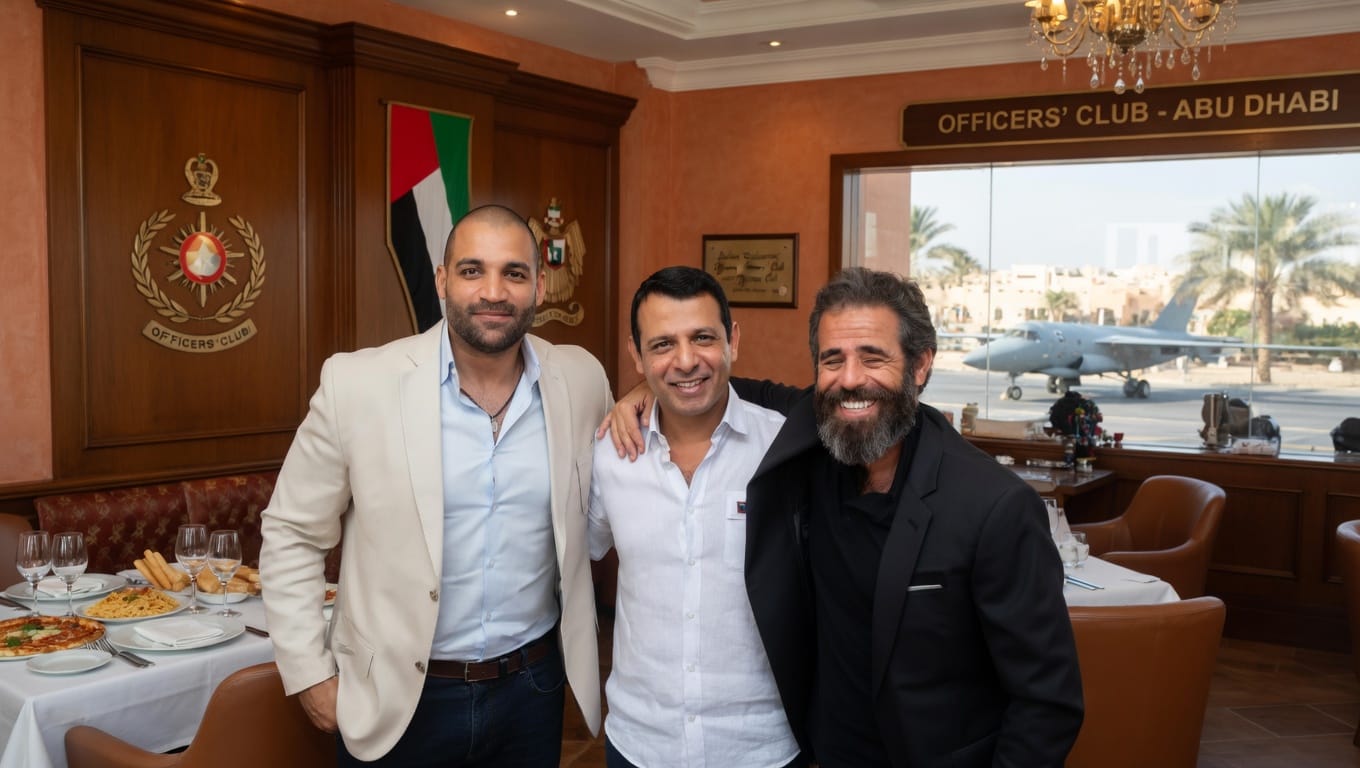
According to the lawsuit and the original 2018 BuzzFeed investigation by Aram Roston, Dahlan arranged a lunch meeting at an Italian restaurant inside the officers' club of a UAE military base in Abu Dhabi. He told Golan and Gilmore the assignment was to "disrupt and destroy" al-Islah, Yemen's second-largest political party, which the UAE designates as a Muslim Brotherhood affiliate. Many analysts classify al-Islah as a legitimate opposition party.
Golan and Gilmore had one condition before signing. They insisted on being formally incorporated into the UAE Armed Forces structure and receiving target lists from uniformed UAE military officers. Golan explained the logic directly: the UAE uniform and dog tags would make the legal difference "between a mercenary and a military man" if the operation was ever exposed.
The UAE signed off. Dahlan signed off. The contract started.
The Infrastructure of a Killing Program
Once the deal was in place, recruitment moved fast. By December 2015, a team had been assembled and was boarding a chartered jet at Teterboro Airport in New Jersey. The plane carried body armor, specialized tools for constructing explosives, military rations, and three cases of Basil Hayden's bourbon — difficult to source in Yemen, the suit notes.
Comstock was recruited separately. According to the lawsuit, Golan met with him at a $7 million, 7,000-square-foot estate in a San Diego suburb. Golan put $40,000 cash on the table. Comstock took it and took the job.
The target assigned to the December 2015 operation was Mayo. The reason: he was a senior figure in al-Islah, which the UAE wanted eliminated. The method: plant an explosive device loaded with shrapnel at the front entrance of the party's Aden headquarters, then finish off survivors with small arms. A booby-trapped SUV would serve as a secondary device.
Drone footage of the attack was published by BuzzFeed in 2018. It shows the approach, the detonation, a large explosion, and then a second blast from the vehicle. Mayo had been warned minutes before and fled. He was five minutes from home when he heard both explosions. He assumed, at the time, that it was just another episode of Yemen's civil war.
He has spent the decade since in exile.
What the UN Found and What the U.S. Has Not Done
A UN panel of experts cited in the lawsuit found "reasonable grounds to believe that the United Arab Emirates are responsible for the 10 assassinations in Aden" that it investigated. The human rights organization Reprieve investigated 160 killings in Yemen during the period Spear was active. Only 23 of those killed had documented links to any armed group.
According to the Center for Justice & Accountability, which is representing Mayo, the U.S. government has not prosecuted any of the defendants. Golan currently lives in Westport, Connecticut. Gilmore is a San Diego resident. Comstock lives in Indonesia.
The UAE, which has denied targeting political opponents and characterizes its Yemen operations as counterterrorism, has not responded to the federal filing. The Emirati foreign ministry did not respond to requests for comment from the Associated Press.
No U.S. agency has publicly confirmed whether the Spear program was known to American intelligence. The 2018 BuzzFeed investigation noted that experts considered it nearly impossible that U.S. officials would have been unaware: the UAE is a close military partner whose forces the United States has trained at virtually every level.

The Incentive Structure That Explains Everything
The UAE had three documented reasons to run this program, according to the lawsuit. First, Iran's support for the Houthis made Yemen a proxy battleground. Second, control of the Gulf of Aden would allow the UAE to bypass the Strait of Hormuz, which Iran has repeatedly threatened to close. Third, the UAE wanted al-Islah eliminated as a political force.
Golan and Gilmore had their own reasons. A $1.5 million monthly retainer and performance bonuses created a straightforward economic incentive. The Alien Tort Statute has never been used to successfully prosecute a case with this profile. The odds of accountability were, by design, low.
The lawsuit is asking a federal court to change that calculation. It seeks compensatory and punitive damages, attorney fees, and a permanent injunction barring further targeting of Mayo.
Dahlan, who arranged the original deal, is not a defendant. He has not been charged in any jurisdiction. He currently serves as a senior adviser to the UAE Crown Prince and was reportedly influential in negotiating the Abraham Accords in 2020.
The Central Question

American taxpayers funded the training of these operators. American law governs their conduct. A U.S.-incorporated firm ran the program. The target was a foreign elected official. The client was a U.S. treaty partner.
The lawsuit does not allege government complicity. It does not need to. The institutional question writes itself: what controls exist on the post-service conduct of U.S. military personnel when a foreign sovereign with a checkbook is the buyer?
The answer, at present, is a federal civil court in San Diego and a Yemeni lawmaker who barely made it out of his own office alive.
 Gene Goodwin