DSA voted to abolish the republic. Out loud. On the record.
DSA DSA DSA

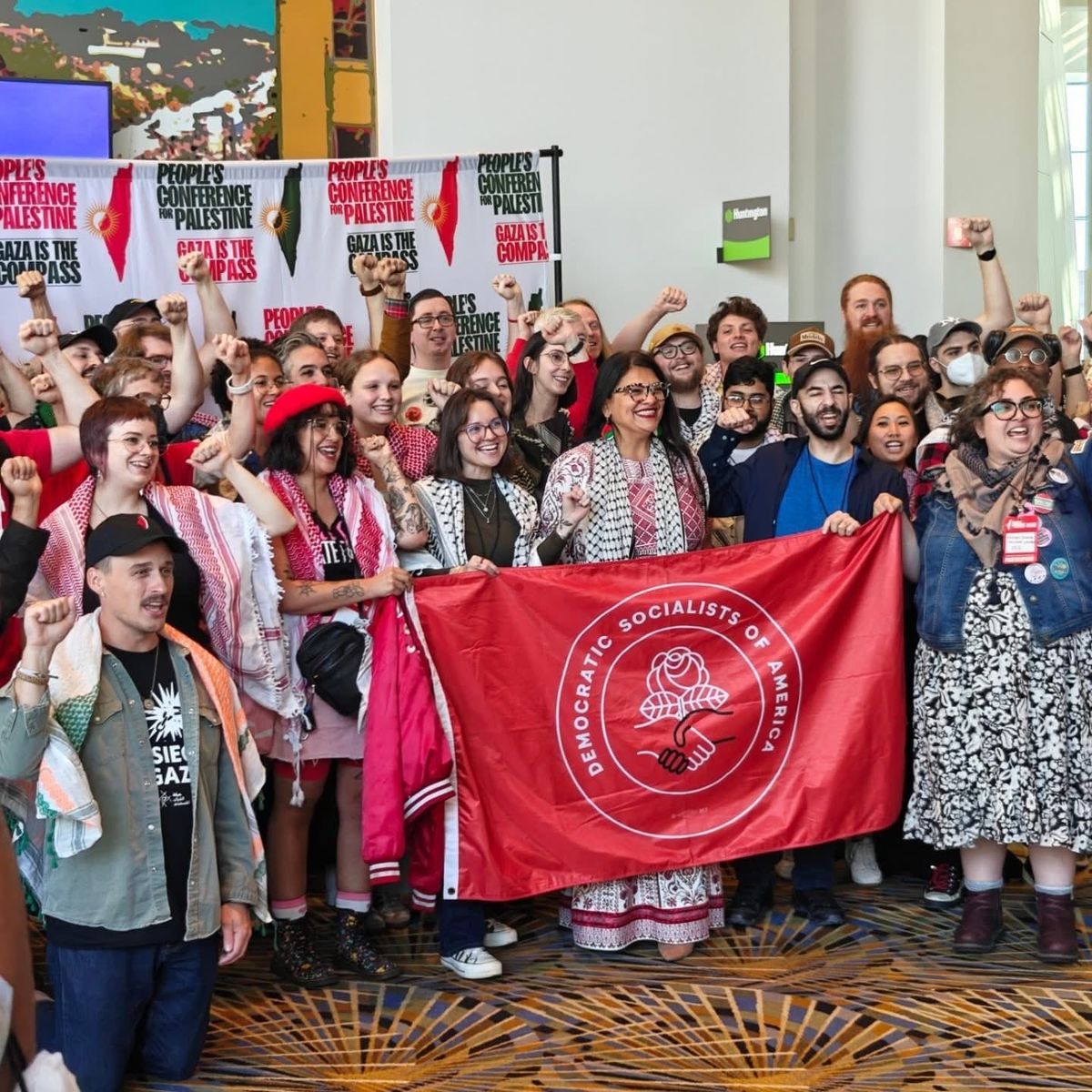
The Democratic Socialists of America just voted to scrap the Senate, the presidency, and the Supreme Court. The Soviets I grew up with would have recognized the language. So would the people who wrote it.
Stu Smith of City Journal sat with the minutes of a meeting most people will never read, and pulled out a sentence worth the whole afternoon. In his reporting on the Democratic Socialists of America's new platform, one line stops you cold. The DSA's governing body voted to replace the president and the Supreme Court with an executive and a judiciary chosen by and subordinate to Congress.
🚨 DSA’s top leadership just adopted a platform calling to abolish the Senate, replace the president and Supreme Court, abolish the “carceral forces” of the state, grant amnesty to all illegal immigrants, and that is just the tip of the iceberg.
— Stu Smith (@thestustustudio) June 17, 2026
My latest for @CityJournal! pic.twitter.com/3GJE7qE6CC
Read that again. Not reform the separation of powers. End it. One elected chamber would appoint the executive, appoint the courts, and answer to nothing above itself. I have read documents like this before, in another language, from another century. They always call it democracy. They always mean the opposite.
The platform is called Workers Deserve More! The exclamation point is theirs. Earlier this month the DSA's National Political Committee, the body that functions as its board of directors, adopted it. And the presidency line is only the headline.
The same document commits the organization to abolishing the United States Senate. To defunding the Department of War and closing overseas bases. To ending every economic sanction, including the ones on Iran, Cuba, and Russia. To universal amnesty for illegal immigrants. And to what it calls, in plain text, abolishing the carceral forces of the capitalist state. Smith reports it aims to win the battle for democracy, draft a new constitution, and build a new society from the ground up.
Here is the part that should hold your attention. These are not slogans shouted from a back row. They are positions, debated for two months in committee before they ever reached the floor, and the people defending them know exactly what the words mean.
🚨 Hasan Piker Calls NYC-DSA the “Vanguard” of a Socialist Struggle Across America
— Stu Smith (@thestustustudio) June 12, 2026
At NYC-DSA’s “A City to Win” rally with Hasan Piker, Piker framed New York City’s Democratic Socialists of America as “the vanguard of a struggle” taking place across the country, telling the room… pic.twitter.com/irxbDfrUFI
Cliff Connolly of the Marxist Unity Group caucus told the committee the truth out loud. The point of the Senate, the president, and the Supreme Court, he said, is to give the ruling class levers to pull when popular legislation passes the House. His example: the Supreme Court striking down student debt relief. The court told the legislature no. In the system Connolly wants, nothing can tell the legislature no. That is the entire design.
Watch how the so-called moderates handle this. They do not push back. They sequence it. Sarah Milner of the Reform and Revolution caucus admitted the language might be off-putting, then described the amendment as a vision for transforming the American state to allow the implementation of socialism. NPC co-chair Ashik Siddique conceded that abolishing the Senate is radical, then added that more and more people are coming to see it as reasonable. Notice the move. The position never softens. The window slides toward it.
This is the oldest trick in the manual, and I say that as someone who grew up watching it run. You state the maximal goal, you repeat it until it sounds ordinary, and you let your elected people walk toward it at whatever speed the moment allows. The gap between the demand and the achievable is not a problem to be solved. It is the method itself.
And the demands are no longer theoretical. Sidney Carlson White of the Marxist Unity Group argued that the police-abolition amendment gives elected officials room to work toward the goal, by weakening police unions and redirecting funding, especially, he said, now that the DSA has taken executive power in New York and is responsible for the actions of the police.
🚨 “Zohran is literally attempting to do what conservatives say we want to do, which is provide gender affirming care to anyone who wants it for free. We're gonna fly people in and pay for their hotel rooms.”
— Stu Smith (@thestustustudio) August 4, 2025
That’s Daniel Goulden, a member of NYC DSA’s Steering Committee,… pic.twitter.com/3qPLC3kqKI
Hold onto that clause. This is not a debating society drafting wish lists in a rented hall. The organization holds power in the largest city in the country, and its governing body is writing down, in advance, what it intends to do with that power. Katie Sims of the Socialist Majority Caucus saw the exposure and warned that carceral abolition would put endorsed candidates at odds with the platform exactly as the DSA pushes those candidates toward alignment. She lost the argument. The prison-abolition demand passed sixteen to eight. The candidates are expected to catch up.
The platform was never ratified at a convention, and it does not need to be. Smith reports it functions as the organization's platform regardless, timed as a soft reboot to fire up the membership before the Socialists Summit in Chicago at the end of July. One NPC member called the document what a horizon of power looks like. It is a candid phrase. They are telling you the destination.
So the only real question is whether anyone outside that hall is reading as carefully as the people inside it. Smith read it. Now you have. Send it to someone who hasn't.
Reporting and primary sourcing for this piece is drawn from Stu Smith, "The Democratic Socialists of America Just Adopted a Radical New Platform," City Journal, June 17, 2026. The Unredacted credits City Journal for the original reporting.