FBI Seized $15 Billion and Freed Thousands of Slaves. You Weren't Supposed to Notice.
The FBI seized $15.2 billion, dismantled four of the largest scam compounds on earth, and freed thousands of trafficked workers. It is the largest forfeiture in American history. The press treated it like a weather report.

There is a particular kind of story the American press no longer knows how to tell, and this is one of them. Not because it is complicated. Because it is good news of a sort that flatters the wrong people.
Here is the news. The largest asset forfeiture in the history of the United States government has taken place. Fifteen point two billion dollars. Four of the largest scam compounds on earth dismantled. Thousands of trafficked human beings walked out of captivity. Eight thousand internet terminals switched off. Ten thousand Americans reached in time to keep the savings they were minutes from wiring to a stranger. FBI Director Kash Patel put the figures on the record on the last day of July, the cumulative haul of a sixteen-month campaign called Operation Blackout that ran through Cambodia, the Emirates, Myanmar, and Thailand. You could be forgiven for not having heard of it. That is the second story, and in some ways the more important one.
Operation Blackout took down 4 of the largest scam compounds on earth.
— FBI Director Kash Patel (@FBIDirectorKash) July 31, 2026
$15.2 BILLION seized.
Thousands of trafficked workers freed.
8,000 internet terminals shut off.
10,000 Americans already saved from losing their life savings.
The mission is results.
The end. pic.twitter.com/wN4vTpQwSl
The heart of the money is a single defendant. On the eighth of October last year, a federal grand jury in the Eastern District of New York returned an indictment against Chen Zhi, who goes by Vincent, the founder and chairman of a Cambodian conglomerate called Prince Holding Group. Wire fraud conspiracy. Money laundering conspiracy. The case is docketed 1:25-cr-00312, and anyone who wants to doubt a word of this can pull it. Alongside the indictment the Justice Department filed a civil forfeiture complaint against roughly 127,271 bitcoin sitting in wallets whose private keys Chen controlled, worth about fifteen billion dollars the day the government took them. The department called it the largest forfeiture action it has ever brought. The coins are in federal custody now. Chen is not. He is at large, which is its own small comment on the reach of even a record-setting case.
Understand what Prince Group presented itself as, because the disguise is the point. On paper it was a legitimate empire, real estate and financial services and consumer goods, dozens of corporate entities spread across more than thirty countries, the kind of glossy multinational that sponsors conferences and buys respectability by the yard. What the indictment describes underneath the glossy shell is a system of at least ten forced-labor compounds inside Cambodia, where trafficked workers were made, under threat of violence, to run the confidence scheme the trade calls pig butchering. The method was patient. An American would be cultivated for weeks, befriended, flattered, courted, and then walked step by step into a fake investment platform the organization owned outright, until the savings were gone. The proceeds were washed through crypto mining and property and every other channel that looks clean in a spreadsheet. The Treasury named Prince Group a transnational criminal organization. Its sanctions office, working with the British, put 146 individuals and entities on the list. These are not rhetorical flourishes. They are a designation and a roster, and they will still be there when the news cycle that ignored them has forgotten its own name.
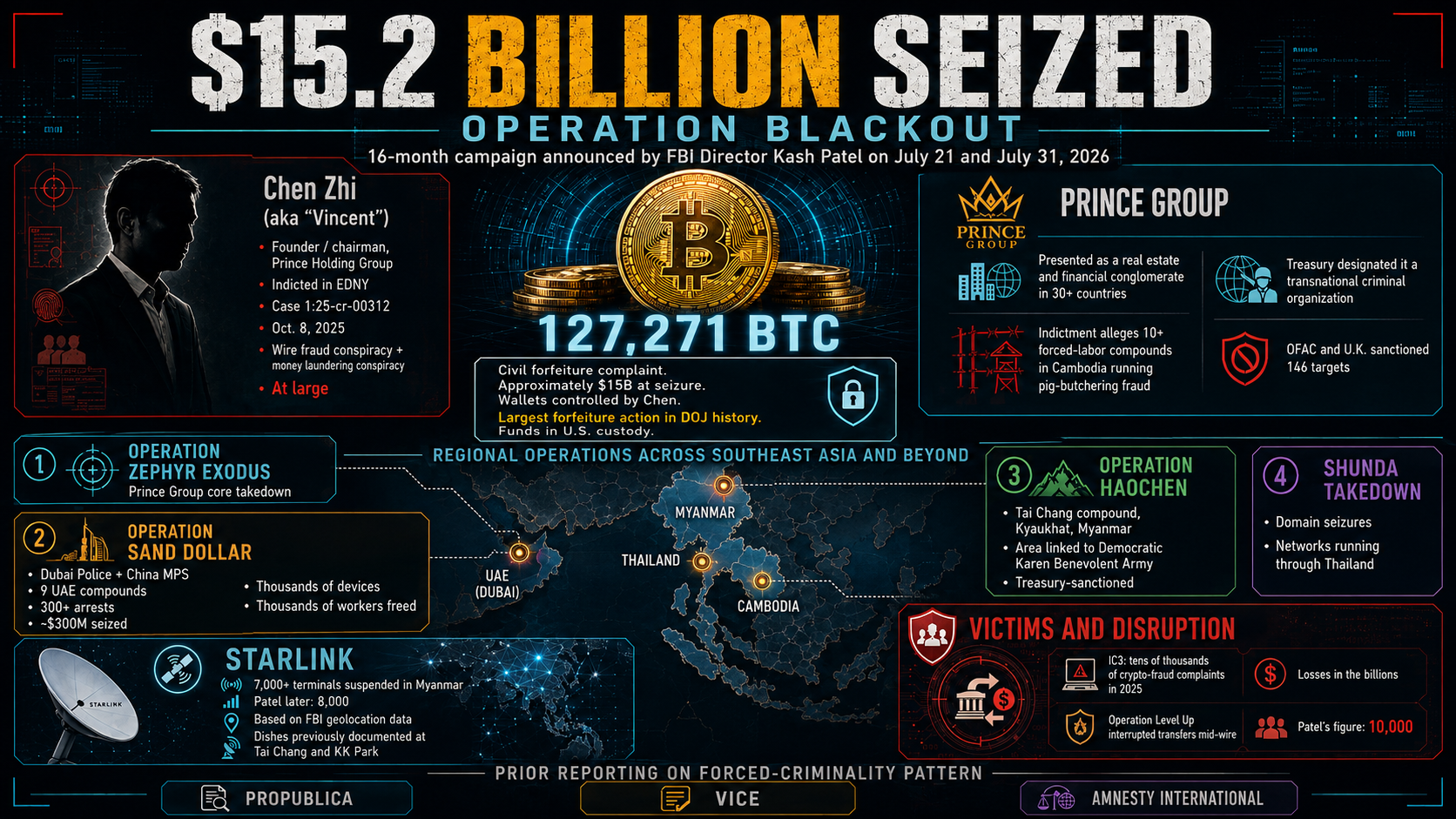
The forfeiture was only the center of the thing. Blackout was the umbrella, and each operation beneath it closed a different door. Zephyr Exodus took the Prince Group core. Sand Dollar, run jointly with the Dubai Police and, remarkably, China's Ministry of Public Security, struck nine compounds in the Emirates, produced more than three hundred arrests, seized around three hundred million dollars, hauled off thousands of devices, and freed thousands more workers. Haochen went into the Tai Chang compound at Kyaukhat in Myanmar, an area tied to an armed faction the Treasury had already sanctioned for exactly this kind of predation. A fourth strand, the Shunda takedown, broke networks running through Thailand. This is what coordinated looks like when a government decides it is serious. Four theaters, several foreign services, one continent-spanning criminal architecture pulled apart at once.
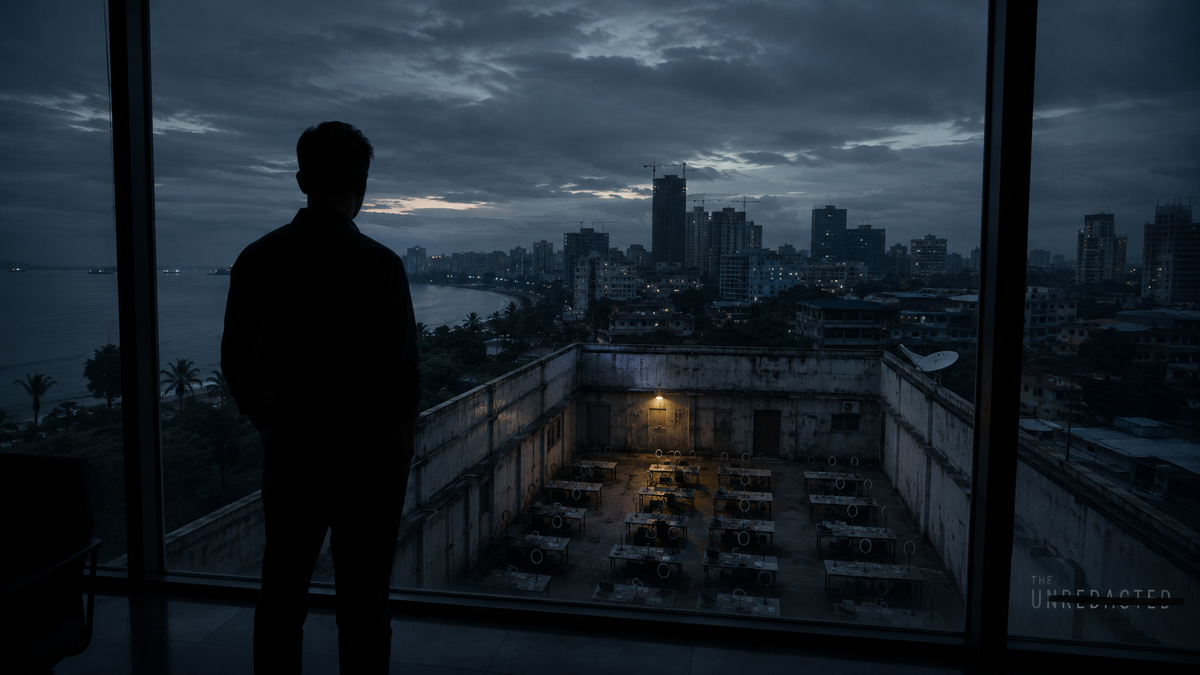
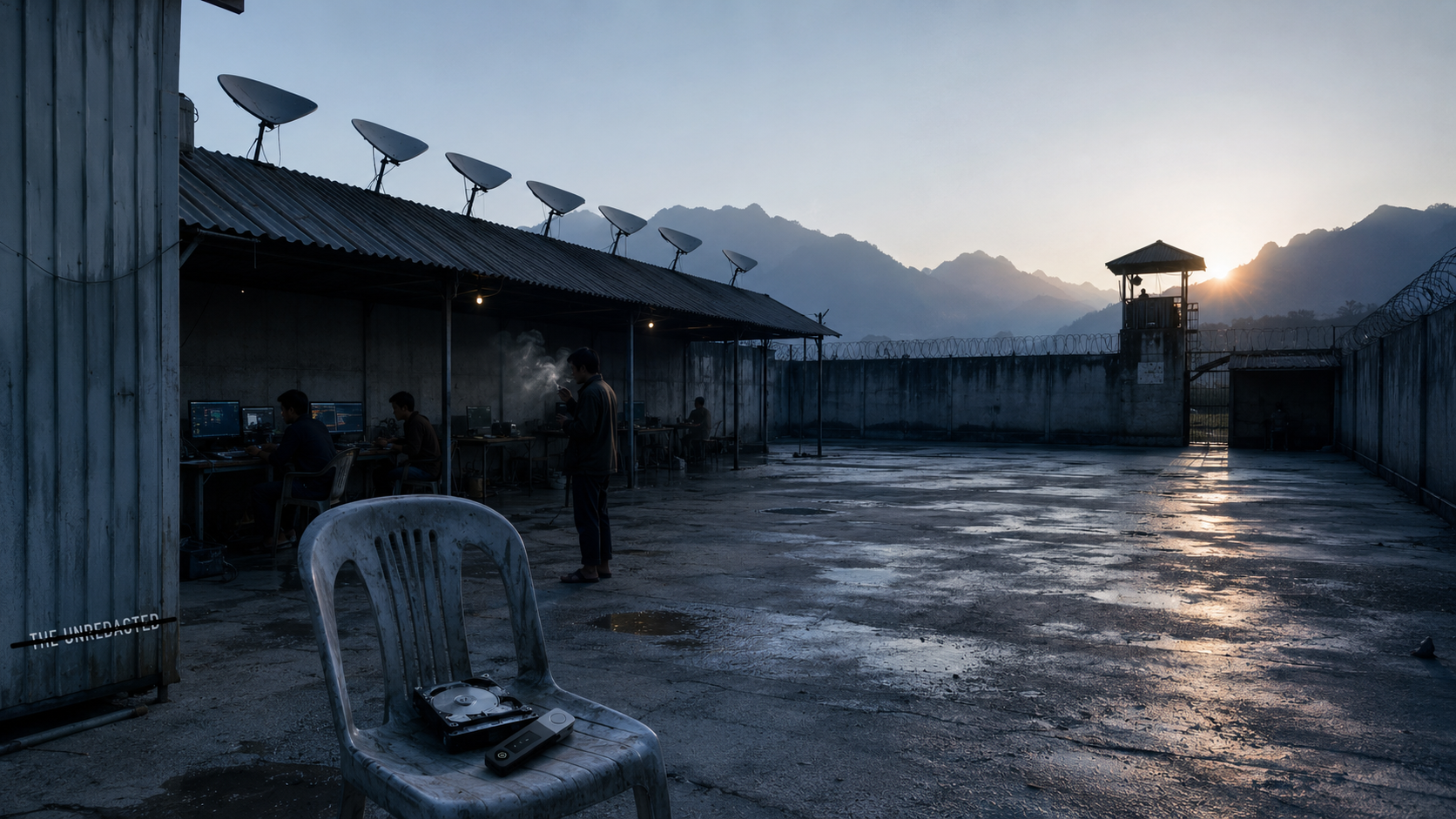
The detail that ought to have made this irresistible to any editor with a pulse is the Starlink piece. The Myanmar compounds ran on satellite internet, dozens of dishes bolted to the rooftops at Tai Chang and at the notorious KK Park, documented in court warrants before the FBI ever moved. The Bureau handed SpaceX the geolocation data and SpaceX cut service to more than seven thousand terminals, a number Patel later rounded to eight thousand. Sit with what that means. The entire industrial apparatus, the thing that reaches out of a walled compound in Southeast Asia and into a retiree's phone in Ohio, depends on a signal from orbit. Turn off the signal and the machine goes deaf. The government found the off switch and threw it. If that is not a story, nothing is a story.
And it was never secret, which is the part that should keep an honest journalist up at night. The people held in those compounds were recruited with fake job listings, promised respectable work in offices and hotels, stripped of their passports at the gate, and then beaten, shocked with electric batons, and locked in dark rooms when they missed a fraud quota or tried to run. None of this is a revelation of the raids. ProPublica reported it. VICE reported it. Amnesty International reported it. The blockchain traces were public. The satellite imagery was public. The survivors were talking for years. The victims on the other end of the wire, the Americans, filed tens of thousands of complaints with the FBI's own crime center in a single year, losses stacking into the billions, while a separate program quietly caught people mid-transfer and stopped the money before it left. Everything needed to act was lying in the open the entire time. What was missing was not evidence. What was missing was that anyone in a position to move decided the thing was worth moving on. Somebody finally did.
So why the silence. Patel has remarked on it himself, the strange quiet that followed an announcement of this magnitude, and he is not wrong to be puzzled by it, though I suspect he knows the answer as well as I do. A story like this pays out to the wrong account. It credits a federal law enforcement apparatus a great many people in the press have spent a decade teaching their readers to distrust. It arrives wrapped in Elon Musk's satellites and a Republican administration's enforcement priorities, and it asks the reader to feel something uncomplicated, gratitude, at a moment when the prevailing mood insists that nothing is ever that simple and no institution is ever that good. Fifteen billion dollars recovered and thousands of slaves freed is a headline that refuses to fit the frame, so it was quietly set down and left unread. That is not a conspiracy. It is something duller and worse. It is a profession that has lost the reflex to recognize a genuinely large thing when the largeness cuts against its priors.
The seizures happened. The indictment is real and public. The sanctions list is real and public. The terminals went dark and the workers walked free. All of it stands in the record whether or not a single additional word is written about it, which is the quiet dignity of a fact. But a free press exists precisely to notice the enormous thing, especially the enormous thing that does not flatter its assumptions, and on this one it did not notice. Someone took fifteen billion dollars off a slaving empire and turned thousands of captives loose. The least the rest of us owe them is to say so out loud.
📬 Share, Comment, and Support Our Work
Share this. Restack it. Forward the email. That's the whole ask.
Support the work. The reporting linked above took weeks of tracing records, filings, and on-the-record statements. It doesn't happen on faith. If you find it useful, become a paid subscriber and help fund the next one.