Everyone Should Watch "Beneath Sheep's Clothing." It's Free on X Right Now.
Julie Behling's documentary sees a Soviet pattern in American schools and churches. The pattern is real. The chain of command she implies is not, and the difference is the whole argument.

For a limited time, Julie Behling's 2024 documentary Beneath Sheep's Clothing is streaming free, in full, on X and at beneathsheepsclothing.movie. Charlie Kirk called it important and said it would open your eyes. I've watched it three times. That's the recommendation. The price of finding out for yourself is currently zero.
Here is what it is. Behling was a missionary in post-Soviet Russia in the 1990s. She earned dual master's degrees in Russian Language and Literature and Russian and East European Studies, and wrote her thesis on underground Christian movements in the USSR and the tactics the Soviet state used to crush them. Starting around 2008, she says she began seeing the same tactics at work in American schools and churches. The film is her case for that parallel, and she does not make it alone.
"Everyone must see this important film. It will open your eyes." - Charlie Kirk, TPUSA. Watch Beneath Sheep's Clothing in its entirety for FREE here on X and at https://t.co/RFpWXcpyJm. Please consider donating to help us reach more people - https://t.co/3M09g02nZy. pic.twitter.com/AMMKfgAQQJ
— Julie Behling - Beneath Sheep's Clothing (@JulieABehling) May 27, 2026
The argument: infiltration, not invasion
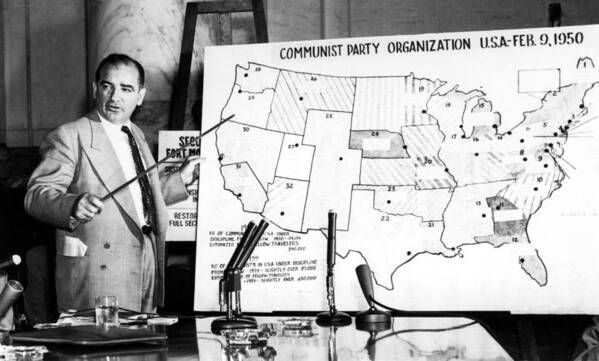
The film opens with the Soviet playbook. Its organizing idea comes from the Marxist theorist Antonio Gramsci: you do not need to storm the gates if you can capture the institutions that shape how people think. Education. Religion. Family. Media. Law. Take those, and you rewrite the operating system of a culture without firing a shot.
The historical sections are the film's strongest. Testimony from Soviet-era survivors like Timothy Chmykhalov puts a human face on what ideological capture actually costs. Archival footage of uniformed children, denunciations, and compromised clergy grounds the abstraction in lived experience.
Then the film argues that the same pattern is visible in America now. In schools, it points to identity-focused curricula and equity frameworks crowding out core instruction. In churches, it points to social-justice rhetoric cloaked in Christian language, shifting focus from doctrine to activism. That is the "sheep's clothing" of the title. You do not have to accept every parallel to find the argument worth two hours.
Why watch it yourself
This is the honest pitch. Watch it with your guard up. The film builds its case from history and observable trends, and where it draws causal lines, decide for yourself whether they hold. James Lindsay breaks down how what he calls "Woke Marxism" swaps class for race, gender, and identity. Trevor Loudon traces networks and funding. The production is tight and the tone is urgent without tipping into hysteria.
A film that can survive a skeptical viewing is worth your time. This one is built to be argued with, not nodded along to. That is exactly why you should watch it while it costs nothing.
Watch now, because "now" is the whole point
The people who made it opened the gate. It is free in full on X and at beneathsheepsclothing.movie. That will not last. Watch it once. If it is what I think it is, you will watch it again, and you will send it to someone.
Don't take my word for it. Take the two hours while they're free.
Watch here:
"Everyone must see this important film. It will open your eyes." - Charlie Kirk, TPUSA. Watch Beneath Sheep's Clothing in its entirety for FREE here on X and at https://t.co/RFpWXcpyJm. Please consider donating to help us reach more people - https://t.co/3M09g02nZy. pic.twitter.com/AMMKfgAQQJ
— Julie Behling - Beneath Sheep's Clothing (@JulieABehling) May 27, 2026
📬 Share, Comment, and Support Our Work
Share this. Restack it. Forward the email. That's the whole ask.
Support the work. The reporting linked above took weeks of tracing records, filings, and on-the-record statements. It doesn't happen on faith. If you find it useful, become a paid subscriber and help fund the next one.
 Gene Goodwin