Ivanka Trump was reportedly targeted in an assassination plot linked to an IRGC-trained terrorist.
The choice of Ivanka Trump as target is not random. The IRGC and Kata'ib Hezbollah operate inside a logic that tracks family relations and religious identity, not titles. Once she carried a portfolio in the administration that authorized the killing of Soleimani, she carried it forever.

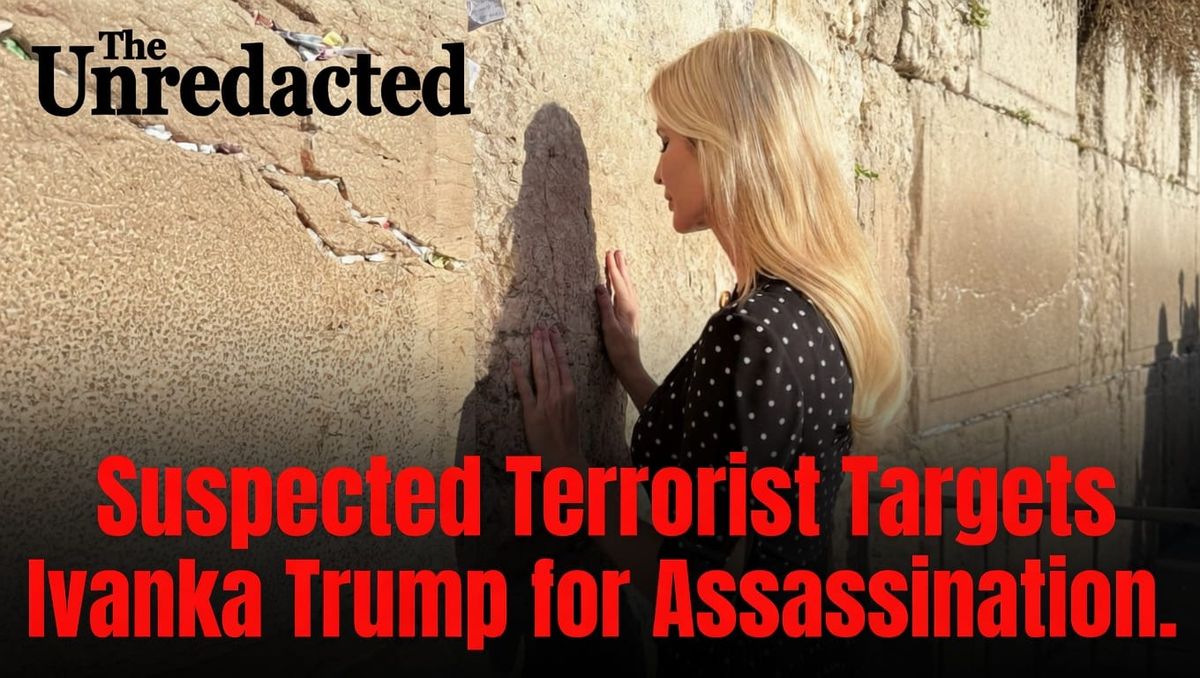
The thwarted assassination plot against Ivanka Trump by Iranian operative Mohammad Baqer Saad Dawood Al-Saadi is not a localized security anomaly. It is the logical, terrifying culmination of a decade of Washington policy.
For two administrations, the American foreign policy establishment has operated on a singular, delusional premise: that the Islamic Republic of Iran can be bribed, coddled, and integrated into a "regional security architecture." This fantasy, engineered during the Obama era and sustained by a permanent bureaucratic class, has effectively immunized Tehran's terror apparatus, allowing its shadow war to cross the Atlantic and pull up to the gates of a $24 million estate in Palm Beach.
NEW: Federal prosecutors have charged 32-year-old Iraqi national Mohammad Baqer Saad Dawood al-Saadi with plotting nearly 20 terror attacks targeting Jewish institutions and U.S. citizens across the United States, Canada, and Europe. pic.twitter.com/QhEAhStfSj
— I Meme Therefore I Am 🇺🇸 (@ImMeme0) May 18, 2026
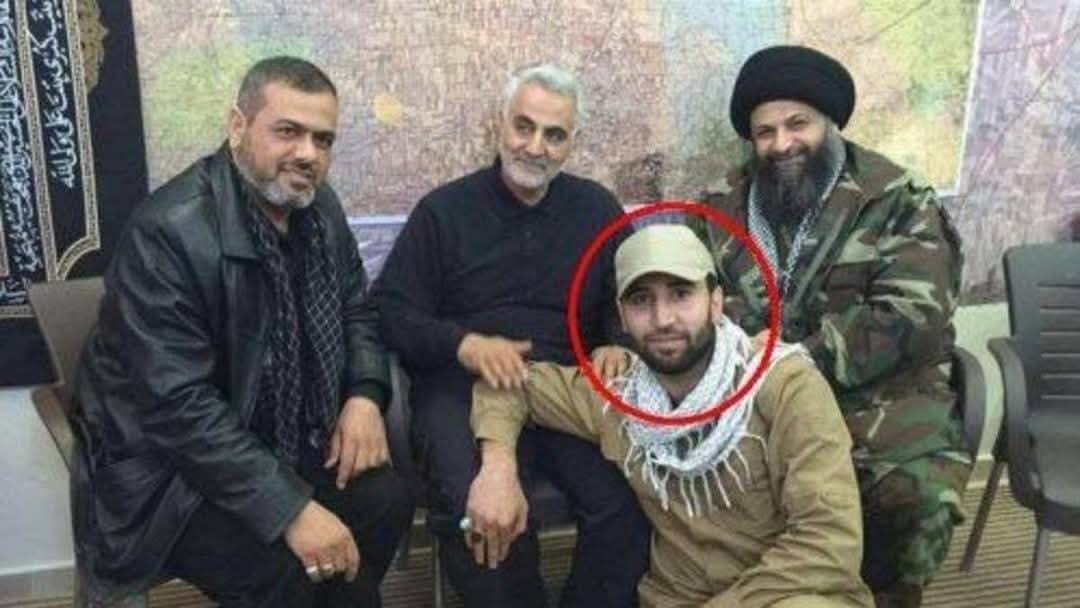
The details of the Department of Justice indictment read like a autopsy of Western deterrence. Al-Saadi, a thirty-two-year-old operative trained in Tehran by the Islamic Revolutionary Guard Corps, was not acting on a personal whim. He is the son of Iranian Brigadier General Ahmad Kazemi, who died in 2006, and was raised in Baghdad under the wing of Qasem Soleimani. When a US drone strike justly eliminated Soleimani in January 2020, the Washington echo chamber panicked, mourning the loss of a "rational actor" with whom they wanted to sign deals. Meanwhile, Al-Saadi viewed Soleimani as a father figure and went to work organizing a campaign of tribal blood revenge. He explicitly told associates that they needed to kill Ivanka to burn down the house of Trump the way he burned down our house.
The operational freedom Al-Saadi enjoyed reveals the terrifying depth of the institutional compromise. To move across international borders, Al-Saadi did not use the forged documents of a desperate migrant. He traveled on an official Iraqi service passport. This is a highly privileged travel document issued to government employees that requires the direct authorization of the Iraqi Prime Minister. This passport granted Al-Saadi access to VIP airport lounges and allowed him to bypass standard security screenings inside Iraq. To the rest of the world, he was an official representative of an American-subsidized state. To Tehran, he was a lethal asset managing a global kinetic network.
Jiu-Jitsu is more than a martial art. Rooted in tradition and guided by the 753 Code, it builds physical confidence, mental clarity, and emotional balance@IvankaTrump pic.twitter.com/BtJ3TtdhQe
— Valente Brothers (@ValenteBrother) March 21, 2025
 Gene Goodwin
Using a religious travel agency in Baghdad as his logistical front, Al-Saadi successfully engineered a transnational terror spree spanning Europe and North America. The federal indictment connects him to a minimum of eighteen attacks and attempted operations. In March alone, his network carried out the firebombing of the Bank of New York Mellon in Amsterdam, the arson of a Jewish temple in Rotterdam, and a shooting at the United States consulate building in Toronto. In April, his operatives stabbed two Jewish victims in London and firebombed a synagogue in Liège, Belgium. The targeting of Jewish sites was entirely deliberate, dovetailing directly with his plotting against Ivanka Trump, who converted to Orthodox Judaism in 2009.
The security apparatus in Washington has spent the last several years re-tooling its vast capabilities to hunt down domestic political dissidents, manufacturing internal enemies to justify its own expansion. While intelligence agencies looked inward, an IRGC-trained terrorist was walking through European capitals, taking smiling selfies in front of the Eiffel Tower, and snapping pictures of a missile he promised would pound the strongholds of Zionism. He then turned his sights on Florida, securing detailed architectural blueprints of Ivanka Trump's private family residence.
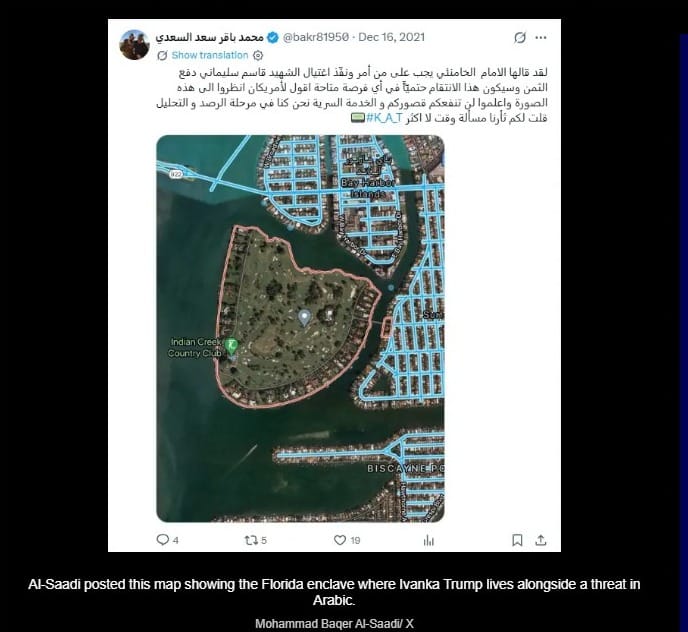
He was so confident in his immunity that he posted a map of her specific residential enclave on X, formerly Twitter, openly mocking the Secret Service in Arabic by stating that neither palaces nor bodyguards would protect them, warning that his revenge was merely a matter of time.
The physical reality of this threat was confirmed by Elizabeth Tsurkov, the New Lines Institute fellow who was kidnapped in Baghdad and held hostage by Kata'ib Hezbollah for nine hundred and three days. Following her release, Tsurkov confirmed that Al-Saadi was a high-ranking asset within the very militia network that held her captive, maintaining direct access and receiving constant operational resources from Brigadier General Esmail Qaani, Soleimani's successor.
Al-Saadi was finally intercepted in Turkey while in transit to Russia, and he now sits in solitary confinement at the Metropolitan Detention Center in Brooklyn. His arrest is a testament to raw law enforcement intervention, but the system that allowed him to get this close remains completely intact. The Washington elite will undoubtedly treat this as an isolated law enforcement success to avoid answering the fundamental question. How does an operative funded by America's chief geopolitical adversary obtain state-backed diplomatic travel documents, run an international bombing campaign against Western and Jewish targets, and map the floor plans of a former first family's home while our multi-billion-dollar intelligence bureaucracy looks the other way?
The answer is as simple as it is grim: the policy class has decided that preserving their diplomatic fiction with Tehran is worth the price of American security.
Gene Goodwin