THE DSA MAYOR WHO WANTS TO DISARM NEW YORK

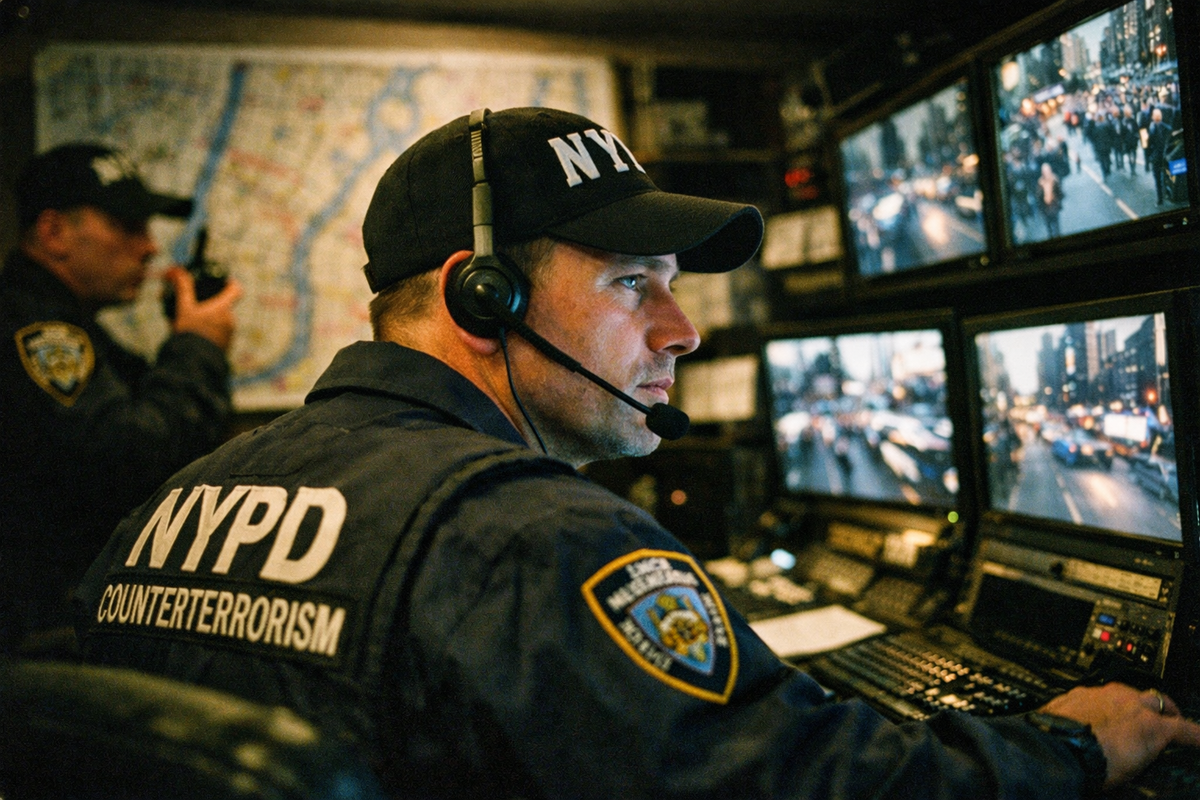
Mamdani and his DSA apparatus are coming for the one unit that stands between this city and the next catastrophe
Saturday morning at Grand Central Terminal, a man who called himself Lucifer boarded the 7 train in Queens, rode it into Midtown with a machete, and started slashing strangers. Three elderly riders went down across two platforms before two NYPD detectives tracked Anthony Griffin, 44, to the 4/5/6 level, ordered him more than 20 times to drop the weapon, and shot him dead when he advanced on them with the blade extended. Law enforcement sources told CNN that Griffin had more than a dozen prior arrests, including for menacing with a sharp object. He was loose on the subway anyway.
Grand Central was not exceptional. The subway system has seen riders pushed onto tracks, set on fire, and slashed at random for years. This is the background radiation of daily life in a city of more than eight million people, where random violence against strangers has become so routine that most incidents don't make national news. New Yorkers have largely absorbed it.
BREAKING: Witness tells @PIX11News that NYPD shot a man who wouldn’t drop a knife after slashing two people in Grand Central Station this morning - 4, 5 and 6 line. pic.twitter.com/teSSiMjLkk
— Eileen Lehpamer (@EileenLehpamer) April 11, 2026
Five weeks before Grand Central, the city came within faulty bomb construction of a mass casualty event. On March 7, two Pennsylvania teenagers, Emir Balat, 18, and Ibrahim Kayumi, 19, drove into Manhattan carrying homemade bombs packed with TATP, the explosive known as the Mother of Satan, and headed for Gracie Mansion during a protest outside the mayor's residence. Balat threw the first device into the crowd. He dropped the second near a group of NYPD officers before jumping a barricade. Neither bomb detonated as designed. Cops tackled both men in seconds.
The federal indictment that followed was detailed and damning. Dashcam audio from the drive captured the two calculating kill counts, eight to 16 dead at once, up to 60 if the crowd was dense enough. A notebook recovered from the vehicle contained TATP recipes, shrapnel specifications, and contingency plans targeting festivals, parades, and public gatherings. Explosive residue and bomb-making supplies were found in a Pennsylvania storage unit they had rented days before. After his arrest, Balat wrote a pledge of allegiance to ISIS.
Kayumi told investigators he was aligned with the organization and had been consuming its propaganda. Both had wanted a higher body count than the Boston Marathon bombing. FBI Director Kash Patel, U.S. Attorney Jay Clayton, and NYPD Commissioner Jessica Tisch stood together to announce the eight-count indictment. The department kept the city alive.
These two incidents are not aberrations. They are data points in a continuous series. A city this size, this dense, this politically targeted, generates threats at volume. The question is never whether the next incident is coming. The question is whether the right people are positioned to stop it.
Mayor Zohran Mamdani has a clear answer to that question, and it is the wrong one.
Islamophobia is a word none of us should accept.
— Gene Mikhov (@genegmb) March 9, 2026
Islamophobia is a word used to silence opposition and demonize others.
We need to reject the premise of Islamophobia completely.
Especially when they hurl IED's at you, screaming Aloha Snackbar fanboys of Zohran Mamdani! pic.twitter.com/qktMgr4ldb
His mission, stated from the campaign trail and pressed forward every week since he took office, is the disbandment of the NYPD's Strategic Response Group. The SRG is roughly 700 officers trained specifically for the situations that kill people at scale: volatile crowds, mass deployment to high-risk incidents, and the now-documented overlap between protest activity and organized terrorism. Mamdani wants them gone. Not restructured. Not reformed. Gone. He said it plainly in a post on X, promising to disband the SRG because it had cost taxpayers money in lawsuit settlements and "brutalized countless New Yorkers exercising their First Amendment rights." He repeated it in January. He repeated it after the Gracie Mansion bombs failed.
This week, his chief of staff, Elle Bisgaard-Church, went on NY1 and said it again: "The mayor has been very clear on our commitment to disband SRG." On April 9, Mamdani told reporters directly that if he and Commissioner Tisch cannot reach an agreement, he will overrule her. "Yes, ultimately I hold the final decision no matter which department or agency we're speaking about."
The lawsuit argument deserves to be examined and then dismissed. The settlements critics invoke came largely from the 2020 protests, a moment of genuine chaos in which policing decisions across the country went badly in multiple directions simultaneously. Misconduct should be prosecuted. Officers who cross the line should face consequences. That is a separate question from whether a specialized rapid-response unit of 700 officers is appropriate for a city of more than eight million people facing the documented threat environment described above. The academics who argue otherwise, the Alex Vitales of this world who built careers writing that policing itself is the pathology, have no answer for the man on the platform with the machete or the teenagers in the car with the bombs. Their framework simply excludes those people from the analysis. Mamdani has imported that framework wholesale into City Hall.
The mental health spending argument fares no better. New York State's Mental Hygiene system, covering mental illness, developmental disabilities, and addiction services, spent $10.7 billion in fiscal year 2026. That is not a rounding error. It is a serious, sustained public investment. The problems it addresses have not gone away. Jabez Chakraborty, 22, who had lived with schizophrenia for years, was in crisis in January when his family called 911 for an ambulance. Officers arrived instead. Body camera footage shows Chakraborty advancing on them with a large kitchen knife. He was shot four times.
He survived on a ventilator. Mamdani visited him in the hospital, lobbied the Queens DA not to file charges, and announced he was accelerating plans for a Department of Community Safety, projected to cost an additional $1 billion annually, that would send social workers in place of police to mental health calls. The footage of what happened when officers encountered Chakraborty exists. Anyone can watch it. The question of what would have happened if an unarmed social worker had walked through that door instead answers itself.
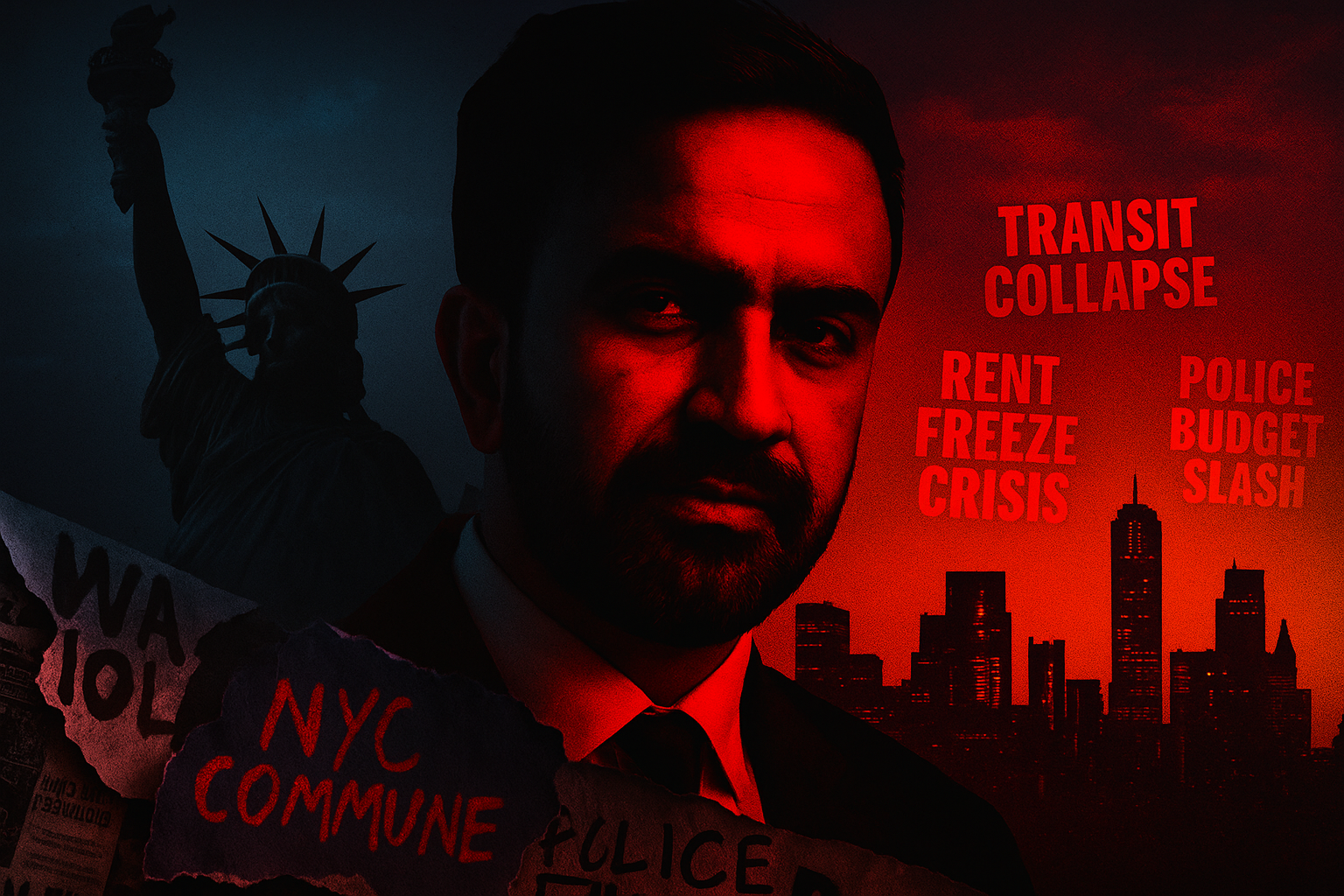
Mamdani is not approaching public safety as a policy problem. He is approaching it as an ideological project. The SRG is the symbol he needs to retire to prove to his Democratic Socialists of America base that he has not made peace with the police department his movement regards as an occupying force. The lawsuit settlements are the political cover. The rhetoric about decoupling counterterrorism from protest policing is the framing. None of it engages with the reality of what the SRG is for or what eliminating it would mean in practice.
What it would mean is this: the next time ISIS-inspired bombers target a protest outside a mayoral residence, the next time a machete attack unfolds across multiple platforms in a major transit hub, the next time a crowd situation degrades into violence faster than a standard patrol unit can respond, the specialized officers trained and equipped for exactly that contingency will not be there. Retired NYPD Chief of Department John Chell was direct about the implication. "If you take them away," he said, "you're kind of leaving the NYPD and the city naked."
The NYPD says it has been using its Strategic Response Group to respond to the ICE protests this week to ensure that protests stay peaceful. No arrests have been made@NYCMayor has said he wants to disband the unit.Yesterday he said this is still a pledge he “intends to fulfill” pic.twitter.com/yyrCjug8Cs
— Morgan McKay (@morganfmckay) January 9, 2026
Mamdani posted his gratitude to the officers who stopped Griffin at Grand Central. The ISIS indictment has not moved him. His chief of staff went on television the day after the machete attack to reaffirm the commitment to disband the unit. That tells you everything about how this administration processes information that contradicts its priors.
Palestine demonstrators kicks a door in at Grand Central pic.twitter.com/HMMBZOOVSc
— Steven Vago (@Vagoish) November 11, 2023
New York City is not a political science seminar. It is a target. The people who want to hurt it do not consult academic frameworks before they build bombs or board subway trains with machetes. The city needs more trained officers, not fewer. It needs specialized units that can respond to complex and rapidly evolving threats, not a Columbus, Ohio dialogue model studied by City Hall staffers on a field trip. It needs a mayor who reads the threat environment as it actually exists, not as DSA doctrine requires it to be.
Mamdani is not that mayor. The 700 officers of the Strategic Response Group are the difference between a city that can respond to what comes next and one that cannot. Disbanding them to satisfy a factional political commitment, in this threat environment, in this city, is not reform. It is negligence dressed in the language of civil liberties. And when the next attack comes, the people who paid for this choice will not be the ones who made it.