
NYC's Youth Violence Crisis Is Getting Worse — Even as the City Gets Safer
Homicides are at historic lows, but juvenile felony arrests hit 5,623 in 2025 — a 156% increase since 2018. Experts say gangs are exploiting a law meant to protect kids

NYC Youth Violence Is at Historic Highs
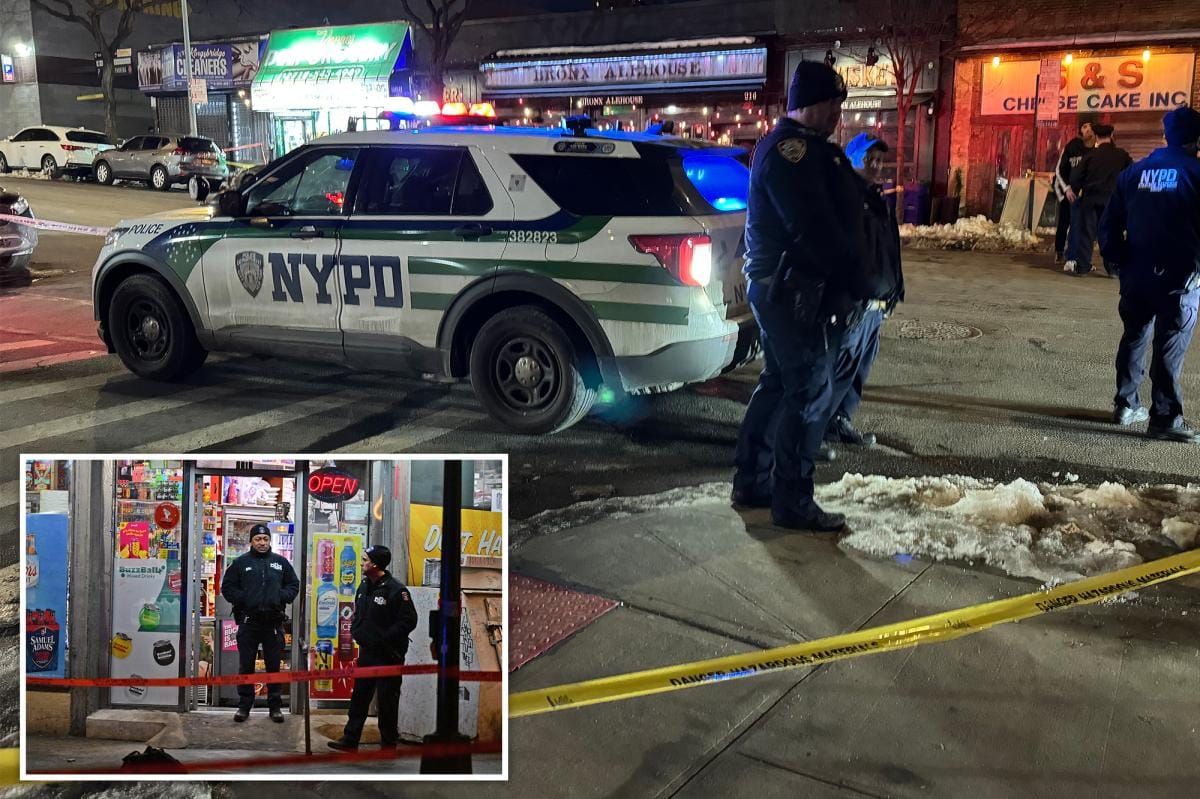
In 2025, youth violence in New York City reached unprecedented levels — the NYPD confirmed that 14% of shooting victims and 18% of shooters were minors, the highest figures recorded since tracking began in 2018. This surge is happening even as overall NYC crime dropped to historic lows, making the youth violence spike especially alarming.
🚨🇺🇸 | ATAQUE CON MACHETE A MENOR EN QUEENS
— Actualidad Mundial (@ActualidaMundo) April 30, 2026
Un adolescente de 13 años fue agredido por un grupo con machete, cuchillos y objetos contundentes tras una disputa que derivó en robo, cerca del Rufus King Park.
Le robaron la mochila y los zapatos. Fue trasladado al Hospital Infantil… pic.twitter.com/J3JtvFZCfe
The "Raise the Age" Law Effect
A central driver cited by law enforcement is New York's "Raise the Age" law, enacted in 2017 and fully implemented by 2019, which raised the age of criminal responsibility to 18 and allows defendants as young as 21 to be held in juvenile — rather than adult — detention. NYPD Commissioner Jessica Tisch has been explicit: gangs now deliberately recruit minors to commit robberies, assaults, and even shootings, knowing those recruits face far lighter consequences. In 2024, the NYPD made 486 juvenile gun arrests — a quarter-century record — and juvenile felony arrests jumped 9% to 5,623 in 2025.
Absolute Horrifying Sickening video shows NYC teen slam a girl to the ground and stomp on her head— after she refused to give him her number.
— Chris Goodwin (@ChrisGoodwin79) April 24, 2026
Awful beyond belief. pic.twitter.com/OFMym6iJFm
Gang Proliferation in Southeast Queens
Southeast Queens has been a specific hotbed. In November 2025, Queens DA Melinda Katz announced the largest single gang takedown in Queens history, indicting 32 members of the Bad-Co Ballout gang for at least 13 shootings and three homicides — many carried out near parks, public schools, and residential areas. Rival gang wars between crews like Floss Money Ballers and Blitz Gang 4 in South Jamaica have turned neighborhood parks into battlegrounds. Gang membership citywide is now at an all-time high, with members getting younger every year.
Nobody's watching: how New York's staged-crash industry stole $300 million in plain sighthttps://t.co/6jRHaKRb9N
— Gene Mikhov (@genegmb) April 29, 2026
Parks as Flashpoints
Parks concentrate unsupervised youth in tight spaces — making them natural collision points for rival crews. The killing of Jaden Pierre, a 15-year-old fatally shot at St. Albans Park on April 16, 2026, illustrates the pattern: what began as a water balloon fight with 300 teenagers escalated into a fatal shooting, which police investigated as possible gang violence. Residents say the sheer scale of youth congregating at parks without adequate programming or supervision creates conditions for violence to erupt quickly.
Social Media as Accelerant
Law enforcement officials note that social media fuels both recruitment and retaliation — gangs brag about violence online, which triggers counter-responses and escalating cycles of retribution. NYPD Commissioner Tisch noted that gang members actively use social platforms to "terrorize rivals" and amplify their reach. Individual risk factors like low impulse control and peer influence compound the effect, as research shows young people are significantly more likely to offend when their peers are delinquent.

What's Being Done
- Queens DA Katz's office conducted the largest gang takedown in borough history in late 2025
- The NYPD's Gun Violence Suppression Division has been executing targeted crew takedowns in Queens, Brooklyn, and the Bronx
- Lawmakers and advocates are pressing Governor Kathy Hochul to reform or roll back the Raise the Age law
- NYC Mayor Zohran Mamdani, who took office in 2026, has signaled a shift toward community-based safety responses alongside policing
The picture across NYC's five boroughs is a study in contrasts — youth violence surged into record territory in 2025 and carried that momentum into 2026, even as overall crime fell to historic lows. Here's a borough-by-borough breakdown:
A 14-year-old male was charged with murder in the gang-related Bronx subway shooting that killed an innocent bystander and wounded five other people last month.
— Crime In NYC (@Crime_In_NYC) March 15, 2024
The teen — who was wounded in the burst of violence and had been in custody since — was also charged Thursday with… pic.twitter.com/JBPYUJJrkH
The Bronx — Highest Concentration, Improving
The Bronx has historically accounted for roughly one-third of all NYC homicides, and that pattern held in early 2026 — 21 of 55 Q1 murders (40%) occurred there. However, the borough also showed the most dramatic improvement from NYPD intervention: the department's Youth Safety Zones, deployed along school commuter corridors and bus stops since September 2025, drove youth-related crime down 56.7% during deployment hours. The Bronx has been the primary testing ground for the program.
Queens — Deadliest for Youth in Spring 2026
Queens recorded 16 homicides in Q1 2026, a modest decline from 17 in Q1 2025 — but the smallest percentage improvement of any borough. More alarmingly, several of 2026's most high-profile juvenile violence incidents — the Rufus King Park machete attack, the St. Albans Park fatal shooting of 15-year-old Jaden Pierre, and a Jamaica sneaker robbery — all clustered in the Southeast Queens corridor in April alone. Queens accounted for approximately 30% of citywide murders through Q1 despite being the second-largest borough by population.
Brooklyn — Greatest Overall Improvement
Brooklyn saw the sharpest homicide drop of any borough — murders fell more than 57% in Q1 2026 (12 vs. 28 in Q1 2025), reaching levels described by Brooklyn DA Eric Gonzalez as the "safest start to a year in recorded borough history". But juvenile-specific incidents did occur: on January 4, a 17-year-old was beaten and stabbed by a group of teens inside the Livonia Avenue subway station in Brownsville, and felony assault borough-wide jumped 10% in January year-over-year.
Manhattan — Remarkably Low Murder Rate
Manhattan recorded only 4 homicides in Q1 2026 — a decline of more than 44% from the same period in 2025. Youth-involved incidents did emerge: a Times Square teen stabbing on April 26 involved a juvenile suspect with an existing robbery rap sheet, and a gang-motivated stabbing of a 17-year-old was reported in late March. But the density of NYPD presence in high-traffic corridors continues to suppress youth violence relative to outer boroughs.
Staten Island — Lowest Violence, No Q1 Murders
Staten Island recorded zero homicides in Q1 2026, with no significant juvenile violence incidents making headlines — a stark contrast to the other four boroughs.
The Youth Age Group Driving the Surge
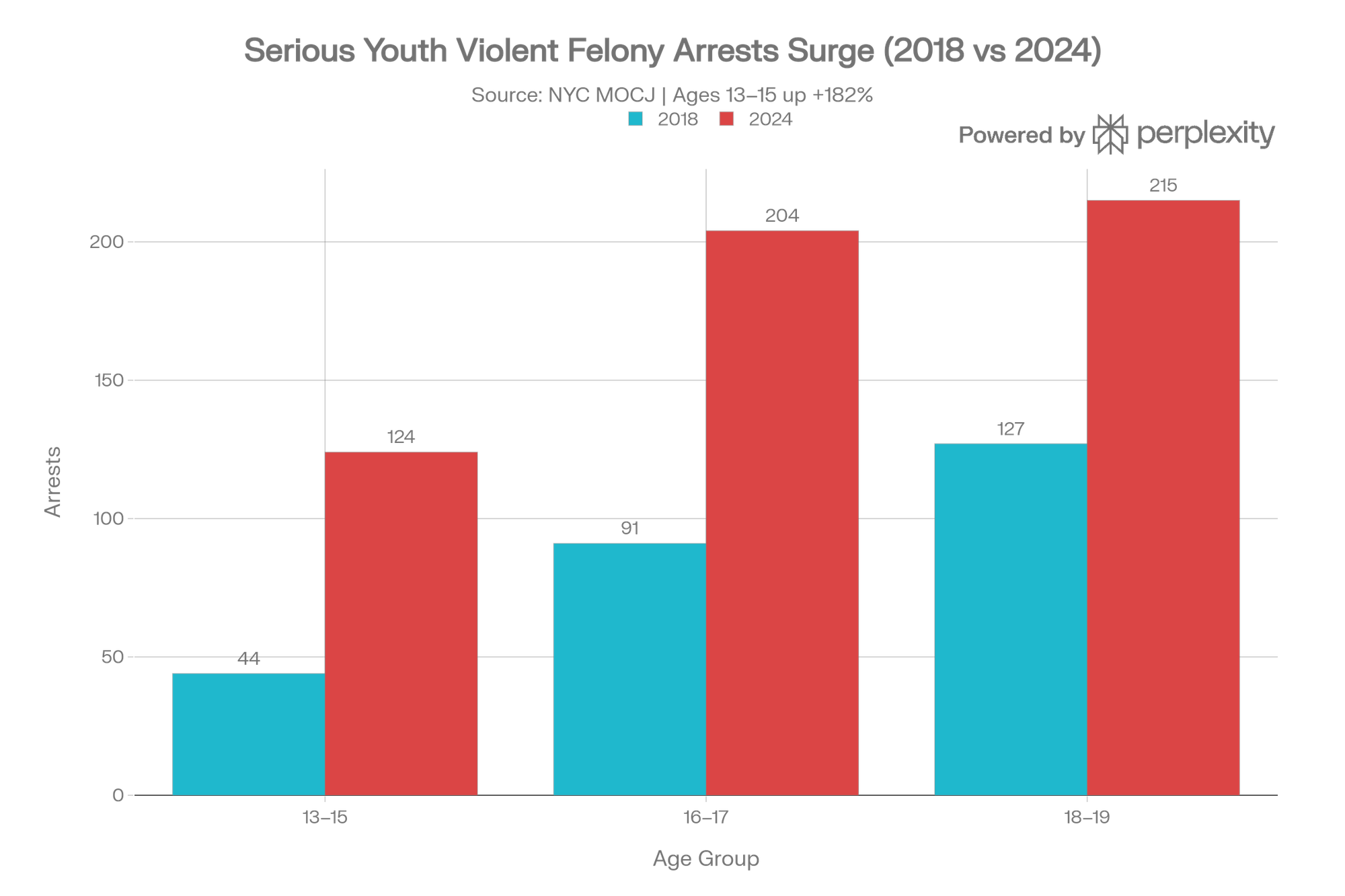
The most alarming structural trend cutting across all boroughs is the explosion in serious violent felony arrests among 13–15-year-olds, up 182% between 2018 and 2024 (from 44 to 124 arrests). Arrests of 16–17-year-olds for serious violent crimes grew 124% over the same period, and the under-18 share of all serious violent felony offenses reached 23.3% by mid-2025 — up from just 9.8% in 2018. Youth-related crime citywide is down 55% during NYPD Youth Safety Zone hours, suggesting targeted deployment is working — but incidents like those in Queens show the problem persists outside those corridors.
How to Submit Tips
Anyone with information is urged to contact:
- Crime Stoppers hotline: 1-800-577-TIPS (8477)
- Online: NYPDCrimeStoppers.com
- X/Twitter: @NYPDTips
- Spanish speakers: 1-888-57-PISTA (74782)
Tips can be submitted anonymously, and Crime Stoppers may offer a reward for information leading to an arrest. This incident is part of a disturbing wave of youth violence in Queens parks and neighborhoods that has alarmed residents and law enforcement in recent weeks.