The Northbound Pipeline: 89 Guns, an Afghan ID, and the Border Story No One Will Tell
Three men. Eighty-nine guns. Seventeen stolen. A Pakistani national carrying an Afghan ID concealed on his body, on Route 90, bound for Canada. The federal complaint says it all. The press will sanitize most of it. We will not.

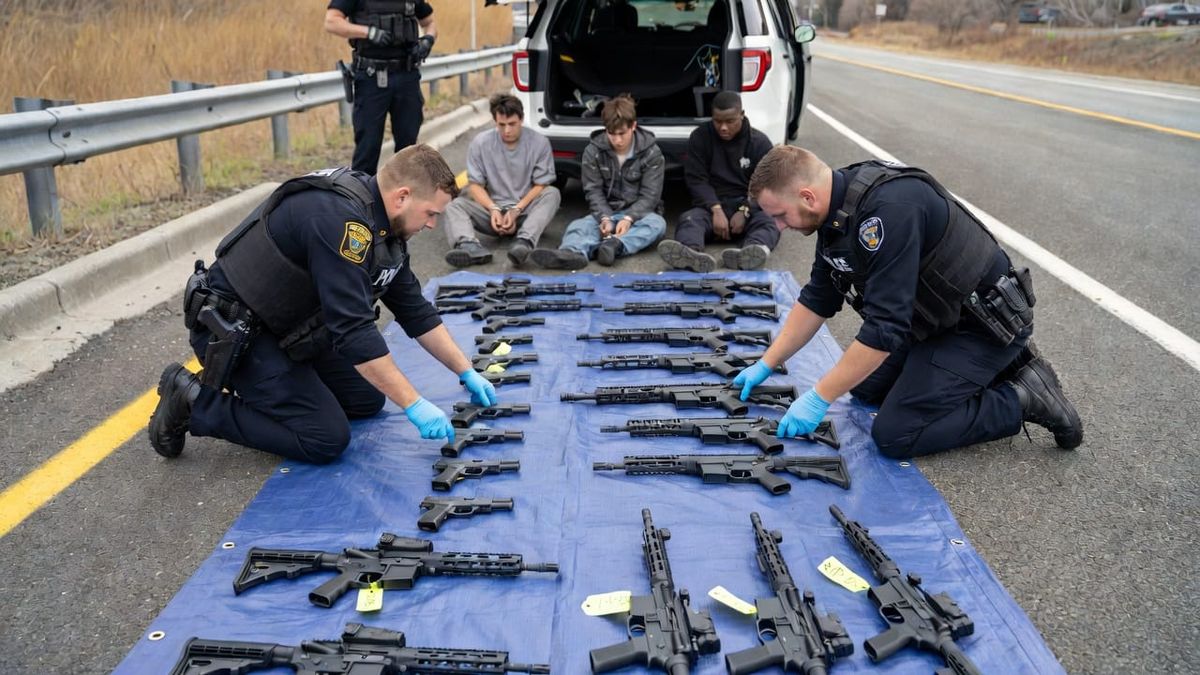
On or about May 7, 2026, three young men in a white Ford Explorer were pulled over on State Route 90 in upstate New York. According to the federal complaint unsealed in White Plains the next day, what New York State Police troopers found in that vehicle, and on the body of one of its occupants, ought to be the kind of story that leads every news bulletin in the country for a week.
Eighty-nine firearms. Seventeen of them stolen. Short-barreled rifles. A heavy suitcase concealing a small armory. Three defendants, two of them foreign nationals, one of them a Pakistani citizen with an Afghan identity document hidden in his buttocks.
It will not lead anything.
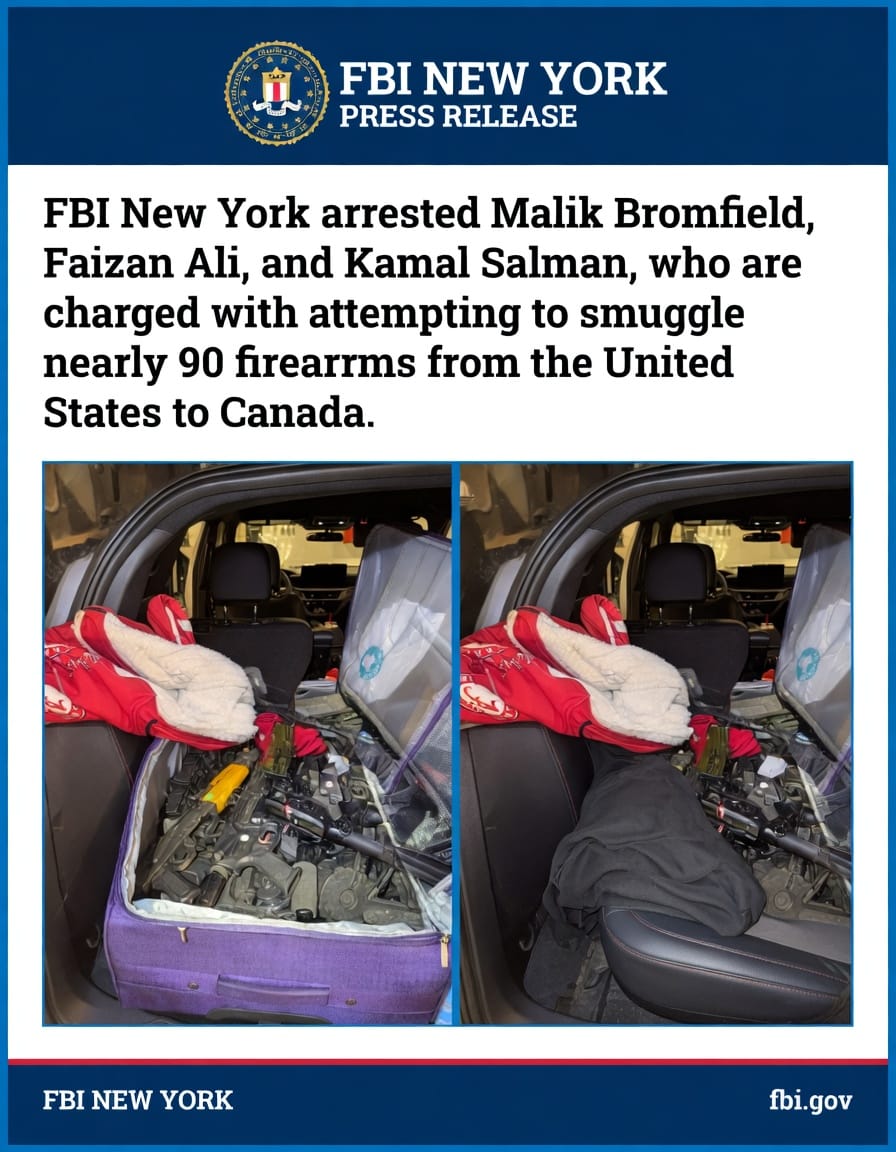
The defendants are Malik Bromfield, twenty-two, a Canadian citizen. Faizan Ali, twenty-five, a Pakistani citizen. And Kamal Salman, twenty-two, who holds three passports: Canadian, American, and Jordanian. The U.S. Attorney for the Southern District of New York, Jay Clayton, says the trio was attempting to smuggle the guns into Canada. They face charges that, in the aggregate, could put them in federal prison for the rest of their working lives.
That is the bare outline of the case. It is also where most reporting on it will end.
The detail that will not survive the rewrite into the wire copy is the one buried in the middle of the complaint. After the canine sweep and before the suitcase was opened, troopers asked Faizan Ali if they could search his person. Ali consented. What the trooper found, concealed in Ali's buttocks, was an expired Pakistani National Driving Permit. The permit had been issued to an Afghan national. The name on the permit was not Ali's.
Hold that detail in your hand. Turn it over.
A Pakistani citizen, riding through upstate New York with a Canadian and a tri-national, sitting on top of nearly ninety guns destined for Canada, was carrying a foreign identity document that belonged to someone else, from a country that has hosted millions of cross-border migrants, in the most intimate hiding place a man can use without surgical assistance.
There are two ways to read that. The first is incompetence. The second is operational discipline. People who travel with stolen identity documents concealed on their bodies are not amateurs taking a road trip. They are people who have been told, by someone, that the document might be needed, and that it cannot be allowed to surface in a wallet, a glovebox, or a search of luggage. They are people who have been trained, however informally, by other people who have done this before.
FBI New York, @SDNYnews, @nyspolice, and @ATFNewYork announced the arrests of Malik Bromfield, Faizan Ali, and Kamal Salman, who are charged with attempting to smuggle nearly 90 firearms from the United States to Canada.
— FBI New York (@NewYorkFBI) May 8, 2026
"These three defendants, including two foreign nationals,… pic.twitter.com/UQCunh4RgS
This is what gun trafficking looks like in 2026. It does not look like the made-for-television image of the southern-border drug mule. It looks like a Pakistani national in a Ford Explorer on Route 90, ferrying American guns to Canada, with someone else's Afghan paperwork tucked where a search is most likely to be cursory.
Route 90 is the spine of the northern smuggling corridor. It runs from Boston through Albany, Syracuse, Rochester, and Buffalo. From any point along it, a determined driver is within a tank of gas of a Canadian border crossing, a remote upstate access road, or the porous stretch of the St. Lawrence that runs through Akwesasne. The southern border gets the cameras and the campaign rhetoric. The northern border gets the guns, the fentanyl precursors, and the people the southern coverage trains us not to see.
The composition of the defendant group is not incidental. Bromfield is Canadian. Salman is Canadian, American, and Jordanian. Ali is Pakistani. None of them is from the communities that politicians and editorial boards have spent the last decade insisting are the source of America's trafficking problems. None of them fits the cartel iconography the country has been schooled in. They fit a different profile, one that the agencies who run our counterterrorism and counterproliferation desks recognize, and that the press, by long habit, declines to.
The agencies recognized it here. The case was led by the FBI's New York Hudson Valley Safe Streets Task Force, with the ATF and the New York State Police. James C. Barnacle, Jr., the FBI Assistant Director in Charge of the New York field office, took the unusual step of noting, in his official statement, that two of the three defendants are foreign nationals. He did not have to say that. He chose to. Federal officials do not freelance language in press releases. When that detail makes the cut, it is because the bureau wants it on the record.
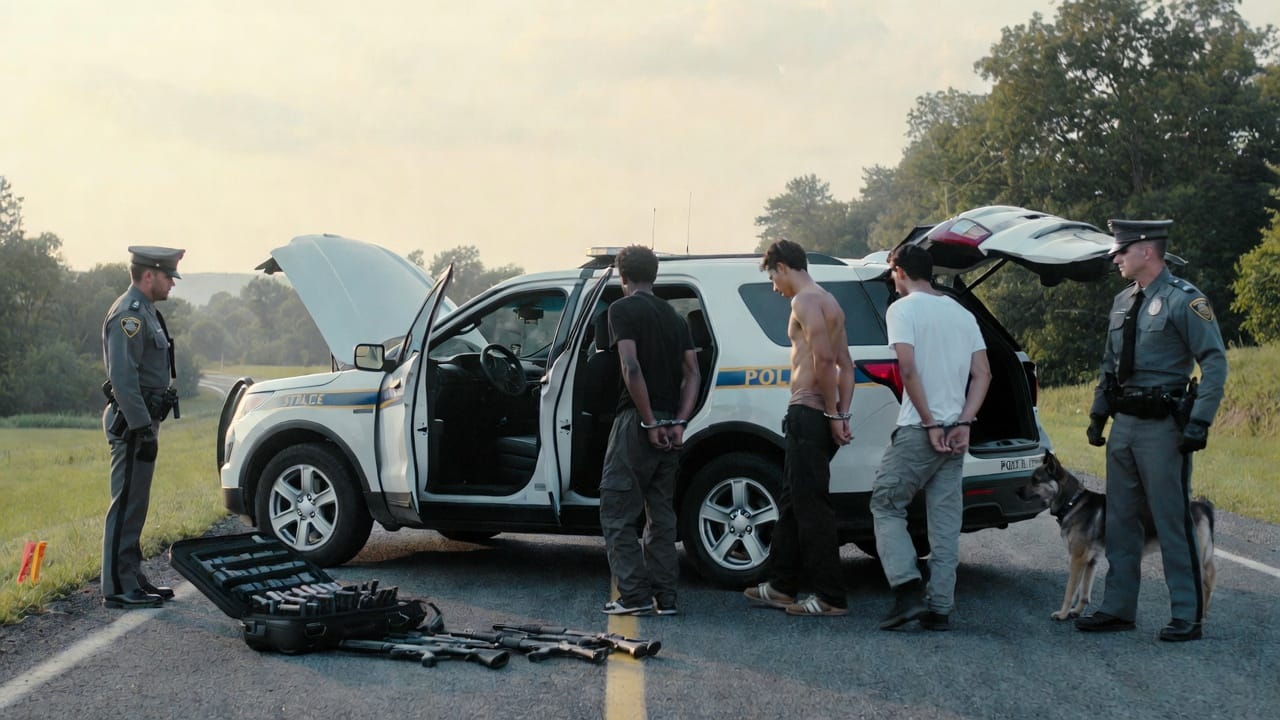
What is on the record is this. Three men, two of them foreign, one of them carrying an Afghan ID belonging to another person, were stopped on a known trafficking route with eighty-nine guns and seventeen of them stolen. They were going to Canada. They were caught because a New York State trooper paid attention to inconsistent and evasive answers, and because a dog did its job.
What is not on the record, but ought to be, is the longer chain. Where did the seventeen stolen guns come from? Whose names are on the original purchase paperwork for the other seventy-two? Who supplied them? Who paid for them? Who was waiting on the Canadian side? Who paid for Ali's travel, if there was air travel, or arranged his entry, if there was another route? Whose Afghan permit was that, and how did it come to be in the possession of a Pakistani national in upstate New York?
These are not rhetorical questions. They are the questions a competent prosecution will already be asking. Assistant U.S. Attorney John Sarlitto, who is handling the case out of the Southern District's White Plains division, is by all accounts a serious lawyer. The complaint he and his colleagues filed is tight and unusually specific. The detail about the permit is in there because it is going to matter. The bureau and ATF would not have surfaced the stolen-gun count if they were not already running the traces.
What the country will not get, unless publications outside the legacy press insist on it, is the connective tissue. The story will be filed under "gun trafficking" and forgotten by the end of the news cycle. The Pakistani national will become "one of the defendants." The Afghan ID will become a footnote, if it survives at all. The fact that a small army's worth of American firearms, including stolen ones, was minutes away from crossing into Canada, will become a passing line in a year-end roundup nobody reads.
The defendants are presumed innocent. The complaint is an allegation. Those caveats are the law, and the law is right to require them. But the document is also a window into a trafficking ecology that is not the one Americans have been told to watch for. It runs north, not south. It uses foreign nationals from Pakistan and identity documents from Afghanistan. It moves volume. It has discipline.
It got caught this time because of a traffic violation on Route 90. The next load is already on the road.
 Gene Goodwin