The Bund Is a Corpse. They Want You to Worship It Anyway.
A dead movement is back in fashion. Bundism died in 1945 alongside the Jews who believed working-class solidarity would protect them. Now its mourners want it to run for office again, eighty years after history settled the argument in blood.

There is a fashion this season among a certain class of American Jews. It involves dressing up a dead political movement in fresh clothes and parading it through the culture pages as a moral alternative to the State of Israel. The movement is the Jewish Labor Bund. It died in 1945. Its mourners have decided it should run for office again.
The pitch goes like this. Before there was Zionism, there was Bundism, a homegrown European socialism that promised Jews they could stay exactly where they were, organize alongside the working class, and be protected by the solidarity of their neighbors. No homeland required. No Hebrew required. Just Yiddish, socialism, and a concept the Bundists called doykeit, which translates roughly to "hereness." Where we live is our country. That was the slogan.
You can see why this appeals to people who want to call themselves Jewish while sharing their political cohort's contempt for the Jewish state. The Bund hands them a kosher certification for anti-Zionism. It lets them claim authenticity, history, and a tragic European glamour all at once. The actress Hannah Einbinder has gestured at it. The illustrator Molly Crabapple has built a book around it, published this April by an imprint of Penguin Random House and reviewed warmly by the New York Times. Even The Economist has gotten in on the act, presenting Bundism as the Jewish road not taken.
There is one problem with the road not taken. We know where it led, because the people who walked it are buried along it.
 Gene Goodwin
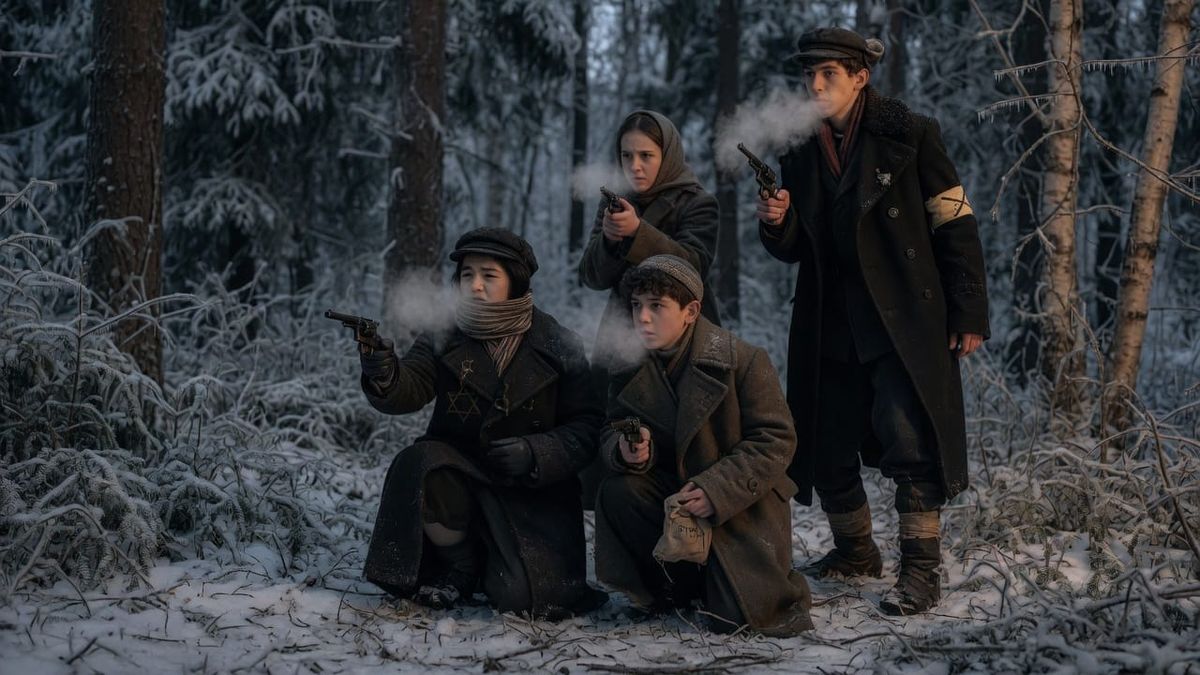
Debbie Lechtman, who runs the educational account @rootsmetals and is writing a book on Jewish history, laid out the case this week in Tablet, and the spine of what follows is hers. Her own family supplies the evidence. In February 1943, seventeen young Jewish partisans slipped out of the Ostrowiec ghetto in south-central Poland carrying twelve overpriced revolvers bought on the black market. They marched to a forest bunker near Kunów to link up with other fighters. The Polish Home Army, the resistance against the very same Nazi occupation, found them and threw a single grenade. That was the end of them.
 Gene Goodwin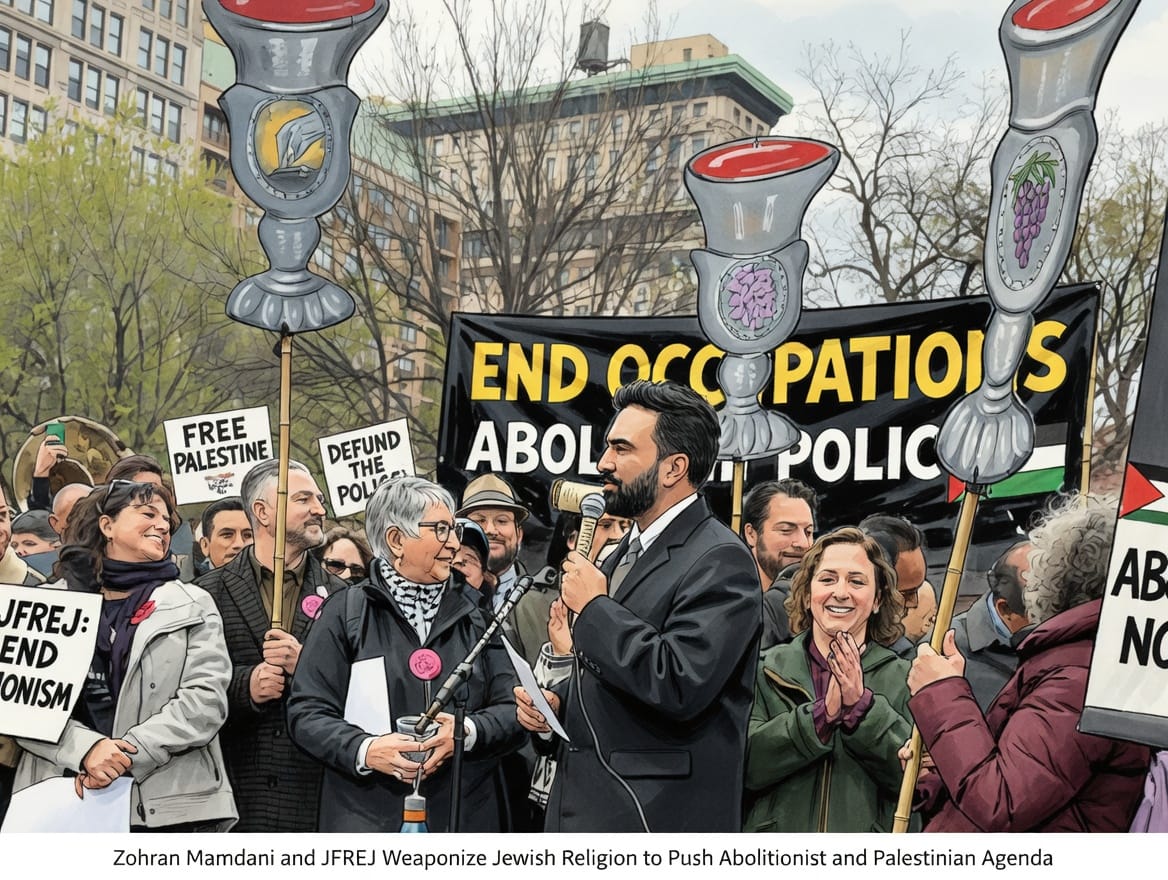
The survivors regrouped, cut through the wire in 1944, and went back to the forest. For another year they fought the Germans while being hunted by Polish partisans wherever they moved. Of the original group, almost none lived. Among the dead were Lechtman's grandfather's brother and two cousins. Of six great-uncles who became partisans, five were murdered, Zionist and Bundist alike, and rotted into the Polish soil. One survived, became an ardent Zionist, and stayed one until he died.
This is the texture the neo-Bundists leave out. They are selling an idea. The idea was tested. It failed under laboratory conditions more total and more merciless than any political theory has ever been tested before or since.
Here is what the Bund actually believed. It believed that working-class solidarity transcended ethnicity, that Polish workers and Jewish workers shared a common enemy in capital, and that this shared interest would protect the Jews when the pressure came. It believed in doykeit, that the Jewish future lay in the Diaspora, in being good neighbors and good socialists, not in some far-off homeland. These were not crazy ideas in 1925. A reasonable person could have held them.
The Bund was not a fringe outfit. In interwar Poland it was enormous, pulling as much as eighty percent of the Jewish vote in some cities, Warsaw chief among them. Much of that support was about wages and unions rather than the homeland question, but the movement was real, organized, and confident. Then the tanks came.
The story everyone knows is the Warsaw Ghetto Uprising, the moment Jewish youth of every faction set aside their quarrels and formed the Jewish Combat Organization to die fighting rather than die in the cattle cars. It is a true story and a holy one. But the part nobody tells is what happened first. In the years leading up to the revolt, the Zionist youth movements wanted to fight. The Bund wanted to wait. Its underground newspapers in the ghetto kept preaching solidarity with the suffering Polish population beyond the walls. Week after week, the solidarity did not come. And rather than admit the theory had collapsed, the Bund downplayed the abandonment to its own people. Only at the end did the older Bundists relent and let their young people join the Zionists in the Combat Organization. You know how it ended.
Mahmoud Khalil spoke at an “As a Jew” outdoor Seder today. He instructed the crowd to pray that Israel is no longer in existence next year. Khalil also ordered that the city divest from Israel and said @MarkLevineNYC is wrong to say that Israeli bonds are good investments. Khalil… pic.twitter.com/n2J1r29AfG
— Documenting Jew Hatred on Campus at Columbia U (@CampusJewHate) April 9, 2026
By 1945 the argument was over, and not because anyone won a debate. Zionism became the near-unanimous position of the survivors, former Bundists included. In the Displaced Persons camps, Jews who had condemned emigration their whole lives now begged the British to open Palestine. The American Harrison Report and later surveys found that as many as ninety-seven percent of these stateless, destitute people demanded Palestine and only Palestine. Asked for a second choice, some wrote a single word: crematoria. Harrison recorded that for the resettlement of those who could not or would not go home, Palestine was the overwhelming first choice, the place they wanted to be evacuated to the way other nations were being sent home.
Even the hard cases came around. The longtime anti-Zionist writer Isaac Deutscher, who had argued against Zionism through the 1920s and 1930s on the strength of his faith in the European labor movement, admitted in 1954 that he had abandoned that position. He said that had he urged European Jews to go to Palestine instead of arguing against it, he might have helped save lives that ended in the gas chambers. For the remnant, he said, the Jewish state had become a historic necessity and a living reality.
A living reality. Hold onto that phrase, because it is the whole ballgame.
The neo-Bundists never engage with the living reality, because to engage with it is to lose. So they perform a clever substitution. They equate the Bund's old anti-Zionism with their own, as if the two were the same animal. They are not. The Bund opposed building a state that did not yet exist. Today's anti-Zionists demand the dissolution of a state that does exist, with ten million citizens who are simply expected to evaporate. Nobody in the comfortable seats ever explains where the seven million Jews of Israel are supposed to go. Back to Poland? To Iraq? To Yemen? To populations that regard their very presence as an offense against God? The logistics of someone else's survival never seem to trouble people insulated by wealth and abstraction. The inconvenience just needs to disappear.
Crabapple captured the whole posture in an interview, complaining that Zionists have tried to colonize all of Jewish history. Then she posted a screenshot of her glowing Times review with two words attached. "We will win." Win what? The argument the Holocaust already settled? It is as if the twentieth century never happened to these people, as if six million data points were a rounding error in a Brooklyn book launch.
 Gene Goodwin
There is a name for the underlying move. The claim that Jews embraced Zionism not from experience but from trauma, that the Shoah so warped Jewish judgment that it turned the victims into oppressors and colonizers, is Holocaust inversion. It is soft Holocaust denial wearing a keffiyeh. It takes the worst thing that ever happened to a people and uses it to indict them.
The Bund earned its dignity. It did what it thought best with the information it had, and a person in 1930 could be forgiven for believing in hereness and solidarity. The dead deserve that grace. But the living do not get to LARP as the dead while standing on eighty years of hindsight the dead never had, in a world where most Jews on earth now live in the country the Bund said they did not need.