The Whales Behind the Mayor
Polymarket had Mamdani at 95 percent for months while polls showed a tightening race. Ten wallets funded through exchanges in China and the Middle East controlled 40 percent of the win market. The markets moved votes. The bigger story is who paid.


The markets called it months before the polls did.
By late October 2025, Polymarket had Zohran Mamdani at 95 percent to win New York City's mayoral race. Kalshi sat at 94. Siena College had him at 43 to Andrew Cuomo's 29, with the spread well inside what any honest pollster would call a competitive race. The markets disagreed. The markets were right.
Mamdani won with 50.78 percent and just over 1.1 million votes. Total turnout hit 2.2 million, the highest mayoral participation since 1969. Young voter turnout tripled. Brooklyn precincts that posted weak numbers in 2021 doubled or tripled their output. The 34-year-old Democratic Socialist won, and he won big.
Now the question. Did Polymarket and Kalshi simply read the room better than the pollsters? Or did the markets, plastered on Times Square billboards and amplified by every news cycle from August through November, manufacture some portion of the result they were predicting?
The answer, on the evidence, is yes to both. But the more important question, the one almost nobody is asking, is who paid for the call.
Start with the volume. Polymarket logged 143 million dollars in trades on the NYC mayoral race alone. Kalshi's related contracts cleared 121 million. These are not small numbers for a municipal election. They are large numbers for a presidential primary. Polymarket's NYC mayoral market drew more volume than several 2024 swing-state contracts.

Inside that volume, the concentration is what matters.
Forensic blockchain researchers at WAS Intel ran the flows in late October and published their findings on October 28, picked up the same day by the New York Post and circulated by accounts including @DefiyantlyFree and @EYakoby on X. The top ten wallets controlled roughly 40 percent of the entire Mamdani win market. Eighty-seven percent of the funding for those wallets routed through three exchanges: Binance, Bybit, and OKX. Binance is the platform with documented China exposure that pleaded guilty in 2023 to U.S. anti-money laundering violations. Bybit and OKX are dominant in the Middle East. The pattern was not hidden. It was on-chain, public, and verifiable to anyone willing to read the data.
 Gene Goodwin
Ten wallets. Forty percent of the market. Funded through exchanges concentrated in China and the Middle East.
One account, dubdubdub2, was created in September 2025 and proceeded to spend over a million dollars buying Mamdani shares, often paying 95 cents to win five. That math only works if you are not in it for the five cents. A separate trader operating under the handle RememberAmalek built roughly 300,000 dollars in profit by buying in at 8 cents during the spring, then gave an interview after the win in which he described Mamdani as a brilliant but narcissistic sociopath. A Canadian communist lawyer reportedly cleared around ten thousand on the primary contracts alone. The ideological diversity of the buy side is not the story. The geographic concentration of the buy side is.

Bill Ackman noticed. The hedge fund manager who dropped 1.75 million dollars on anti-Mamdani PACs went public on X in late October complaining that the Polymarket odds did not match what he was seeing on the ground. He was mocked for sour grapes. The mockery missed the point. Ackman had a position, which is exactly why he was watching the order book in real time. The academics writing post-mortems three years from now will not have that view.
Polymarket denied manipulation. Kalshi, the CFTC-regulated platform, pointed to its market-maker safeguards. Neither platform addressed the WAS Intel findings directly. Neither has produced a competing forensic analysis. The wallets and their funding routes sit on-chain, available for anyone to verify.
Now the mechanism. How do offshore betting odds move votes in a New York City mayoral race?
They do it by appearing everywhere. Polymarket and Kalshi ran ads across the New York digital ecosystem and on physical billboards through the fall. The 95 percent number became the lede on cable hits and the punchline of X threads. Mamdani's campaign leaned into it. Volunteers cited market confidence on the doors. The Cuomo operation, meanwhile, spent the closing weeks fighting a narrative that the race was already decided.
JUST IN: Socialist Zohran Mamdani now has an 82% chance of becoming the next mayor of New York City, an all-time high according to Polymarket.
— Collin Rugg (@CollinRugg) August 13, 2025
Former NY Governor Andrew Cuomo only has a 9% chance of winning with current NYC mayor Eric Adams at 7%.
Both Cuomo and Adams are now… pic.twitter.com/mooGOT7a1l
The academic literature on prediction markets and bandwagon effects is thin but suggestive. Studies of 2016 and 2020 betting markets found small but measurable shifts in turnout and intensity tied to visible odds in close races, generally in the one to three percent range. In a low-turnout municipal race with high under-30 engagement on platforms where market data circulates, that ceiling rises. Mamdani's coalition skewed young, online, and reactive to social proof. His opponents skewed older and offline. The asymmetry mattered.
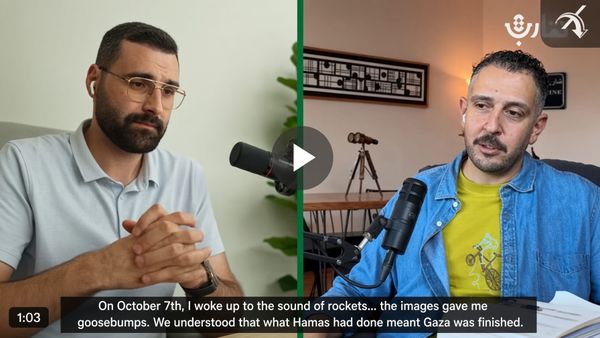
A widely shared Instagram reel made the case in plain language. These are not polls. They are betting odds. Foreign crypto markets are behind a lot of them. When the odds look hopeless, voters stay home. The reel was directed at Cuomo's softer supporters. Whether it landed at scale is unprovable. The mechanism it described is real.
What the data cannot tell us is exactly how much of the turnout surge came from the markets and how much came from the campaign. Mamdani's ground operation was the largest progressive volunteer mobilization in city history. Tens of thousands of canvassers. Record early voting that cleared 735,000 ballots before Election Day. A 28 percent youth turnout rate calculated by Tufts CIRCLE, against prior municipal averages in the single digits. That machine would have moved hundreds of thousands of votes with or without Polymarket displaying 95 percent on a Times Square screen.
But the markets did not exist in isolation from the machine. They reinforced it. They told every donor, volunteer, and undecided voter the same story for three months running: this is over, get on the right side of history. That is not neutral information. That is a megaphone, and forty percent of the megaphone was being held by ten wallets funded through exchanges in China and the Middle East.
The question for the next race is not whether the megaphone exists. It does. The question is who is allowed to hold it, and whether American voters deserve to know when the hand on the volume knob is foreign.
That is where Part Two begins.
Gene Goodwin