Hezbollah‑Inspired Suicide Truck Attack on Major Michigan Synagogue Exposes Radicalization Pipeline

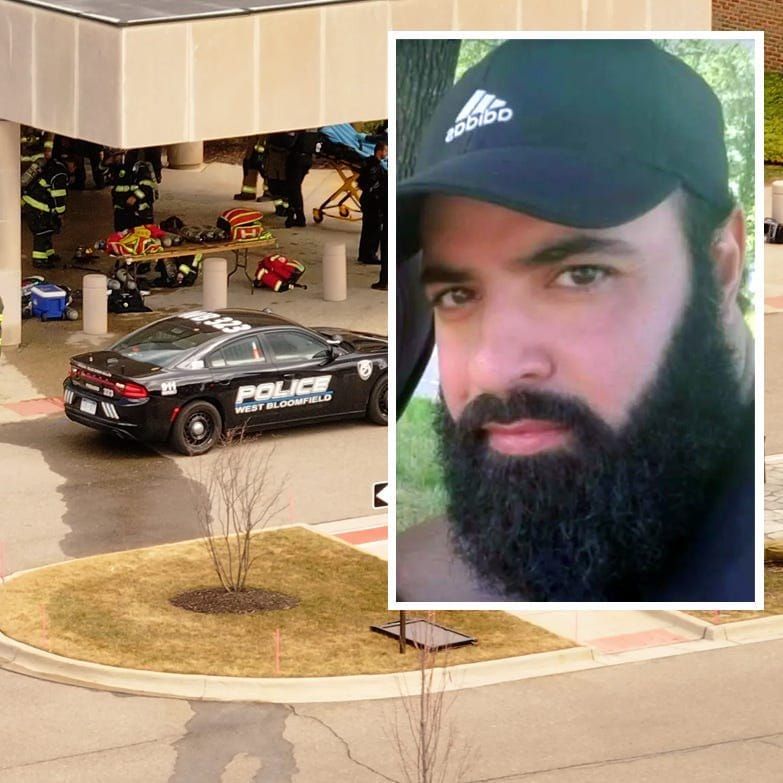
Federal investigators have now labeled the March 12, 2026 attack on Temple Israel in West Bloomfield, Michigan as a “Hezbollah‑inspired act of terrorism,” explicitly tying the violence to the Iranian‑backed militant group rather than treating it as a lone‑wolf outburst. The assailant, Ayman Mohamad Ghazali, recorded a series of chilling final videos before ramming an explosives‑laden truck into the synagogue, declaring he was targeting “the largest gathering place for Israelis in the State of Michigan” and vowing to kill as many as he possibly could.
BREAKING: The FBI has determined that the vehicle-ramming attack earlier this month at Temple Israel near Detroit—carried out by Ayman Mohamed Ghazali—was a Hezbollah-inspired terror attack. pic.twitter.com/5D5sIOYCJY
— Eyal Yakoby (@EYakoby) March 30, 2026
What actually happened
On March 12, 2026, Ghazali drove a pickup truck packed with fireworks, ammunition, and other weapons into the front of Temple Israel, one of the largest Reform Jewish congregations in the country and a major hub for Jewish life in Metro Detroit. Armed security stationed at the synagogue confronted Ghazali in the vehicle, leading to a gunfight; Ghazali died after his truck caught fire, and no congregants were killed, though the potential for mass casualties was enormous given the presence of children and the packed lunchtime schedule he had researched.
The FBI later revealed that Ghazali had booby‑trapped the truck, studied the temple’s layout, and timed his attack to coincide with peak attendance, including a day‑care center operating inside the building. He sat in the parking lot for roughly two hours, sending 19 messages—videos and images—to his sister in Lebanon, repeatedly invoking Hezbollah and martyrdom while outlining his plan to storm the temple and open fire. One of those clips, played back by investigators, shows him stating, “This is the largest gathering place for Israelis in the State of Michigan … I will forcibly enter and start shooting them. God willing, I will kill as many of them as I possibly can.”
Who Ghazali was and Hezbollah’s hand
Ghazali, 41, was a naturalized U.S. citizen born in Lebanon who entered the United States in 2011 on an IR1 immigrant visa and became a citizen in 2016, according to the Department of Homeland Security. Investigators say he was flagged in federal databases as having connections to “known or suspected terrorists” associated with Hezbollah well before the attack, and his brother, Ibrahim Ghazali, was a Hezbollah commander killed by the Israeli Defense Forces in Lebanon the week prior, which the FBI believes turbocharged his radicalization.
In the months leading up to March 12, Ghazali consumed Hezbollah‑aligned propaganda, watched Iranian‑backed news channels, and searched terms like “Hezbollah Lebanon,” “pro‑Hezbollah news channels,” and “shootout videos” on his devices. He also researched Jewish organizations, synagogues, and cultural sites in Michigan, including checking Temple Israel’s lunch schedule the day before the attack and then deleting the search history, suggesting he was deliberately covering his tracks. Federal prosecutors say that, had he survived, he would have been charged with providing material support to Hezbollah and acts of domestic terrorism.
BREAKING: Black smoke is rising out of Temple Israel synagogue in Michigan after someone rammed his vehicle into the building and unleashed gunfire.
— Eyal Yakoby (@EYakoby) March 12, 2026
The attacks against Jews must stop.
pic.twitter.com/Fvz2SD1ijQ
Why this attack fits the Hezbollah playbook
The FBI’s decision to label the assault a “Hezbollah‑inspired act of terrorism” is not symbolic: it tracks a specific pattern of low‑level operatives using brute‑force methods to attack Western Jewish and Israeli‑connected soft targets. Hezbollah’s global network has long relied on dispersed cells, sympathizers, and “inspired” individuals who can be pushed into action without direct, traceable command links, allowing the group to plausibly deny involvement while still stoking fear among Jewish communities. In this case, Ghazali’s family ties to a Hezbollah commander, his immersion in Hezbollah propaganda, and his explicit references to the group in his final messages all fit that model.
Temple Israel’s size and prominence make it exactly the kind of target Iran‑backed militants favor: not a government building or military base, but a heavily used civilian religious site where an attack maximizes terror rather than strategic military gain. By striking the “largest Jewish temple in Michigan” during a weekday lunchtime gathering, Ghazali aimed to send a message to the broader American Jewish community that no synagogue is safe, even in the heartland of the United States.

Timing, enforcement, and the narrative game
The timing of the FBI’s public label is significant. The Temple Israel attack occurred amid a broader spike in antisemitic rhetoric and plots in the United States, including a rash of threats against Jewish institutions and pro‑Palestinian protests that have mutated into calls for violence in some fringe circles. By formally calling this a Hezbollah‑inspired terrorist act two weeks after the event, the Justice Department and FBI are signaling that they are treating domestic anti‑Jewish terrorism not as isolated hate crime but as connected to foreign‑backed networks.
At the same time, that same timing raises questions about why the full Hezbollah connection was not highlighted immediately. Early reporting largely framed the incident as a “truck attack” or “active‑shooter style” event, letting some media and activists downplay its ideological roots or spin it purely as a domestic hate crime divorced from foreign actors. Only after the FBI’s detailed press conference did the full picture of Hezbollah‑linked propaganda, family ties, and foreign‑sourced inspiration come into sharp focus—a clarification that dramatically changes how the public should understand who Ghazali was and what he was trying to achieve.
Who benefits from which narrative
Pro‑Hezbollah circles and elements of the anti‑Israel left benefit from any narrative that shrugs off such attacks as mere “lone wolves” or generic antisemitism. If audiences believe Ghazali was just a random anti‑Jewish fanatic with no ties to Iran‑backed networks, the pressure on Hezbollah and its state sponsors to be held accountable drops dramatically. Conversely, the longer institutions and media hesitate to name Hezbollah explicitly, the easier it is for Tehran‑aligned groups to continue using sympathizers and “inspired” individuals to conduct attacks that feel local but originate in a foreign terrorist ecosystem.
On the other side, U.S. officials and Jewish‑community leaders gain leverage by insisting that this was a Hezbollah‑inspired terrorist act, not a marginal hate crime. Doing so strengthens the legal and political case for tighter monitoring of Hezbollah‑linked networks in the United States, harsher sanctions on Tehran, and more robust security for synagogues and Jewish institutions. It also dispels the comforting myth that radicalization begins and ends in domestic white‑supremacist or purely domestic antisemitic bubbles, when the reality is often a toxic mix of foreign ideology, local grievance, and family radicalization.
Here is how far-left financier Fergie Chambers reacted to the Temple Israel attack, exactly as you would expect, by grotesquely trying to justify violence against a synagogue and school as a “measured and appropriate response.” pic.twitter.com/1D4BjVABwP
— Stu Smith (@thestustustudio) March 14, 2026
Accountability: who’s really on the hook
The legal hook is first on Ghazali himself, but the deeper accountability chain runs from Hezbollah and Iran to U.S. intelligence and immigration agencies. Lebanon‑based Hezbollah deliberately exports violent ideology, celebrates attacks on Israeli and Jewish targets abroad, and uses social media and encrypted channels to encourage sympathizers in the diaspora, even if it maintains a thin layer of plausible deniability. Tehran, as Hezbollah’s primary patron, funds and directs that strategy, knowing that low‑profile attacks like Temple Israel can fray American social cohesion and pressure Washington to soften its posture toward Iran.
On the U.S. side, the fact that Ghazali was already flagged in federal databases as having ties to known or suspected terrorists immediately before the attack raises serious questions about enforcement thresholds and interagency information‑sharing. If someone tied to Hezbollah’s network had a brother who was a Hezbollah commander killed in an Israeli airstrike, an active consumption of Hezbollah propaganda, and a documented interest in attacking Jewish institutions, why did that not trigger a higher‑level intervention or closer monitoring? The FBI’s eventual classification of this as terrorism is a step toward accountability, but it also exposes how long the warning signals went unacted upon.

What this means for Jewish communities and the rest of America
For Jewish communities across the United States, the Temple Israel attack is a stark reminder that the line between “overseas conflict” and “local assault” is increasingly blurred. When Hezbollah and its Iranian backers can radicalize a naturalized U.S. citizen with family ties to the group, and have him stage a suicide‑truck attack on a synagogue without a direct command order, every synagogue, JCC, and Jewish school must assume it is within the crosshairs of a global terrorist network, not just a local bigot. That reality demands far more than sympathy statements; it demands funding, security upgrades, and intelligence sharing that treats Jewish institutions as part of the national security infrastructure, not just religious venues.
For the rest of the country, Temple Israel should shatter the illusion that foreign terrorism is confined to big‑city airports, embassies, or military facilities. A Hezbollah‑inspired attack on a Michigan synagogue means that soft targets in suburban America are now explicit nodes in Hezbollah’s global strategy. That is not a partisan talking point; it is a fact underlined by the FBI’s own evidence, the killer’s own videos, and the naked goal stated in his final messages: “God willing, I will kill as many of them as I possibly can.”