IRAN'S REGIME FAMILY WAS IN LOS ANGELES. WHO LET THEM IN?
Soleimani's niece lived in LA for 11 years on a U.S. green card — promoting IRGC propaganda, calling America the "Great Satan," flying back to Tehran 4 times. Biden gave her permanent residency in 2021. ICE arrested her April 3. Who approved this?

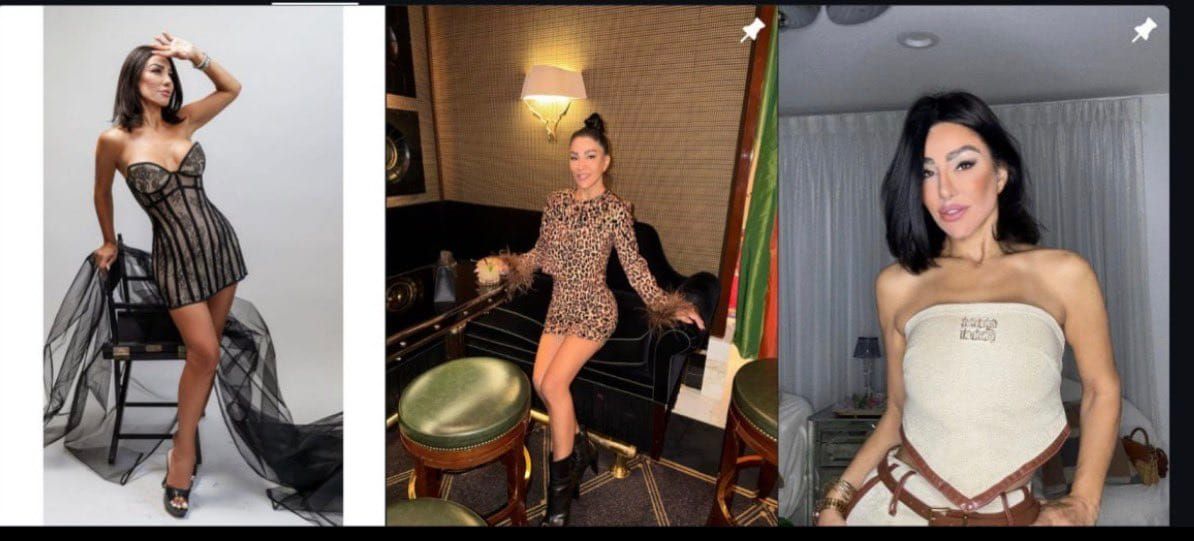
Hamideh Soleimani Afshar niece of the man who killed hundreds of American soldiers was granted asylum, handed a green card, and left alone to promote IRGC propaganda from her Hollywood neighborhood. It took a war to remove her.
The man who orchestrated the deaths of hundreds of American soldiers had a niece living in Los Angeles. She wasn't hiding. She was posting.
Hamideh Soleimani Afshar, 47, entered the United States in June 2015 on a tourist visa. Within four years, an immigration judge had granted her asylum. By 2021, the Biden administration had made her a lawful permanent resident. Her daughter, Sarinasadat Hosseiny, arrived on a student visa the same summer of 2015. She too received asylum in 2019 and a green card in 2023.
They were not political refugees fleeing a regime. They were members of that regime's inner orbit. Afshar is the niece of Qasem Soleimani, the IRGC's Quds Force commander who ran Iran's proxy war machine across Iraq, Syria, Yemen, and Lebanon until a U.S. drone strike ended him at Baghdad International Airport on January 3, 2020.

While living in Los Angeles, Afshar did not stay quiet. According to a State Department letter confirming the April 3 arrests, she "promoted Iranian regime propaganda, celebrated attacks against American soldiers and military facilities in the Middle East, praised the new Iranian Supreme Leader, denounced America as the 'Great Satan,' and voiced her unflinching support for the Iranian Revolutionary Guard Corps" — a designated terrorist organization. She did all of this on Instagram, publicly, for years, before deleting the account once attention mounted.
Nobody at DHS, DOS, or the FBI revoked anything. Not in 2019. Not in 2021. Not in 2023 when Hosseiny received her own green card. Not until Secretary of State Marco Rubio personally terminated both women's legal status this week, triggering their arrest by ICE agents on the night of April 3, 2026.
The question is not whether removing them was right. It was. The question is what every federal agency was doing for the eleven years before that.
The asylum fraud case is not ambiguous. Afshar applied for U.S. citizenship in July 2025 and, in her own naturalization application, disclosed she had traveled to Iran at least four times since receiving her green card. Asylum is granted on the legal premise that a person cannot safely return to their country of origin. She returned four times. DHS states flatly: her asylum claims were fraudulent. That is not a characterization — it is a legal conclusion drawn from her own sworn disclosures.

The pattern here extends beyond one family. Also this week, Rubio revoked the green cards of Fatemeh Ardeshir-Larijani, daughter of the late Ali Larijani, former Secretary of Iran's Supreme National Security Council. Ardeshir-Larijani had been employed at Emory University's oncology department in Georgia. Her father was killed in a joint U.S.-Israeli airstrike on Tehran on March 17, 2026. A Change.org petition demanding her removal had gathered 157,000 signatures before the administration acted. It took a war and six figures of public signatures to remove a regime official's daughter from a federally funded academic institution.
This is the system working exactly as it was designed to work — for everyone except American citizens.
The vetting argument collapses immediately under scrutiny. These women were not unknown individuals from a conflict zone. Afshar shares a surname with one of the most consequential military figures in modern Middle Eastern history, a man the U.S. government had designated a terrorist threat years before she arrived. Her public social media promoted the organization her uncle commanded. She returned to the country she claimed would kill her, four times, on a U.S. travel document. At no point did any agency connect those dots without political pressure forcing the issue.
Hosseiny, 25, presents a different layer of the problem. Her case was not premised on her own political activity — she was 14 when she first arrived. Her removal is predicated on her mother's ties and the revocation of her own green card, which was issued in 2023 under the Biden administration. The State Department has not publicly detailed what, if any, independent review of Hosseiny's individual record triggered her removal versus her mother's. That distinction matters legally, and the administration owes the public a clear accounting.
What is not in dispute: a neighbor confirmed to reporters that ICE agents intercepted Hosseiny while she was driving in Hollywood, surrounding her vehicle and demanding she identify her mother's location. The operation was coordinated. The government knew exactly where both women were.
They knew for years. They chose not to act.

The broader pattern is now unmistakable. Rubio's office confirmed this is part of a wider State Department initiative targeting Iranian regime-connected individuals currently residing in the United States. Iranian leadership's children have been documented working at American universities, living on American visas, and maintaining dual loyalty to a government that has been formally at war with U.S. forces and interests for decades. The Soleimani arrests are not an isolated enforcement action. They are a belated acknowledgment that a systemic failure occurred across multiple administrations.
The IRGC's Quds Force — the organization Qasem Soleimani commanded — is responsible for the deaths of at least 600 American service members through proxy attacks in Iraq alone, according to Pentagon estimates. His niece was granted the right to permanently reside in the country he targeted. Her daughter was handed that same right under a separate administration, two years after his death, after the assassination had already made the family connection a matter of public record.
That happened. It was a policy choice, made by identifiable people, at identifiable agencies, on identifiable dates.
Congress needs to demand the names of every official who approved these status grants. The public is owed a full accounting of what intelligence existed at the time of each visa and asylum decision, who reviewed it, and what the legal standard applied was. If vetting procedures were followed and still produced this result, those procedures are the problem. If they were not followed, the individuals responsible must be identified.

Rubio acted. That credit is due. But action in April 2026 does not explain inaction from 2015 through 2025. The administration's current enforcement posture is not accountability for a decade of failure. It is correction. Accountability requires a full audit, public disclosure, and personnel consequences for the chain of officials who handed green cards to the family of America's most wanted Iranian commander while he was still actively targeting U.S. troops.
That audit has not been announced. It should be demanded immediately. The vetting system that let this happen is still in place. Rubio corrected one case. The pattern runs deeper.
Demand your senator open a full congressional audit of every visa and asylum approval for Iranian regime-connected individuals issued between 2015 and 2024. Share this article. Tag your representative. Subscribe for continued coverage as this investigation develops.